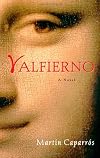
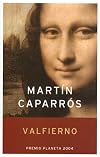
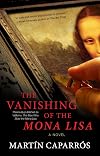
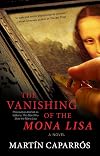
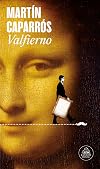
Valfierno: The Man Who Stole the Mona Lisa
by Martín Caparrós
On This Page
Description
A tale inspired by the infamous 1911 theft of the Mona Lisa finds the dying Marquis de Valfierno divulging to an American journalist the truth about his secret identity as a working-class Argentine youth who drew on his artistic mastery in order to become one of the world's most notorious art thieves.Tags
Recommendations


































Member Reviews
Valfierno is a disappointing fictional account of the theft of the Mona Lisa. The point of view is constantly shifting, sometimes multiple times in the same page, so that you hardly know which disreputable character you are following. The confusion isn’t helped by the multiple aliases used by the principles. It made me tired. Judicious editing would have done wonders. There are far better fictional accounts of art theft.
In 1932, sensationalist (and incredibly incompetent) reporter Karl Decker wrote about a fictional character he created to explain how the Mona Lisa was stolen in 1911. The story was, naturally, published and pitched as a genuine article in the Saturday Evening Posts, where it was assumed to be true like all of Decker's silly and absurd fictions. Now we have Valfierno, a fictional or shall I say re-fictional account of the mythical character created some 80's years ago.
Had I not read a nonfiction book on the topic before reading this, I probably would not have known what was going on. The author presents a narrative so disjointed and unclear I felt like I was chasing the plot through a house of mirrors. Before starting I knew who show more everyone was, what was going to happen, and how it was going to end for the most part, and I still hadn't a clue half the time what was happening. The story is presented in the tiniest little pieces and from so many angles, and everything shifts so quickly and so often without any indication that it has happened that I frequently found myself at a complete loss for words. If only Caparros had felt the same while writing it I wouldn't have wasted my time on the damn thing.
This book is a train wreck. Perhaps at one time or another there was a solid story here, but I couldn't begin to care enough to actually pick up the wreckage strewn across the pages and try to piece it all together. It's just bad, in every way imaginable, and the author didn't even have to come up with his own story considering he took it from an equally incompetent writer. He just had to present it, and build upon it, and he failed miserably. I would strongly suggest you avoid this at all costs. Literally. If you see it in a store, pay them not to sell it to you. I'm serious. It's so bad. show less
Had I not read a nonfiction book on the topic before reading this, I probably would not have known what was going on. The author presents a narrative so disjointed and unclear I felt like I was chasing the plot through a house of mirrors. Before starting I knew who show more everyone was, what was going to happen, and how it was going to end for the most part, and I still hadn't a clue half the time what was happening. The story is presented in the tiniest little pieces and from so many angles, and everything shifts so quickly and so often without any indication that it has happened that I frequently found myself at a complete loss for words. If only Caparros had felt the same while writing it I wouldn't have wasted my time on the damn thing.
This book is a train wreck. Perhaps at one time or another there was a solid story here, but I couldn't begin to care enough to actually pick up the wreckage strewn across the pages and try to piece it all together. It's just bad, in every way imaginable, and the author didn't even have to come up with his own story considering he took it from an equally incompetent writer. He just had to present it, and build upon it, and he failed miserably. I would strongly suggest you avoid this at all costs. Literally. If you see it in a store, pay them not to sell it to you. I'm serious. It's so bad. show less
Maybe I'll go back one day and finish this one—but I'm over a hundred pages in, and don't think I can handle any more of what I guess I'd call weary-urbane-eyebrow-raised-in-comeback questions.
Una interesante historia arruinada por un escritor enamorado de su voz y estilo. Después de ver lo insoportable que es Caparrós en entrevistas no me dan ganas de leer nada más de él.
Great premise (and HC cover), but writing style was incredibly disjointed and difficult to follow.
You know, I heard that the publisher's rep loved this one. Naturally, this made me think, 'Well, there's one in the bag for me! I don't have to worry about whether or not it'll be good, I know it will be amazing.' So I saved the galley, like you do, for when you know you'll be tired of reading non-fiction and you'll just want something entertaining & engaging with which to curl up some wintry night.
Bad choice.
Had I read it sooner, I would have known that it was terrible and had something better in reserve. Boo.
Bad choice.
Had I read it sooner, I would have known that it was terrible and had something better in reserve. Boo.
La Gioconda de Leonardo Da Vinci fue robada del Museo del Louvre el 22 de agosto de 1911. Tras la confusión inicial empezaron las sospechas: la policía miró hacia los grupos artísticos vanguardistas que abominaban del arte académico, entre los que figuraba Pablo Picasso, y encarceló al poeta Apollinaire. Pero pasaba el tiempo y no había ni rastro del cuadro, de los verdaderos ladrones. Dos años después, en 1913, el italiano Vicenzo Peruggia fue detenido en Florencia con la obra maestra en su poder; arguyó que quería restituirla a su país, Italia. Sin embargo, ¿Qué ocurrió durante estos dos años?, y sobre todo, ¿alguien creyó que el humilde Peruggia fue el cerebro del golpe del siglo? Quince años después, alguien que show more se hace llamar Marqués de Valfierno, y que no soporta morirse sin que el mundo sepa de su audacia, cuenta a un periodista toda la verdad: la preparación del robo, la falsificación, la venta, sus cambios de identidad. show less
Nov 19, 2010Spanish
Members
- Recently Added By
Lists

Books Read in 2012
816 works; 34 members
Author Information

61 Works 651 Members
Awards and Honors
Common Knowledge
- Original title
- Valfierno: The Man Who Stole The Mona Lisa
- Alternate titles
- The Vanishing of the Mona Lisa
- Important places
- Louvre Museum, Paris, France
- Important events
- Theft of the Mona Lisa
Classifications
- Genres
- Fiction and Literature, Historical Fiction, General Fiction
- DDC/MDS
- 863.64 — Literature & rhetoric Spanish Literature Spanish fiction 20th Century 1945-2000
- LCC
- PQ7798.13 .A57 .V3513 — Language and Literature French, Italian, Spanish and Portuguese literatures Spanish literature Provincial, local, colonial, etc. Spanish America
- BISAC
Statistics
- Members
- 131
- Popularity
- 248,781
- Reviews
- 7
- Rating
- (2.74)
- Languages
- 8 — English, French, German, Polish, Portuguese, Romanian, Spanish, Swedish
- Media
- Paper, Ebook
- ISBNs
- 14
- ASINs
- 3