
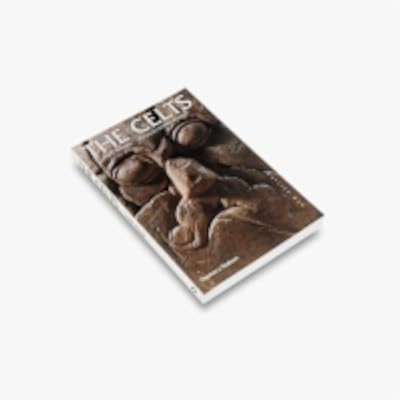
The Celts: The People Who Came Out of the Darkness
by Gerhard Herm
On This Page
Description
The story of North European cultural ancestors.Tags
Recommendations



















Member Reviews
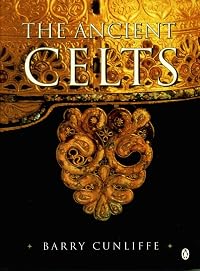
TL;DR: Outdated at this point, and clearly written by an enthusiastic amateur, not a specialist. Find a more recent work by an actual expert. I recommend Barry Cunliffe.
So-so. This book clearly has its strengths, but each is muddled (or perhaps cancelled out?) by what I see as some pretty serious flaws. For one, Herm offers an ok large-scale overview of what was known about the Celts, their migrations and their interactions with the Mediterranean world -- back in the seventies. That's fine and dandy, but the intervening forty-odd years have made this book increasingly less reliable, and a similar but more recent book should be preferred.
Secondly, Herm is no historian, but a journalist, and it shows. Herm is at his best when he talks show more about individual excavations and specific locations: as long as he can rely on archeologists and historians and linguists to guide him through the facts, he's an engaging summarizer. (I found the section on the oppidum at Manching particularly memorable). Where Herm goes off the rails sometimes, in my view, is in linking the large-scale, macro level with the micro-level: I encountered several questionable conclusions and enthusiastic extrapolations that a real historian would be much more careful about. Case in point: at one point the author broaches the topic of Atlantis, and whether it might have been real, and for a few pages he gets lost in speculations about conspiracy theories and cranks' pet theories. He also quotes approvingly a source claiming that all Indo-European peoples are Russians because their putative homeland near the Black Sea lies in 1970s Soviet Russia. Perhaps it's the journalistic training in him that wants to balance a credentialled specialist with a maverick crank or an attention-grabbing soundbite, but I don't think that such silliness should merit inclusion. And finally: I think he is too uncritically accepting of 18th-20th-century claims of Celtic revivalism, taking them too much at face value.
I feel that this book is now too dated to be of much use, and that a specialist would have done a better job of drawing mid-level conclusions. Its strengths are covered in other, more recent books, that do not suffer from these flaws. Check out Barry Cunliffe: he's an archeologist who's also a great science communicator. show less
So-so. This book clearly has its strengths, but each is muddled (or perhaps cancelled out?) by what I see as some pretty serious flaws. For one, Herm offers an ok large-scale overview of what was known about the Celts, their migrations and their interactions with the Mediterranean world -- back in the seventies. That's fine and dandy, but the intervening forty-odd years have made this book increasingly less reliable, and a similar but more recent book should be preferred.
Secondly, Herm is no historian, but a journalist, and it shows. Herm is at his best when he talks show more about individual excavations and specific locations: as long as he can rely on archeologists and historians and linguists to guide him through the facts, he's an engaging summarizer. (I found the section on the oppidum at Manching particularly memorable). Where Herm goes off the rails sometimes, in my view, is in linking the large-scale, macro level with the micro-level: I encountered several questionable conclusions and enthusiastic extrapolations that a real historian would be much more careful about. Case in point: at one point the author broaches the topic of Atlantis, and whether it might have been real, and for a few pages he gets lost in speculations about conspiracy theories and cranks' pet theories. He also quotes approvingly a source claiming that all Indo-European peoples are Russians because their putative homeland near the Black Sea lies in 1970s Soviet Russia. Perhaps it's the journalistic training in him that wants to balance a credentialled specialist with a maverick crank or an attention-grabbing soundbite, but I don't think that such silliness should merit inclusion. And finally: I think he is too uncritically accepting of 18th-20th-century claims of Celtic revivalism, taking them too much at face value.
I feel that this book is now too dated to be of much use, and that a specialist would have done a better job of drawing mid-level conclusions. Its strengths are covered in other, more recent books, that do not suffer from these flaws. Check out Barry Cunliffe: he's an archeologist who's also a great science communicator. show less
A chronological event of the Celts from the time they first encountered Roman armies in Italy to the coming of Caesar to the campaigns advancing into England and Ireland to the acceptance of Christianity to the arising of the King Arthur legend due to William of Normandy's defeat on Harold of England in the battle of the Hastings. The book overall was interesting in parts and slow in others. If nothing else it gave me an appreciation of my heritage. From the beginning they were barbarians with their ragged hair, painted bodies, and unduly tactics of war that drove their enemy into fright at first sight. They had an over imaginative superstition to the spirit world in so much that they kept the heads of their victims and decorated their show more homes, including making drinking vessels out of the skulls, believing that they would protect them. The adoption of Christianity began to tame them to some extent but their ingenious fallacy continued forth in the devising of the Grail and the legend of King Arthur which continues to influence people today. show less
Extensive overview of the origins of Celtic Tribes and their migration through Europe to the British Isles Well written and readable style of writing. Assumes no real previous knowledge of the subject.
I read this a long time ago in a galaxy far away. My first vision of the celts, and this book set the stage for my way of looking at the Dorian Greeks, who were probably celts.
Dit boek veronderstelt al een bepaalde basiskennis die wanneer je deze ontbeert (zoals ik) er een hele kluif aan hebt om door al die jaartallen en namen heen te worstelen. Heel erg jammer want de schrijver heeft duidelijk kennis over het onderwerp. De manier van schrijven maakt het echter zo onaantrekkelijk dat je een doorbijter moet zijn om tussen al die droge feiten de krenten uit de pap te vissen waarin er iets meer van de mensen die Kelten genoemd worden, beschreven wordt in de zin van hoe ze leefden en wat hun motieven waren.
Nov 26, 2011Dutch
Members
- Recently Added By
Lists

r/History Recommended Reading List
603 works; 12 members
Author Information

23+ Works 1,316 Members
Some Editions
Series
Belongs to Publisher Series
Common Knowledge
- Canonical title*
- Die Kelten : Das Volk, das aus dem Dunkel kam
- Original title
- Die Kelten. Das Volk, das aus dem Dunkel kam
- Original publication date
- 1975
- People/Characters*
- Kelten
- Dedication*
- Meiner Frau Christina gewidmet
- First words
- An explosive business, but its handling was almost comic.
- Last words
- (Click to show. Warning: May contain spoilers.)It is as if history had thereby tried to erect a final monument to the Celts.
*Some information comes from Common Knowledge in other languages. Click "Edit" for more information.
Classifications
- Genres
- History, Nonfiction, Anthropology, General Nonfiction
- DDC/MDS
- 936.4 — History & geography History of ancient world (to ca. 499) Europe north and west of Italian Peninsula to ca. 499 Celtic Regions to 486
- LCC
- D70 .H4713 — History of Europe, Asia, Africa and Oceania History (General) Ancient history
- BISAC
Statistics
- Members
- 1,035
- Popularity
- 25,158
- Reviews
- 6
- Rating
- (3.35)
- Languages
- Dutch, English, German, Italian
- Media
- Paper
- ISBNs
- 15
- ASINs
- 23