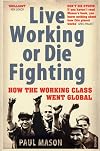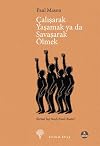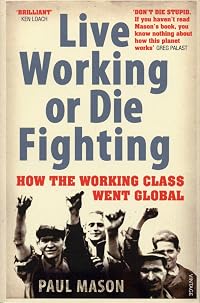
Live Working or Die Fighting: How the Working Class Went Global
by Paul Mason
On This Page
Description
A Chinese woman pushes her way to the front of a hiring queue outside a factory in Shenzhen.... A Bolivian miner, without light or ventilation, crawls deep inside a deserted mine... A group of Somali cleaners files into an investment bank in London's Canary Wharf...Globalisation has created a whole new working class - and they are reliving stories that were first played out a century ago. In Live Working or Die Fighting, Paul Mason tells the story of this new working class alongside the epic show more history of the global labour movement, from its formation in the factories of the 1800s to its near destruction by fascism in the 1930s. Along the way he provides a 'Who Do You Think You Are?' for the anti-globalisation movement, uncovering startling parallels between the issues that confronted the original anti-capitalists and those who have taken to the streets in Seattle, Genoa and beyond.Blending exhilarating historical narrative with reportage from today's front line, he links the lives of 19th-century factory girls with the lives of teenagers in a giant Chinese mobile phone factory; he tells the story of how mass trade unions were born in London's Docklands - and how they're being reinvented by the migrant cleaners in skyscrapers that stand on the very same spot.The stories come to life through the voices of remarkable individuals- child labourers in Dickensian England, visionary women on Parisian barricades, gun-toting railway strikers in America's wild west, and beer-swilling German metalworkers who tried to stop World War One. It is a story of urban slums, self-help co-operatives, choirs and brass bands, free love and self-education by candlelight. And, as the author shows, in the developing industrial economies of the world it is still with us. Live Working or Die Fighting celebrates a common history of defiance, idealism and self-sacrifice, one as alive and active today as it was two hundred years ago. It is a unique and inspirational book. show lessTags
Recommendations









Member Reviews
A book like this distanced from both the set in stone doctrines of Trotskyite sects and the insular anarchist ghetto is as rare as hen's teeth. Rarer still are ones written by a BBC Newsnight Business Correspondent.
Avoiding the usual class-blind hand-wringing and guilt tripping that constitutes most left-wing and liberal thinking these days, Paul Mason describes the struggles and movements of the mainly European and American working class of the 19th and early 20th Century, formed in opposition to their exploitation by industrial capitalism. Revolutionary Syndicalism is at the centre of this book but is not the whole story. By opening each chapter with a snapshot of workers and labour activists in today's developing world, mainly based show more on the author's own travels as a journalist, he links the past and the present together. At the same time he points out the major differences between then and now, taking into account the new conditions of a global, consumer society. He hopefully believes the international working class will find its radical voice once again, strengthened by communication innovations and the effect of globalisation itself.
This is no dry academic tome but a lively readable book telling the stories of the old working class, their struggles and the alternative culture they created-schools, adult education, co-ops, choirs and brass bands. It bases itself around individuals, participants in history changing uprisings and strikes, who have been forgotten or belittled, even by the left. But neither is it a rose-tinted or romantic view of proletarian revolt. It explains the desperate circumstances, the compromises and the tragic and terrible mistakes-one of the worse being the split in the German working class between the SPD and the Communist Party leading to the victory of the Nazis (The War Amongst Brothers.)
This is a must-read for all those interested in radical history and anti-capitalism. And of course for those at the sharp end of all this-the new working class, making up over half of the world's population. show less
Avoiding the usual class-blind hand-wringing and guilt tripping that constitutes most left-wing and liberal thinking these days, Paul Mason describes the struggles and movements of the mainly European and American working class of the 19th and early 20th Century, formed in opposition to their exploitation by industrial capitalism. Revolutionary Syndicalism is at the centre of this book but is not the whole story. By opening each chapter with a snapshot of workers and labour activists in today's developing world, mainly based show more on the author's own travels as a journalist, he links the past and the present together. At the same time he points out the major differences between then and now, taking into account the new conditions of a global, consumer society. He hopefully believes the international working class will find its radical voice once again, strengthened by communication innovations and the effect of globalisation itself.
This is no dry academic tome but a lively readable book telling the stories of the old working class, their struggles and the alternative culture they created-schools, adult education, co-ops, choirs and brass bands. It bases itself around individuals, participants in history changing uprisings and strikes, who have been forgotten or belittled, even by the left. But neither is it a rose-tinted or romantic view of proletarian revolt. It explains the desperate circumstances, the compromises and the tragic and terrible mistakes-one of the worse being the split in the German working class between the SPD and the Communist Party leading to the victory of the Nazis (The War Amongst Brothers.)
This is a must-read for all those interested in radical history and anti-capitalism. And of course for those at the sharp end of all this-the new working class, making up over half of the world's population. show less
Ratings
Members
- Recently Added By
Author Information

7+ Works 1,085 Members
Paul Mason is a former award-winning economics editor of Britain's Channel 4 News. His books include Meltdown: The End of the Age of Greed and Why It's Still Kicking Off Everywhere: The New Global Revolutions. He writes for The Guardian and the New Statesman, among other publications.
Classifications
Statistics
- Members
- 107
- Popularity
- 302,341
- Reviews
- 1
- Rating
- (4.10)
- Languages
- English, Turkish
- Media
- Paper, Ebook
- ISBNs
- 5
- ASINs
- 2