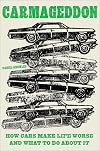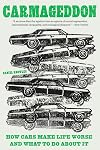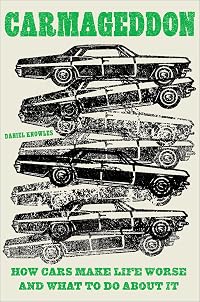
Carmageddon: How Cars Make Life Worse and What to Do About It
by Daniel Knowles
On This Page
Description
"A high-octane polemic against cars-which are ruining the world, while making us unhappy and unhealthy-from a talented young writer at the Economist The automobile was one of the most miraculous inventions of the 20th century. It promised freedom, style, and utility. But sometimes, rather than improving our lives technology just makes everything worse. Over the past century cars have filled the air with toxic pollutants and fueled climate change. Cars have stolen public space and made our show more cities uglier, dirtier, less useful, and more unequal. Cars have caused tens of millions of deaths and injuries. They have wasted our time and our money. In Carmageddon, journalist Daniel Knowles outlines the rise of the automobile and the costs we all bear as a result. Weaving together history, economics, and reportage, Knowles traces the forces and decisions that normalized cars and cemented our reliance on them. He takes readers around the world to show the ways car use has impacted people's lives-from Nairobi, where few people own a car but the city is still cloaked in smog, to Houston, where the Katy Freeway has a mind-boggling 26 lanes and there are 30 parking spaces for every resident, enough land to fit Paris ten times. With these negatives, Knowles shows that there are better ways to live, looking at Amsterdam, Copenhagen, Tokyo, and New York City"-- show lessTags
Recommendations










Member Reviews
Carmageddon, by Daniel Knowles, is an engaging and important read, even while many of the ideas disrupt the world in which we have grown both comfortable and frustrated.
The information here highlights the history of the automobile as well as our contemporary situation, focusing on how something once for the elite and viewed as a luxury has become a necessity (as we currently perceive and construct the world) for the vast majority of people, particularly in the "west." What we learn is that in addition to the damage we are doing to the planet cars also add to a level of anxiety and unhappiness in our lives. No, he doesn't claim we use cars consciously in spite of this, but that what we think of as representing freedom has come to be, for show more many, just the opposite.
The ideas and suggestions included range from small to, over time, major shifts in how we live. These prescriptive parts are the ones that I had to think about the most. I agree with the points he makes about what cars, and all of the associated infrastructure that goes with them, do to the quality of life. I even like the endpoint vision of how society could be. I just have a hard time wrapping my mind around how we might get there. Between resistance from people who love cars to politicians more concerned about the next election cycle than actually governing and making difficult decisions, this will be a hard struggle. Though, thanks to Knowles, one I think would be well worth it. Before you panic, he is not suggesting no cars, he is not suggesting no personal cars. This is mostly about options and getting people to live differently.
If there is one issue I have it is with citations. Much of what he uses comes from conversations with public figures, but some facts and figures are also mentioned. Notes and citations, to whatever extent possible, would make the resistance to the ideas more difficult. I read an advanced review copy so the final copy may well have notes and a bibliography, or at least I hope so.
Highly recommended for those who are interested in climate change as well as those who simply think our society could be better for humans and the planet.
Reviewed from a copy made available by the publisher via NetGalley. show less
The information here highlights the history of the automobile as well as our contemporary situation, focusing on how something once for the elite and viewed as a luxury has become a necessity (as we currently perceive and construct the world) for the vast majority of people, particularly in the "west." What we learn is that in addition to the damage we are doing to the planet cars also add to a level of anxiety and unhappiness in our lives. No, he doesn't claim we use cars consciously in spite of this, but that what we think of as representing freedom has come to be, for show more many, just the opposite.
The ideas and suggestions included range from small to, over time, major shifts in how we live. These prescriptive parts are the ones that I had to think about the most. I agree with the points he makes about what cars, and all of the associated infrastructure that goes with them, do to the quality of life. I even like the endpoint vision of how society could be. I just have a hard time wrapping my mind around how we might get there. Between resistance from people who love cars to politicians more concerned about the next election cycle than actually governing and making difficult decisions, this will be a hard struggle. Though, thanks to Knowles, one I think would be well worth it. Before you panic, he is not suggesting no cars, he is not suggesting no personal cars. This is mostly about options and getting people to live differently.
If there is one issue I have it is with citations. Much of what he uses comes from conversations with public figures, but some facts and figures are also mentioned. Notes and citations, to whatever extent possible, would make the resistance to the ideas more difficult. I read an advanced review copy so the final copy may well have notes and a bibliography, or at least I hope so.
Highly recommended for those who are interested in climate change as well as those who simply think our society could be better for humans and the planet.
Reviewed from a copy made available by the publisher via NetGalley. show less
An international reporter details what he has learned about the proliferation of cars around the world and what they do to people and neighborhoods and cities. He discusses the development of US highways, his hometown of Birmingham in England, the fall of Detroit, Jane Jacobs, electric cars, parking, the auto industry, oil cartels, traffic accidents, Nairobi (where he once lived for work), Amsterdam, and Tokyo, among many other topics.
This is a decent overview of a wide variety of anti-car-dependency topics for anyone looking for an introduction. It doesn’t go terribly deeply into any particular area, though. Knowles quotes all the right people, who have been experts in the field for decades, but unfortunately does not include notes show more or a bibliography. Like many similar anti-car books it does veer into some fatphobia and ableism (there are plenty of reasons to ditch cars, “Americans are fat and active transport will force them to lose weight” doesn’t need to be one of them!) but I did appreciate that he has a more international view than most. I don’t know much about anti-car-dependency activism outside of the US so I enjoyed his perspective. I did not really enjoy his writing; I found it awkward, especially his tendency to cite statistics vaguely or without comparable terms (e.g. using a fraction and a percentage in the same sentence). I don’t regret reading it but I don’t think it’s going to stick with me. show less
This is a decent overview of a wide variety of anti-car-dependency topics for anyone looking for an introduction. It doesn’t go terribly deeply into any particular area, though. Knowles quotes all the right people, who have been experts in the field for decades, but unfortunately does not include notes show more or a bibliography. Like many similar anti-car books it does veer into some fatphobia and ableism (there are plenty of reasons to ditch cars, “Americans are fat and active transport will force them to lose weight” doesn’t need to be one of them!) but I did appreciate that he has a more international view than most. I don’t know much about anti-car-dependency activism outside of the US so I enjoyed his perspective. I did not really enjoy his writing; I found it awkward, especially his tendency to cite statistics vaguely or without comparable terms (e.g. using a fraction and a percentage in the same sentence). I don’t regret reading it but I don’t think it’s going to stick with me. show less
Great writing. I only wished it contained at least one table or graph per chapter to make the points more compelling.
Ratings
Members
- Recently Added By
Lists

The War on Cars podcast
108 works; 1 member
Author Information
1 Work 86 Members
Some Editions
Common Knowledge
- Original publication date
- 2023
- Dedication
- To my parents, who had child bike seats decades before it was cool, and to my wife, who still has not passed her driving test
- First words
- Around three miles away from where I live in Chicago, southeast from my apartment in Wicker Park, is the most congested stretch of road in the entire United States.
- Last words
- (Click to show. Warning: May contain spoilers.)You might find that it actually sets you free.
- Blurbers
- Speck, Jeff; Toderian, Brent; Freemark, Yonah
Classifications
- Genres
- Nonfiction, Sociology, General Nonfiction, Science & Nature
- DDC/MDS
- 303.48 — Society, government, & culture Social sciences, sociology & anthropology Social processes Social change Causes of change
- LCC
- HE5611 .K66 — Social sciences Transportation and communications Transportation and communications Automotive transportation
- BISAC
Statistics
- Members
- 90
- Popularity
- 357,041
- Reviews
- 3
- Rating
- (4.07)
- Languages
- English
- Media
- Paper, Audiobook, Ebook
- ISBNs
- 5
- ASINs
- 5