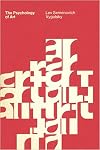
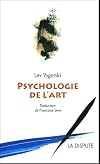
The Psychology of Art
by Lev Semenovich Vygotsky
On This Page
Description
Vygotsky opened up an original field in the science of psychology, based on the sociohistorical theory of the nature of man's consciousness. This work, written more than forty years ago and now translated into English for the first time, approaches the study of art from a psychological basis. However, Vygotsky's view is free of the old subjective-empirical outlook. His method, while objective and analytical, found its basis in the reasoning that to analyze the structure of artistic creation show more one must re-create the total concept motivated Vygotsky to evolve the means by which artistic accomplishments could be examined and the elements of their validity "revealed." The Psychology of Art discusses the literary genre in its classical forms - the fable, the epic, the short story, and Shakespearean tragedy. The heightened levels of perception and feeling that are created by great literature and drama are discussed by Vygotsky with clarity and conviction. Many of the appraisals in this work resulted from Vygotsky's reaction to the fallacious "solutions" proposed by the one-sided, traditional views of the literary critics of his time. An entire chapter, "Art as Technique," investigates and expresses his contradistinctive views of the formalistic view of the nature of art. For Vygotsky, form did not and could not exist independently as a valid dimension - form appeared only in relation to the medium or the material it incarnated. Vygotsky's presentation of his thesis in The Psychology of Art is a logical procession of his basic thoughts. In the first chapter, "The Psychological Problem of Art," he clarifies the major pitfall of criticism up to his day, where he points out: "The fundamental error of experimental aesthetics consists in starting from the wrong end, that of aesthetic pleasure and aesthetic appraisal, all the while intentionally ignoring the fact that both pleasure and appraisal may be arbitrary, secondary, or even irrelevant features of aesthetic behavior." From here he goes on to investigate the psychological premises of art. In viewing a work of art as "a combination of aesthetic symbols aimed at arousing emotions in people," Vygotsky proceeds to analyze these symbols and re-create the basic, "impersonal" components that make up the psychology of the work - without specific references to author-creator or reader-subject - examining only the elements of form and material that are combined in the work. For example, in his chapter on Hamlet Vygotsky examines the structure from "subjective" and "objective" viewpoints, presents the problems of "identification" of the hero, and discusses the play in its various levels of consciousness. Essentially a work of synthesis, The Psychology of Art laid the foundations for a new science of art, and as such is a major contribution to its study. show lessTags
Recommendations











Member Reviews
Met een nawoord van M. G. Jaroshevskij.
Dit boek is ook aanwezig in een uitgave uit 1965 en een voorwoord van A. N. Leont'ev
Dit boek is ook aanwezig in een uitgave uit 1965 en een voorwoord van A. N. Leont'ev
5 estante derecha frente
Apr 10, 2020Spanish
Members
- Recently Added By
Lists

Alan Kay's Reading List
103 works; 3 members
Author Information

65 Works 1,630 Members
Series
Belongs to Publisher Series
Common Knowledge
- Original title
- Психология искусства
- Original publication date
- 1968
- Original language*
- Russisch
*Some information comes from Common Knowledge in other languages. Click "Edit" for more information.
Classifications
Statistics
- Members
- 52
- Popularity
- 585,047
- Reviews
- 2
- Languages
- 7 — English, French, German, Italian, Portuguese, Russian, Spanish
- Media
- Paper, Ebook
- ISBNs
- 7
- ASINs
- 3