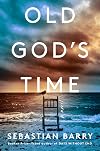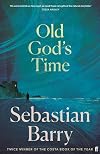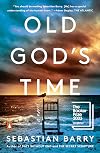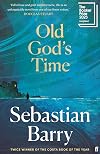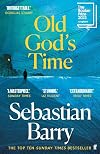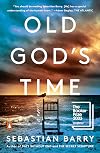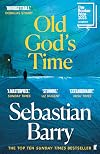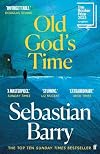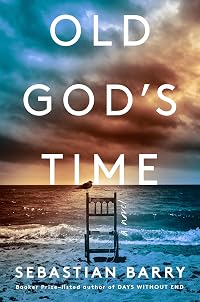
Old God's Time
by Sebastian Barry
On This Page
Description
"Recently retired policeman Tom Kettle is settling into the quiet of his new home, a lean-to annexed to a Victorian castle overlooking the Irish Sea. For months he has barely seen a soul, catching only glimpses of his eccentric landlord and a nervous young mother who has moved in next door. Occasionally, fond memories return, of his family, his beloved wife June and their two children, Winnie and Joe. But when two former colleagues turn up at his door with questions about a decades-old case, show more one which Tom never quite came to terms with, he finds himself pulled into the darkest currents of his past"-- show lessTags
Recommendations












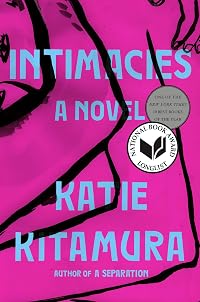
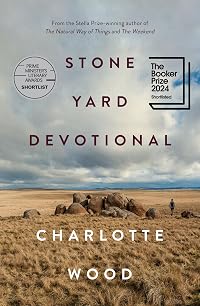


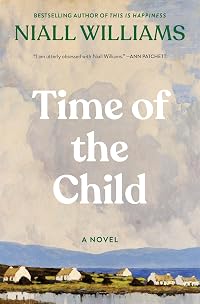
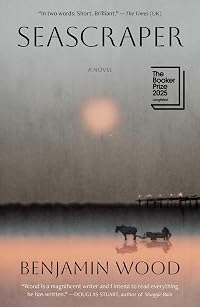
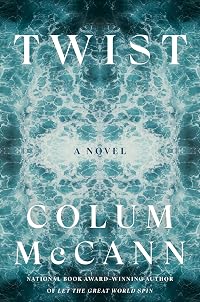


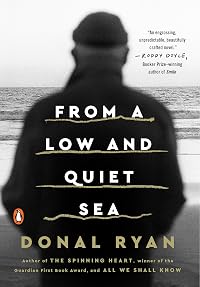
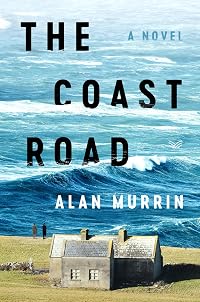

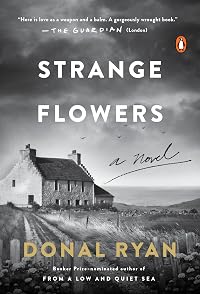

Member Recommendations

BillPilgrim Another Irish novel with a stream of consciousness narrative. Listen to the audiobook.
Iudita Both books are slow, thoughtful stories based on the reminiscences of an old man. Both are also beautifully written.
Member Reviews
Tom Kettle is a retired detective, living alone in a small Irish town. His wife died several years earlier, and Tom’s days seem to be consumed with just getting by. He is thrown off balance when two members of the police force stop by to get Tom’s perspective on a cold case. Their questions bring long-dormant memories to the surface, and most of this novel is devoted to Tom’s internal monologue.
Reading Old God’s Time is like viewing the world through a haze. Tom is not the most reliable narrator, and prone to dozing off. Memories and dreams are commingled. What is fact, and what fiction? Small but important details are revealed without much fanfare. The cold case intersected with Tom’s personal life, the full extent of which show more gradually becomes clear, as do the lives of Tom and his two children.
It’s not a happy story, but it’s a compelling one, brilliantly crafted. show less
Reading Old God’s Time is like viewing the world through a haze. Tom is not the most reliable narrator, and prone to dozing off. Memories and dreams are commingled. What is fact, and what fiction? Small but important details are revealed without much fanfare. The cold case intersected with Tom’s personal life, the full extent of which show more gradually becomes clear, as do the lives of Tom and his two children.
It’s not a happy story, but it’s a compelling one, brilliantly crafted. show less
To Whom Vengeance Belongeth*
Review of the Blackstone Publishing audiobook edition (March 21, 2023) narrated by Stephen Hogan of the Faber & Faber eBook/hardcover editions (Feb. 28/Mar. 2, 2023)
Longlisted for the 2023 Booker Prize.
It was a chance thing that put Old God's Time in my path. On July 28, 2023 it was the Audible Daily Deal for $1.99. Usually you would say that discounting an audiobook only 4 months after its release is a bad sign, but I had been so impressed with Barry's frontier saga Days Without End (2016) that I didn't hesitate. Then on August 1, 2023 it was announced as one of the baker's dozen of books to make the 2023 Booker Prize longlist.
See image at https://static01.nyt.com/images/2023/06/18/books/review/18Barry/18Barry-jumbo.jp...
Illustration for the New York Times book review of "Old God's Time". See link below.
I will say that "reading" this book in audiobook format only is probably not the ideal medium. I did make reference to an eBook to help keep track of the narrative (also to note quotes). Except for the occasional dialogue, it is very stream-of-consciousness most of the way. The PoV of that SoC is that of retired Irish Garda policeman Thomas Kettle, whom you slowly discover is having memory issues combined with the various traumas of his life and career. These involve the loss of his family but also his abuse at a young age by priests.
Everything comes back to haunt him when two detectives from his former station come to him with a cold case of a murdered priest from back in the day. Meanwhile a young mother moves into the neighbourhood who is likely being stalked by her ex-husband. Tom also spends time with his landlord and another neighbour who is a cellist, but who also keeps a gun handy. All of the backstory and the fates of Tom's family only become clear very slowly over the course of the book as you wonder how much of Tom's account is reliable. Then it all comes to a head as Tom has a final chance at redemption.
The book did have its touching and bittersweet moments though, especially in Tom's memories of his family. I particularly loved this passage about Tom's wife June and son Joseph:
This was a powerful and haunting story and although it is my first 2023 Booker Prize read, it is already my front-runner.
Soundtrack
The Max Bruch (1838-1920) composition Kol Nidrei Op. 47 for cello and orchestra is being rehearsed by Tom Kettle’s neighbour in Old God’s Time. You can hear it performed by cellist Jacqueline du Pré (1945-1987) on YouTube here.
Other Reviews
A Survivor’s Song by Melissa Harrison, The Guardian, February 22, 2023.
A Cop You Can’t Trust by Declan Ryan, The Observer, February 27, 2023.
Once a Detective, Always a Detective by Andrew Miller, The New York Times, March 21, 2023.
Footnote, Trivia and Link
* From Psalm 94.1. show less
Review of the Blackstone Publishing audiobook edition (March 21, 2023) narrated by Stephen Hogan of the Faber & Faber eBook/hardcover editions (Feb. 28/Mar. 2, 2023)
Longlisted for the 2023 Booker Prize.
The weird giddiness of it, he was sure mere age couldn’t blunt that. He trod along between the beautiful houses, their high walls, their perfected oldness and rightness, thinking of what it would have meant to him to grow old with June. Was it not one of the ordinary rewards of love, crawl with each other to hospital appointments maybe but also revel in the allotments of days still left? Talk about the children with the reverence and pride of former owners. He could only imagine it. It was given to you toshow more
live or not to live, there was nothing else. A soul like him left on earth without the person he had loved what sort of creature was that?
It was a chance thing that put Old God's Time in my path. On July 28, 2023 it was the Audible Daily Deal for $1.99. Usually you would say that discounting an audiobook only 4 months after its release is a bad sign, but I had been so impressed with Barry's frontier saga Days Without End (2016) that I didn't hesitate. Then on August 1, 2023 it was announced as one of the baker's dozen of books to make the 2023 Booker Prize longlist.
See image at https://static01.nyt.com/images/2023/06/18/books/review/18Barry/18Barry-jumbo.jp...
Illustration for the New York Times book review of "Old God's Time". See link below.
I will say that "reading" this book in audiobook format only is probably not the ideal medium. I did make reference to an eBook to help keep track of the narrative (also to note quotes). Except for the occasional dialogue, it is very stream-of-consciousness most of the way. The PoV of that SoC is that of retired Irish Garda policeman Thomas Kettle, whom you slowly discover is having memory issues combined with the various traumas of his life and career. These involve the loss of his family but also his abuse at a young age by priests.
Everything comes back to haunt him when two detectives from his former station come to him with a cold case of a murdered priest from back in the day. Meanwhile a young mother moves into the neighbourhood who is likely being stalked by her ex-husband. Tom also spends time with his landlord and another neighbour who is a cellist, but who also keeps a gun handy. All of the backstory and the fates of Tom's family only become clear very slowly over the course of the book as you wonder how much of Tom's account is reliable. Then it all comes to a head as Tom has a final chance at redemption.
The book did have its touching and bittersweet moments though, especially in Tom's memories of his family. I particularly loved this passage about Tom's wife June and son Joseph:
As they grew, himself and June passed all the stations of parenthood. The first day at school, which so shocked Joseph. He came home after the long day and said to June: ‘Well, Mammy, I will never have to do that again …’ She almost hadn’t the heart to tell him it was going to be every day.
This was a powerful and haunting story and although it is my first 2023 Booker Prize read, it is already my front-runner.
Soundtrack
The Max Bruch (1838-1920) composition Kol Nidrei Op. 47 for cello and orchestra is being rehearsed by Tom Kettle’s neighbour in Old God’s Time. You can hear it performed by cellist Jacqueline du Pré (1945-1987) on YouTube here.
Other Reviews
A Survivor’s Song by Melissa Harrison, The Guardian, February 22, 2023.
A Cop You Can’t Trust by Declan Ryan, The Observer, February 27, 2023.
Once a Detective, Always a Detective by Andrew Miller, The New York Times, March 21, 2023.
Footnote, Trivia and Link
* From Psalm 94.1. show less
It seems to be my fate recently to read books written atmospherically about time and memory. When I first started reading this, I was hyper conscious of the time ticking down on the pile of library books beside my bed. But as soon as I let myself relax into it, I began to enjoy it. I'm also atracted to stories about Ireland. Tom Kettle is a retired policeman enjoying his quiet seclusion... or is he? He flirts with interactions, with his neighbours, and with a pair of detectives who come sniffing around, digging up details of an old case, whose details and impacts on Tom they can't begin to realize. Tom cooperates and participates, all the while contemplating and concealing the bitter truth. But, Tom can't seem to keep straight what is show more real and what is imagined, or remembered. Are the people in his life alive, or dead? What will be his own fate? Does it matter? As the story wound down into an epic finish, I wasn't sure which reality I would prefer. Ultimately, it wasn't up to me. show less
This is not, as I have seen reviewed elsewhere, a police procedural. That is like saying beluga caviar is fish eggs. It is true, it is true, it is misleading.
Barry puts us inside the tired, grieving and guilt ridden mind of Tom Kettle, retired policeman, widower, father of two also no longer with him. The equivocation and misdirection of the sensations being felt by our subject are expertly and sympathetically drawn. They are as coherent as they are confused. If that doesn't make sense to you well life often doesn't either and that is much the point here.
The reopening of a cold case into abusive clerics and a visit from ex-colleagues brings dread matters he had half buried scurrying to the surface.
Excellent and recommended.
Barry puts us inside the tired, grieving and guilt ridden mind of Tom Kettle, retired policeman, widower, father of two also no longer with him. The equivocation and misdirection of the sensations being felt by our subject are expertly and sympathetically drawn. They are as coherent as they are confused. If that doesn't make sense to you well life often doesn't either and that is much the point here.
The reopening of a cold case into abusive clerics and a visit from ex-colleagues brings dread matters he had half buried scurrying to the surface.
Excellent and recommended.
When we meet Tom Kettle, he is settling into retirement from the police force and obviously grieving his wife, who seems to have died recently. He's visited by two policemen who start to question him about a cold case that he was involved in. Kettle's memories start to surface and bring up many, many questions. His own memory seems unreliable (is he slipping into dementia?) - to himself and to the reader, and some of the characters start to reveal themselves as ghosts. It's clear that some really, really terrible things have happened to Tom and his wife, June, in their childhoods. They were both seriously abused by priests. And Tom's grown children also have stories that need to be told.
The Irish have a way of writing. It is beautiful show more and descriptive and sad and there is often a tenuous divide between the living and the dead. This book is no exception. Barry writes beautifully and masterfully, invoking the beautiful setting of Tom's retirement home, slowly revealing Tom's story and those of his family, and keeping the reader guessing all the way to the very end about what is true and what is false. And in the end, there are still questions, and I loved that.
I had a really hard time with the book, especially in the middle, as some really horrific child abuse is revealed. I didn't really know anything about the plot of this book when I started it, and the topic might have put me off. But, really, the book is so masterfully written that I'm glad I stuck it out.
Recommended, but know that it's not an easy book to read, emotionally. show less
The Irish have a way of writing. It is beautiful show more and descriptive and sad and there is often a tenuous divide between the living and the dead. This book is no exception. Barry writes beautifully and masterfully, invoking the beautiful setting of Tom's retirement home, slowly revealing Tom's story and those of his family, and keeping the reader guessing all the way to the very end about what is true and what is false. And in the end, there are still questions, and I loved that.
I had a really hard time with the book, especially in the middle, as some really horrific child abuse is revealed. I didn't really know anything about the plot of this book when I started it, and the topic might have put me off. But, really, the book is so masterfully written that I'm glad I stuck it out.
Recommended, but know that it's not an easy book to read, emotionally. show less
This is an elegiac study of memory, trauma, and grief which is both beautifully written and deeply frustrating.
Old God's Time is set in suburban Dublin in the mid-90s, where retired Garda detective Tom Kettle finds himself rattled by the visit of some younger investigators who are probing a long-ago and disturbing case. Except that Tom—increasingly isolated and ageing—is having bouts of confusion and memory lapses and he's not entirely sure what happened himself. Was he a good cop or a bad one?
Parts of the novel are beautiful: Sebastian Barry has such a deft hand with lyrical prose and command of this kind of stream-of-consciousness style that you could absolutely see, say, Dublin Bay unfold in front of you as he describes it. He show more can sketch in even minor characters with great vividness, and there are some lovely wry asides/observations.
Parts are unsettling: I don't think many people would need a lot of guesses to figure out what kind of scandal would be coming to the fore in Ireland in the 90s. Sometimes the abuse is implied or referred to euphemistically; at others, Barry is explicit and I found myself queasily skimming ahead.
But where Old God's Time works on the small scale—in the prose, in the details—I thought it was less successful on the larger one.There's a danger with an unreliable narrator, and particularly one who seems to hallucinate whole scenes as Tom does, of tipping over the line from "fascinating study of memory and perspective" to "parody of that 'it was all a dream!' storyline in Dallas". Since I could never trust that what I was reading about or that Tom was recalling had actually happened, it was difficult to emotionally connect with the book. This intensified in the last 50 pages or so, when we seemingly learn how Tom's wife died and that both of their children have been dead the whole time, even though Tom's been thinking of them in the present tense. This should be a gut punch for the reader! Except I'm not sure that any of it was "true" at all, because of an anachronism in the description of June's suicide. (We're told explicitly that she died in the mid-80s and that she had just purchased something for which she'd received a 10-bob note in change. Except decimalisation took place in Ireland in 1971 so why would she be getting change in shillings? Unless...) And if this is all just the meanderings of a deteriorating mind, why should I get invested? There's no resolution to it all, no catharsis, and there's something that's bugging me about how the abuse of girls and women gets framed here by a male author through a male POV character.
To put it more succinctly: a book on topics like those covered by
Old God's Time, written by someone of Sebastian Barry's calibre, should haunt you. I don't think it will. show less
Old God's Time is set in suburban Dublin in the mid-90s, where retired Garda detective Tom Kettle finds himself rattled by the visit of some younger investigators who are probing a long-ago and disturbing case. Except that Tom—increasingly isolated and ageing—is having bouts of confusion and memory lapses and he's not entirely sure what happened himself. Was he a good cop or a bad one?
Parts of the novel are beautiful: Sebastian Barry has such a deft hand with lyrical prose and command of this kind of stream-of-consciousness style that you could absolutely see, say, Dublin Bay unfold in front of you as he describes it. He show more can sketch in even minor characters with great vividness, and there are some lovely wry asides/observations.
Parts are unsettling: I don't think many people would need a lot of guesses to figure out what kind of scandal would be coming to the fore in Ireland in the 90s. Sometimes the abuse is implied or referred to euphemistically; at others, Barry is explicit and I found myself queasily skimming ahead.
But where Old God's Time works on the small scale—in the prose, in the details—I thought it was less successful on the larger one.
To put it more succinctly: a book on topics like those covered by
Old God's Time, written by someone of Sebastian Barry's calibre, should haunt you. I don't think it will. show less
Probably the best novel written by Sebastian Barry, an emotionally hard-hitting form of literary retribution for the crimes committed by the Catholic church in Ireland.
Tom Kettle has retired 9 months ago as a copper, settling on his own in an annex to a castle on the Irish coast, not far from Dublin. Nothing much happens in Tom’s life and he is eager to keep it that way, though he cherishes the occasional visits of his daughter Winnie and thoughts of his son Joe, who stays in new Mexico as a medic amongst pueblo Indians. But then two men, 2 Guardia, visit him with a file of which his boss and best friend Fleming suspects Tom knows a lot. Tom sort of scathes the issue, while offering the men food and a place to stay. The next day show more Fleming comes along and they go for a walk.
By then the reader has become aware that something is amiss with our dear old doddering Tom. He cries a lot, for seemingly no specific reason. The encounters he has with his beloved wife June, or daughter Winnie are perhaps imagined, not real, since they are supposedly dead as well. Slowly Tom gets drawn into the investigation of a child abusing priest, who happens to accuse him, Tom Kettle, of killing his child raping colleague. It is clear that the Police does not want to pursue that end of the investigation, whereas it is also clear to the reader that Tom knows more.
Slowly, slowly we get the back story, having to deal with whole episodes of imagined encounters that turn out only to happen in Tom’s head. This is done in such a crafty way that one kind of looks forward to the next episode of ghostly presences. Meanwhile a young woman (McNulty) and her young son, who also stay in the castle, invite Tom in with an urgent request – can he keep an eye out for her child-abusing husband from whom she fled, after losing her daughter to a colonary disease caused by frequent sexual (anal) abuse.
Towards the end we have been told all back stories and it is time for some decisive action (whereby Tom kills the sexually abusive father after the latter abducts the child) and some decisive inaction (the Police refrains from persecuting Tom for his role in the brutal murder of the other priest – by his wife June, who was raped daily between the ages of 6 and 12 by this same Father). It is such a well written novel, and reflects so well on the scandal of the Catholic church in Ireland, that the book is bound to stay with you and perhaps precipitate some tears. show less
Tom Kettle has retired 9 months ago as a copper, settling on his own in an annex to a castle on the Irish coast, not far from Dublin. Nothing much happens in Tom’s life and he is eager to keep it that way, though he cherishes the occasional visits of his daughter Winnie and thoughts of his son Joe, who stays in new Mexico as a medic amongst pueblo Indians. But then two men, 2 Guardia, visit him with a file of which his boss and best friend Fleming suspects Tom knows a lot. Tom sort of scathes the issue, while offering the men food and a place to stay. The next day show more Fleming comes along and they go for a walk.
By then the reader has become aware that something is amiss with our dear old doddering Tom. He cries a lot, for seemingly no specific reason. The encounters he has with his beloved wife June, or daughter Winnie are perhaps imagined, not real, since they are supposedly dead as well. Slowly Tom gets drawn into the investigation of a child abusing priest, who happens to accuse him, Tom Kettle, of killing his child raping colleague. It is clear that the Police does not want to pursue that end of the investigation, whereas it is also clear to the reader that Tom knows more.
Slowly, slowly we get the back story, having to deal with whole episodes of imagined encounters that turn out only to happen in Tom’s head. This is done in such a crafty way that one kind of looks forward to the next episode of ghostly presences. Meanwhile a young woman (McNulty) and her young son, who also stay in the castle, invite Tom in with an urgent request – can he keep an eye out for her child-abusing husband from whom she fled, after losing her daughter to a colonary disease caused by frequent sexual (anal) abuse.
Towards the end we have been told all back stories and it is time for some decisive action (whereby Tom kills the sexually abusive father after the latter abducts the child) and some decisive inaction (the Police refrains from persecuting Tom for his role in the brutal murder of the other priest – by his wife June, who was raped daily between the ages of 6 and 12 by this same Father). It is such a well written novel, and reflects so well on the scandal of the Catholic church in Ireland, that the book is bound to stay with you and perhaps precipitate some tears. show less
Members
- Recently Added By
Published Reviews
ThingScore 100
This sublime study of love, trauma, memory and loss explores the legacy of childhood abuse in Ireland’s Catholic institutions....All of this could make a good story in another writer’s hands; what elevates this novel is Barry’s sustained, ventriloquial, impressionistic evocation of a unique, living consciousness, which at times takes flight into immersive transports of thought, feeling show more and memory in which nothing is fixed beyond the simple lodestar of Tom’s love for June. In terms of plot this serves a vital purpose, keeping the ground under our feet unsteady; on the level of emotion, it leads to an identification with Tom so close as to feel utterly, overwhelmingly true. The ending is a tour de force of transcendent power and complexity. I don’t expect to read anything as moving for many years. show less
added by vancouverdeb
Lists

Recommend the 20 best books you've read in the last five years
2,168 works; 601 members

Irish writers
87 works; 17 members

Books Read in 2023
5,638 works; 147 members

Top Five Books of 2023
767 works; 317 members
Dublin Literary Award 2024 Longlist
66 works; 4 members

Booker Prize Longlist 2023
13 works; 1 member

Books Read in 2024
4,727 works; 128 members

WBS - Book Club
71 works; 1 member
Author Information

43+ Works 9,653 Members
Sebastian Barry is a playwright whose work has been produced in London, Dublin, Sydney, and New York. He lives in Wicklow, Ireland, with his wife and three children. Sebastian Barry is an Irish writer and playwright, born in 1955. He is the author of two novels, A Long Long Way and Days Without End, which won the Costa Book Award for best novel. show more His other awards include the Kerry Group Irish Fiction Prize, the Irish Book Awards Novel of the Year, the Independent Booksellers Prize and the James Tait Black Memorial Prize. (Bowker Author Biography) show less
Some Editions
Awards and Honors
Awards
Distinctions
The Guardian Book of the Day (2023-02-22)
Series
Belongs to Publisher Series
A tot vent (790)
Common Knowledge
- Canonical title
- Old God's Time
- Original publication date
- 2023-02-23
- People/Characters
- Tom Kettle
- Important places
- Ireland
- Epigraph
- Will the unicorn be willing to serve thee? -Book of Job
- Dedication
- To my son, Merlin
- First words
- Sometime in the sixties old Mr. Tomelty had put up an incongruous lean-to addition to his Victorian castle. It was a granny flay of modest size but with some nice touches befitting a putative relative. The carpentry at least ... (show all)was excellent, and one wall was encased in something called "beauty board", its veneer capturing light and mutating it into soft brown darkness. -Chapter One
- Canonical DDC/MDS
- 823.914
- Canonical LCC
- PR6052.A729
Classifications
Statistics
- Members
- 735
- Popularity
- 38,505
- Reviews
- 53
- Rating
- (3.91)
- Languages
- 10 — Catalan, English, French, German, Greek, Italian, Polish, Slovenian, Spanish, Turkish
- Media
- Paper, Audiobook, Ebook
- ISBNs
- 25
- ASINs
- 7