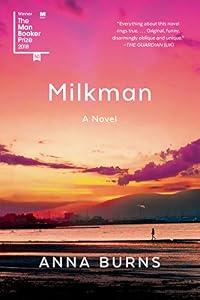
Milkman
by Anna Burns
On This Page
Description
In an unnamed city, middle sister stands out for the wrong reasons. She reads while walking, for one. And she has been taking French night classes downtown. So when a local paramilitary known as the milkman begins pursuing her, she suddenly becomes interesting, the last thing she ever wanted to be. Despite middle sister's attempts to avoid him and to keep her mother from finding out about her maybe-boyfriend rumors spread and the threat of violence lingers. Milkman is a story of the way show more inaction can have enormous repercussions, in a time when the wrong flag, wrong religion, or even a sunset can be subversive. Told with ferocious energy and sly, wicked humor, Milkman establishes Anna Burns as one of the most consequential voices of our day. show lessTags
Recommendations

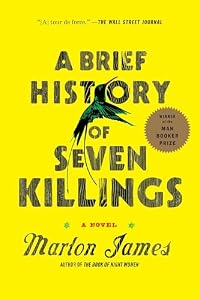
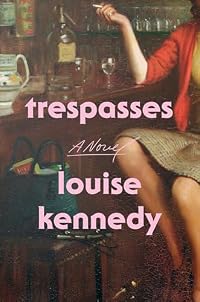
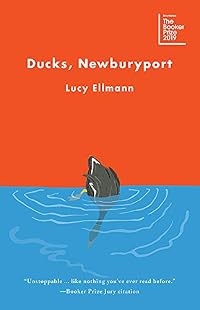

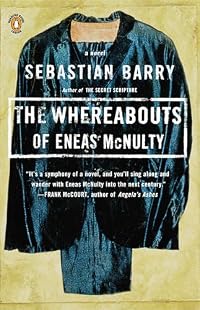
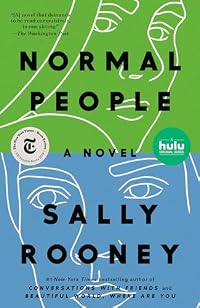


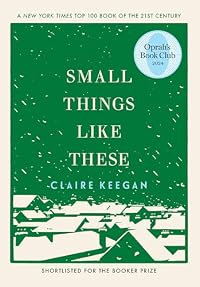
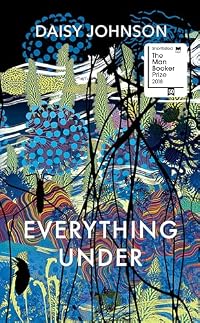
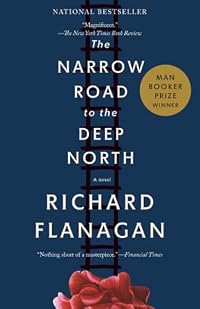
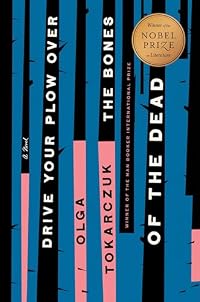
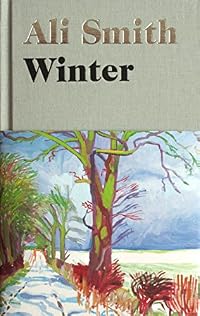
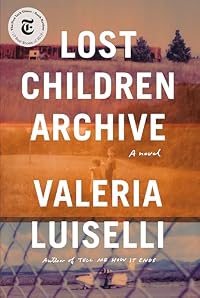
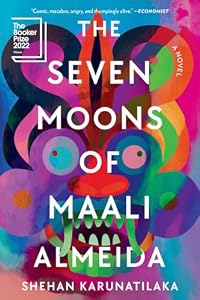


Member Recommendations
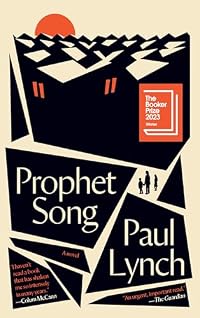
thorold For those who can't get enough Milkmen...
BillPilgrim Set in Ireland during the Troubles with a female protagonist
by suniru
Member Reviews
Brilliant novel. I loved the narrator's askew view and ironic comic attitude describing her life in what was a warped culture under tremendous pressure at the time from the "political problems" often given the side-eyed glance. Her decision to use depersonalized monikers like "second sister" or "third brother-in-law" or that "country over the water" instead of proper names I quickly got used to and appreciated, as it reflects her efforts to hold the entire twentieth century at ten-foot-pole's length.
This convoluted, stream-of-consciousness narrative is no easy read, but it rewards the effort made to get under its skin. An eighteen year old woman living somewhere in (it has to be, though never said) in Northern Ireland during the 1970s, attempts escape from the convoluted realities of loyalties, honour, family, tribalism, rumour by reading 19th century novels, attending French classes. There is no escape from the attentions of The Milkman, a married man who all-but stalks her. There's her maybe-boyfriend, her wee sisters, her mother's attempts to marry her off, her family to contend with, and all this is described in multi-layers of language, which simultaneously illuminate and confuse. The inability simply to be, to get on with show more life without meaning being imposed by others on the simplest routines is described in all its confusing power by Burns' use of language - adjective piled on adjective, metaphor on metaphor. It's suffocatingly powerful, and quite honestly, I was glad to finish it. Though very glad to have read it. show less
How plot can derail a novel
This is an untimely review in several respects. It's about a book that won the Man Booker prize in 2018, so I imagine almost no one is reading it now. And what I have to say runs against what Kwame Anthony Appiah said, speaking for the judges:
"None of us has ever read anything like this before... Set in a society divided against itself, Milkman explores the insidious forms oppression can take in everyday life."
This isn't wrong, but it orients a reader's response in the wrong way. Burns takes pains to keep everything generic. Northern Ireland isn't mentioned, and neither is England (it is "the flag" or "the country over the water") or even Belfast, and people are "maybe-boyfriend," "longest friend," "third show more sister," and so on. The utility of that for this novel is clear: it permits Burns to give voice to the way her main character isolates herself from the politics of her community: she experiences people as signs of different types of permitted, preferred, and problematic relationships. The precedent for this studied anonymity is existential literature, especially Kafka and Beckett but also the Coetzee of "Waiting for the Barbarians" or Buzzati's "Tartar Steppe," and there are hints of Calvino and others in the same lineage.
I don't read novels to find out about the world, but inevitably many things in Milkman present themselves a found facts from Burns's upbringing. She couldn't have invented, for example, the idea that in a neighborhood opposed to the "state" (England), and full of "renouncers" and paramilitaries, people didn't want to go to the hospital because they'd be reported to "the flag" and "the army" or "the police" might try either to turn them into spies or spread the word that they were spies. In the course of Milkman I learned a number of probable facts like that. But I didn't read it to experience Belfast in the 1970s, and those realizations were intrusive.
As a novel, it is a study in "brutality, sexual encroachment and resistance," as Appiah also says, and it achieves its effect line by line. The precedent for Burns's blank, affectless, but curiously tortured prose is Gertude Stein, and Stein is also the source of some overly wrought passages, like the final clause in this sentence:
"And he experimented with food, thinking all the time he was an average guy, with no average guy, not even his mates, who did like him, thinking him this also." (32)
Milkman is exceptionally tightly crafted. It reads at an unchanging slow pace from the first page to the last, again like Stein. The anomalies are therefore all the more obtrusive. One is the main character's own reading, which is 18th and 19th c. European literature: Gogol (20), "The Brothers Karamazov, Tristram Shandy, Vanity Fair, or Madame Bovary" (17) and so on. These are just tokens of the narrator's dangerous detachment from her politicized surroundings--they're a 20th c. version of Madame Bovary's gothic novels. They're also obtrusive because they refer too directly, too specifically, to Burns's own teenage years, and they are too distant from Burns's own literary references.
The mostly tightly woven prose helps make the book claustrophobic, helps convey its stifled fear and anger, helps express the narrator's ostrich-in-the-sand survival strategy. It's a really unusual accomplishment, and it is at its strongest when Burns gives us 2- or 3-page essays on different social dilemmas and particular constructions of lies and self-deception.
As in the early modern "novel-essays" studied by Roberto Ercolino, Sianne Ngai, and others, and like Kafka's parables and Beckett's dramas, things that actually happen are either muffled by rumor or ineffective at changing the narrator's life. Plot is inimical to this kind of novel because it presents easy solutions to problems that the author has demonstrated, over many pages of careful prose, to be either insoluble or so easily renewed that there is no point in trying to solve them.
That is why the last two chapters of Milkman, beginning around p. 260, should be seen as disappointing. If they aren't, that's because readers expect a certain kind of plot, one with resolutions, justice, and especially an escape for the beleaguered heroine. In the last hundred pages the narrator's mother finally connects with her true love after an agonizing mismatched marriage; the narrator witnesses one of her brothers belatedly connecting with the woman he loves, who has been poisoned and is nearly blind; the narrator has a delicious revenge against one of her sisters; she herself is poisoned and nearly dies; the man who has been following her around is killed; another man who has been harrassing her is beaten; her "maybe-boyfriend" turns out to be bisexual and more in love with his male partner; and she realizes at last that it's been useless to try to ignore the place she lives in and bury herself in 19th c. novels.
Those are all spoilers, but they shouldn't be, because until p. 260 or so this is not the kind of novel that can be spoiled by plot points. There are no spoilers in Kafka, Beckett, or others, because there is no sense that a dramatic turn of events could solve or resolve anything. Plot, from that perspective, is fantasy. Nothing in my reading of the first 260 pages is diminished by knowing the things I have mentioned: those are dense pages, written with an exceptional degree of control, and it's just too bad, in retrospect, and Burns felt she needed a sudden string of revenges, epiphanies, morals ("how terrifying it was not to be numb," p. 294), and happy endings to wrap up her novel. Beckett, Kafka, and even Stein could have told her she didn't. show less
This is an untimely review in several respects. It's about a book that won the Man Booker prize in 2018, so I imagine almost no one is reading it now. And what I have to say runs against what Kwame Anthony Appiah said, speaking for the judges:
"None of us has ever read anything like this before... Set in a society divided against itself, Milkman explores the insidious forms oppression can take in everyday life."
This isn't wrong, but it orients a reader's response in the wrong way. Burns takes pains to keep everything generic. Northern Ireland isn't mentioned, and neither is England (it is "the flag" or "the country over the water") or even Belfast, and people are "maybe-boyfriend," "longest friend," "third show more sister," and so on. The utility of that for this novel is clear: it permits Burns to give voice to the way her main character isolates herself from the politics of her community: she experiences people as signs of different types of permitted, preferred, and problematic relationships. The precedent for this studied anonymity is existential literature, especially Kafka and Beckett but also the Coetzee of "Waiting for the Barbarians" or Buzzati's "Tartar Steppe," and there are hints of Calvino and others in the same lineage.
I don't read novels to find out about the world, but inevitably many things in Milkman present themselves a found facts from Burns's upbringing. She couldn't have invented, for example, the idea that in a neighborhood opposed to the "state" (England), and full of "renouncers" and paramilitaries, people didn't want to go to the hospital because they'd be reported to "the flag" and "the army" or "the police" might try either to turn them into spies or spread the word that they were spies. In the course of Milkman I learned a number of probable facts like that. But I didn't read it to experience Belfast in the 1970s, and those realizations were intrusive.
As a novel, it is a study in "brutality, sexual encroachment and resistance," as Appiah also says, and it achieves its effect line by line. The precedent for Burns's blank, affectless, but curiously tortured prose is Gertude Stein, and Stein is also the source of some overly wrought passages, like the final clause in this sentence:
"And he experimented with food, thinking all the time he was an average guy, with no average guy, not even his mates, who did like him, thinking him this also." (32)
Milkman is exceptionally tightly crafted. It reads at an unchanging slow pace from the first page to the last, again like Stein. The anomalies are therefore all the more obtrusive. One is the main character's own reading, which is 18th and 19th c. European literature: Gogol (20), "The Brothers Karamazov, Tristram Shandy, Vanity Fair, or Madame Bovary" (17) and so on. These are just tokens of the narrator's dangerous detachment from her politicized surroundings--they're a 20th c. version of Madame Bovary's gothic novels. They're also obtrusive because they refer too directly, too specifically, to Burns's own teenage years, and they are too distant from Burns's own literary references.
The mostly tightly woven prose helps make the book claustrophobic, helps convey its stifled fear and anger, helps express the narrator's ostrich-in-the-sand survival strategy. It's a really unusual accomplishment, and it is at its strongest when Burns gives us 2- or 3-page essays on different social dilemmas and particular constructions of lies and self-deception.
As in the early modern "novel-essays" studied by Roberto Ercolino, Sianne Ngai, and others, and like Kafka's parables and Beckett's dramas, things that actually happen are either muffled by rumor or ineffective at changing the narrator's life. Plot is inimical to this kind of novel because it presents easy solutions to problems that the author has demonstrated, over many pages of careful prose, to be either insoluble or so easily renewed that there is no point in trying to solve them.
That is why the last two chapters of Milkman, beginning around p. 260, should be seen as disappointing. If they aren't, that's because readers expect a certain kind of plot, one with resolutions, justice, and especially an escape for the beleaguered heroine. In the last hundred pages the narrator's mother finally connects with her true love after an agonizing mismatched marriage; the narrator witnesses one of her brothers belatedly connecting with the woman he loves, who has been poisoned and is nearly blind; the narrator has a delicious revenge against one of her sisters; she herself is poisoned and nearly dies; the man who has been following her around is killed; another man who has been harrassing her is beaten; her "maybe-boyfriend" turns out to be bisexual and more in love with his male partner; and she realizes at last that it's been useless to try to ignore the place she lives in and bury herself in 19th c. novels.
Those are all spoilers, but they shouldn't be, because until p. 260 or so this is not the kind of novel that can be spoiled by plot points. There are no spoilers in Kafka, Beckett, or others, because there is no sense that a dramatic turn of events could solve or resolve anything. Plot, from that perspective, is fantasy. Nothing in my reading of the first 260 pages is diminished by knowing the things I have mentioned: those are dense pages, written with an exceptional degree of control, and it's just too bad, in retrospect, and Burns felt she needed a sudden string of revenges, epiphanies, morals ("how terrifying it was not to be numb," p. 294), and happy endings to wrap up her novel. Beckett, Kafka, and even Stein could have told her she didn't. show less
Anna Burns’ Milkman, the 2018 winner of the Man Booker prize, hooked me at first with its language: stilted and formal, hinting at a post-apocalyptic near future reminiscent of 1984, where everyone checks for bugs in their phones and is not surprised to be photographed while jogging in the park. Most characters are stripped of names and are known only by epithets, such as “the man who didn't love anybody” or “Somebody McSomebody” or “maybe-boyfriend.”
Middle sister, our nameless narrator, is being approached by the milkman. But he’s not really a milkman, he’s a renouncer of the state, and quite high up in the paramilitary pecking order. Anna Burns’ great achievement is recreating the psychological tension of the show more unwanted attention that without words or violence still constitutes harassment. See the progression in this string of quotes I highlighted from early in the book to almost the end:
“I couldn’t be rude because he wasn’t being rude … Why was he presuming I didn’t mind him beside me when I did mind him beside me? ... I did not know intuition and repugnance counted, did not know I had a right not to like, not to have to put up with, anybody and everybody coming near … So shiny was bad, and ‘too sad’ was bad, and ‘too joyous’ was bad, which meant you had to go around not being anything … I came to understand how much I’d been closed down, how much I’d been thwarted into a carefully constructed nothingness by that man.”
The sad parallel that Burns draws is between the one-on-one intimidation of a woman by a man, and the similar constant harrying of a terrorist state (presumably Ireland in the 1970s), in which the citizens become used to unspoken rules, constant surveillance, and an ever-present threat of violence.
The comparison, and its conveyance through nameless characters in absurd situations, is brilliant. Nonetheless, the plot started to lag about halfway through, and I had to push through to the end.
Now I have read every single Man Booker prize winner since its inception fifty years ago in 1968. My future goal is to read the winner every year, and perhaps the shortlisted books as well. Next post: my personal Booker favorites.
Follow my adventures in reading at www.methodtohermadness.com show less
Middle sister, our nameless narrator, is being approached by the milkman. But he’s not really a milkman, he’s a renouncer of the state, and quite high up in the paramilitary pecking order. Anna Burns’ great achievement is recreating the psychological tension of the show more unwanted attention that without words or violence still constitutes harassment. See the progression in this string of quotes I highlighted from early in the book to almost the end:
“I couldn’t be rude because he wasn’t being rude … Why was he presuming I didn’t mind him beside me when I did mind him beside me? ... I did not know intuition and repugnance counted, did not know I had a right not to like, not to have to put up with, anybody and everybody coming near … So shiny was bad, and ‘too sad’ was bad, and ‘too joyous’ was bad, which meant you had to go around not being anything … I came to understand how much I’d been closed down, how much I’d been thwarted into a carefully constructed nothingness by that man.”
The sad parallel that Burns draws is between the one-on-one intimidation of a woman by a man, and the similar constant harrying of a terrorist state (presumably Ireland in the 1970s), in which the citizens become used to unspoken rules, constant surveillance, and an ever-present threat of violence.
The comparison, and its conveyance through nameless characters in absurd situations, is brilliant. Nonetheless, the plot started to lag about halfway through, and I had to push through to the end.
Now I have read every single Man Booker prize winner since its inception fifty years ago in 1968. My future goal is to read the winner every year, and perhaps the shortlisted books as well. Next post: my personal Booker favorites.
Follow my adventures in reading at www.methodtohermadness.com show less
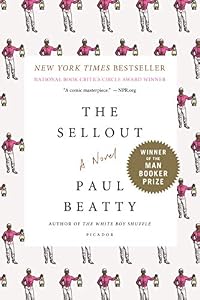
I picked this up somewhat warily after it won the Man Booker because I had understood it wasn’t an easy read. It’s true that it has fewer paragraph and chapter breaks than I generally prefer, but it’s such a strong read that it’s hard to complain. It’s a historical novel that is urgent and contemporary. It is a story about the Troubles that is both disturbing and properly funny. Funnier than The Sellout or any other novel I can think of recently that was marketed as a hilarious satire. It may be the confirmation bias talking, but this was a fine and worthy book.
From the first page I was filled with rage and fear and contempt. Then about halfway through things started shifting, there were some unexpected turns, I was still afraid but the rage was less and the contempt was near gone. By the last page I was addicted, swooning, riding that what-an-awesome-book high.
Burns's bizarre, lunatic prose and bizarre, arguably (depending on your point of view) lunatic narrator are ideally adapted for writing about a bizarre, lunatic world — IRA turf in 70's Belfast. Novels that withhold names from their characters invariably boil my piss, but I think it works here, in a place where names, like what kind of butter you get or TV show you watch or hobbies you have, come coated in layers of perverse, indelible, sectarian significance. If the loopings and tic-like repetitions of Middle Sister's voice are frustrating to read, they're also strangely lifelike as well as evoking the everyday frustrations of the setting, and of the narrator's futile efforts to assert control over her own narrative, or at least to show more ignore the false narrative being erected around her. I like how the first-person voice intrudes into reported speech, littering it with dusty old book words Middle Sis has picked up in her pre-20th century perusals. There are also two or three strands of humour running through the book (the narrator's irony, the farce of the community goings-on, the cast of crackpots), which I think is necessary/inevitable but could easily have fallen flat.
Going back to the "no names" thing. I think the reason this trick usually chafes me so bad is that — Saramago's Blindness for example — it's obviously a gimmick and/or an attempt to distract from those characters' lack of personality. But there are half a dozen characters in Milkman who ring extremely true. I guess names are no more necessary to characters in a novel than detailed physical descriptions.
I guess too there's still hope for literary fiction, hooray! Although Burns is 63. Feels like just a couple years ago this book won prizes, but it's seven. show less
Going back to the "no names" thing. I think the reason this trick usually chafes me so bad is that — Saramago's Blindness for example — it's obviously a gimmick and/or an attempt to distract from those characters' lack of personality. But there are half a dozen characters in Milkman who ring extremely true. I guess names are no more necessary to characters in a novel than detailed physical descriptions.
I guess too there's still hope for literary fiction, hooray! Although Burns is 63. Feels like just a couple years ago this book won prizes, but it's seven. show less
Members
- Recently Added By
Published Reviews
ThingScore 75
Als Anna Burns 2018 für ihren Roman Milkman mit dem Man-Booker-Preis ausgezeichnet wurde, tobte das verbissene politische Ringen um eine harte oder grüne EU-Außengrenze zwischen Irland und Nordirland. Burns konnte, als sie mit dem Roman über Belfast in den 1970ern zur Zeit des Nordirlandkonflikts begann, nicht absehen, dass er ein Buch der Stunde würde. Die Angst, dass der EU-Austritt show more Großbritanniens alte Wunden aufbrechen lassen könnte, ist heute aber noch immer nicht ausgestanden. show less
added by DeusXMachina
The day Somebody McSomebody put a gun to my breast and called me a cat and threatened to shoot me was the same day the milkman died,” begins this strange and intriguing novel that tackles the Northern Ireland conflict from the perspective of an 18-year-old girl with no interest in the Troubles...Anna Burns, who was shortlisted for the Orange prize in 2002 with No Bones, which also depicted show more the Troubles, is excellent at evoking the strange ecosystem that emerges during protracted conflict – “this psycho-political atmosphere, with its rules of allegiance, of tribal identification...What starts out as a study of how things go wrong becomes a study in how things go right, and the green shoots are not the work of the paramilitaries. The narrator of Milkman disrupts the status quo not through being political, heroic or violently opposed, but because she is original, funny, disarmingly oblique and unique: different. The same can be said of this book. show less
added by vancouverdeb
Lists

2019 Tournament of Books
18 works; 17 members

1001 Books You Must Read Before You Die
1,448 works; 1,132 members

2019 Women's Prize for Fiction Longlist
16 works; 12 members

Recommend the 20 best books you've read in the last five years
2,168 works; 606 members

Top Five Books of 2020
982 works; 350 members

Top Five Books of 2019
387 works; 111 members

Baileys Women's Prize for Fiction Winners and Shortlisted Books
61 works; 11 members

Booker Prize
491 works; 62 members

Female Author
1,235 works; 64 members

Irish writers
87 works; 17 members

Top 10 books read in 2020
10 works; 1 member

Books Read in 2023
5,547 works; 145 members

Top 10 Favourite Books of the 2010s
10 works; 2 members

Five star books
1,755 works; 108 members

A's favorite novels
100 works; 3 members

Fiction: Historical
288 works; 3 members
Books Read in 2020
4,379 works; 123 members

Kirkus Starred Fiction Reviews of Books Published in 2018
330 works; 3 members
Book Club Suggestions for 2020
27 works; 2 members

World Books
51 works; 4 members

Read Irish Women Challenge 2023
11 works; 3 members

Top Five Books of 2023
767 works; 317 members

LitHub's Best Novels of the Decade 2010-2019
39 works; 1 member

Books Read in 2024
4,623 works; 126 members

Best Books of the 2010s
20 works; 1 member

.
184 works; 1 member

Books We Discovered On LibraryThing
530 works; 130 members

Top Five Books of 2025
950 works; 302 members

Books Read in 2019
4,052 works; 110 members

Books whose title names an object usually found in the kitchen
171 works; 14 members

Take Four Books
131 works; 1 member

EU Fiction: 1950-2022
223 works; 70 members
Author Information

4 Works 3,326 Members
Anna Burns was born in Belfast, Ireland in 1962. Her books include Little Constructions, No Bones, and Milkman, which won the 2018 Man Booker Prize. (Bowker Author Biography)
Some Editions
Awards and Honors
Awards
Distinctions
Series
Belongs to Publisher Series
Common Knowledge
- Canonical title
- Milkman
- Original title
- Milkman
- Original publication date
- 2018
- People/Characters
- Middle sister; Milkman; Nuclear boy; Nuclear boy's mother; Maybe-boyfriend; First brother (show all 30); Second brother; Third brother; Fourth brother; First brother-in-law; Third brother-in-law; Chef; Da; Longest friend; Tablets girl; Tablets girl's sister; Ivor; Jason of the Names; Ma; Somebody McSomebody; Real milkman; Peggy; Eldest sister; Second sister; Third sister; Oldest-youngest sister; Middle-youngest sister; Youngest-youngest sister; Teacher; The eighth woman
- Important places
- Northern Ireland, UK
- Important events
- The Troubles
- Dedication
- For Katy Nicholson, Clare Dimond and James Smith
- First words
- The day Somebody McSomebody put a gun to my breast and called me a cat and threatened to shoot me was the same day the milkman died.
- Quotations
- In our district the renouncers-of-the-state were assumed the good guys, the heroes, the men of honour, the dauntless, legendary warriors, outnumbered, risking their lives, standing up for our rights, guerrilla-fashion, agains... (show all)t all the odds.
Thing was, my growing suspicions of almost everyone and everything was proof of how the milkman had got in.
I thought he might be watching us, spying on us, perhaps taking secret pictures of us, and especially I'd be worried because he'd made his position clear on my dating maybe-boyfriend. Yet here I was, still dating maybe-boyfri... (show all)end, which didn't mean, however, I'd dismissed that bomb threat.
I wasn't sure anymore what was plausible, what was exaggeration, what might be reality or delusion or paranoia.
So 'I don't know' was my three-syllable defence in response to the questions.
'Lots of people haven't done anything,' said longest friend. ' And still they're not doing it, will always be not doing it, in their private coffins down at the usual place.'
And now, quite suddenly, I felt sad. It wasn't that I was the one breaking ties and pulling first from longest friend but that longest friend had already done the pulling.
It was that miscellany territory where, like the informer; you're not accepted, you're not admired, you're not respected, not by one side, not by the other side, not by anybody, not even really by yourself.
So I picked up the receiver and, as usual, checked for bugs, also as usual not knowing how to recognise what I was checking for.
Then again, I knew all along it wouldn't be over. With these sorts of things you have to take each day, each person, each reprisal, at a time. - Last words
- (Click to show. Warning: May contain spoilers.)Then, landing on the pavement in the direction of the parks & reservoir, I exhaled this light and for a moment, just a moment, I almost nearly laughed.
- Blurbers
- Forbes, Michele; Kidd, Jess; McNamee, Eoin; McInerney, Lisa; Kwame Anthony Appiah
- Original language
- English
- Canonical DDC/MDS
- 823.92
- Canonical LCC
- PR6102.U76
Classifications
Statistics
- Members
- 2,992
- Popularity
- 5,923
- Reviews
- 145
- Rating
- (3.73)
- Languages
- 19 — Catalan, Chinese, Czech, Danish, Dutch, English, Finnish, French, German, Greek, Italian, Norwegian, Polish, Portuguese, Romanian, Slovenian, Spanish, Swedish, Turkish
- Media
- Paper, Audiobook, Ebook
- ISBNs
- 52
- ASINs
- 13