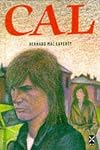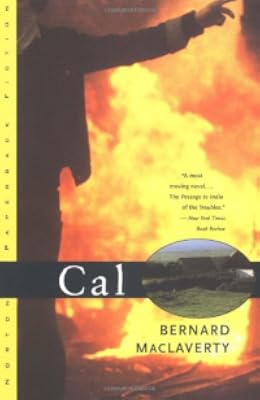
Cal
by Bernard MacLaverty
On This Page
Description
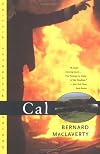
"Set in the Northern Ireland of the 1980 s, Caltells the story of a young Catholic man living in a Protestant area. For Cal, some choices are devastatingly simple- he can work in an abattoir that nauseates him or join the dole queue; he can brood on his past or plan a future with Marcella. Springing out of the fear and violence of Ulster, Cal is a haunting love story that unfolds in a land where tenderness and innocence can only flicker briefly in the dark."Tags
Recommendations







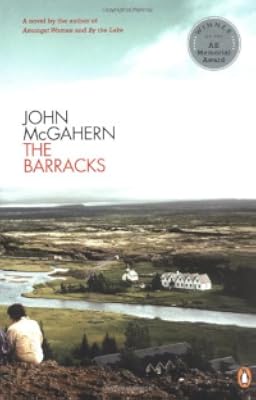
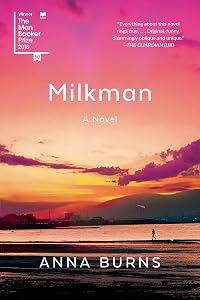

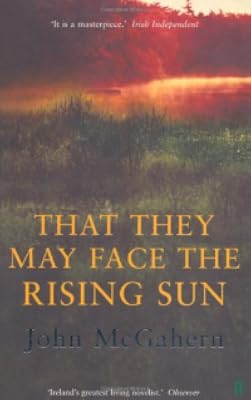
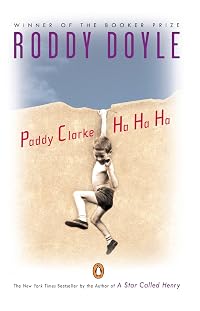
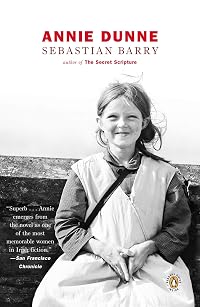
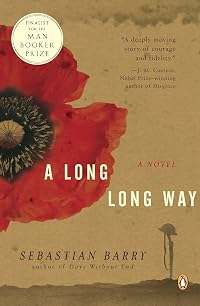
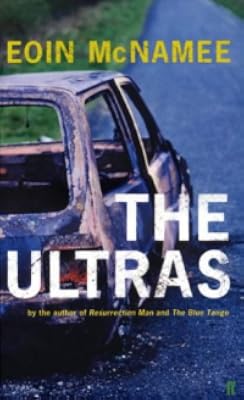

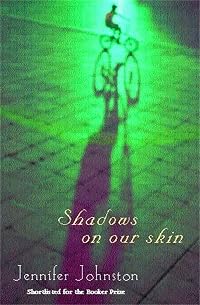




Member Recommendations
Member Reviews
An aimless kindhearted and awkward (and catholic) teenager in the middle of the irish "troubles" falls in love with a bookstore clerk at first sight making him think differently about what his friends are doing in the IRA. Especially when he realizes that helping them was the results of the death of that clerk's husband. The book doesn't have a grand argument about the conflict, but a human story in the middle of it. The dialogue is amazingly well done. There's a brutal tension between the clerk Marcella and Cal as they fall in love. Cal's relationship with his father is very Irish Catholic, basically loving each other but disliking that fact at the same time. And Cal's friends bullying him into participating in what he thinks is show more pointless, and not respecting his change of heart, they're killers after all. The prose is very impersonal, but the dialogue is what gives everything a personality. As funny and empathetic as the characters can be everything is incredibly sad.
To suffer for something which didn't exist, that was like Ireland. People were dying every day, men and women were being crippled and turned into vegetables in the name of Ireland. An Ireland which never was and never would be. It was the people of Ulster who were heroic, caught between the jaws of two opposing ideals trying to grind each other out of existence. show less
To suffer for something which didn't exist, that was like Ireland. People were dying every day, men and women were being crippled and turned into vegetables in the name of Ireland. An Ireland which never was and never would be. It was the people of Ulster who were heroic, caught between the jaws of two opposing ideals trying to grind each other out of existence. show less
I recently read Milkman by Anna Burns which is about an 18-year-old girl growing up in Northern Ireland. This novella from 1983 is about a young man also living in Northern Ireland during The Troubles.
Cal McCluskey and his father Shamie are the only Catholics living in a Protestant area of Ulster. Cal falls in love with Marcella, a young widow whose husband, a Protestant reserve policeman, was assassinated. He hopes for a relationship with the local librarian but he has secrets because of his unwilling involvement with the IRA. The book jacket offers a perfect summary: “Springing out of the fear and violence of Ulster, Cal is a haunting love story in a land where tenderness and innocence can only flicker briefly in the dark.”
Cal’s show more father works in an abattoir where Cal could also have a job but he “hadn’t a strong enough stomach” (18). It is quite obvious that the slaughterhouse is a metaphor for Ireland: “People were dying every day, men and women were being crippled and turned into vegetables in the name of Ireland . . . [People were] caught between the jaws of two opposing ideals trying to grind each other out of existence” (83). Cal has been coerced into being a driver during some militant actions but he doesn’t want to be involved: “’I just don’t like what’s happening. . . . I have no stomach for it’” (23).
The book depicts what life is like in a conflict zone. Because of his neighbourhood, Cal faces almost daily intimidation, and he and his father receive a threat from the Ulster Volunteer Force: “Get out you Fenian scum or we’ll burn you out. This is your 2nd warning, there will be no other” (27). Cal is a sensitive and thoughtful person who does not want to get involved but is pressured into being an accomplice for the IRA. Then when he indicates that he wants out, he is threatened by those very people: “’That creates a big problem, Cahal. It would be out of my hands. I wouldn’t like to see you hurt’” (40). The effects on Shamie are equally devastating.
The characterization of Cal is outstanding. He is a decent person who wants nothing to do with violence. Yet he cannot live the peaceful life he wants or be with the woman he wants because of the sectarian violence. He feels a great deal of shame and guilt for the activities in which he’s participated: “Then he went to his bedroom to eat again the ashes of what he had done” (15).
An atmosphere of sadness permeates the book. The relationship between Cal and Marcella is doomed because of the circumstances. This is a harrowing story told with compassion but without sentimentality. It is a short narrative (154 pages) but its emotional effect lingers.
Note: Please check out my reader's blog (https://schatjesshelves.blogspot.com) and follow me on Twitter (@DCYakabuski). show less
Cal McCluskey and his father Shamie are the only Catholics living in a Protestant area of Ulster. Cal falls in love with Marcella, a young widow whose husband, a Protestant reserve policeman, was assassinated. He hopes for a relationship with the local librarian but he has secrets because of his unwilling involvement with the IRA. The book jacket offers a perfect summary: “Springing out of the fear and violence of Ulster, Cal is a haunting love story in a land where tenderness and innocence can only flicker briefly in the dark.”
Cal’s show more father works in an abattoir where Cal could also have a job but he “hadn’t a strong enough stomach” (18). It is quite obvious that the slaughterhouse is a metaphor for Ireland: “People were dying every day, men and women were being crippled and turned into vegetables in the name of Ireland . . . [People were] caught between the jaws of two opposing ideals trying to grind each other out of existence” (83). Cal has been coerced into being a driver during some militant actions but he doesn’t want to be involved: “’I just don’t like what’s happening. . . . I have no stomach for it’” (23).
The book depicts what life is like in a conflict zone. Because of his neighbourhood, Cal faces almost daily intimidation, and he and his father receive a threat from the Ulster Volunteer Force: “Get out you Fenian scum or we’ll burn you out. This is your 2nd warning, there will be no other” (27). Cal is a sensitive and thoughtful person who does not want to get involved but is pressured into being an accomplice for the IRA. Then when he indicates that he wants out, he is threatened by those very people: “’That creates a big problem, Cahal. It would be out of my hands. I wouldn’t like to see you hurt’” (40). The effects on Shamie are equally devastating.
The characterization of Cal is outstanding. He is a decent person who wants nothing to do with violence. Yet he cannot live the peaceful life he wants or be with the woman he wants because of the sectarian violence. He feels a great deal of shame and guilt for the activities in which he’s participated: “Then he went to his bedroom to eat again the ashes of what he had done” (15).
An atmosphere of sadness permeates the book. The relationship between Cal and Marcella is doomed because of the circumstances. This is a harrowing story told with compassion but without sentimentality. It is a short narrative (154 pages) but its emotional effect lingers.
Note: Please check out my reader's blog (https://schatjesshelves.blogspot.com) and follow me on Twitter (@DCYakabuski). show less
Belfast author Bernard MacLaverty's CAL is a page turner, that's for sure. I liked this little novel about the continuing "Troubles" in Northern Ireland very much, except maybe for the ending. I thought it far too abrupt. But the story itself, of a nineteen year-old Catholic, surrounded and threatened by Protestants, is really quite riveting. It's a coming-of-age tale of sorts, and firmly planted in modern times, but there's also an off-handed nod to Dostoevsky, with its mention of CRIME AND PUNISHMENT - "a fat red book ... [that] felt the size of a lunchbox under his arm" - and the young protagonist's name, Cal McCluskey, with its recurring "k" sounds, is reminiscent of "Raskolnikov." And too, there is Cal's guilty compulsion to keep show more returning to the scene of the grisly crime he took an unwilling part in, and the heartbreaking dilemma he finally finds himself in. MacLaverty is a fine writer who wastes no words. I may have to try another of his books, because this one has whetted my appetite. I will recommend it. show less
The mid 70's to early 80's was a time fraught with danger in Northern Ireland. As an expat living and working in England I am well versed to understand the mindset of the various embattled groups that continued to carry on a war of attrition not only against the so called enemy (police and army) but equally against each other and if you happened to be of the wrong religion residing in the perceived wrong locality intimidation was an everyday occurrence.
Cal McCluskey and his dad were a catholic family living in a predominately protestant locality...."he could not bear to look up and see the flutter of Union Jacks, and now the red and white cross of the Ulster flag with it red hand.".... Cal was often the target of insults, taunting, and show more intimidation, but he tried to ignore, picking up his Giro on a regular basis and hanging around street corners, ripe pickings for paramilitary scouts. So he helped with the "cause" and when needed would act as a driver for his fellow republicans Crilly and Skeffington. With so much free time, and little hope of a job in this divided land, he was often to be seen perusing books and cassettes in the local library where one day he notices a new woman behind the counter. What follows is a beautifully written story of a love affair that is doomed to failure from the start. Cal holds a secret that if revealed to Marcella would end their relationship as he is torn between loyalties to his friends and honesty to his lover.
The language and descriptive prose of the author reminded me of the many years I lived in a country riddled with hypocrisy and bigotry....."the weight and darkness of Protestant Ulster, with its neat stifled Sabbath towns.".... "people were dying everyday, men and women were being crippled and turned into vegetables in the name of Ireland. An Ireland which never was and never would be."....."I like the look of Donegal where nothing grows. Beaches, bogs and mountains."......"The parade led by Evangelists screaming about sin and death and damnation."....
The ending when it happens is unexpected and sudden in its execution and brutality but I felt that it suited so well the time and events in such a deeply divided community. Highly Recommended. show less
Cal McCluskey and his dad were a catholic family living in a predominately protestant locality...."he could not bear to look up and see the flutter of Union Jacks, and now the red and white cross of the Ulster flag with it red hand.".... Cal was often the target of insults, taunting, and show more intimidation, but he tried to ignore, picking up his Giro on a regular basis and hanging around street corners, ripe pickings for paramilitary scouts. So he helped with the "cause" and when needed would act as a driver for his fellow republicans Crilly and Skeffington. With so much free time, and little hope of a job in this divided land, he was often to be seen perusing books and cassettes in the local library where one day he notices a new woman behind the counter. What follows is a beautifully written story of a love affair that is doomed to failure from the start. Cal holds a secret that if revealed to Marcella would end their relationship as he is torn between loyalties to his friends and honesty to his lover.
The language and descriptive prose of the author reminded me of the many years I lived in a country riddled with hypocrisy and bigotry....."the weight and darkness of Protestant Ulster, with its neat stifled Sabbath towns.".... "people were dying everyday, men and women were being crippled and turned into vegetables in the name of Ireland. An Ireland which never was and never would be."....."I like the look of Donegal where nothing grows. Beaches, bogs and mountains."......"The parade led by Evangelists screaming about sin and death and damnation."....
The ending when it happens is unexpected and sudden in its execution and brutality but I felt that it suited so well the time and events in such a deeply divided community. Highly Recommended. show less
What strikes me most are the violet swings between love and hate.. with an emphisis on "violent". There is much of all three in the book and the middle ground seems an unstable place to be. Really great character portraits, especially Shamie.
I finished Bernard Mac Laverty’s 1983 novel, Cal, which is closer to a novella than a novel. The story’s setting is in Northern Ireland amidst the Troubles.
Cal, a young man trying to break away from the I.R.A., is the hero of the novel. He lives in a small town where he and his widowed father are the only remaining Catholics of their district, living in what is basically a state of siege. Every page carries a longing for the quite life that its characters can never take for granted. The sense of joy at moments stolen from the Troubles gave the novel a sad, expansive beauty and calls into question the efficacy of all sectarian violence. Cal was a most moving novel whose emotional impact is grounded in a complete avoidance of any show more sentimentality.
Mac Laverty, who was born in Belfast, is completely objective and takes no sides in Ulster’s political battles. His viewpoint is Christian without being either Catholic or Protestant. Because it is a nonpartisan novel, Mac Laverty does a fine job of capturing the pathos and the madness of both sides. At one point in the book, Cal reflects that Protestants are called “staunch,” while Catholics are “fervent.” Appropriate descriptions for its characters as well as Mac Laverty’s prose. show less
Cal, a young man trying to break away from the I.R.A., is the hero of the novel. He lives in a small town where he and his widowed father are the only remaining Catholics of their district, living in what is basically a state of siege. Every page carries a longing for the quite life that its characters can never take for granted. The sense of joy at moments stolen from the Troubles gave the novel a sad, expansive beauty and calls into question the efficacy of all sectarian violence. Cal was a most moving novel whose emotional impact is grounded in a complete avoidance of any show more sentimentality.
Mac Laverty, who was born in Belfast, is completely objective and takes no sides in Ulster’s political battles. His viewpoint is Christian without being either Catholic or Protestant. Because it is a nonpartisan novel, Mac Laverty does a fine job of capturing the pathos and the madness of both sides. At one point in the book, Cal reflects that Protestants are called “staunch,” while Catholics are “fervent.” Appropriate descriptions for its characters as well as Mac Laverty’s prose. show less
Racked by guilt at having been involved with a murder, Cal seeks out the victim's widow, but their relationship develops into something unexpected and Cal has to figure out how to deal with his past actions. Although this is very much about "The Troubles" in 1980s Northern Ireland, it's mainly a psychological study about guilt and how to deal with changing circumstances and creating your own fate. This was a reread for me (after about 25 years!) and, although I wasn't bowled over, it did hold up quite well. Not one I'll ever read again, but I'm glad I revisited it.
Members
- Recently Added By
Lists

School Made Us Read It
380 works; 196 members

fictional librarians
53 works; 19 members
Author Information

Some Editions
Awards and Honors
Distinctions
Notable Lists
Series
Belongs to Publisher Series
Work Relationships
Is contained in
Has the adaptation
Has as a student's study guide
Common Knowledge
- Canonical title
- Cal
- Original title
- Cal
- Original publication date
- 1983
- People/Characters
- Cal McCluskey
- Important places
- Belfast, Northern Ireland, UK
- Important events
- The Troubles
- Related movies
- Cal (1984 | IMDb)
- Dedication
- For my brother Peter
- First words
- He stood at the back gateway of the abattoir, his hands thrust into his pockets, his stomach rigid with the ache of want.
- Last words
- (Click to show. Warning: May contain spoilers.)The next morning, Christmas Eve, almost as if he expected, the police arrived to arrest him and he stood in a dead man's Y-fronts listening to the charge, grateful that at last someone was going to beat him to within an inch of his life.
Classifications
Statistics
- Members
- 578
- Popularity
- 51,136
- Reviews
- 13
- Rating
- (3.63)
- Languages
- 11 — Danish, Dutch, English, German, Italian, Norwegian (Nynorsk), Norwegian (Bokmål), Polish, Portuguese, Spanish, Swedish
- Media
- Paper, Audiobook, Ebook
- ISBNs
- 42
- ASINs
- 9