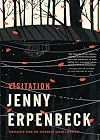
Visitation
by Jenny Erpenbeck
On This Page
Description
A forested property on a Brandenburg lake outside Berlin lies at the heart of this darkly sensual, elegiac novel. Encompassing over one hundred years of German history, from the nineteenth century to the Weimar Republic, from World War II to the Socialist German Democratic Republic, and finally reunification and its aftermath, Visitation offers the life stories of twelve individuals who seek to make their home in this one magical little house. The novel breaks into the everyday life of the show more house and shimmers through it, while relating the passions and fates of its inhabitants. Elegant and poetic, Visitation forms a literary mosaic of the last century, tearing open wounds and offering moments of reconciliation, with its drama and its exquisite evocation of a landscape no political upheaval can truly change. show lessTags
Recommendations
















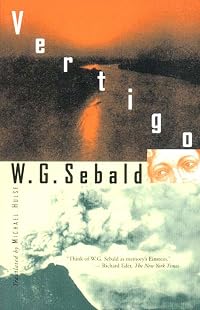

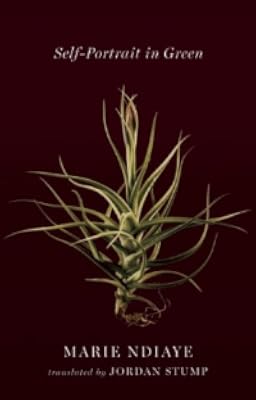
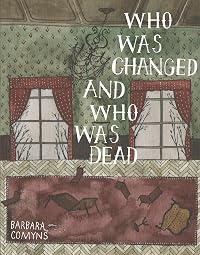


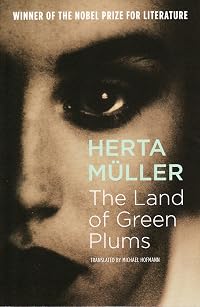




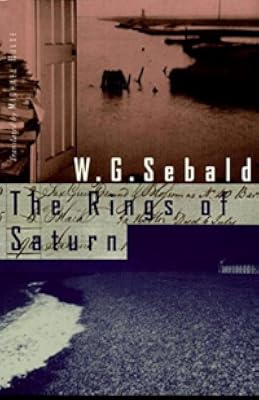





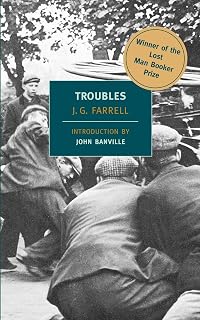

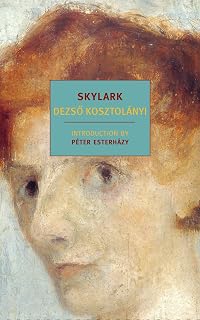

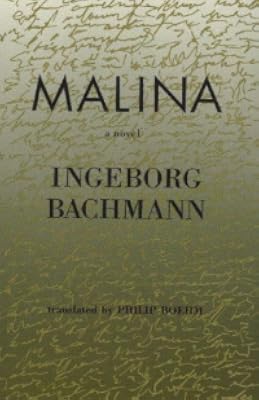


Member Recommendations

Smiler69 Another book where the house forms a central character, this time in East Germany as the occupants change through WWII and communism.
20
by anonymous user
by spiphany
wandering_star Two experimental Jennys with a similar elliptical style of storytelling.

Member Reviews
‘’In a household where a death has taken place, the clock must be stopped at once.’’
It is easy to stop the clocks when Death has arrived in a house. The rules are simple. Stop the clocks, cover the mirrors, open the doors and windows to let the soul fly free, whisper it to the birds and the bees. What happens when Death has covered an entire country under a dark veil? What happens when Death has conquered an entire continent, the entire world with Hatred and Tyranny as his faithful followers? You cannot stop the clock nor cover the mirrors. You cannot turn back the time, you cannot search for a new home. You can only pray that the suffering will not last long. This is the journey of the characters in this outstanding book by show more Jenny Erpenbeck.
‘’The dandelions are the same here as back home, and so are the larks.’’
A house by a lake outside Berlin stands witness to a turbulent, troubling course. From the days of the Weimar Republic, through the bloody path of two World Wars with devastating results for the country and the entire world, stopping in a nightmarish terror state reflected in the German ‘’Democratic Republic’’ (what a choice of words to name a totalitarian factory of deceit and oppression….) to the Reunification and a fragile future. 12 characters, whose lives are irrevocably depended on and altered by the fate of their land where the notion of ‘’home’’ has been lost, in a haunting, dark version of Chaucer’s Tales, albeit much more powerful and poignant. Dark fables narrating a journey of loss and violence.
‘’Now no one knows she is here any longer. All around her everything is black, and the care of this black chamber is she herself. The circumstance that there isn’t even a narrow crack to let the light in is intended to save her life, but it also means there is no longer anything differentiating her from the darkness.’’
Jenny Erpenbeck writes unlike any other writer I’ve ever had the fortune to read. I have never come across such a powerful blend of darkness, poetry, exposure of the subconscious, dread for what is to come and deep sadness and guilt for all that could not be prevented. This is evident in her masterpiece The End of Days and in Visitation. Her writing is like a glorious ivy that grows and grows and still has certain parts that are unseen by the sun. Beautiful symbolism, clarity through metaphors, themes that are linked to each other, images that are lurking in a cold corner, waiting to enter your mind. Customs of marriage and death co-exist with memories of a bloody past, a terrifying present, a hope that something will change. Once again, War shows itself as the greatest culprit, a plague not by God but by human beings that are ignorant of every basic virtue and sense. War as a chance for uneducated fools to exert control. War as the ultimate weapon for tyrants. War as the nightmare that will always be by our side as long as the human race exists.
‘’When you’ve arrived, can you still be said to be fleeing? And when you’re fleeing, can you ever arrive?’’
The Architect is the symbol of the open wound of a country torn in two, reflected in the presence of the S-Bahn, walking in the streets of a divided Berlin, reaching Friedrichstraße. A girl of Jewish descent tries to save herself in a story that immediately brought Polanski’s The Pianist to mind. A farmer tries to arrange his daughters’ fortune, an officer of the Red Army is defeated by his own weapon, a writer tries to satisfy everyone in order to buy a house, a visitor is a stranger among strangers. At the centre of the journey, we find the House and the Gardener whose life becomes dependant on it. I felt that the Gardener was given the most prominent role, perhaps as a symbol of our capacity to plant and reap, to create and to destroy. Our dubious connection to Nature, our desire and ability to create beauty and the million ways we invent to rape her and her creatures.
Keep in mind that these aren’t characters in the traditional sense of the word but symbols, archetypes of the people who have experienced the tragedy and horror of War throughout the centuries. They represent fears, hopes, shuttered dreams. Resilience and Faith. It would be a mistake to consider them as actual characters.
Beautifully translated by Susan Bernofsky, Visitation is a literary masterpiece created by a writer who clearly demonstrates that even the most unutterable horrors can acquire an eerie, frightening beauty in the hands of a truly gifted artist. This is true Literature, a word we have begun to forget…
‘’To whom do these words now belong in such darkness?’’ show less
It is easy to stop the clocks when Death has arrived in a house. The rules are simple. Stop the clocks, cover the mirrors, open the doors and windows to let the soul fly free, whisper it to the birds and the bees. What happens when Death has covered an entire country under a dark veil? What happens when Death has conquered an entire continent, the entire world with Hatred and Tyranny as his faithful followers? You cannot stop the clock nor cover the mirrors. You cannot turn back the time, you cannot search for a new home. You can only pray that the suffering will not last long. This is the journey of the characters in this outstanding book by show more Jenny Erpenbeck.
‘’The dandelions are the same here as back home, and so are the larks.’’
A house by a lake outside Berlin stands witness to a turbulent, troubling course. From the days of the Weimar Republic, through the bloody path of two World Wars with devastating results for the country and the entire world, stopping in a nightmarish terror state reflected in the German ‘’Democratic Republic’’ (what a choice of words to name a totalitarian factory of deceit and oppression….) to the Reunification and a fragile future. 12 characters, whose lives are irrevocably depended on and altered by the fate of their land where the notion of ‘’home’’ has been lost, in a haunting, dark version of Chaucer’s Tales, albeit much more powerful and poignant. Dark fables narrating a journey of loss and violence.
‘’Now no one knows she is here any longer. All around her everything is black, and the care of this black chamber is she herself. The circumstance that there isn’t even a narrow crack to let the light in is intended to save her life, but it also means there is no longer anything differentiating her from the darkness.’’
Jenny Erpenbeck writes unlike any other writer I’ve ever had the fortune to read. I have never come across such a powerful blend of darkness, poetry, exposure of the subconscious, dread for what is to come and deep sadness and guilt for all that could not be prevented. This is evident in her masterpiece The End of Days and in Visitation. Her writing is like a glorious ivy that grows and grows and still has certain parts that are unseen by the sun. Beautiful symbolism, clarity through metaphors, themes that are linked to each other, images that are lurking in a cold corner, waiting to enter your mind. Customs of marriage and death co-exist with memories of a bloody past, a terrifying present, a hope that something will change. Once again, War shows itself as the greatest culprit, a plague not by God but by human beings that are ignorant of every basic virtue and sense. War as a chance for uneducated fools to exert control. War as the ultimate weapon for tyrants. War as the nightmare that will always be by our side as long as the human race exists.
‘’When you’ve arrived, can you still be said to be fleeing? And when you’re fleeing, can you ever arrive?’’
The Architect is the symbol of the open wound of a country torn in two, reflected in the presence of the S-Bahn, walking in the streets of a divided Berlin, reaching Friedrichstraße. A girl of Jewish descent tries to save herself in a story that immediately brought Polanski’s The Pianist to mind. A farmer tries to arrange his daughters’ fortune, an officer of the Red Army is defeated by his own weapon, a writer tries to satisfy everyone in order to buy a house, a visitor is a stranger among strangers. At the centre of the journey, we find the House and the Gardener whose life becomes dependant on it. I felt that the Gardener was given the most prominent role, perhaps as a symbol of our capacity to plant and reap, to create and to destroy. Our dubious connection to Nature, our desire and ability to create beauty and the million ways we invent to rape her and her creatures.
Keep in mind that these aren’t characters in the traditional sense of the word but symbols, archetypes of the people who have experienced the tragedy and horror of War throughout the centuries. They represent fears, hopes, shuttered dreams. Resilience and Faith. It would be a mistake to consider them as actual characters.
Beautifully translated by Susan Bernofsky, Visitation is a literary masterpiece created by a writer who clearly demonstrates that even the most unutterable horrors can acquire an eerie, frightening beauty in the hands of a truly gifted artist. This is true Literature, a word we have begun to forget…
‘’To whom do these words now belong in such darkness?’’ show less
Germany has some of the strictest planning laws in the world, but they seem to have a remarkable blind-spot when it comes to lakes. Every German lake with any pretensions to being scenic has its shores lined with hotels, villas and dachas, all surrounded by high mesh fences and dense evergreen hedges to ensure that no unauthorised person can catch a glimpse of the water. When you spend your holidays there, all you ever see of the lake (unless you get on a boat or climb a nearby mountain) are the fifty metres or so of shore that belong to the place where you are staying.
Heimsuchung is set on a short stretch of the shore of the Scharmützelsee, which lies roughly halfway between Berlin and Frankfurt-an-der-Oder. It is a prime example of show more such a lake: promoted as a beauty-spot by Theodor Fontane, who gave it the romantic name "Märkisches Meer", it has been a popular get-away spot for prosperous Berliners since the mid-19th century. One of the most famous to have a house there was the boxer Max Schmeling, who is mentioned a few times in the book. After a prelude in the last ice age, we follow the history of the plot of land in a series of scenes that take us from through about a hundred and fifty years up to the present day. We see a successful architect with Nazi connections building a summer-house there; we see Jews being dispossessed of their plot and exiled or murdered; a Red Army major commandeers the place for a couple of days in 1945; we see the architect fleeing the communists and the summer-house being allocated to a clan of writers with a more-than-superficial resemblance to the Erpenbecks; we see the granddaughter of the family enmeshed in legal disputes over the land after the fall of the DDR. "German history 1870 to the present day" in a holiday cottage. What could be more convenient?
It may sound a bit corny when you condense it like that, and it is occasionally a touch too obvious, but on the whole, I thought it worked very well. The writing is pleasantly lyrical, but not intrusive in its style. You can see Erpenbeck's opera background working in the very tight, symmetrical construction of the scenes. Everything is carefully thought out and fits together exactly as it should, there are lots of repeated motifs - phrases, bits of stage business, props keep reappearing from scene to scene; the entrances of the symbolic, non-speaking gardener-character cover the set changes and time-shifts; there are even a couple of scenes that are structured as classic da capo arias ("ABA") and one where two sets of characters in different places and times are on-stage together (that last was probably a mistake: in an opera you can have two things going on at once, but on the printed page it doesn't really make sense). Even the set has a theatrical feeling to it: the action is confined to a very small number of locations within the plot of land, and almost all the indoor scenes take place in a pair of upstairs rooms with a climbable balcony, connected by an ingenious hidden cupboard for eavesdropping purposes. Perfect for Act II of Le Nozze di Figaro! show less
Heimsuchung is set on a short stretch of the shore of the Scharmützelsee, which lies roughly halfway between Berlin and Frankfurt-an-der-Oder. It is a prime example of show more such a lake: promoted as a beauty-spot by Theodor Fontane, who gave it the romantic name "Märkisches Meer", it has been a popular get-away spot for prosperous Berliners since the mid-19th century. One of the most famous to have a house there was the boxer Max Schmeling, who is mentioned a few times in the book. After a prelude in the last ice age, we follow the history of the plot of land in a series of scenes that take us from through about a hundred and fifty years up to the present day. We see a successful architect with Nazi connections building a summer-house there; we see Jews being dispossessed of their plot and exiled or murdered; a Red Army major commandeers the place for a couple of days in 1945; we see the architect fleeing the communists and the summer-house being allocated to a clan of writers with a more-than-superficial resemblance to the Erpenbecks; we see the granddaughter of the family enmeshed in legal disputes over the land after the fall of the DDR. "German history 1870 to the present day" in a holiday cottage. What could be more convenient?
It may sound a bit corny when you condense it like that, and it is occasionally a touch too obvious, but on the whole, I thought it worked very well. The writing is pleasantly lyrical, but not intrusive in its style. You can see Erpenbeck's opera background working in the very tight, symmetrical construction of the scenes. Everything is carefully thought out and fits together exactly as it should, there are lots of repeated motifs - phrases, bits of stage business, props keep reappearing from scene to scene; the entrances of the symbolic, non-speaking gardener-character cover the set changes and time-shifts; there are even a couple of scenes that are structured as classic da capo arias ("ABA") and one where two sets of characters in different places and times are on-stage together (that last was probably a mistake: in an opera you can have two things going on at once, but on the printed page it doesn't really make sense). Even the set has a theatrical feeling to it: the action is confined to a very small number of locations within the plot of land, and almost all the indoor scenes take place in a pair of upstairs rooms with a climbable balcony, connected by an ingenious hidden cupboard for eavesdropping purposes. Perfect for Act II of Le Nozze di Figaro! show less
Jenny Erpenbeck: Visitation
The story of the novel focuses on a summer house by the side of a lake in Brandenburg. A young architect builds the house of his dreams, but the land has a dark history that begins with the drowning of a young woman and grows darker over the course of the century; the one-time Jewish owners of the house disappear; the Red Army requisitions the house and wrecks it; a young German tries to swim to freedom post-war; a couple return from a brutal exile in Siberia and try to rebuild their lives; the house is left to a granddaughter who has to relinquish her claim and sell to new owners intent on demolition. Erpenbeck traces the layers of German history in the 20th century through the house and its owners and show more inhabitants and in doing so, she gives individual faces to effects of social and political currents.
The novel is also a meditation on the essence of change In the world. Everything is transient. Everything fades, disappears, or is destroyed. This is true geologically over eons, centuries or less for empires and countries, maybe centuries or decades for political movements, two or three generations for memories, and lifespans for relationships and individuals. There is stability and continuity and strength In the land, and security in a sense of place. But change and the winds of war and prejudice and politics can destroy these too with millions of individual lives trammelled and fraught and twisted and destroyed.
An unnamed gardner appears periodically through the novel. He works and lives on the grounds of the house through decades. The seasonal rhythms of planting and arranging flowers and trees and harvesting fruits convey the stability that the land, and place, provide. Erpenbeck uses trees as a wonderful metaphor for life: "The eucalyptus trees rustle louder than any other tree Ludwig has ever heard, their rustling is louder than that of beeches, lindens or birches, louder than pines, oaks and alders. Ludwig loves this rustling...and always sits down...whenever opportunity presents itself, just to hear the wind caught amid their millions of silvery leaves"----as currents and winds of social and political change sweep across the lives of millions who have no more control than leaves in the wind.
Something often overlooked in histories of the war are the forced or 'voluntary' movements and dislocations of millions of people fleeing persecution or invading armies. Erpenbeck reminds that everyone of those millions was an individual life with hopes and fears and a desire to live. One elderly woman musing on her life and how she moved and moved again post war with her grandchildren: "...with each step you take while fleeing, your baggage grows less and less, with more and more left behind, and sooner or later you just stop and sit there, and then all that is left of life is life itself, and everything else is lying in all the ditches beside all the roads in a land as enormous as the air..."
It is not the main point of the novel, but it is a main point of German history, and Erpenbeck presents the brutality of individual Jewish deaths as well as the fundamental questions about seeing and not seeing what was happening. And having survived the Nazi era, those in East Germany then had to see/and not see again in a society when the rhetoric of equality overlay the realities of power and influence. A society captured by Milan Kundera's wonderful phrase: "On the surface, an intelligible lie; underneath the unintelligible truth."
The novel wanders back and forth in time in the lives of some of the characters; often with a nostalgia for a time and place of security and comfort in family and place that is long gone. But Erpenbeck keeps this under control; her writing is direct and clear, almost deceptively so given the range and depth of issues and themes that she encompasses.
A recommended read.
ADDENDUM
The Holocaust is much written about in fiction and non-fiction. The best of the former are stories that bring to the personal level the horror of the destruction that is more than just the wanton waste of life but what became a bloodlust of killing beyond any rational human concept. Erpenbeck provides one of these stories.
Doris is 12 years old and living in the ghetto of Lodz. We have seen her earlier in the novel, at the house by the lake, but now she is hiding in a wall after the area of the ghetto has been cleared of all inhabitants. But she is discovered:
"Of the one hundred and twenty people in the boxcar, approximately thirty suffocate during the two-hour trip. As a motherless child, she is considered an inconvenience that might interfere with things running smoothly, and so the moment they arrive she is herded off to the side along with a few old people who cannot walk any longer and the ones who went mad during the trip, she is ushered past a pile of clothing as high as a mountain--like the Nackliger, she can't help thinking and remembers her own smile that she smiled that day when the gardner told her the funny name of the underwater shoal. For two minutes, a pale, partly cloudy sky arches above her just the way it would look down by the lake right before it rained, for two minutes she inhales the scent of pine trees she knows so well, but she cannot see the pine trees themselves because of the tall fence. Has she really come home? For two minutes she can feel the sand beneath her shoes along with a few pieces of flint and pebbles made of quartz or granite; then she takes off her shoes forever and goes to stand on the board to be shot.
Nothing is nicer than diving with your eyes open. Diving down as far as the shimmering legs of your mother and father who have just come back from swimming and now are wading to shore through the shallow water. Nothing is more fun than to tickle them and to hear, muffled by the water, how they shriek because they know it will make their child happy.
For three years the girl took piano lessons, but now, while her dead body slides down into the pit, the word piano is taken back from human beings, now the backflip on the high bar that the girl could perform better than her schoolmates is taken back, along with all the motions a swimmer makes, the gesture of seizing hold of a crab is taken back, as well as all the basic knots to be learned for sailing, all these things are taken back into uninventedness, and finally, last of all, the name of the girl herself is taken back, the name no one will ever again call her by: Doris." show less
The story of the novel focuses on a summer house by the side of a lake in Brandenburg. A young architect builds the house of his dreams, but the land has a dark history that begins with the drowning of a young woman and grows darker over the course of the century; the one-time Jewish owners of the house disappear; the Red Army requisitions the house and wrecks it; a young German tries to swim to freedom post-war; a couple return from a brutal exile in Siberia and try to rebuild their lives; the house is left to a granddaughter who has to relinquish her claim and sell to new owners intent on demolition. Erpenbeck traces the layers of German history in the 20th century through the house and its owners and show more inhabitants and in doing so, she gives individual faces to effects of social and political currents.
The novel is also a meditation on the essence of change In the world. Everything is transient. Everything fades, disappears, or is destroyed. This is true geologically over eons, centuries or less for empires and countries, maybe centuries or decades for political movements, two or three generations for memories, and lifespans for relationships and individuals. There is stability and continuity and strength In the land, and security in a sense of place. But change and the winds of war and prejudice and politics can destroy these too with millions of individual lives trammelled and fraught and twisted and destroyed.
An unnamed gardner appears periodically through the novel. He works and lives on the grounds of the house through decades. The seasonal rhythms of planting and arranging flowers and trees and harvesting fruits convey the stability that the land, and place, provide. Erpenbeck uses trees as a wonderful metaphor for life: "The eucalyptus trees rustle louder than any other tree Ludwig has ever heard, their rustling is louder than that of beeches, lindens or birches, louder than pines, oaks and alders. Ludwig loves this rustling...and always sits down...whenever opportunity presents itself, just to hear the wind caught amid their millions of silvery leaves"----as currents and winds of social and political change sweep across the lives of millions who have no more control than leaves in the wind.
Something often overlooked in histories of the war are the forced or 'voluntary' movements and dislocations of millions of people fleeing persecution or invading armies. Erpenbeck reminds that everyone of those millions was an individual life with hopes and fears and a desire to live. One elderly woman musing on her life and how she moved and moved again post war with her grandchildren: "...with each step you take while fleeing, your baggage grows less and less, with more and more left behind, and sooner or later you just stop and sit there, and then all that is left of life is life itself, and everything else is lying in all the ditches beside all the roads in a land as enormous as the air..."
It is not the main point of the novel, but it is a main point of German history, and Erpenbeck presents the brutality of individual Jewish deaths as well as the fundamental questions about seeing and not seeing what was happening. And having survived the Nazi era, those in East Germany then had to see/and not see again in a society when the rhetoric of equality overlay the realities of power and influence. A society captured by Milan Kundera's wonderful phrase: "On the surface, an intelligible lie; underneath the unintelligible truth."
The novel wanders back and forth in time in the lives of some of the characters; often with a nostalgia for a time and place of security and comfort in family and place that is long gone. But Erpenbeck keeps this under control; her writing is direct and clear, almost deceptively so given the range and depth of issues and themes that she encompasses.
A recommended read.
ADDENDUM
The Holocaust is much written about in fiction and non-fiction. The best of the former are stories that bring to the personal level the horror of the destruction that is more than just the wanton waste of life but what became a bloodlust of killing beyond any rational human concept. Erpenbeck provides one of these stories.
Doris is 12 years old and living in the ghetto of Lodz. We have seen her earlier in the novel, at the house by the lake, but now she is hiding in a wall after the area of the ghetto has been cleared of all inhabitants. But she is discovered:
"Of the one hundred and twenty people in the boxcar, approximately thirty suffocate during the two-hour trip. As a motherless child, she is considered an inconvenience that might interfere with things running smoothly, and so the moment they arrive she is herded off to the side along with a few old people who cannot walk any longer and the ones who went mad during the trip, she is ushered past a pile of clothing as high as a mountain--like the Nackliger, she can't help thinking and remembers her own smile that she smiled that day when the gardner told her the funny name of the underwater shoal. For two minutes, a pale, partly cloudy sky arches above her just the way it would look down by the lake right before it rained, for two minutes she inhales the scent of pine trees she knows so well, but she cannot see the pine trees themselves because of the tall fence. Has she really come home? For two minutes she can feel the sand beneath her shoes along with a few pieces of flint and pebbles made of quartz or granite; then she takes off her shoes forever and goes to stand on the board to be shot.
Nothing is nicer than diving with your eyes open. Diving down as far as the shimmering legs of your mother and father who have just come back from swimming and now are wading to shore through the shallow water. Nothing is more fun than to tickle them and to hear, muffled by the water, how they shriek because they know it will make their child happy.
For three years the girl took piano lessons, but now, while her dead body slides down into the pit, the word piano is taken back from human beings, now the backflip on the high bar that the girl could perform better than her schoolmates is taken back, along with all the motions a swimmer makes, the gesture of seizing hold of a crab is taken back, as well as all the basic knots to be learned for sailing, all these things are taken back into uninventedness, and finally, last of all, the name of the girl herself is taken back, the name no one will ever again call her by: Doris." show less
Both haunting and sad, the visitation that these all too brief lives make upon a plot of land by a lake near Berlin is a mere blip in the geological scale but rife with meaning all the same. The writing is at once distancing and enveloping. We know so little about many of those who pass some or all of their days on this property. The gardener, for example, whose faithful tending of the trees and shrubs, grass and flowers, repeats and repeats over many year, goes unnamed. But perhaps the various landowners could be equally unnamed since their individual existences are so tangential to the land itself. Certainly people come and go. They sometimes grow. Significant events occur for some. But all eventually fade or are subject to disease or show more violence or flight. And even residual claims to “rightful” ownership are merely bureaucratic noise. Those too, you suspect, will fade in time. Given enough time.
Don’t be put off by the suspiciously hyperbolic blurbs you might read on the cover of this short novel. It really is just as astonishingly and surprisingly powerful as previous readers have discovered. Of course you have to be patient with it. It is not a familiar novelistic form. But your patience will be rewarded as wave after wave of the lives of folk wash over this land. And even if the consequence of their presence will be as minor as the ripples in the buried layer of sand formed by an ancient sea, those ripples are not nothing.
Certainly recommended. show less
Don’t be put off by the suspiciously hyperbolic blurbs you might read on the cover of this short novel. It really is just as astonishingly and surprisingly powerful as previous readers have discovered. Of course you have to be patient with it. It is not a familiar novelistic form. But your patience will be rewarded as wave after wave of the lives of folk wash over this land. And even if the consequence of their presence will be as minor as the ripples in the buried layer of sand formed by an ancient sea, those ripples are not nothing.
Certainly recommended. show less
Definitely a 5-star read. This book is about time, durability, existence, perception, memory. A piece of land has existed seemingly forever – a lovely opening chapter describes its emergence during the ages, how it came to be a meadow and a lake up against the edge of a mountain, 24000 years ago. It is part of the local landscape, subject to the clear rules of nature, year in, year out. A mysterious “gardener” helps the local community maintain it, with unvarying protocols (and occasional improvements), just like the unvarying local protocols on marriage, on death, on religion, on life generally. These are described carefully, beautifully, repeatedly. “Nothing” happens – although clearly things must have done, as there are show more hints of suicides, trysts, childbirths, escapes of one kind or another. Then, the latest owner, having no son to leave it to (but 4 daughters – what’s that about?), sells it off in three pieces, and a lot more happens.
The rest of the book tells, not always linearly or chronologically, but clearly enough if you read a bit more slowly than usual, the stories of the people who acquire the pieces of land. At first, these are all hopeful stories of life enhancement and expansion, but this is Germany in the 1930’s, so soon enough come hyperinflation, the rise of the Nazis, expropriation of Jewish property, the need to hide, to escape or fail to escape, the War, the Holocaust, the Russian occupation, the oppressions of the East German regime, and eventually the fall of the Berlin Wall and the quest for repatriation of ownership. Some people are “winners”, some of the time, most are “losers” most of the time. Some lose their homes, their fortunes, their possessions, others lose their families, their lives. The houses and the land live in their memories, events recalled and stories re-told, when they are exiled or dying, or even when they are there. Eventually, all this will end, a short season of madness in a long history of a place. Existence will carry on, bigger than the individuals, although for them, it has been all their time.
This is where I wish I was a much better reader and analyst, so I could really tell you what makes this such a special book. It is short, and beautiful, and worth reading more than once. show less
The rest of the book tells, not always linearly or chronologically, but clearly enough if you read a bit more slowly than usual, the stories of the people who acquire the pieces of land. At first, these are all hopeful stories of life enhancement and expansion, but this is Germany in the 1930’s, so soon enough come hyperinflation, the rise of the Nazis, expropriation of Jewish property, the need to hide, to escape or fail to escape, the War, the Holocaust, the Russian occupation, the oppressions of the East German regime, and eventually the fall of the Berlin Wall and the quest for repatriation of ownership. Some people are “winners”, some of the time, most are “losers” most of the time. Some lose their homes, their fortunes, their possessions, others lose their families, their lives. The houses and the land live in their memories, events recalled and stories re-told, when they are exiled or dying, or even when they are there. Eventually, all this will end, a short season of madness in a long history of a place. Existence will carry on, bigger than the individuals, although for them, it has been all their time.
This is where I wish I was a much better reader and analyst, so I could really tell you what makes this such a special book. It is short, and beautiful, and worth reading more than once. show less
Story of a house on a small parcel of lakeside property in Germany, and its inhabitants, over many decades. It covers a period from the late nineteenth century through the years after the fall of the Berlin Wall. A few families own the property and assume they will be there forever, but historic events occur, and they must leave. Some inhabitants move in illegally. The property is maintained by The Gardener. He performs the same tasks for each set of inhabitants, is never named, and never speaks.
It is a slim novel, poetically written. It conveys a sense of the impermanence of life. People come and go. The land remains the same. It is an original method of relating German history through people that occupy a house, what happens to them, show more and why they end up leaving. There is no “storyline” per se. It is, I think, intended to give the reader a sense of what happened without actually telling it in detail. It is certainly a creative approach and would be a great candidate for further literary analysis.
Memorable passages:
“Tonight, too, he puts his hands into the smooth, lustrous cloth, pulls it to his face, rubs it between his fingers, rubs the fabric’s rough inner surface against its rough inner surface, fills his lungs with the scent of peppermint and camphor before he closes the door and lies down on the bed, all around him the walls covered in pink silk; the balcony door is open to the darkness, and down in the garden the horses are softly neighing and pawing the earth and snorting in the huge muffled stall that extends all the way to the stars.”
“Sometimes he asks himself whether, if their two fathers had not acted as if in cahoots that day to make them playmates, his life would still have become his life. But life would no doubt have filled up with various other sorts of would-haves and probably been just as much his life as this one.”
“Perhaps eternal life already exists during a human lifetime, but since it looks different from what we’re hoping for—something that transcends everything that’s ever happened—since it looks instead like the old life we already knew, no one recognizes it.” show less
It is a slim novel, poetically written. It conveys a sense of the impermanence of life. People come and go. The land remains the same. It is an original method of relating German history through people that occupy a house, what happens to them, show more and why they end up leaving. There is no “storyline” per se. It is, I think, intended to give the reader a sense of what happened without actually telling it in detail. It is certainly a creative approach and would be a great candidate for further literary analysis.
Memorable passages:
“Tonight, too, he puts his hands into the smooth, lustrous cloth, pulls it to his face, rubs it between his fingers, rubs the fabric’s rough inner surface against its rough inner surface, fills his lungs with the scent of peppermint and camphor before he closes the door and lies down on the bed, all around him the walls covered in pink silk; the balcony door is open to the darkness, and down in the garden the horses are softly neighing and pawing the earth and snorting in the huge muffled stall that extends all the way to the stars.”
“Sometimes he asks himself whether, if their two fathers had not acted as if in cahoots that day to make them playmates, his life would still have become his life. But life would no doubt have filled up with various other sorts of would-haves and probably been just as much his life as this one.”
“Perhaps eternal life already exists during a human lifetime, but since it looks different from what we’re hoping for—something that transcends everything that’s ever happened—since it looks instead like the old life we already knew, no one recognizes it.” show less
Jenny Erpenbeck has written here a miniature history of Germany against the background of a house and the people who lived there, were forced to abandon it and returned to it, over many generations from the Kaiserreich, through the Weimar Republic, the Nazi period and the Second World War, through East Germany and the reunification of the two Germanies following the collapse of the Soviet bloc. But it is not a history book. It is the story of human beings.
Members
- Recently Added By
Lists

German Literature
518 works; 56 members

The Guardian's 100 best books of the 21st century
100 works; 21 members

Houses and Buildings as Characters in Fiction
182 works; 28 members

Lithub: The 50 Best Contemporary Novels Under 200 Pages
50 works; 4 members

Books Read in 2020
4,379 works; 124 members

History in the long view
55 works; 3 members

Books You Can Read in a Weekend
7 works; 1 member

To Read (Prospector)
86 works; 1 member

BBC World Book Club
265 works; 5 members

Books Read in 2026
1,963 works; 66 members

World Book Club (BBC World Service)
212 works; 1 member
Author Information

23+ Works 4,117 Members
Jenny Erpenbeck was born on March 12, 1967 in East Berlin. She is a German director and writer. In Berlin she attended an Advanced High School, where she graduated in 1985. She then completed a two-year apprenticeship as a bookbinder before working at several theaters as props and wardrobe supervisor. From 1988 to 1990 Erpenbeck studied theatre at show more the Humboldt University of Berlin. In 1990 she changed her studies to Music Theater Director studying with Ruth Berghaus. After the completion of her studies in 1994 she spent some time as an assistant director at the opera house in Graz, where in 1997 she did her own productions of Schoenberg's Erwartung, Bartók's Duke Bluebeard's Castle and a world premiere of her own piece Cats Have Seven Lives. As a freelance director, she directed in 1998 different opera houses in Germany and Austria, including Monteverdi's L'Orfeo in Aachen, Acis and Galatea at the Berlin State Opera and Wolfgang Amadeus Mozart's Zaide in Nuremberg/Erlangen. In the 1990s Erpenbeck started a writing career in addition to her directing. She is author of narrative prose and plays: in 1999, History of the Old Child, her debut; in 2001, her collection of stories Trinkets; in 2004, the novella Dictionary; and in February 2008, the novel Visitation. In March 2007, Erpenbeck took over a column by Nicole Krauss in the Frankfurter Allgemeine Zeitung. In 2015 won the Independent Foreign Fiction Prize with her title The End of Days. (Bowker Author Biography) show less
Some Editions
Awards and Honors
Awards
Distinctions
Series
Belongs to Publisher Series
btb (73894)
Work Relationships
Is contained in
Common Knowledge
- Canonical title
- Visitation
- Original title
- Heimsuchung
- Original publication date
- 2008
- People/Characters
- The Gardener
- Important places
- German Democratic Republic
- Epigraph
- As the day is long and the world is old, many people can stand in the same place, one after another. - Marie in 'Woyzeck', by Georg Büchner.
If I came to you,
O woods of my youth, could you
Promise me peace once... (show all) again?
-Friedrich Hölderlin.
When the house is finished, Death enters.
-Arabic proverb - Dedication
- For Doris Kaplan.
- First words
- APPROXIMATELY TWENTY-FOUR THOUSAND years ago, a glacier advanced until it reached a large outcropping of rock that now is nothing more than a gentle hill above where the house stands.
- Last words
- (Click to show. Warning: May contain spoilers.)Until the time comes when a different house will be built on this same spot, the landscape, if ever so briefly, resembles itself once more.
- Original language
- German
Classifications
- Genres
- General Fiction, Fiction and Literature
- DDC/MDS
- 401.4 — Language Language Philosophy and theory; international languages Communication; semantics, pragmatics, languages for special purposes
- LCC
- PT2665 .R59 .H4513 — Language and Literature German, Dutch and Scandinavian literatures German literature Individual authors or works 1961-2000
- BISAC
Statistics
- Members
- 866
- Popularity
- 31,436
- Reviews
- 48
- Rating
- (3.89)
- Languages
- 15 — Danish, Dutch, English, Finnish, French, German, Greek, Hungarian, Italian, Korean, Norwegian, Russian, Spanish, Swedish, Turkish
- Media
- Paper, Audiobook, Ebook
- ISBNs
- 33
- ASINs
- 6