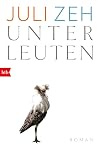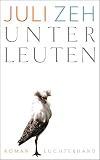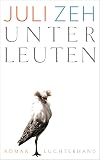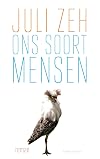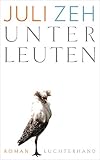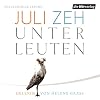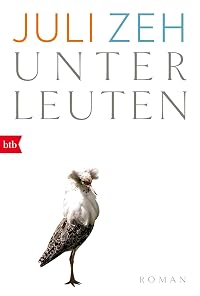
Unterleuten
by Juli Zeh
On This Page
Description
En familie flytter til provinsen i håbet om en tilværelse med åbne vidder og det nære fælleskab. De mødes af en realitet hvor familier har boet på egnen i generationer, og alle er bundet sammen af noget andet end blot naboskab.Tags
Recommendations







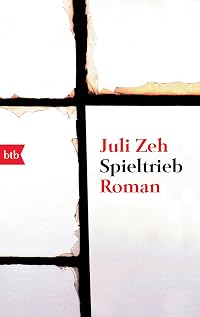
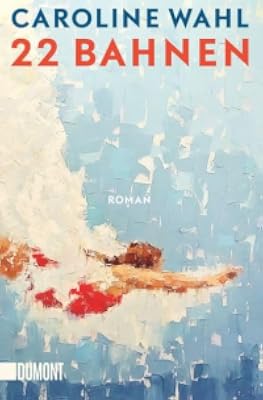
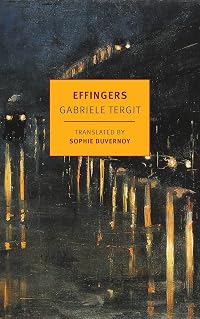
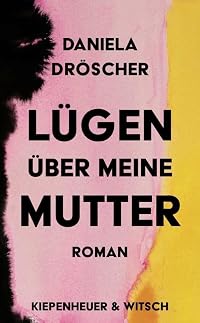




Member Recommendations

by Dariah
Member Reviews
Wenn in Unterleuten, einem kleinen Dorf in Brandenburg, überwiegend Kopien der eigenen Person leben würden, dann, ja dann wäre das Leben dort vermutlich sehr idyllisch und harmonisch. So aber treffen Menschen aufeinander, von denen sich jede/r im Besitz der alleinglückseligmachenden Wahrheit meint, während der Rest nur Stuß verzapft. Darüberhinaus pflegen praktisch Alle ihre Vermutungen und Erwartungen über die Anderen, die im seltensten Fall positiv sind. Jede/r traut jeder/m das Schlechteste zu und fast wie eine Art selbsterfüllender Prophezeiung geschehen Dinge, die die eigene Meinung noch bestätigen. Statt miteinander wird mehr übereinander geredet und so verbreiten sich Mutmaßungen und Argwohn in Windesweile im Dorf. show more Stadtbewohner (junge Frau, alter Mann) gegen grobschlächtigen Einheimischen - die Frau nennt diesen nur 'das Tier'. Naturschützer gegen Unternehmen - man schreibt Briefe. Kommunist gegen Kapitalist - eine Feindschaft, die keinerlei sachliche Grundlage hat. Ehemann gegen Ehefrau in unterschiedlichen Konstellationen - Erwartungen und Vermutungen werden nicht ausgesprochen, stattdessen schweigt man bis zum bitteren Ende. Als dann im Dorf ein Streit über die Errichtung eines Windparks beginnt, werden diese Beziehungsgeflechte auf's Äußerste strapaziert, wobei die alten Konflikte mit einer ungeheuren Heftigkeit wieder aufbrechen und die NeubürgerInnen direkt miteinbeziehen.
Obwohl das Buch mehr als 600 Seiten hat, lässt es sich weglesen wie ein Unterhaltungsroman. Die Figuren, die erst recht klischeehaft daherkommen, entwickeln sich ziemlich schnell zu eigenständigen Persönlichkeiten, sodass von der ursprünglichen Schablonenhaftigkeit nicht mehr viel bleibt. Gombrowski beispielsweise, der massige, ungeschlachte und auch brutale Wendegewinner hat eine überaus sensible Seite, von der aber nur die Wenigsten wissen - was ihn dennoch nicht von seinem Verhalten Anderen gegenüber freispricht. Schaller, sein ehemaliger Angestellter und Handlanger ist ähnlich ungeschlacht, wenn auch nicht so schlau wie dieser. Sein Schicksal ist derart unvorstellbar, dass ich mehr Mitgefühl als alles andere für ihn empfand. Und so ist es bei fast allen Figuren in diesem Roman, so eindimensional zu Beginn sie auch daherkommen mögen: Jeder/r von ihnen hat eine Geschichte, die sich zu erzählen lohnt. Von Juli Zeh habe ich kürzlich in einem Interview gelesen, dass Jonathan Franzen einer ihrer Lieblingsschriftsteller ist. "Mit seinem Roman 'Freiheit' kam ich mir wieder vor wie als Kind, als ich mit der Taschenlampe unter der Decke Seite um Seite verschlungen und alles andere vergessen habe. Es gibt nicht viele, die es beherrschen, so realistisch zu erzählen, ohne dass es dröge wird. Franzen schafft es, die Welt in der wir leben, anschaulich zu machen." Liebe Juli Zeh, Sie schaffen das auch! Danke dafür! show less
Obwohl das Buch mehr als 600 Seiten hat, lässt es sich weglesen wie ein Unterhaltungsroman. Die Figuren, die erst recht klischeehaft daherkommen, entwickeln sich ziemlich schnell zu eigenständigen Persönlichkeiten, sodass von der ursprünglichen Schablonenhaftigkeit nicht mehr viel bleibt. Gombrowski beispielsweise, der massige, ungeschlachte und auch brutale Wendegewinner hat eine überaus sensible Seite, von der aber nur die Wenigsten wissen - was ihn dennoch nicht von seinem Verhalten Anderen gegenüber freispricht. Schaller, sein ehemaliger Angestellter und Handlanger ist ähnlich ungeschlacht, wenn auch nicht so schlau wie dieser. Sein Schicksal ist derart unvorstellbar, dass ich mehr Mitgefühl als alles andere für ihn empfand. Und so ist es bei fast allen Figuren in diesem Roman, so eindimensional zu Beginn sie auch daherkommen mögen: Jeder/r von ihnen hat eine Geschichte, die sich zu erzählen lohnt. Von Juli Zeh habe ich kürzlich in einem Interview gelesen, dass Jonathan Franzen einer ihrer Lieblingsschriftsteller ist. "Mit seinem Roman 'Freiheit' kam ich mir wieder vor wie als Kind, als ich mit der Taschenlampe unter der Decke Seite um Seite verschlungen und alles andere vergessen habe. Es gibt nicht viele, die es beherrschen, so realistisch zu erzählen, ohne dass es dröge wird. Franzen schafft es, die Welt in der wir leben, anschaulich zu machen." Liebe Juli Zeh, Sie schaffen das auch! Danke dafür! show less
A small community in Brandenburg is thrown into turmoil by a proposal to build wind turbines, and the unhealed wounds of old conflicts get mixed up with new tensions between the different priorities of old residents and incomers. Sounds like every novel about a fictional small community you've ever read. That this doesn't turn into an East German version of Midsomer Murders or The Archers is mainly due to the very unusual, but effective, way Zeh structures the book: the 61 chapters (plus an epilogue) rotate between eleven main viewpoint characters, so that the idiot/bigot/evil manipulator of the previous chapter becomes the sympathetic centre-point of this one, and a background irrelevance in the next one. It sounds disorientating, and show more it is rather: this is a rural tragedy with eleven different people competing to fail most spectacularly, and most of them end up with more soap than opera. It seems to be making the point that tragedy is a form that only exists on the stage, not in real life.
But of course there is also a lot of clever observation of how small communities work, of the problems specific to rural East Germany after the fall of the DDR, and of the classic dilemma of how to manage the countryside against the conflicting claims for it to be a food- and energy-factory, a museum, an unspoilt nature-reserve, and a recreation-ground for city-dwellers. Zeh has fun showing us how confusing it is for outsiders that the villagers of Unterleuten(*) insist that business should be done face-to-face, that deals should be arranged with the minimum possible involvement of lawyers and officials, and that barter or (social) credit are better than cash. The person in the strongest position in the village is the one who is owed most favours. Incomers like the bird-warden (and downscaled academic) Gerhard completely fail to see this, and put themselves in the wrong by bombarding their neighbours with official letters.
Very enjoyable, in a dark sort of way: the 600+ pages flew past.
---
(*) There's a running joke that, as in Angela Thirkell's Barsetshire, many of the place-names in this part of Brandenburg, although made up of conventional German place name elements, turn out to have double meanings: Unterleuten, if read as "unter Leuten", means "among people". show less
But of course there is also a lot of clever observation of how small communities work, of the problems specific to rural East Germany after the fall of the DDR, and of the classic dilemma of how to manage the countryside against the conflicting claims for it to be a food- and energy-factory, a museum, an unspoilt nature-reserve, and a recreation-ground for city-dwellers. Zeh has fun showing us how confusing it is for outsiders that the villagers of Unterleuten(*) insist that business should be done face-to-face, that deals should be arranged with the minimum possible involvement of lawyers and officials, and that barter or (social) credit are better than cash. The person in the strongest position in the village is the one who is owed most favours. Incomers like the bird-warden (and downscaled academic) Gerhard completely fail to see this, and put themselves in the wrong by bombarding their neighbours with official letters.
Very enjoyable, in a dark sort of way: the 600+ pages flew past.
---
(*) There's a running joke that, as in Angela Thirkell's Barsetshire, many of the place-names in this part of Brandenburg, although made up of conventional German place name elements, turn out to have double meanings: Unterleuten, if read as "unter Leuten", means "among people". show less
What a book. By some told to be inspired by [[Jonathan Franzen]] his work, but oh no, not for me. This is much better.
A village in East Germany, quiet, some village stories. So it looks. Until now.
Then comes the announcement of a change and all in the village, ever living there families as well as newcomers are going to see their lives all turned inside out and upside down. Successful for some, or not? Dramatic for others, or was it already dramatic before and didn't they just see it? All is clear: the good and the bad. Or is it just a pose? A game?
Intrigues, and fine tuned arrangements combined with elephant behaviour of the unknowing, it all turns into a catastrophic end. Or in complete rest for others.
Read this book, it takes you show more slowly in, all main characters tell their story, they all get some chapters named after them and you just feel more and more, this is going to be weird. And weird it ends.
It took me a few weeks, 670 pages in Dutch, but never a dull moment. I started it during a busy period for my job as well, i would read it again in a holiday and just get the story done by in a few days as you are looking forward to the next point of view, told by another character. Strongly written and a good translation into Dutch.
[[Juli Zeh]] gets up again in my list of favorite authors. Relentlessly violent in her descriptions of mankind and human society, every one goes under the scalpel. The politicians, the media, the marketing guys with one beautiful phrase: "95% of all publicity is a brutal denial of your intelligence"; and most of all: nobody is what he looks to be: the lefties in society all of a sudden become conservatives, the traders seem to have a soft spot, the agressive farmers and landowners happen to do everything for ....... yep, for what and for whom?
Give yourself a surprise and dive in this book. It's like real life. It's like a bustling city. It's full of events. And, it's only a village.
A spectrum of power, environment, economics, politics, behaviour and society evolution like you will seldom see in one book. show less
A village in East Germany, quiet, some village stories. So it looks. Until now.
Then comes the announcement of a change and all in the village, ever living there families as well as newcomers are going to see their lives all turned inside out and upside down. Successful for some, or not? Dramatic for others, or was it already dramatic before and didn't they just see it? All is clear: the good and the bad. Or is it just a pose? A game?
Intrigues, and fine tuned arrangements combined with elephant behaviour of the unknowing, it all turns into a catastrophic end. Or in complete rest for others.
Read this book, it takes you show more slowly in, all main characters tell their story, they all get some chapters named after them and you just feel more and more, this is going to be weird. And weird it ends.
It took me a few weeks, 670 pages in Dutch, but never a dull moment. I started it during a busy period for my job as well, i would read it again in a holiday and just get the story done by in a few days as you are looking forward to the next point of view, told by another character. Strongly written and a good translation into Dutch.
[[Juli Zeh]] gets up again in my list of favorite authors. Relentlessly violent in her descriptions of mankind and human society, every one goes under the scalpel. The politicians, the media, the marketing guys with one beautiful phrase: "95% of all publicity is a brutal denial of your intelligence"; and most of all: nobody is what he looks to be: the lefties in society all of a sudden become conservatives, the traders seem to have a soft spot, the agressive farmers and landowners happen to do everything for ....... yep, for what and for whom?
Give yourself a surprise and dive in this book. It's like real life. It's like a bustling city. It's full of events. And, it's only a village.
A spectrum of power, environment, economics, politics, behaviour and society evolution like you will seldom see in one book. show less
Prachtig boek! Een boerengat en al haar inwoners wordt heel fotografisch en tegelijk ook heel herkenbaar beschreven. Je wordt zelf inwoner van Unterleuten en wordt meegetrokken in de intriges in het dorp. Hoewel er ongeveer 13 vertellers beurtelings aan bod komen, blijft het allemaal heel behapbaar. De mens wordt heel kenmerkend getypeerd, soms is het boek zelfs maatschappijkritisch, maar nergens werd het belerend.
Heel mooi geschreven met massa's prachtzinnen. Een plezier om te lezen! Ook heel goed vertaald. Aan vertalingen uit het Engels stoor ik me vaak maar hier merkte ik niet dat ik een vertaling aan het lezen was. Knap!
Jammer dat ik het boek uit heb. Ik ga nog andere romans van Zeh lezen.
Heel mooi geschreven met massa's prachtzinnen. Een plezier om te lezen! Ook heel goed vertaald. Aan vertalingen uit het Engels stoor ik me vaak maar hier merkte ik niet dat ik een vertaling aan het lezen was. Knap!
Jammer dat ik het boek uit heb. Ik ga nog andere romans van Zeh lezen.
Plot:
Unterleuten is a remote village in Brandenburg. It has become a favorite destination for city people growing tired of Berlin and preferring to live in the country, like Gerhard and Jule or Frederik and Linda. Not all of the original villagers are happy about that, but they are more occupied with their own rivalries like Gombrowski and Kron who have been fighting for decades. Things start to escalate when an energy company announces that it wants to build a wind farm right next to Unterleuten - a lucrative opportunity for some, a catastrophe for others.
Unterleuten has great characters and a really amazing setting. It's really fascinating to see how many ways things can go to hell, but I would have liked a less depressing show more ending.
Read more on my blog: https://kalafudra.com/2018/08/01/unterleuten-juli-zeh/ show less
Unterleuten is a remote village in Brandenburg. It has become a favorite destination for city people growing tired of Berlin and preferring to live in the country, like Gerhard and Jule or Frederik and Linda. Not all of the original villagers are happy about that, but they are more occupied with their own rivalries like Gombrowski and Kron who have been fighting for decades. Things start to escalate when an energy company announces that it wants to build a wind farm right next to Unterleuten - a lucrative opportunity for some, a catastrophe for others.
Unterleuten has great characters and a really amazing setting. It's really fascinating to see how many ways things can go to hell, but I would have liked a less depressing show more ending.
Read more on my blog: https://kalafudra.com/2018/08/01/unterleuten-juli-zeh/ show less
Het laatste boek dat ik dit jaar las, was bijzonder interessant. Over het dorp Unterleuten, waar de mensen op een aparte manier met elkaar communiceren. Zet er een paar nieuwkomers bij, een speculant en je hebt een mooi verhaal. Ieder hoofdstuk is geschreven vanuit een andere persoon. Geheimen worden langzamerhand ontrafeld maar niet alles wordt gezegd. Een gruwelijk einde, heel goed geschreven.
Zie onze recensie."""
Members
- Recently Added By
Published Reviews
Juli Zehs Roman ist ein tragikomisches Zeitbild für Ostler und Westler
added by Dariah
Juli Zehs Roman ist ein Thriller unserer Zeit, der von ihren Widersprüchen und Verwerfungen erzählt.
added by Dariah
added by elwetritsche
Lists

Top Five Books of 2020
982 works; 350 members

Books Read in 2020
4,379 works; 124 members

Down on the Farm
17 works; 6 members

Books Read in 2021
5,361 works; 114 members
Author Information

40+ Works 3,304 Members
Some Editions
Awards and Honors
Awards
Distinctions
Series
Belongs to Publisher Series
Le strade [Fazi] (349)
Work Relationships
Has the adaptation
Common Knowledge
- Canonical title*
- Ons soort mensen
- Original title
- Unterleuten
- Original publication date
- 2016-03-08
- People/Characters
- Rudolf Gombrowski (zoon landeigenaar); Kron (arbeider en communist); Linda Franzen (het paardenmeisje); Frederik Wachs (haar vriend); Elena Gombrowski, geboren Niehaus; Hilde Kessler (vrouw van Erik+) (show all 26); Kathrin Kron-Hübschke (dochter Kron); Wolfi Hübschke (man Katrine); Kroontje (dochter Kathrine); Gerhard Fließ (de vogelman); Jule Weiland (vrouw Fliess); Sophie (dochtertje Jule en Gerhard); Arne Seidel (de burgemeester); Konrad Meiler (de westerling die aast op grond); Betty (dochter Hilde); Pilz (woordvoerder windmolenproject); Bodo Schaller (opknapper vuile karweitjes automekanieker); Miriam Schaller (dochter van Bodo); Barbara Seidel ( overleden echtgenote van Arne, Stasi spionne); Lucy Finkbeiner (freelance journalist, vriendin van Jule); Fidi (Gombrowski's hond en één van zijn vrouwen); Rack (hervormingsadviseur); Manfred Gortz (reeël); Püppi Gombrowski (dochter van Rudolf); Mizzi (echtgenote van Konrad Meiler); Philipp Meiler (zoon van Konrad)
- Important places*
- Unterleuten, Brandenburg, Duitsland (fictief)
- Important events*
- Wende
- Dedication
- Voor Ada
- First words
- 'Dat beest heeft ons in zijn macht. Dat is nog erger dan hitte en stank.' Jule keek op. 'Ik kan er niet meer tegen.'
- Quotations
- Unterleuten betekent vrijheid (Gerhard Fliess, p. 194)
Een verhaal wordt er niet helderder op als het door vele mensen wordt verteld (Lucy Finkbeiner, p. 664)
Maar Unterleuten zag eruit als iets wat je heimat zou kunnen noemen (Konrad Meiler, p. 69)
Unterleuten is een gevangenis (Kathrin Kron-Hübschke, p. 10) - Last words
- (Click to show. Warning: May contain spoilers.)Buiten vlijt de nacht zich over het dorp als een kalmerende hand op een hoofd.
- Original language
- German
*Some information comes from Common Knowledge in other languages. Click "Edit" for more information.
Classifications
- Genres
- Fiction and Literature, General Fiction
- DDC/MDS
- 830 — Literature & rhetoric German & related literatures German literature and literatures of related languages
- LCC
- PT2688 .E28 — Language and Literature German, Dutch and Scandinavian literatures German literature Individual authors or works 1961-2000
Statistics
- Members
- 479
- Popularity
- 63,550
- Reviews
- 22
- Rating
- (4.02)
- Languages
- 6 — Danish, Dutch, English, French, German, Italian
- Media
- Paper, Audiobook, Ebook
- ISBNs
- 22
- ASINs
- 5