
Short philosophical essay on the need the human specimen has for stories and the question if this is what differentiates mankind from apes. Very interesting and clear, like always with this author.
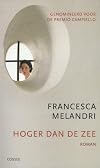
A nice novel about a recent Italian history of "revolution" and terrorism, and about violence in general, about high security prisons and the people that are condemned but mostly about the people having to deal with this situation : parents, partners, children. How their life goes on with relatives in jail, how they are confronted more with the damage then the actual emprisoned ones, how they struggle ... or not.
It's hard to find authors better than Melandri to describe the everyday aspects of life, the devastating details, the mixed sentiments. An inevitable lovestory mellows the drama, but it ends quite surprising. 3,5 stars for the beautiful sentences, in doubt for star nr 4 but hesitating as the story could have dug deeper but didn't.
It's hard to find authors better than Melandri to describe the everyday aspects of life, the devastating details, the mixed sentiments. An inevitable lovestory mellows the drama, but it ends quite surprising. 3,5 stars for the beautiful sentences, in doubt for star nr 4 but hesitating as the story could have dug deeper but didn't.
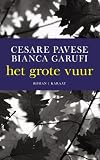
What a great novel. Unbelievable. Wrote by the "4 mains" principle with [[Bianca Garufi]]. A mirrored novel, strong by what's not told, by the silence. A tremendous effort in silence, in the not writing of the untold, a masterpiece in language control. Great Literature.
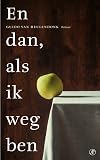
A treefold story about people wandering around in their lives, in their loves, in their memories and futures. Reflections on what was good, what could have been or should have been and still could be. At first complicated, then it gets better with some nice sentences that help you reflect yourself but the end of the novel is strange, all comes together and ends abrupt. Weird.
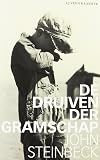
A true classic. Fascinating and moving insight in the human resilience and hardship. Nothing more to add. Just read it.
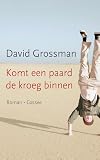
a very weird book, very well written, nicely composed but ... it also breaks you down, slowly, determined, with glimmers of hope in between, but ending dramatically. And it's about stand up comedy!
The story doesn't let you go, so be warned. But read it, it's great, emotional, tender, compelling, sometimes witty and funny but .... is comedy always ending happily?
The story doesn't let you go, so be warned. But read it, it's great, emotional, tender, compelling, sometimes witty and funny but .... is comedy always ending happily?
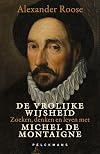
a nice philosophical portrait of Michel de Montaigne, the first modern man (according to the author). Inspiring read.
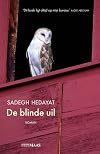
a very special novel, dark, gloomy, depressing. The author, not the most joyful person it seems, uses opium but the reader only needs his writing to reach a trance. Don't kill yourself after reading this, seems to be the recommendation to give.
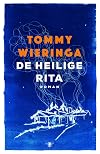
What a writer is Wieringa! A beautiful and easy reading story stuffed with the most beautiful and straigthforward sentences and insights in what the human being, pure and alone, is in a small society. The small society of a village in an outpost of the Netherlands maybe small but it can't hide from the turmoil of migration, of local restaurants being taken over by Chinese families, of events that bring them once in the spotlight and then .... they simply go on, and on, and on.....
Or not? Small events, words spoken out on the wrong moment, a little remark, it can set the relations upside down or just bring them to clarity. Some people want to stand up, but does their environment agrees?
Wieringa describes it as the best. A class author.
Or not? Small events, words spoken out on the wrong moment, a little remark, it can set the relations upside down or just bring them to clarity. Some people want to stand up, but does their environment agrees?
Wieringa describes it as the best. A class author.
A debute. What a debute. A Dutch female author of only 28 years. And how mature the writing.
A fragmentary novel, a lot of white space on the pages, a lot of silence and .... a battle. A battle fought by every word on every page. To justify it's presence, to prove the skill of the author. Sentences that hit like bullets or that caress like feathers. Despair, hope, and relentless love for the other.
Aside the importance of the things said, there is the even bigger importance of what is unspoken, unwritten, unexistant...
This book should be translated to English, to German, to all languages, it's a beauty.
A fragmentary novel, a lot of white space on the pages, a lot of silence and .... a battle. A battle fought by every word on every page. To justify it's presence, to prove the skill of the author. Sentences that hit like bullets or that caress like feathers. Despair, hope, and relentless love for the other.
Aside the importance of the things said, there is the even bigger importance of what is unspoken, unwritten, unexistant...
This book should be translated to English, to German, to all languages, it's a beauty.
An easy reading story, but a very nice story. On friendship, on growing up, on being an adult and not responding to the predefined lifepaths for adults, on supporting each other. Or .... on all other things that go completely .....
Read it, get embraced by the warmth, go along on the way of the eight mountains.
Read it, get embraced by the warmth, go along on the way of the eight mountains.

Another short novel by the epic Italian author. Two girls, in love, with whom? Themselves? Boyfriends? The other girl? Sensual but a rather thin story.
a long winding story and in multiple layers turning and returning, inviting the reader to reflect, this book is not an easy read. All corners and aspects of the protagonists during and after a war, the second world war in this case, are talked about and reflected upon. It would have been great if the second story of the book, mingled in between the numbered chapters, would have been more concise. Now it's an intriguing, but also fatiguing read
A rare book, starting with a funeral, by an author that seems to develop more and more mystery to me. Every novel is so different and this one is truly special. The protagonist is dead. But you should just read it. And reflect yourself. Are we better? Are we more honest? Are we ... alive? And doing the good thing?
A rare book indeed.
A rare book indeed.

Some great lectures on Rawls philosophy, assembled by the liberal thinktank Liberales in Belgium.
This is a book for people who know French politics in the 80's, who have a feeling with language, with the pure narrative of linguistics, the rivalry between the French intellectuals of that period and .... willing to believe that there is a kind of complot to be in power of the "word". The word that convinces political enemies, worth killing for. The word that can spread your status above all others and worth losing some fingers fore ....
The author took a big gamble with this book. I know that in France (next to Belgium) there is this kind of intellectuel scene bewildered with the perfect language. Or what it would supposedly be.
But outside of France, this will be a very, very far from home feeling for a lot of readers.
The story has some loose ends, who the hell are the Japanese guys in the story and who did send them? How come that the protagonist ends up in a revenge story?
Lost myself in this seventh function of language? Possible.
The author took a big gamble with this book. I know that in France (next to Belgium) there is this kind of intellectuel scene bewildered with the perfect language. Or what it would supposedly be.
But outside of France, this will be a very, very far from home feeling for a lot of readers.
The story has some loose ends, who the hell are the Japanese guys in the story and who did send them? How come that the protagonist ends up in a revenge story?
Lost myself in this seventh function of language? Possible.
Read. And now a review. Pfff.
What to say: incredible beautiful sentences, winding and turning thoughts, interrupting the sentences, coming back, mindgames.... without end. And there's the downside: it is tiring. Exhausting even. Hence only 3 stars.
A lot of family members come together as one is dying. Each individual his thoughts on life, family, heritage, come by and .... seem to stay.
So, read it, try it, you will be bewildered of the beauty and maybe chased away by the shadow of horses by the sea ....
And a very special congratulations to the translator, what a challenge this must have been. Wow.
What to say: incredible beautiful sentences, winding and turning thoughts, interrupting the sentences, coming back, mindgames.... without end. And there's the downside: it is tiring. Exhausting even. Hence only 3 stars.
A lot of family members come together as one is dying. Each individual his thoughts on life, family, heritage, come by and .... seem to stay.
So, read it, try it, you will be bewildered of the beauty and maybe chased away by the shadow of horses by the sea ....
And a very special congratulations to the translator, what a challenge this must have been. Wow.

A short story on an old man, who thinks he's good for all around him, falling in love with a young girl. Morality comes around the corner when the old man gets a medical problem and he links it with his sins. Funny at first, repeating itself towards the end.
Wat een hype! En waarom? Zoals LT lid Scotandthefox hier opmerkt is het ook voor mij soms ongeloofwaardig. De schokkende scène met het drama dat alles zal blijken te bepalen, de timing zelfs, het klopt niet helemaal. Ook de vele lezers die verklaren dat ze zich in de personages kunnen inleven zijn een beetje bizar. Ik hoop voor hen dat hun leven niet zo'n over the top drama's gekend heeft. Het boek had inderdaad half zo dik gekund of zoals LT lid philippe1965 opmerkt had het op de 480 blz veel complexer mogen zijn.
Soit, hier en daar beschrijft het goed het kleinburgerlijke Vlaanderen, maar wie zat daar (nogmaals) op te wachten. Het lijkt bij veel Vlaamse schrijvers een soort verplichting: schrijven over het kneuterige, het kleine. Alsof er in Vlaanderen geen andere mentaliteit bestaat.
Het verhaal had dus veel complexer gekund en de elementen daarvoor zitten echt wel in het boek. Dat is een verdienste van de auteur, maar tegelijk laat ze een gedroomde kans liggen naar mijn bescheiden mening: de familiale situatie wordt nauwelijks gelinkt aan het drama, de hele of halve dramatische situaties van de andere kinderen blijven ook onderbelicht. Heel bizar. Blijkbaar was de drang om uitvoerig, en in de meeste gevallen zeer platvloers, over de sexuele aspecten te schrijven veel groter.
De schrijfstijl vind ik niet bijzonder, er zijn mooie vondsten maar nooit een superzin die je wil inlijsten en soms zijn er echte gedrochten van zinnen met 3 opeenvolgende werkwoorden. Brrr.
Als show more debuut is het voor een jonge auteur zeker verdienstelijk, de eerste climax is nog redelijk verrassend maar draait dan zeer onwaarschijnlijk uit, het einde is (gewild?) voorspelbaar. Geen slecht boek maar onbegrijpelijke hype. De verkoopcijfers spreken mij misschien tegen maar het lijkt me zo'n boek dat iedereen begint te lezen omdat er zo'n hype over is, ook velen die anders weinig of geen boeken lezen. Nieuwe of hernieuwde lezers aantrekken is natuurlijk dik OK. ;) show less
Soit, hier en daar beschrijft het goed het kleinburgerlijke Vlaanderen, maar wie zat daar (nogmaals) op te wachten. Het lijkt bij veel Vlaamse schrijvers een soort verplichting: schrijven over het kneuterige, het kleine. Alsof er in Vlaanderen geen andere mentaliteit bestaat.
Het verhaal had dus veel complexer gekund en de elementen daarvoor zitten echt wel in het boek. Dat is een verdienste van de auteur, maar tegelijk laat ze een gedroomde kans liggen naar mijn bescheiden mening: de familiale situatie wordt nauwelijks gelinkt aan het drama, de hele of halve dramatische situaties van de andere kinderen blijven ook onderbelicht. Heel bizar. Blijkbaar was de drang om uitvoerig, en in de meeste gevallen zeer platvloers, over de sexuele aspecten te schrijven veel groter.
De schrijfstijl vind ik niet bijzonder, er zijn mooie vondsten maar nooit een superzin die je wil inlijsten en soms zijn er echte gedrochten van zinnen met 3 opeenvolgende werkwoorden. Brrr.
Als show more debuut is het voor een jonge auteur zeker verdienstelijk, de eerste climax is nog redelijk verrassend maar draait dan zeer onwaarschijnlijk uit, het einde is (gewild?) voorspelbaar. Geen slecht boek maar onbegrijpelijke hype. De verkoopcijfers spreken mij misschien tegen maar het lijkt me zo'n boek dat iedereen begint te lezen omdat er zo'n hype over is, ook velen die anders weinig of geen boeken lezen. Nieuwe of hernieuwde lezers aantrekken is natuurlijk dik OK. ;) show less

An impressive novel in many ways, most of all in my opinion for the author taking himself as the main protagonist ... at the age of 9 years. You really get the feeling of that 9 year old boy looking at the adults world, beginning to understand what the "adult" troubles are but sometimes looking at them with a totally different focus.
The US get a drastic turnover when Roosevelt is not elected president in 1940 but Lindbergh is. This could have happened history is the other protagonist in the book. Father, mother and brother Roth all look differently at the political and societal evolutions, troubling the 9 year old Philip more and more.
The downside of the book is the length of it. Multiple events are first told about in a kind of stream of events, and then repeated with the 9 year old Philip wondering what just happened or reviving them from within his perspective.
This one was a tip of LT member .Monkey., it's a good read but not as powerful as [Verontwaardiging].
The US get a drastic turnover when Roosevelt is not elected president in 1940 but Lindbergh is. This could have happened history is the other protagonist in the book. Father, mother and brother Roth all look differently at the political and societal evolutions, troubling the 9 year old Philip more and more.
The downside of the book is the length of it. Multiple events are first told about in a kind of stream of events, and then repeated with the 9 year old Philip wondering what just happened or reviving them from within his perspective.
This one was a tip of LT member .Monkey., it's a good read but not as powerful as [Verontwaardiging].
Vreemder dan je je kunt voorstellen een alternatieve geschiedenis van de twintigste eeuw by John Higgs
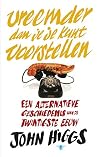
One of the more original history books you can read. Not the classic tale on the 20th century going from WWI to WWII and all the way to the crisis of the 80's but from Einstein over cubism, individuality, nihilims, popart, Super Mario and the network we are all part of today, like here on Librarything.
Higgs is an artist, one that has done a lot of research, but still an artist in my opinion. The way he composes the book, the links between chapters that look unlinked at the start, the very educational (without becoming preachy) style in situating the origin of a phenomenon, explaining it and then giving the effects of the phenomenon provide real insight.
Sometimes easy to recognise, sometimes you need a second look, but always clear, always part of the composition that this book is. It is not 15 stand alone chapters on 15 different things, by coincidence all happening in the 20th century. It is a piece of art, a cubistic one, that gives you the time to reflect on yourself, on the world, on society's past and future.
And it has a positive end. Brace yourself.
Thank you for this wonderful book, Mr. Higgs.
Higgs is an artist, one that has done a lot of research, but still an artist in my opinion. The way he composes the book, the links between chapters that look unlinked at the start, the very educational (without becoming preachy) style in situating the origin of a phenomenon, explaining it and then giving the effects of the phenomenon provide real insight.
Sometimes easy to recognise, sometimes you need a second look, but always clear, always part of the composition that this book is. It is not 15 stand alone chapters on 15 different things, by coincidence all happening in the 20th century. It is a piece of art, a cubistic one, that gives you the time to reflect on yourself, on the world, on society's past and future.
And it has a positive end. Brace yourself.
Thank you for this wonderful book, Mr. Higgs.
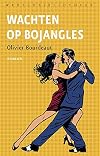
Who said that watching French movies / reading French books is more annoying then watching paint dry? Well, .... Here's an exception, and what an exception. The author surprises us with a double viewpoint on a fantastic hilarious woman. The son and the husband reflect on their life as son and as husband to what is a most entertaining, most intriguing life led by the mother / wife but sadly largely due to mental illness.
Whilst the books makes you laugh and you start to imagine a large part of it, especially the parties that never seem to end, it turns slightly into more dark moments still surrounded by the hilarious moments. To then surprise you back at the end with a climax..... immediately followed by the end.
Warning: you will get wet eyes. You do. Or you gave your heart and imagination away a long time ago.
And somewhat later you will hesitate to review this book because it leaves you with a lot of feelings. Very mixed feelings that is.
An incredible debut. Thank you Olivier.
Whilst the books makes you laugh and you start to imagine a large part of it, especially the parties that never seem to end, it turns slightly into more dark moments still surrounded by the hilarious moments. To then surprise you back at the end with a climax..... immediately followed by the end.
Warning: you will get wet eyes. You do. Or you gave your heart and imagination away a long time ago.
And somewhat later you will hesitate to review this book because it leaves you with a lot of feelings. Very mixed feelings that is.
An incredible debut. Thank you Olivier.
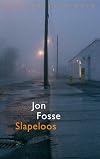
A short novel, allegoric to the christmas tale of a man, in this case a boy, and a woman, a girl in this story, looking for shelter to give birth and welcome nowhere. Reflections to their parents, their situation and the hopelessness of their future. Suggestiont that the boy goes all the way when refused shelter again, entisingly predicted by a man telling "you haven't done anything wrong, yet" .... and still, a new suggestion at the end that all will go well.
In what has to be an exorcizing writing style, full of repetition, endless sentences and a lot of unspoken feelings. But also some things are repeated and repeated, over and over again ... and this takes for me the magic away, it's like the author tries to hard, tries to get the atmosphere too expressive. The effect, in my humble opinion, is that it takes away the power of the events. There are more powerfull gripping short stories out there. Try Silvio D'Arzo for instance.
In what has to be an exorcizing writing style, full of repetition, endless sentences and a lot of unspoken feelings. But also some things are repeated and repeated, over and over again ... and this takes for me the magic away, it's like the author tries to hard, tries to get the atmosphere too expressive. The effect, in my humble opinion, is that it takes away the power of the events. There are more powerfull gripping short stories out there. Try Silvio D'Arzo for instance.
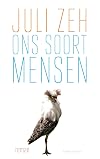
What a book. By some told to be inspired by [[Jonathan Franzen]] his work, but oh no, not for me. This is much better.
A village in East Germany, quiet, some village stories. So it looks. Until now.
Then comes the announcement of a change and all in the village, ever living there families as well as newcomers are going to see their lives all turned inside out and upside down. Successful for some, or not? Dramatic for others, or was it already dramatic before and didn't they just see it? All is clear: the good and the bad. Or is it just a pose? A game?
Intrigues, and fine tuned arrangements combined with elephant behaviour of the unknowing, it all turns into a catastrophic end. Or in complete rest for others.
Read this book, it takes you slowly in, all main characters tell their story, they all get some chapters named after them and you just feel more and more, this is going to be weird. And weird it ends.
It took me a few weeks, 670 pages in Dutch, but never a dull moment. I started it during a busy period for my job as well, i would read it again in a holiday and just get the story done by in a few days as you are looking forward to the next point of view, told by another character. Strongly written and a good translation into Dutch.
[[Juli Zeh]] gets up again in my list of favorite authors. Relentlessly violent in her descriptions of mankind and human society, every one goes under the scalpel. The politicians, the media, the marketing guys with one beautiful phrase: "95% show more of all publicity is a brutal denial of your intelligence"; and most of all: nobody is what he looks to be: the lefties in society all of a sudden become conservatives, the traders seem to have a soft spot, the agressive farmers and landowners happen to do everything for ....... yep, for what and for whom?
Give yourself a surprise and dive in this book. It's like real life. It's like a bustling city. It's full of events. And, it's only a village.
A spectrum of power, environment, economics, politics, behaviour and society evolution like you will seldom see in one book. show less
A village in East Germany, quiet, some village stories. So it looks. Until now.
Then comes the announcement of a change and all in the village, ever living there families as well as newcomers are going to see their lives all turned inside out and upside down. Successful for some, or not? Dramatic for others, or was it already dramatic before and didn't they just see it? All is clear: the good and the bad. Or is it just a pose? A game?
Intrigues, and fine tuned arrangements combined with elephant behaviour of the unknowing, it all turns into a catastrophic end. Or in complete rest for others.
Read this book, it takes you slowly in, all main characters tell their story, they all get some chapters named after them and you just feel more and more, this is going to be weird. And weird it ends.
It took me a few weeks, 670 pages in Dutch, but never a dull moment. I started it during a busy period for my job as well, i would read it again in a holiday and just get the story done by in a few days as you are looking forward to the next point of view, told by another character. Strongly written and a good translation into Dutch.
[[Juli Zeh]] gets up again in my list of favorite authors. Relentlessly violent in her descriptions of mankind and human society, every one goes under the scalpel. The politicians, the media, the marketing guys with one beautiful phrase: "95% show more of all publicity is a brutal denial of your intelligence"; and most of all: nobody is what he looks to be: the lefties in society all of a sudden become conservatives, the traders seem to have a soft spot, the agressive farmers and landowners happen to do everything for ....... yep, for what and for whom?
Give yourself a surprise and dive in this book. It's like real life. It's like a bustling city. It's full of events. And, it's only a village.
A spectrum of power, environment, economics, politics, behaviour and society evolution like you will seldom see in one book. show less
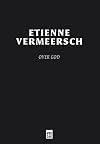
A short statement and comments on the non-existence of the god of christianity, islam and jews. Professor emeritus in philosophy Vermeersch arguments in a very rational way that god, as described by christians, jews and muslims, can not exist.
Beginning with a statement, explaining the statement, and even going through the different argumentations of new theologists, the statement stands as a rock.
Or god is not almighty, allknowing and endlessly merciful, and if he would be all of that he is a fake as all religions excused, tolerated and even approved atrocities as slavery, lower position of women, child abuse or neglect and even prosecution of those who do not believe, or worse: who believe in another persona of the same god.
The professor spends an extra chapter on those that would say that he criticises an old fashioned idea of god. The new fashioned ideas of god, without hell, without damnation or inferiority of women, etc., etc., is a "a la carte" idea of god build by those who came to the conclusion that this old fashioned god doesn't respond anymore to current moral standards, but unfortunately for them, this has nothing to do with the official christianity or other official religions.
It is all the more unfortunate for these people that in other parts the professor clearly states and proves with references that moral standards came a lot earlier to development then the historical start periods of these religions.
Being a very kind man, the author understands that show more these statements can heart people as always with cognitive dissonance related to the education everyone of us received through the persons they love the most in their childhood: the parents. Being religious is for a lot of people an entire part of their lives, told and learned to them from their earliest years in their family and so it becomes a part of them. Receiving then arguments that go against this long standing tradition shared with their beloved ones, is painful. The professor concludes that most of the people their faith has nothing to do with believing or not the arguments pro or contra a god.
From my side, i hope not to shock a lot of people here, although i will not ignore that i am an atheist. I was brought up in christian religion, i even feared god for quite some time. Was it rational arguments that caused the change? Yes, and no. It was even more the other way round, there is no rationale for me in atrocities happening every day combined with an endlessly merciful god. And if he tests us like some say, it is not a "loving" god, because love can't get tested. show less
Beginning with a statement, explaining the statement, and even going through the different argumentations of new theologists, the statement stands as a rock.
Or god is not almighty, allknowing and endlessly merciful, and if he would be all of that he is a fake as all religions excused, tolerated and even approved atrocities as slavery, lower position of women, child abuse or neglect and even prosecution of those who do not believe, or worse: who believe in another persona of the same god.
The professor spends an extra chapter on those that would say that he criticises an old fashioned idea of god. The new fashioned ideas of god, without hell, without damnation or inferiority of women, etc., etc., is a "a la carte" idea of god build by those who came to the conclusion that this old fashioned god doesn't respond anymore to current moral standards, but unfortunately for them, this has nothing to do with the official christianity or other official religions.
It is all the more unfortunate for these people that in other parts the professor clearly states and proves with references that moral standards came a lot earlier to development then the historical start periods of these religions.
Being a very kind man, the author understands that show more these statements can heart people as always with cognitive dissonance related to the education everyone of us received through the persons they love the most in their childhood: the parents. Being religious is for a lot of people an entire part of their lives, told and learned to them from their earliest years in their family and so it becomes a part of them. Receiving then arguments that go against this long standing tradition shared with their beloved ones, is painful. The professor concludes that most of the people their faith has nothing to do with believing or not the arguments pro or contra a god.
From my side, i hope not to shock a lot of people here, although i will not ignore that i am an atheist. I was brought up in christian religion, i even feared god for quite some time. Was it rational arguments that caused the change? Yes, and no. It was even more the other way round, there is no rationale for me in atrocities happening every day combined with an endlessly merciful god. And if he tests us like some say, it is not a "loving" god, because love can't get tested. show less
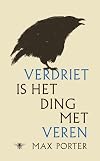
A poetic short novella, rythmic writing, noise, sounds, combined with long and winding sentences, all in all very atypical. A bit of a hype this little book and understanding why but not top notch for me.
It describes the broken, unlogical pieces of life someone goes through when suddenly a beloved person is lost. Mourning is not logical, not linear and this is what the author tries to let the reader live through when reading this novella.
It's gripping by moments, absurd in others, it's people trying to pick up their lives. In this aspect you could say that the author is succesful in his setup.
But, it does not stick, it doesn't makes you feel sick, i didn't get empathic or emotional and so it stayed a nice poetic narrative, weirdly unfolded and wrapped together again. But not moving, not strangling you like for instance [Sprakeloos] by [[Tom Lanoye]] on the loss of his mother did. Not the wild emotions and sucking in that [De H Is van Havik] by [[Helen Macdonald]] did.
Nice, that's the correct word. Nothing more, nothing less.
It describes the broken, unlogical pieces of life someone goes through when suddenly a beloved person is lost. Mourning is not logical, not linear and this is what the author tries to let the reader live through when reading this novella.
It's gripping by moments, absurd in others, it's people trying to pick up their lives. In this aspect you could say that the author is succesful in his setup.
But, it does not stick, it doesn't makes you feel sick, i didn't get empathic or emotional and so it stayed a nice poetic narrative, weirdly unfolded and wrapped together again. But not moving, not strangling you like for instance [Sprakeloos] by [[Tom Lanoye]] on the loss of his mother did. Not the wild emotions and sucking in that [De H Is van Havik] by [[Helen Macdonald]] did.
Nice, that's the correct word. Nothing more, nothing less.
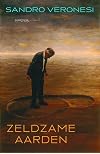
A story about a guy (Pietro Paladini, protagonist in [Kalme Chaos]) who's life falls to pieces after some events, partially outside of his will, partially not wanting to know, not willing to see. But does it really falls to pieces? Or do the pieces actually come together like they never did before?
Veronesi wrote this "sequel" to [Kalme Chaos] because he was surprised, so did he tell himself on the occassion of a visit to Brussels bookshop Passa Porta, that 95% of the people only saw one aspect of Paladini's character or behaviour in that book. And he wanted to explicit the other side.
Now, this seems far fetched for me, it really looked as a kind of marketing stunt to promote this new book, but that was maybe because i myself was also so sucked into the "standard" recognition of the Paladini character.
Anyhow. This [Zeldzame Aarden] is a very nice book, at the start it looks like a mixture of the absurdity typical for [[Niccolo Ammaniti]] mixed with some cheap Italian action movie, but slowly it evolves towards the possible double twists, double layers, and certainly possible double interpretations that are so strongly present in other books by Veronesi. (see [XY] as best example)
Read this book: it contains again some very beautiful written passages, the end of the book is incredibly strong, it made me think about my own life and the people around me and it leaves you in astonishment: do we ever really know who we truly are?
Veronesi wrote this "sequel" to [Kalme Chaos] because he was surprised, so did he tell himself on the occassion of a visit to Brussels bookshop Passa Porta, that 95% of the people only saw one aspect of Paladini's character or behaviour in that book. And he wanted to explicit the other side.
Now, this seems far fetched for me, it really looked as a kind of marketing stunt to promote this new book, but that was maybe because i myself was also so sucked into the "standard" recognition of the Paladini character.
Anyhow. This [Zeldzame Aarden] is a very nice book, at the start it looks like a mixture of the absurdity typical for [[Niccolo Ammaniti]] mixed with some cheap Italian action movie, but slowly it evolves towards the possible double twists, double layers, and certainly possible double interpretations that are so strongly present in other books by Veronesi. (see [XY] as best example)
Read this book: it contains again some very beautiful written passages, the end of the book is incredibly strong, it made me think about my own life and the people around me and it leaves you in astonishment: do we ever really know who we truly are?
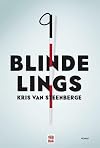
The authors second novel, after his brilliant debut [Woesten]. And of course, a brilliant debut sets high expectations. Which are not immediately met. The first chapters, all chronological, all in one day, are too slow. Too slow for me, at least. But slowly and steadily the characters take form, the situation gets set, the story unfolds. In a 24-style concept (like the tv-series) every small chapter gets situated and timed.
The plot goes around a boy who's live looks dominated by all around him, be it by being overpresent or just not, by too much or not enough attention, by the absence of drama or the overwhelming presence of it. Flashbacks in his mind and reflections by all others involved show how we came to this day and of course all comes together in the end and no one will ever be the same afterwards.
Pyschological warfare, indifference, love, honour and conscience, the author isn't scared of the big questions in life and the human attitudes.
This author can write! Brilliant sentences, long and winding very beautiful descriptions or staccato when needed. Now and then a bit overdone? For my taste, not every noun needs an adjective, and sometimes especially in the first half of the story it slows down the reading. But the style can also make you smile, the subtle depicting of small characteristics of the protagonists, the sharp or just absolute blunt reactions in dialogues, it's a fine line for the author and he finds the balance in the rather fast evolving second part show more of this novel.
The final outcome is somewhat half predictable but the pieces of drama lived by all protagonists take some twists and turns.
[Woesten] did shake me up, how was it possible that this author who wrote so powerful and so beautiful had never written a novel before? And i was deeply moved by the story. This one, [Blindelings] is a very good book. But less original in characters, less surprising, maybe caused by the expectations, who knows? The concept looks well thought off, but maybe a bit in the way of the beauty of the story?
Should you read it? Yes, you should. Don't let my small remarks put you off, it is a very good book, i would give too much away if i told you more but i can tell you this: you don't want to be one of the protagonists. Not one of them. Go, find out.
This book is yet another time living proof that the game between reader and writer is complex. After my first [[Philip Roth]] i didn't expect anything, after my first [[Kris Van Steenberge]] i expected the world. And i got a nice part of it. show less
The plot goes around a boy who's live looks dominated by all around him, be it by being overpresent or just not, by too much or not enough attention, by the absence of drama or the overwhelming presence of it. Flashbacks in his mind and reflections by all others involved show how we came to this day and of course all comes together in the end and no one will ever be the same afterwards.
Pyschological warfare, indifference, love, honour and conscience, the author isn't scared of the big questions in life and the human attitudes.
This author can write! Brilliant sentences, long and winding very beautiful descriptions or staccato when needed. Now and then a bit overdone? For my taste, not every noun needs an adjective, and sometimes especially in the first half of the story it slows down the reading. But the style can also make you smile, the subtle depicting of small characteristics of the protagonists, the sharp or just absolute blunt reactions in dialogues, it's a fine line for the author and he finds the balance in the rather fast evolving second part show more of this novel.
The final outcome is somewhat half predictable but the pieces of drama lived by all protagonists take some twists and turns.
[Woesten] did shake me up, how was it possible that this author who wrote so powerful and so beautiful had never written a novel before? And i was deeply moved by the story. This one, [Blindelings] is a very good book. But less original in characters, less surprising, maybe caused by the expectations, who knows? The concept looks well thought off, but maybe a bit in the way of the beauty of the story?
Should you read it? Yes, you should. Don't let my small remarks put you off, it is a very good book, i would give too much away if i told you more but i can tell you this: you don't want to be one of the protagonists. Not one of them. Go, find out.
This book is yet another time living proof that the game between reader and writer is complex. After my first [[Philip Roth]] i didn't expect anything, after my first [[Kris Van Steenberge]] i expected the world. And i got a nice part of it. show less

A bombshell.
I must admit, i was scared. I bought this book years ago and it stayed on my "to be read" list because i didn't like at all Deception by the same author. How wrong was i? Terribly wrong. This book, Indignation is like a high speed train rushing through your veins. Roth describes the coming of age of Marcus Messner, son of a Jewish butcher and trying to get independant, trying to do university in a catholic small town, while he comes from the already more open New York atmosphere.
The backdrop of the terrible Korean war, the "indignation" on injustice, the low self esteem combined with the high intellectual powers, the mistrust, the .... everything an 18 year old sholar goes through: girls, sex, humiliation,.... it all culminates in a few furious last months.
I have seldom ever read a book at the speed i did with this one, it's vivacious, it's a rush and it seems to me like one big dealing with the past. Is Roth dealing with his own past? Probably. The engagement is too high to be purely fictional.
I only see now, googling on Roth's life that this book has been transformed into a movie only recently. The book is anti-religious with some beautiful quotes and statements, so that is already a little shock even in the USA of today. But the movie will need to be very hard boiled to reach the adrenaline level of the book. Let's see.
A passionate and repetitive writing style make this book a top notch read. Do it.
I must admit, i was scared. I bought this book years ago and it stayed on my "to be read" list because i didn't like at all Deception by the same author. How wrong was i? Terribly wrong. This book, Indignation is like a high speed train rushing through your veins. Roth describes the coming of age of Marcus Messner, son of a Jewish butcher and trying to get independant, trying to do university in a catholic small town, while he comes from the already more open New York atmosphere.
The backdrop of the terrible Korean war, the "indignation" on injustice, the low self esteem combined with the high intellectual powers, the mistrust, the .... everything an 18 year old sholar goes through: girls, sex, humiliation,.... it all culminates in a few furious last months.
I have seldom ever read a book at the speed i did with this one, it's vivacious, it's a rush and it seems to me like one big dealing with the past. Is Roth dealing with his own past? Probably. The engagement is too high to be purely fictional.
I only see now, googling on Roth's life that this book has been transformed into a movie only recently. The book is anti-religious with some beautiful quotes and statements, so that is already a little shock even in the USA of today. But the movie will need to be very hard boiled to reach the adrenaline level of the book. Let's see.
A passionate and repetitive writing style make this book a top notch read. Do it.