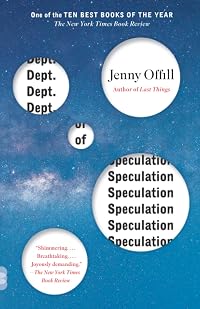
Dept. of Speculation
by Jenny Offill
On This Page
Description
"Dept. of Speculation is a portrait of a marriage. It is also a beguiling rumination on the mysteries of intimacy, trust, faith, knowledge, and the condition of universal shipwreck that unites us all. Jenny Offill's heroine, referred to in these pages as simply "the wife," once exchanged love letters with her husband, postmarked Dept. of Speculation, their code name for all the uncertainty that inheres in life and in the strangely fluid confines of a long relationship. As they confront an show more array of common catastrophes--a colicky baby, bedbugs, a faltering marriage, stalled ambitions--the wife analyzes her predicament, invoking everything from Keats and Kafka to the thought experiments of the Stoics to the lessons of doomed Russian cosmonauts. She muses on the consuming, capacious experience of maternal love, and the near total destruction of the self that ensues from it, as she confronts the friction between domestic life and the seductions and demands of art. With cool precision, in language that shimmers with rage and wit and fierce longing, Jenny Offill has crafted an exquisitely suspenseful love story that has the velocity of a train hurtling through the night at top speed. Exceptionally lean and compact, Dept. of Speculation can be read in a single sitting, but there are enough bracing emotional insights in these pages to fill a much longer novel. "-- show lessTags
Recommendations





Member Recommendations
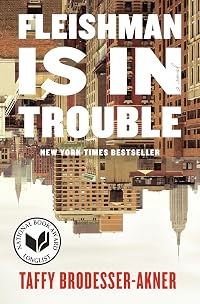
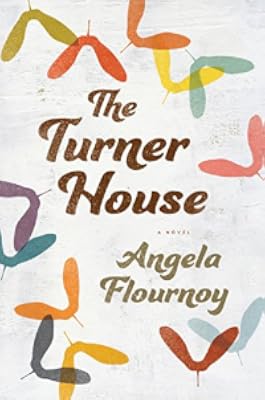
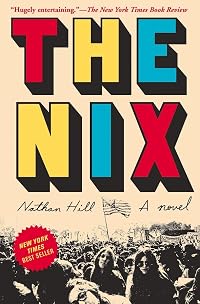
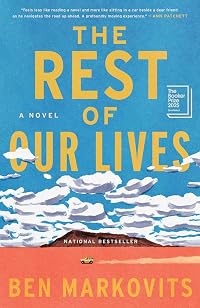
wandering_star Similar fragmented approach to telling a devastating story.

by Othemts
wandering_star Two experimental Jennys with a similar elliptical style of storytelling.
Member Reviews
This is a short meditative book about life. It is told in first person present tense by a young woman. She is initially called “the narrator,” and later becomes “the wife.” It is a story of a marriage that begins well, but with the stresses of a baby and a few bad decisions, the relationship falters. The narrator comments on the circumstances of her life, at a distance, almost like an impartial observer. It is a very creative take on how a person changes over time, particularly when facing issues such as spousal infidelity and the exhaustion of early motherhood.
We spend time in the narrator’s head as she attempts to work through these issues and examines her priorities. It is told in snippets of thoughts and ideas and can show more feel a bit fragmented. The narrator intersperses quotes and observations about science, spiritualism, and philosophy. For example: “The Buddhists say there are 121 states of consciousness. Of these, only three involve misery or suffering. Most of us spend our time moving back and forth between these three.”
The writing is stunning. I have read a couple of other books by this author, and this is my favorite by far. It is sad in places but also contains subtle humor. It is short (175 pages), reflective, and thought-provoking. Even though it deals with life’s struggles, and the narrator goes through many sad and depressing circumstances, it ends on a hopeful note.
“But now it seems possible that the truth about getting older is that there are fewer and fewer things to make fun of until finally there is nothing you are sure you will never be.”
4.5 show less
We spend time in the narrator’s head as she attempts to work through these issues and examines her priorities. It is told in snippets of thoughts and ideas and can show more feel a bit fragmented. The narrator intersperses quotes and observations about science, spiritualism, and philosophy. For example: “The Buddhists say there are 121 states of consciousness. Of these, only three involve misery or suffering. Most of us spend our time moving back and forth between these three.”
The writing is stunning. I have read a couple of other books by this author, and this is my favorite by far. It is sad in places but also contains subtle humor. It is short (175 pages), reflective, and thought-provoking. Even though it deals with life’s struggles, and the narrator goes through many sad and depressing circumstances, it ends on a hopeful note.
“But now it seems possible that the truth about getting older is that there are fewer and fewer things to make fun of until finally there is nothing you are sure you will never be.”
4.5 show less
In wistful mode the female narrator of this novel charts some of the events of her life, her youthful romances, encountering the man who would become her husband, the birth of her daughter, and the rupture that draws her life forward through change. The narrator is a writer and teacher of writing and sometimes a ghost-writer. Already she has given up on her first goal in life, which was to become an art monster. Because of him. And because of her, meaning her daughter. Her husband is a musician, a composer of jingles for advertisements, and sometimes of songs for her and her daughter. But he’s also the source of the rupture. Which is unforgivable. Perhaps.
The writing comes in short bursts, as though snatched from the breeze. Or maybe show more it is the writing that conforms to the tiny moments of private thought afforded a young mother. It creates a kind of distance between the protagonist/narrator and her life. As though her life were being obliquely observed. That works well as we waft along in the first half of the novel, and doubly well when the rupture provokes more erratic thoughts and emotional excesses.
There is wit and charm here and a surfeit of deeper thought about life and art and the art of life from art monsters and philosophy monsters and poets. I enjoyed it immensely but feel as though I should read it again almost immediately so that none of it slips away unappreciated.
Highly recommended. show less
The writing comes in short bursts, as though snatched from the breeze. Or maybe show more it is the writing that conforms to the tiny moments of private thought afforded a young mother. It creates a kind of distance between the protagonist/narrator and her life. As though her life were being obliquely observed. That works well as we waft along in the first half of the novel, and doubly well when the rupture provokes more erratic thoughts and emotional excesses.
There is wit and charm here and a surfeit of deeper thought about life and art and the art of life from art monsters and philosophy monsters and poets. I enjoyed it immensely but feel as though I should read it again almost immediately so that none of it slips away unappreciated.
Highly recommended. show less
What did you do today, you'd say when you got home from work, and I'd try my best to craft an anecdote for you out of nothing.
In Dept. of Speculation, Jenny Offill leaves plot behind in favor of brief, beautifully written vignettes in a woman's life. The unnamed protagonist begins the book as a young woman, ambitious and determined to be an "art monster," living entirely for her writing. Along the way, she gets married and has a child, entanglements that complicate and enrich her life. And that's the book, really. Her thoughts and experiences as she lives her life; not the milestones, but what it feels like to stand behind an elderly woman at the drug store, to care for a cranky infant who will not sleep, to work, resentfully, toward show more forgiveness.
How has she become one of those people who wears yoga pants all day? She used to make fun of those people. With their happiness maps and gratitude journals and their bags made out of recycled tire treads. But now it seems possible that the truth about getting older is that there are fewer and fewer things to make fun of until finally there is nothing you are sure you will never be.
Dept. of Speculation is a short novel, almost a novella, but it feels like a much larger book. The woman is prickly and often irritated and I like characters like that. The writing is wonderful; vivid without being ornate; there isn't a superfluous word in the thing. show less
In Dept. of Speculation, Jenny Offill leaves plot behind in favor of brief, beautifully written vignettes in a woman's life. The unnamed protagonist begins the book as a young woman, ambitious and determined to be an "art monster," living entirely for her writing. Along the way, she gets married and has a child, entanglements that complicate and enrich her life. And that's the book, really. Her thoughts and experiences as she lives her life; not the milestones, but what it feels like to stand behind an elderly woman at the drug store, to care for a cranky infant who will not sleep, to work, resentfully, toward show more forgiveness.
How has she become one of those people who wears yoga pants all day? She used to make fun of those people. With their happiness maps and gratitude journals and their bags made out of recycled tire treads. But now it seems possible that the truth about getting older is that there are fewer and fewer things to make fun of until finally there is nothing you are sure you will never be.
Dept. of Speculation is a short novel, almost a novella, but it feels like a much larger book. The woman is prickly and often irritated and I like characters like that. The writing is wonderful; vivid without being ornate; there isn't a superfluous word in the thing. show less
Lee recommended that I read this book ages ago. And dutifully I added it to my to-read list and moved on. An age later, I finally picked up a copy. And put it on my to-read shelf and moved on. Another age had to pass until I was staring at my shelves to make a TBR pile for the Libraries Matter Readathon, and I grabbed it.
ONCE I STARTED READING I COULD NOT PUT IT DOWN.
I don't know how its fragmented structure was so effective, but it was. Aren't our lives made up of fragments? Small memories, that interesting article you read, an anecdote about a saint you learned about in school that comes back to you all of the sudden with shocking relevance.
And it is definitely the writing with this book, not the plot. The plot is every American show more marriage with a few standard specifics thrown in: bed bugs, a child who breaks both wrists, a husband who has an affair, a wife wondering why she traded in her chance for art, for greatness, for single-minded pursuit of her muse for the above.
Most notably, this book filled me with an incandescent rage at the cheating husband, the gutless weenie he cheated with, all of society that enables this bullshit, etc. A rage that bubbled over and spilled on all sorts of other things.A rage that was barely (not really) satisfied by the reconciliation at the end of the novel. But this is life, right? Messy, and fractured, and compromised. show less
ONCE I STARTED READING I COULD NOT PUT IT DOWN.
I don't know how its fragmented structure was so effective, but it was. Aren't our lives made up of fragments? Small memories, that interesting article you read, an anecdote about a saint you learned about in school that comes back to you all of the sudden with shocking relevance.
And it is definitely the writing with this book, not the plot. The plot is every American show more marriage with a few standard specifics thrown in: bed bugs, a child who breaks both wrists, a husband who has an affair, a wife wondering why she traded in her chance for art, for greatness, for single-minded pursuit of her muse for the above.
Most notably, this book filled me with an incandescent rage at the cheating husband, the gutless weenie he cheated with, all of society that enables this bullshit, etc. A rage that bubbled over and spilled on all sorts of other things.
If you'd like to discuss the book, we're talking about it at The Socratic Salon.
The wife. She is broken, enraged and listless, but not before being filled with the joys of new love and uncertainties of motherhood. She battles a never-ending barrage of bedbugs and baby vomit sneak attacks. She wonders where she lost herself, or if she willingly gave herself away.
At just under 200 pages, Dept. of Speculation can be devoured in a few hours, but begs to be savored over several days. Though Offill's unnamed narrator can at times feel distant, using humorous anecdotes to keep readers at arm's length, she also reveals intimate, honest details that are frighteningly relatable. Those in need of a solid plotline in their reading will likely show more struggle with the structure of Offill's prose. Yet, the wife's stream of consciousness is not without purposeful organization.
“But now it seems possible that the truth about getting older is that there are fewer and fewer things to make fun of until finally there is nothing you are sure you will never be."
Like the swirl of thoughts that fill our heads as we lie awake at night, the vignettes in Dept. of Speculation run from self-deprecating to hopeful and nostalgic to envious in sporadic, but gorgeously penned, sentences. Offill combines witty humor with careful analysis of modern life and marriage in a book I'm sure I'll be recommending all year. show less
The wife. She is broken, enraged and listless, but not before being filled with the joys of new love and uncertainties of motherhood. She battles a never-ending barrage of bedbugs and baby vomit sneak attacks. She wonders where she lost herself, or if she willingly gave herself away.
At just under 200 pages, Dept. of Speculation can be devoured in a few hours, but begs to be savored over several days. Though Offill's unnamed narrator can at times feel distant, using humorous anecdotes to keep readers at arm's length, she also reveals intimate, honest details that are frighteningly relatable. Those in need of a solid plotline in their reading will likely show more struggle with the structure of Offill's prose. Yet, the wife's stream of consciousness is not without purposeful organization.
“But now it seems possible that the truth about getting older is that there are fewer and fewer things to make fun of until finally there is nothing you are sure you will never be."
Like the swirl of thoughts that fill our heads as we lie awake at night, the vignettes in Dept. of Speculation run from self-deprecating to hopeful and nostalgic to envious in sporadic, but gorgeously penned, sentences. Offill combines witty humor with careful analysis of modern life and marriage in a book I'm sure I'll be recommending all year. show less
"Memories are microscopic. Tiny particles that swarm together and apart. Little people, Edison called them. Entities. He had a theory about where they came from and that theory was outer space." Clever! Because this book is a bunch of tiny particle-memories, short paragraphs or sentences reporting the life of 'the wife.' One of the things nobody has ever said about the wife, we learn on p 68, is that she needs to take herself more seriously. That is absolutely true. If the narrator of this book took herself any more seriously, she would be an existentialist philosopher. Perhaps she already is.
I know people like to read about experiences they've had/could easily have. I know that for most people who read 'literary fiction,' that means show more reading about school, marriage, kids, divorce, literary fiction, and death. And I know that there are *more* than enough books about those topics, so you have to do something to make your book about marriage, kids, divorce, and literary fiction stand out. Offill has done that by using fragmented forms and other tricks (the taking yourself seriously business comes from a list, for instance). Also, it's nicely written and short.
Thankfully Offill is unwilling to be just another recorder of domestic unhappiness. She brings together astronomy (see Edison stuff above), Buddhism, and other cod-philosophical reflections from the armchair to fill out an otherwise thin book about a couple who has kids, but then he cheats, but (plot spoiler!) it's okay because they forgive each other.
I was half inclined to write all this off as padding, but the Buddhism, at least, does fit in--but I only worked that out because I am, coincidentally, reading a bit of Japanese Buddhism. Apparently there was a real problem in medieval Japan for Buddhists, who vacillated wildly between acknowledging the transience of all existence (thus setting themselves up for salvation and the Pure Land), and actually really starting to *like* the transience and appreciating it for its own sake, which made their life bearable in this world. The same seems to be happening here: is Offill's attention to the quotidian an act of piety that makes the book worthwhile? Or is it just ruining our chance to think about something more important?
That's a really important question, and the book does a nice job of posing it. The implied answer is that the attention to the quotidian is worthwhile and important. But you can only really come to that conclusion if you like your books relatable, rather than imaginative. It also helps if you think Tolstoy was right about unhappy families, when, if contemporary fiction is any indication, he was actually *100%* wrong.
Speaking of the 19th century, everything about this book is so class specific that it makes Austen look like Balzac. That's a real problem for a book that takes itself *this* seriously. show less
I know people like to read about experiences they've had/could easily have. I know that for most people who read 'literary fiction,' that means show more reading about school, marriage, kids, divorce, literary fiction, and death. And I know that there are *more* than enough books about those topics, so you have to do something to make your book about marriage, kids, divorce, and literary fiction stand out. Offill has done that by using fragmented forms and other tricks (the taking yourself seriously business comes from a list, for instance). Also, it's nicely written and short.
Thankfully Offill is unwilling to be just another recorder of domestic unhappiness. She brings together astronomy (see Edison stuff above), Buddhism, and other cod-philosophical reflections from the armchair to fill out an otherwise thin book about a couple who has kids, but then he cheats, but (plot spoiler!) it's okay because they forgive each other.
I was half inclined to write all this off as padding, but the Buddhism, at least, does fit in--but I only worked that out because I am, coincidentally, reading a bit of Japanese Buddhism. Apparently there was a real problem in medieval Japan for Buddhists, who vacillated wildly between acknowledging the transience of all existence (thus setting themselves up for salvation and the Pure Land), and actually really starting to *like* the transience and appreciating it for its own sake, which made their life bearable in this world. The same seems to be happening here: is Offill's attention to the quotidian an act of piety that makes the book worthwhile? Or is it just ruining our chance to think about something more important?
That's a really important question, and the book does a nice job of posing it. The implied answer is that the attention to the quotidian is worthwhile and important. But you can only really come to that conclusion if you like your books relatable, rather than imaginative. It also helps if you think Tolstoy was right about unhappy families, when, if contemporary fiction is any indication, he was actually *100%* wrong.
Speaking of the 19th century, everything about this book is so class specific that it makes Austen look like Balzac. That's a real problem for a book that takes itself *this* seriously. show less
An amusing book about adultery; educational too! I never knew that research shows men tend to have affairs after their oldest child turns six, our evolutionarily reptilian brains thinking that genetic investment is able to carry on without us now, so time to go create a different one. Or that Buddhists believe there are 121 states of consciousness, only 3 of which involve misery or suffering, though naturally we spend most of our time just in those three. I have no confirmation that these are true, mind, but they sound legit.
The book's heroine never intended to get married, and the book never intends to give the reader much of any idea about the husband. He exists, he is outlined, and then he cheats, and we're given the wife's reaction show more along with a steady stream of amusing factoids. Interestingly, the perspective shifts from first to third person once this trouble occurs, as if the character steps back from this clichéd situation to wryly observe the difficulty she's gotten herself into. "If only you'd stuck to your plan to be an Art Monster," her third person omniscient voice might say to her first person character, "this totally could have been avoided." Happily, however, the first person wrenches back control of the narrative at the last. It's always better to have loved.
There is a comparison in the style of this book to Renata Adler's Speedboat in that it is told in little episodic chunks. But Offill is funny; Adler is arch. Offill has a plot; Adler does not. Between the two I'll definitely take Offill. show less
The book's heroine never intended to get married, and the book never intends to give the reader much of any idea about the husband. He exists, he is outlined, and then he cheats, and we're given the wife's reaction show more along with a steady stream of amusing factoids. Interestingly, the perspective shifts from first to third person once this trouble occurs, as if the character steps back from this clichéd situation to wryly observe the difficulty she's gotten herself into. "If only you'd stuck to your plan to be an Art Monster," her third person omniscient voice might say to her first person character, "this totally could have been avoided." Happily, however, the first person wrenches back control of the narrative at the last. It's always better to have loved.
There is a comparison in the style of this book to Renata Adler's Speedboat in that it is told in little episodic chunks. But Offill is funny; Adler is arch. Offill has a plot; Adler does not. Between the two I'll definitely take Offill. show less
Members
- Recently Added By
Published Reviews
ThingScore 63
Offill’s brief book eschews obvious grandeur. It does not broadcast its accomplishments for the cosmos but tracks the personal and domestic and local, a harrowed inner space. It concentrates its mass acutely, pressing down with exquisite and painful precision, like a pencil tip on the white of the nail.
added by Lemeritus
Dept. of Speculation is a riposte to the notion that domestic fiction is humdrum and unambitious. From the point of view of an unnamed American woman, it gives us the hurrahs and boos of daily life, of marriage and of parenthood, with exceptional originality, intensity and sweetness.
[...]
Dept. of Speculation is a shattered novel that stabs and sparkles at the same time. It is the kind of book show more that you will be quoting over and over to friends who don't quite understand, until they give in and read it too. show less
[...]
Dept. of Speculation is a shattered novel that stabs and sparkles at the same time. It is the kind of book show more that you will be quoting over and over to friends who don't quite understand, until they give in and read it too. show less
Offill is a smart writer with a canny sense of pacing; just when you want to abandon the fragmented puzzle pieces of the novel, she reveals a moment of breathtaking tenderness ... especially engaging when it describes new motherhood ... For better or worse, this is not so much a book about their marriage; it is a book about the wife’s marriage. It would be interesting to read the other story show more to this marriage, to know more of the husband, the father — but Offill still makes it seem as if the wife’s version of the marriage is story enough and, perhaps, the only story that matters. show less
added by Lemeritus
Lists

2015 Tournament of Books
16 works; 19 members

Best Contemporary Literary Fiction (Around the Last 30 Years)
388 works; 124 members

Female Protagonist
1,056 works; 57 members

Love and Marriage
93 works; 10 members

Top Five Books of 2018
802 works; 265 members

Top Five Books of 2014
1,064 works; 398 members

Books Read in 2015
3,299 works; 129 members

Lithub: The 50 Best Contemporary Novels Under 200 Pages
50 works; 4 members
Top Five Books of 2016
795 works; 229 members

Vulture's 100 Best Books of the 21st Century (So Far)
98 works; 9 members

Folio Prize 2015 Longlist
79 works; 2 members

Pen/Faulkner Winners and Finalists
178 works; 9 members

Literature About Women and Girls
394 works; 39 members

BBC Radio 4 Bookclub
341 works; 13 members

Contemporary Fiction
109 works; 7 members

Dublin Literary Award Longlist 2016
148 works; 4 members

Reading Group 2015 Winter
6 works; 1 member

Books Read in 2020
4,379 works; 124 members
Overdue Podcast
806 works; 9 members

Novels featuring Mothers
64 works; 8 members
NYTimes 10 Best of 2014
10 works; 3 members

LitHub's Best Novels of the Decade 2010-2019
39 works; 1 member

Best Books of the 2010s
20 works; 1 member

Books Read in 2024
4,727 works; 128 members

Books Read in 2021
5,361 works; 113 members

Great Short Books: A Year of Reading-Briefly
59 works; 4 members

Literature About Adultery
69 works; 10 members

Most Frequently Tagged "Read in 2015"
70 works; 1 member

The Hermenautic Bookshelf
111 works; 7 members

.
184 works; 1 member
Author Information

15+ Works 5,835 Members
Some Editions
Awards and Honors
Awards
Distinctions
Series
Belongs to Publisher Series
Common Knowledge
- Canonical title*
- Amt für Mutmaßungen
- Original title
- Dept. of speculation
- Alternate titles
- Department of Speculation
- Original publication date
- 2014
- People/Characters
- The Wife; The Husband; The Girl
- Important places
- Brooklyn, New York, New York, USA
- Epigraph
- Speculators on the universe...
are no better than madmen.
Socrates - Dedication
- For Dave
- First words
- Antelopes have 10x vision, you said.
- Quotations
- But the smell of her hair. The way she clasped her hand around my fingers. This was like medicine. For once, I didn’t have to think. The animal was ascendant.
The Buddhists say there are 121 states of consciousness. Of these, only three involve misery or suffering. Most of us spend our time moving back and forth between these three.
Studies suggest that reading makes enormous demands on the neurological system. One psychiatric journal claimed that African tribes needed more sleep after being taught to read. The French were great believers in such theorie... (show all)s. During World War II, the largest rations went to those engaged in arduous physical labor and those whose work involved reading and writing.
The reason to have a home is to keep certain people in and everyone else out. A home has a perimeter. But sometimes our perimeter was breached by neighbors, by Girl Scouts, by Jehovah’s Witnesses. I never liked to hear the ... (show all)doorbell ring. None of the people I liked ever turned up that way.
And that phrase—“sleeping like a baby.” Some blonde said it blithely on the subway the other day. I wanted to lie down next to her and scream for five hours in her ear.
I decide to make my class read creation myths. The idea is to go back to the beginning. In some, God is portrayed as a father, in others, as a mother. When God is a father, he is said to be elsewhere. When God is a mother, sh... (show all)e is said to be everywhere.
“How is that even possible?” the philosopher says. “He’s one of the kindest people I’ve ever met.” She knows. She knows. So it begs the question, doesn’t it? Did she unkind and ungood and untrue him?
She remembers the first night she knew she loved him, the way the fear came rushing in. She laid her head on his chest and listened to his heart. One day this too will stop, she thought. The no, no, no of it.
The only love that feels like love is the doomed kind. (Fun fact.)
But the truth is she has good impulse control. That is why she isn’t dead. Also why she became a writer instead of a heroin addict. She thinks before she acts. Or more properly, she thinks instead of acts. A character flaw,... (show all) not a virtue. - Last words
- (Click to show. Warning: May contain spoilers.)No one young knows the name of anything.
- Canonical DDC/MDS
- 813.54
- Canonical LCC
- PS3565.F383
*Some information comes from Common Knowledge in other languages. Click "Edit" for more information.
Classifications
Statistics
- Members
- 2,447
- Popularity
- 7,964
- Reviews
- 155
- Rating
- (3.70)
- Languages
- 11 — Catalan, Danish, Dutch, English, Finnish, French, German, Italian, Portuguese, Spanish, Swedish
- Media
- Paper, Audiobook, Ebook
- ISBNs
- 33
- ASINs
- 18