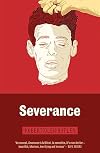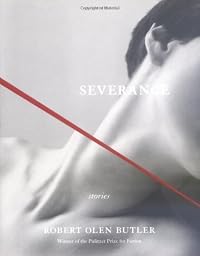
Severance: Stories
by Robert Olen Butler
On This Page
Description
The human head is believed to remain in a state of consciousness for one and one-half minutes after decapitation. In a heightened state of emotion, people speak at the rate of 160 words per minute. Inspired by the intersection of these two seemingly unrelated concepts, Pulitzer Prize-winning author Robert Olen Butler wrote sixty-two stories, each exactly 240 words in length, capturing the flow of thoughts and feelings that go through a person's mind after their head has been severed. The show more characters are both real and imagined Medusa (beheaded by Perseus, 2000 BC), Anne Boleyn (beheaded at the behest of Henry VIII, 1536), a chicken (beheaded for Sunday dinner, Alabama, 1958), and the author (decapitated, on the job, 2008). Told with the intensity of a poet and the wit of a great storyteller, these final thoughts illuminate and crystallize more about the characters' own lives and the worlds they inhabit than many writers manage to convey in full-length biographies or novels. The stories, which have appeared in literary magazines across the country, are a delightful and intriguing creative feat from one of today's most inventive writers. 'In concept, Severance is brilliant. In execution, it’s even better-beautiful, hilarious, horrifying, and humane' - Dave Eggers show lessTags
Recommendations



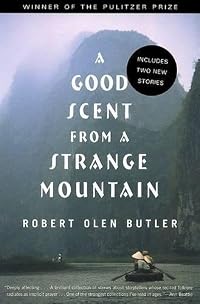











Member Recommendations
Member Reviews
In Severance, Robert Olen Butler combines two seemingly unrelated ideas: first, that consciousness lasts for one and a half minutes after decapitation, and second, that people speak at a rate of 160 words per minute when in a heightened state of emotion. Since people are likely pretty emotional once they've been decapitated, Butler figured that their final thoughts would run precisely 240 words -- the length of each of the book's 62 pieces, which seek to "capture the flow of thoughts and feelings that rush through a mind after the head has been severed."
Yeah, I know, sounds like a stupid gimmick that you'd want to throw across the room after a couple of entries. But Butler moves each one of these pieces -- which are really prose poems, show more although they're billed as short stories -- way beyond the gimmicky. Some of his subjects are fictional (Medusa; the dragon slain by Saint George; Mud, a man decapitated by a saber-toothed tiger); some are historical (Robespierre, Marie Antoinette, Thomas More); and some contemporary (Jayne Mansfield, Nicole Brown Simpson), but all are eloquent. And surprisingly, although many of them are sad, none of these pieces is morbid, as they focus on life rather than death. The entries can be difficult to read (Mary Queen of Scots moved me to tears, believe it or not), but just as many are beautiful, with dreamlike images blending effortlessly from one to the next even within the short wordspan Butler has allotted himself.
The book won't quite make you want to decapitate yourself to test Butler's theory and see whether you can be as eloquent as his subjects, but damn near. (And Butler decapitates himself at the end of the book anyway, so it's been done already and you needn't bother.) show less
Yeah, I know, sounds like a stupid gimmick that you'd want to throw across the room after a couple of entries. But Butler moves each one of these pieces -- which are really prose poems, show more although they're billed as short stories -- way beyond the gimmicky. Some of his subjects are fictional (Medusa; the dragon slain by Saint George; Mud, a man decapitated by a saber-toothed tiger); some are historical (Robespierre, Marie Antoinette, Thomas More); and some contemporary (Jayne Mansfield, Nicole Brown Simpson), but all are eloquent. And surprisingly, although many of them are sad, none of these pieces is morbid, as they focus on life rather than death. The entries can be difficult to read (Mary Queen of Scots moved me to tears, believe it or not), but just as many are beautiful, with dreamlike images blending effortlessly from one to the next even within the short wordspan Butler has allotted himself.
The book won't quite make you want to decapitate yourself to test Butler's theory and see whether you can be as eloquent as his subjects, but damn near. (And Butler decapitates himself at the end of the book anyway, so it's been done already and you needn't bother.) show less
I saw this book on a cart outside Books-a-Million years and years ago. I looked through it, thought it was intriguing, and put it back. I have thought of it at various times over the years, and wished I had purchased it. Not only could I not remember the author's name, I also could not remember the title. The only thing I remembered was that each page was 240 words in length and there was no punctuation.
Fast forward to last week, when I just happened upon it online. Kismet!! It was at Half Price Books, and I ordered it immediately. Imagine my delight when it arrived signed by the author!! Of course, it is signed "To Lauren", but that matters not to me.
On with the review. First of all, the premise of this one is magnificent! The last show more thoughts of a freshly decapitated person (well ... almost all are people). I would have found it interesting to know what the person was thinking about their current situation, but I'll bet it would have all been the same. Kind of a "Well, crap!" trail of thought. Instead, Olen Butler writes their last thoughts as the thing they loved most in life. It may be memories of a father, a lover, or a Messiah. What they would more than likely miss most.
Taking this vantage point not only varies the stories a great deal, it also gives insight into the lives of these people. As much as 240 words can.
I also love the fact that there is no punctuation. I can imagine the rambling thoughts of a dying person being just like this, and stopping in mid-thought, as all of these do.
All-in-all, this is a brilliant little book, and highly recommended. show less
Fast forward to last week, when I just happened upon it online. Kismet!! It was at Half Price Books, and I ordered it immediately. Imagine my delight when it arrived signed by the author!! Of course, it is signed "To Lauren", but that matters not to me.
On with the review. First of all, the premise of this one is magnificent! The last show more thoughts of a freshly decapitated person (well ... almost all are people). I would have found it interesting to know what the person was thinking about their current situation, but I'll bet it would have all been the same. Kind of a "Well, crap!" trail of thought. Instead, Olen Butler writes their last thoughts as the thing they loved most in life. It may be memories of a father, a lover, or a Messiah. What they would more than likely miss most.
Taking this vantage point not only varies the stories a great deal, it also gives insight into the lives of these people. As much as 240 words can.
I also love the fact that there is no punctuation. I can imagine the rambling thoughts of a dying person being just like this, and stopping in mid-thought, as all of these do.
All-in-all, this is a brilliant little book, and highly recommended. show less
Severance is one of the most unique books I’ve ever read. In fact, it’s a little creepy. The premise is based on two scientific theories: 1) that a person’s head remains conscious for one and a half minutes after decapitation and 2) that humans speak at the rate of 160 words per minute when they’re in a heightened state of emotion. These two theories indicate that a person who is decapitated might think 240 words before they’re completely dead. Based on this figure, Butler has written a series of short (240 words each, to be precise) monologues of decapitated people, fictional and non-fictional. These monologues are presented in chronological order, starting with Mud (“man, beheaded by saber-toothed tiger, circa 40,000 show more B.C.”) all the way through the author himself (“writer, decapitated on the job, 2008”). Fortunately, Robert Olen Butler was not decapitated in 2008—that would’ve just been too weird.
The book is interesting especially because of the glimpse it gives you into the lives of famous characters you’ll recognize: Medusa, John the Baptist, George (AND the dragon), the lady of the lake, Marie Antoinette, and so on. I’m mostly intrigued by the format of these monologues. I’ve never heard of a book quite like this and I’m always impressed with books that are out of the norm.
I doubt, however, that I’ll read the book again. It was entertaining and engaging, but not something I would gain insight from by reading it another time. I definitely think it’s an interesting read, but I’d suggest borrowing it from the library rather than buying it. show less
The book is interesting especially because of the glimpse it gives you into the lives of famous characters you’ll recognize: Medusa, John the Baptist, George (AND the dragon), the lady of the lake, Marie Antoinette, and so on. I’m mostly intrigued by the format of these monologues. I’ve never heard of a book quite like this and I’m always impressed with books that are out of the norm.
I doubt, however, that I’ll read the book again. It was entertaining and engaging, but not something I would gain insight from by reading it another time. I definitely think it’s an interesting read, but I’d suggest borrowing it from the library rather than buying it. show less
This odd little book is more a collection of thoughts than stories. Severance by Robert Olen Butler is inspired by two quotes:
After careful study and due deliberation it is my opinion the head remains conscious for one minute and a half after decapitation.
- Dr. Dassy D'Estaing, 1883
In a heightened state of emotion, we speak at the rate of 160 words per minute.
- Dr. Emily Reasoner, A Sourcebook of Speech, 1975
Putting 2 2 together, Butler concluded that a severed head would be able to speak (or think) 240 words before expiring. Thus explains this collection of 62 pieces about what goes through the mind of a severed head. Each story is exactly 240 words long. The heads are historical (John the Baptist, Walter Raleigh, Nicole Brown show more Simpson), fictional (Medusa, the Dragon slayed by St. George) and fanciful (a prehistoric man, a chicken, and the author himself). Over history people are beheaded by angry kings (Henry VIII) and angry mobs (the French Revolution) as well as by murders and in horrible accidents. The thought are often not about the beheading, but focus on a vital moment in the life of that person as the author imagines it. The text is written in a primal stream of consciousness, all one sentence no periods. I don't know who all the characters are, but in some ways the people I know nothing about are all the more fascinating to read about in just 240 of heightened speech.
It's an interesting concept for a book and it works, although I suspect that Butler takes a lot of liberties with the personal histories of the actual people included in his books. This is especially a concern for those who may still have family alive like Brown Simpson or a woman killed in the World Trade Center attacks (the latter includes a bad pun about Paul Anka singing "Put Your Head on My Shoulder"). Barring squeamishness though, this book is an intriguing examination of humanity in extreme situations. show less
After careful study and due deliberation it is my opinion the head remains conscious for one minute and a half after decapitation.
- Dr. Dassy D'Estaing, 1883
In a heightened state of emotion, we speak at the rate of 160 words per minute.
- Dr. Emily Reasoner, A Sourcebook of Speech, 1975
Putting 2 2 together, Butler concluded that a severed head would be able to speak (or think) 240 words before expiring. Thus explains this collection of 62 pieces about what goes through the mind of a severed head. Each story is exactly 240 words long. The heads are historical (John the Baptist, Walter Raleigh, Nicole Brown show more Simpson), fictional (Medusa, the Dragon slayed by St. George) and fanciful (a prehistoric man, a chicken, and the author himself). Over history people are beheaded by angry kings (Henry VIII) and angry mobs (the French Revolution) as well as by murders and in horrible accidents. The thought are often not about the beheading, but focus on a vital moment in the life of that person as the author imagines it. The text is written in a primal stream of consciousness, all one sentence no periods. I don't know who all the characters are, but in some ways the people I know nothing about are all the more fascinating to read about in just 240 of heightened speech.
It's an interesting concept for a book and it works, although I suspect that Butler takes a lot of liberties with the personal histories of the actual people included in his books. This is especially a concern for those who may still have family alive like Brown Simpson or a woman killed in the World Trade Center attacks (the latter includes a bad pun about Paul Anka singing "Put Your Head on My Shoulder"). Barring squeamishness though, this book is an intriguing examination of humanity in extreme situations. show less
A nice literary exercise and cool collection of microfiction. One of those poetiprosaic experiments which is fascinating and has many sparkling lines. However, couldn't agree more about the "creepiness" mentioned by many readers of this work: It is a bizarre premise that tends to overshadow any other points made. Much like any experiment, it both hits and misses. But, it is worth a read. Not sure worth a reread or study; however, I find all writing to be worthy on some level, so give it a try. I admire any author who experiments and attempts to break down boundaries, Faulkner to Calvino and all points in between.
“After decapitation, the human head is believed to remain in a state of consciousness for one and one half minutes.”
“In a heightened state of emotion, people speak at the rate of 160 words per minute.”
Using these two concepts, Butler writes a short story for each decapitated victim using only 240 words. Little to no punctuation was used, which made it slightly uncomfortable for me to read. The language, however, is very descriptive and poetic.
I was impressed at the cast of characters, fictional and factual, that Butler chose to write about. These characters included a dragon, Marie Antoinette, Medusa, a chicken, and even the author himself. Some of the characters were beheaded by accident, like John Martin, a boy who was show more “decapitated by subway after lifting sidewalk grate and falling onto the tracks below.” Others were beheaded as punishment, most notably from the French Revolution. Each of these mini-narratives had an individual voice, unique to each character. Just by the language, you could tell what their education was, their place in history, and their culture.
My favorite passage was that narrative of Pierre-François Lacenaire, “criminal and memoirist, guillotined for murder, 1836.” He described the guillotine as his fiancée, very eloquently. “…all her thin body is rouged for me, all but her bosom which is naked and unadorned, polished bright…” This unlikely juxtaposition was the most poetic and descriptive of all the stories.
Overall, this compilation of short stories was well written and strangely compelling. It was a very short, yet enjoyable read that I would recommend to anyone. show less
“In a heightened state of emotion, people speak at the rate of 160 words per minute.”
Using these two concepts, Butler writes a short story for each decapitated victim using only 240 words. Little to no punctuation was used, which made it slightly uncomfortable for me to read. The language, however, is very descriptive and poetic.
I was impressed at the cast of characters, fictional and factual, that Butler chose to write about. These characters included a dragon, Marie Antoinette, Medusa, a chicken, and even the author himself. Some of the characters were beheaded by accident, like John Martin, a boy who was show more “decapitated by subway after lifting sidewalk grate and falling onto the tracks below.” Others were beheaded as punishment, most notably from the French Revolution. Each of these mini-narratives had an individual voice, unique to each character. Just by the language, you could tell what their education was, their place in history, and their culture.
My favorite passage was that narrative of Pierre-François Lacenaire, “criminal and memoirist, guillotined for murder, 1836.” He described the guillotine as his fiancée, very eloquently. “…all her thin body is rouged for me, all but her bosom which is naked and unadorned, polished bright…” This unlikely juxtaposition was the most poetic and descriptive of all the stories.
Overall, this compilation of short stories was well written and strangely compelling. It was a very short, yet enjoyable read that I would recommend to anyone. show less
Recommended by folks into microfiction; seems to be one of those books that people either totally love or absolutely hate. I sampled about 1/4 of it at the bookstore over the course of a week, trying to get myself to buy it. I couldn't. Brilliant writing, but I agree with other reviewers--I couldn't get over the disconnect between what the pieces were and what the pieces were supposed to be (i.e. the thoughts that can take place during the last 90 seconds in the brain of a decapitated head).
Members
- Recently Added By
Lists

2021 Christmas Gifts
66 works; 13 members

Books Read in 2022
5,164 works; 113 members

Dead narrators
50 works; 4 members

Very short stories
39 works; 2 members
Author Information

44+ Works 5,070 Members
Robert Olen Butler is a novelist, screenwriter, educator, and short-story writer who grew up in Granite City, Illinois. Butler served in Vietnam. Following the Vietnam War, Butler began writing. His stories have appeared in The New Yorker, Esquire, The Paris Review, and The Saturday Review, as well as in four annual editions of the Best American show more Short Stories and six annual editions of New Stories of the South. A collection of his stories, A Good Scent from a Strange Mountain, won the 1993 Pulitzer Prize for Fiction. Butler's novels include The Alleys of Eden, Countrymen of Bones, and Sun Dogs. He has received a Guggenheim Fellowship in fiction and a National Endowment for the Arts grant. Butler also won the Richard and Hinda Rosenthal Foundation Award from the American Academy of Arts and Letters. He teaches creative writing at McNeese State University. (Bowker Author Biography) show less
Work Relationships
Is contained in
Classifications
Statistics
- Members
- 218
- Popularity
- 149,175
- Reviews
- 11
- Rating
- (3.79)
- Languages
- English, French
- Media
- Paper, Ebook
- ISBNs
- 4
- ASINs
- 2