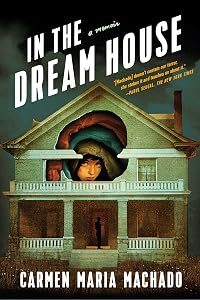
In the Dream House: A Memoir
by Carmen Maria Machado 
On This Page
Description
Biography & Autobiography. LGBTQIA+ (Nonfiction.) Nonfiction. In the Dream House is Carmen Maria Machado's engrossing and wildly innovative account of a relationship gone bad, and a bold dissection of the mechanisms and cultural representations of psychological abuse. Tracing the full arc of a harrowing relationship with a charismatic but volatile woman, Machado struggles to make sense of how what happened to her shaped the person she was becoming. And it's that struggle that gives the book show more its original structure: each chapter is driven by its own narrative trope-the haunted house, erotica, the bildungsroman-through which Machado holds the events up to the light and examines them from different angles. She looks back at her religious adolescence, unpacks the stereotype of lesbian relationships as safe and utopian, and widens the view with essayistic explorations of the history and reality of abuse in queer relationships. Machado's dire narrative is leavened with her characteristic wit, playfulness, and openness to inquiry. She casts a critical eye over legal proceedings, fairy tales, Star Trek, and Disney villains, as well as iconic works of film and fiction. The result is a wrenching, riveting book that explodes our ideas about what a memoir can do and be. show lessTags
Recommendations














Member Recommendations
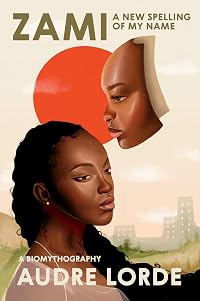
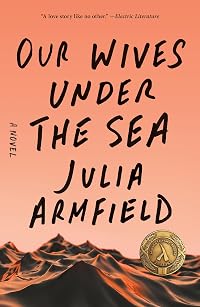
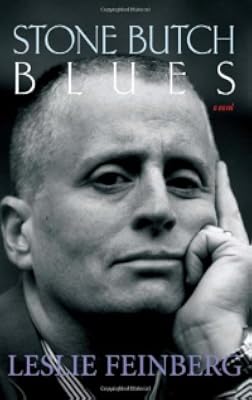
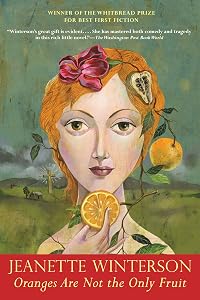
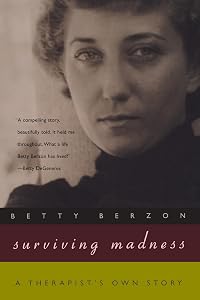
wandering_star Similar fragmented approach to telling a devastating story.
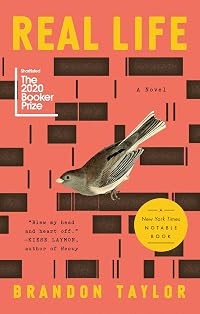
vwinsloe The author processes a traumatic event outside of her control by training a hawk and comparing the experience to the events in T.H. White's memoir. Very unlike In the Dream House in most ways, except that Machado also tries to process her trauma by looking at it through a variety of lenses, as though through broken glass.

Member Reviews
wow, this book.
this is devastating and gorgeous and i feel badly for loving something this much when it is so full of pain and hurt. (but also exquisite writing and depth of thought and honesty and history and folklore.)
and footnotes! (i mean, i really love footnotes, but these are amazing.)
i need to think more about what she does here: what her few researched sections on queer history do for the narrative that her own story doesn't; how she writes in different styles and innovatively (that choose your own adventure section!); and most importantly when she uses the first person (sprinkled in) versus second person (most of the time). i might not have the exact answers to all of these questions, but i do know that this is absolutely show more brilliant and necessary and so well written/done. (edit to add some thoughts: it's like she's showing us little snippets of the relationship to get at the truth of what it was like for her. it's also how memory works, showing pieces at a time or events in flashes. each little chapter is a little insight into her life when she was with the woman in the dream house, and each showed her a little something different about that woman, and so we are given a new voice or a new way of telling or a surprising turn. the change between first and second person pulls us in and pushes us away, something the woman in the dream house did to carmen over and over again, keeping her from feeling sure and comfortable with where she was, who she was, in that relationship.)
"'Don't you ever fucking write about this. Do you fucking understand me?'
You don't know if she means the woman or her, but you nod.
Fear makes liars of us all."
"...and also you're afraid you're going to miss your flight because your girlfriend spent her time this morning putting on her face, an expression you've always found sort of funny and vaguely sexist but that now just strikes you as horrifyingly ominous, because it suggests that she has one face and needs to put on another, and you saw underneath it last night, when you were so afraid and cowering, and she was screaming, and you were hiding from her, hiding from the woman who once told you she loved you and wanted to have children with you and called you the most beautiful and sexy and brilliant woman she'd ever met, you had to hide from her in a bathroom with a lock on the door, and if your family found out they'd probably think it proved every idea they've ever had about lesbians, and you wish she was a man because then at least it could reinforce ideas people had about men, and how she probably wouldn't understand but the last thing queer women need is bad fucking PR..."
"Putting language to something for which you have no language is no easy feat."
"From the corner of my eye, I stared at her freckles and imagined kissing her mouth. When I thought about her, I squirmed, tormented. What did it mean?
I had a crush on her. That's it. It wasn't complicated. But I didn't realize I had a crush on her. Because it was the early 2000s and I was just a baby in the suburbs without a reliable internet connection. I didn't know any queers. I did not understand myself. I didn't know what it meant to want to kiss another woman.
Years later, I'd figured that part out. But then, I didn't know what it meant to be afraid of another woman.
Do you see now? Do you understand?"
to refer back to when reading her book of short stories:
"You will spend the next few years of your writing career coming up with elaborate justifications for the structure of the stories you were writing at the time...
You can't bring yourself to say what you really think: I broke the stories down because I was breaking down and didn't know what else to do."
a quote from sarah manguso: "The trouble with letting people see you at your worst isn't that they'll remember, it's that you'll remember." show less
this is devastating and gorgeous and i feel badly for loving something this much when it is so full of pain and hurt. (but also exquisite writing and depth of thought and honesty and history and folklore.)
and footnotes! (i mean, i really love footnotes, but these are amazing.)
i need to think more about what she does here: what her few researched sections on queer history do for the narrative that her own story doesn't; how she writes in different styles and innovatively (that choose your own adventure section!); and most importantly when she uses the first person (sprinkled in) versus second person (most of the time). i might not have the exact answers to all of these questions, but i do know that this is absolutely show more brilliant and necessary and so well written/done. (edit to add some thoughts: it's like she's showing us little snippets of the relationship to get at the truth of what it was like for her. it's also how memory works, showing pieces at a time or events in flashes. each little chapter is a little insight into her life when she was with the woman in the dream house, and each showed her a little something different about that woman, and so we are given a new voice or a new way of telling or a surprising turn. the change between first and second person pulls us in and pushes us away, something the woman in the dream house did to carmen over and over again, keeping her from feeling sure and comfortable with where she was, who she was, in that relationship.)
"'Don't you ever fucking write about this. Do you fucking understand me?'
You don't know if she means the woman or her, but you nod.
Fear makes liars of us all."
"...and also you're afraid you're going to miss your flight because your girlfriend spent her time this morning putting on her face, an expression you've always found sort of funny and vaguely sexist but that now just strikes you as horrifyingly ominous, because it suggests that she has one face and needs to put on another, and you saw underneath it last night, when you were so afraid and cowering, and she was screaming, and you were hiding from her, hiding from the woman who once told you she loved you and wanted to have children with you and called you the most beautiful and sexy and brilliant woman she'd ever met, you had to hide from her in a bathroom with a lock on the door, and if your family found out they'd probably think it proved every idea they've ever had about lesbians, and you wish she was a man because then at least it could reinforce ideas people had about men, and how she probably wouldn't understand but the last thing queer women need is bad fucking PR..."
"Putting language to something for which you have no language is no easy feat."
"From the corner of my eye, I stared at her freckles and imagined kissing her mouth. When I thought about her, I squirmed, tormented. What did it mean?
I had a crush on her. That's it. It wasn't complicated. But I didn't realize I had a crush on her. Because it was the early 2000s and I was just a baby in the suburbs without a reliable internet connection. I didn't know any queers. I did not understand myself. I didn't know what it meant to want to kiss another woman.
Years later, I'd figured that part out. But then, I didn't know what it meant to be afraid of another woman.
Do you see now? Do you understand?"
to refer back to when reading her book of short stories:
"You will spend the next few years of your writing career coming up with elaborate justifications for the structure of the stories you were writing at the time...
You can't bring yourself to say what you really think: I broke the stories down because I was breaking down and didn't know what else to do."
a quote from sarah manguso: "The trouble with letting people see you at your worst isn't that they'll remember, it's that you'll remember." show less
“Love cannot be won or lost; a relationship doesn't have a scoring system. We are partners, paired against the world. We cannot succeed if we are at odds with each other.”
“The truth is, there is no better place to live than in the shadow of a beautiful, furious mountain.”
“You cried in front of many people. You missed readings, parties, the supermoon. You tried to tell your story to people who didn’t know how to listen. You made a fool of yourself, in more ways than one.
“When the historian of queer experience attempts to document a queer past, there is often a gatekeeper, representing a straight present.”
For many years, Carmen Maria Machado was locked into an abusive same-sex relationship. A nightmare, she had a hard show more time pulling herself out of. In her debut memoir Machado, describes this experience, in exquisite and painful detail. It can be a difficult read at times, but her writing is so bold and gorgeous, it guides the reader safely past the ugly passages. I loved her story collection, Her Body and Other Parties and with this one, she has proved to be a voice to be heard. I can't wait to see what she does next. show less
“The truth is, there is no better place to live than in the shadow of a beautiful, furious mountain.”
“You cried in front of many people. You missed readings, parties, the supermoon. You tried to tell your story to people who didn’t know how to listen. You made a fool of yourself, in more ways than one.
“When the historian of queer experience attempts to document a queer past, there is often a gatekeeper, representing a straight present.”
For many years, Carmen Maria Machado was locked into an abusive same-sex relationship. A nightmare, she had a hard show more time pulling herself out of. In her debut memoir Machado, describes this experience, in exquisite and painful detail. It can be a difficult read at times, but her writing is so bold and gorgeous, it guides the reader safely past the ugly passages. I loved her story collection, Her Body and Other Parties and with this one, she has proved to be a voice to be heard. I can't wait to see what she does next. show less
When Carmen Maria Machado was getting her MFA at Iowa City, she was also involved in an abusive relationship that she writes about here. The conceit is that every chapter -- ranging in length from a single paragraph to several pages -- is set in a specific genre or trope, so one chapter is "The Dream House as Unreliable Narrator" and another is "The Dream House as Choose Your Own Adventure." It's an effective way of pulling together a narrative that isn't too difficult to read, given the subject matter. Machado has researched ideas and themes that appear in fairy tales and folk tales and pulled them in to illustrate the ways in which the abuse manifested and in her response. Machado is also looking at the history of domestic abuse among show more women and how that differs from and imitates the more familiar partner violence in heterosexual relationships.
This could be a heavy book and a sad one, but Machado is so brilliant and her mind is so active and eager to seek out connections and ideas that I had to consciously slow down my reading. And Machado's story doesn't remain one characterized by uncertainty and turmoil. show less
This could be a heavy book and a sad one, but Machado is so brilliant and her mind is so active and eager to seek out connections and ideas that I had to consciously slow down my reading. And Machado's story doesn't remain one characterized by uncertainty and turmoil. show less
Machado has written an incredibly powerful book that does three amazing things all at once: It makes the nebulous but horrific experience of emotional abuse feel palpably real. It exposes the hidden world of women abusing women in lesbian relationships and examines without flinching all the uncomfortable questions that raises. And it does something completely new with the memoir form. If it had achieved any of these three, it would be worth reading, but that it can do all of them is an extraordinary achievement.
As a graduate student, author Carmen Maria Machado got involved with a beautiful, sexy, but also cruel and demeaning woman. This relationship affected Machado deeply, in many ways. In this brilliant memoir, Machado lifts the veil of secrecy that makes abusive queer relationships a taboo topic, even within lesbian and gay circles. I loved her use of folklore indices to reference the various motifs of her personal story. Highly recommended to all memoir readers.
This is a creatively written memoir about the author’s experience in an emotionally abusive same-sex relationship. Each short chapter is written as if viewing the relationship through a particular literary lens, such as picaresque, time travel, cult classic, romance, bildungsroman, erotica, noir, high fantasy, spy thriller, horror, etc. It traces the trajectory of an abusive relationship, from the initial infatuation with a charismatic individual to the euphoric feelings of the first stage of the relationship (the Dream House) to the inevitable slide into lying, gaslighting, manipulation, and controlling behavior.
For me, it is no surprise that same-sex relationships can contain the same types of abuse experienced by heterosexual show more couples, but the author points out that it is even more difficult to bring these issues into the light due to the already prevalent prejudices against the LGBT community. Machado brings up other instances of how abuse is generally viewed in society, as told in our stories – myths, fairy tales, films, television shows, and other media. Women are generally not viewed as capable of inflicting abuse, but when it is about power and control, anyone can be an abuser.
This book provides almost a handbook of red flags. The victim of abuse often tries to excuse or rationalize the partner’s behavior and keeps returning based on promises or apologies, hoping to get back that feeling of euphoria from the first stage. The victim is walking on eggshells and is the recipient of hot and cold treatment. The abuse accelerates over time. I think this book delivers an important message. Emotional and psychological abuse can be insidious, and it is important to recognize it and protect oneself by cutting off all contact. I also really loved this innovative approach to writing a memoir. Anyone who has experienced (or is experiencing) an abusive relationship will be able to relate to this book, though it may trigger painful memories. For others, it will be enlightening and educational. show less
For me, it is no surprise that same-sex relationships can contain the same types of abuse experienced by heterosexual show more couples, but the author points out that it is even more difficult to bring these issues into the light due to the already prevalent prejudices against the LGBT community. Machado brings up other instances of how abuse is generally viewed in society, as told in our stories – myths, fairy tales, films, television shows, and other media. Women are generally not viewed as capable of inflicting abuse, but when it is about power and control, anyone can be an abuser.
This book provides almost a handbook of red flags. The victim of abuse often tries to excuse or rationalize the partner’s behavior and keeps returning based on promises or apologies, hoping to get back that feeling of euphoria from the first stage. The victim is walking on eggshells and is the recipient of hot and cold treatment. The abuse accelerates over time. I think this book delivers an important message. Emotional and psychological abuse can be insidious, and it is important to recognize it and protect oneself by cutting off all contact. I also really loved this innovative approach to writing a memoir. Anyone who has experienced (or is experiencing) an abusive relationship will be able to relate to this book, though it may trigger painful memories. For others, it will be enlightening and educational. show less
This is a fragmented memoir about being in an abusive relationship. As such, it's sometimes a tough read (the abuse is mostly emotional/psychological, but occasionally physical). And yet it's the sort of book I want to go around recommending to people. It reminded me a little of Jenny Offill's Dept. of Speculation, a novel about divorce told in a similarly fragmentary manner. I think that works for these two stories because the structure creates a sense of 'how did I end up here', so far from what the narrators were expecting at the start of the relationship.
In the Dream House gives us a series of short images and episodes from the relationship - from the first excitement of lust and love, through the loved one's increasingly show more unpredictable behaviour, to terrible scenes of rage and jealousy.
You will remember so little about the dinner except that, at the end of it, you want to prolong the evening and so you order tea of all things. You drink it—a mouthful of heat and herb, scorching the roof of your mouth—while trying not to stare at her, trying to be charming and nonchalant while desire gathers in your limbs. Your female crushes were always floating past you, out of reach, but she touches your arm and looks directly at you and you feel like a child buying something with her own money for the first time.
And later:
The next day, after you say good-bye to your friends, you sit in the car in the parking lot as she talks at you—your friends hate me, they’re jealous. An hour later you are still there, your head bent tearily against the window. The new bride walks by and notices you in your car. You see her slow down, her face crimped with puzzlement and concern. You shake your head ever so slightly, and she looks uncertain but mercifully she keeps walking so you can endure your punishment in peace. By the time you’ve wound out of the mountains and gotten back to a freeway, the bite of the fight has sweetened; whiskey unraveled by ice.
Some of the episodes are told in stylistically clever ways, which could have seemed gimmicky except that there is always a reason for it which takes you back to what Machado is saying, and which makes sense emotionally. A short chapter which is a 'lipogram' (without the letter 'e') makes a point about what it's like when there is something huge that you can't talk to anyone about. A chapter in the form of a 'choose your own adventure story' conveys the sense that no matter what Machado did, it wasn't right, and there was no way to break out of the cycle of fights and anger. show less
In the Dream House gives us a series of short images and episodes from the relationship - from the first excitement of lust and love, through the loved one's increasingly show more unpredictable behaviour, to terrible scenes of rage and jealousy.
You will remember so little about the dinner except that, at the end of it, you want to prolong the evening and so you order tea of all things. You drink it—a mouthful of heat and herb, scorching the roof of your mouth—while trying not to stare at her, trying to be charming and nonchalant while desire gathers in your limbs. Your female crushes were always floating past you, out of reach, but she touches your arm and looks directly at you and you feel like a child buying something with her own money for the first time.
And later:
The next day, after you say good-bye to your friends, you sit in the car in the parking lot as she talks at you—your friends hate me, they’re jealous. An hour later you are still there, your head bent tearily against the window. The new bride walks by and notices you in your car. You see her slow down, her face crimped with puzzlement and concern. You shake your head ever so slightly, and she looks uncertain but mercifully she keeps walking so you can endure your punishment in peace. By the time you’ve wound out of the mountains and gotten back to a freeway, the bite of the fight has sweetened; whiskey unraveled by ice.
Some of the episodes are told in stylistically clever ways, which could have seemed gimmicky except that there is always a reason for it which takes you back to what Machado is saying, and which makes sense emotionally. A short chapter which is a 'lipogram' (without the letter 'e') makes a point about what it's like when there is something huge that you can't talk to anyone about. A chapter in the form of a 'choose your own adventure story' conveys the sense that no matter what Machado did, it wasn't right, and there was no way to break out of the cycle of fights and anger. show less
Members
- Recently Added By
Published Reviews
ThingScore 100
On its surface, the book recounts a psychologically abusive relationship that marked Machado's life in many ways. However, just below the surface, the narrative continually shapeshifts and at times becomes a play, an academic look at female queerness in mainstream media, a choose your own adventure book, and a sharp deconstruction of the mechanisms of psychological abuse. That said, the total show more is more than the sum of its parts and In the Dream House is the kind of book that burrows under the reader's skin while simultaneously forcing her to inhabit the body of the writer.... In the Dream House is an uncomfortable read. It is a narrative that is never what you think it is, a story about "a house that was not a house and a dream that was no dream at all." The nameless woman and the house merge together and become a dark reality as well as a haunting nightmare. show less
added by Lemeritus
“In the Dream House” is a page turner of psychological suspense. In short chapters that alternate between lucid scenes from her life and forays into fairy tales, legal histories, queer theory and cultural mainstays like “Star Trek” and “Gaslight,” Machado evokes how abusers entrap their targets with sustained attention, so rare among the distracted shards of modern romance, and show more therefore precious....As she wrote in her first book, “Many people live and die without ever confronting themselves in the darkness.” Machado is not among them, nor are her readers. show less
added by Lemeritus
What could seem gimmicky — I confess I braced myself at first — quickly feels like the only natural way to tell the story of a couple. What relationship exists in purely one genre? What life? ... There is something anxious, and very intriguing, in the degree of experimentation in this memoir, in its elaborately titivated sentences, its thicket of citations. The flurry — the excess — show more feels deliberate, and summons up the image of the writer holding a ring of keys, trying each of them in turn to unlock a resistant story, to open a door she might be hesitant to enter.... At its conclusion, what does she leave us but a library in miniature — those long-invisible, long-suppressed stories now culled from every quarter of history, and explored in every conceivable genre — a living archive of her own loving, idiosyncratic design. show less
added by Lemeritus
Lists

Best Lesbian Fiction (And Narrative Non-Fiction)
155 works; 35 members

Best Biographies, Autobiographies and Memoirs
465 works; 160 members

2020 Hugo Eligible Related works
13 works; 3 members

Top Five Books of 2019
387 works; 111 members

Lit Lattes Ep 004
13 works; 1 member

Lit Lattes Ep 001
9 works; 1 member

Top 10 2021
10 works; 1 member

Phi Beta Kappa reading list
260 works; 8 members

NYT Readers best of 21st C
100 works; 8 members

Not the NYT list of top 100 21st century books
100 works; 6 members

Which house?
423 works; 16 members

top 100
39 works; 1 member

Reading Group 2020
6 works; 1 member
Club Read's Recommended Nonfiction Written by Women
618 works; 30 members

Memoirs by Writers
6 works; 1 member

Sapph-Lit
78 works; 4 members

Queer Nonfiction (Owned TBR)
25 works; 1 member

living room bookshelf
150 works; 1 member

Books Read in 2019
4,052 works; 108 members

Top Five Books of 2023
767 works; 317 members

At the Library
217 works; 1 member

Favourite Books
1,819 works; 316 members

Phoebe Bridgers
29 works; 1 member

BookTok Adult
115 works; 2 members

Banned or Challenged Books
400 works; 37 members

Best 21st Century Books (So Far)
670 works; 85 members

Houses and Buildings as Characters in Fiction
182 works; 29 members

Books Tagged Abuse
152 works; 4 members
Indie Next Picks
196 works; 4 members
The Best LGBTQ Nonfiction
157 works; 66 members
Author Information

24+ Works 7,101 Members
Carmen Maria Machado is a LibraryThing Author, an author who lists their personal library on LibraryThing.
Some Editions
Awards and Honors
Common Knowledge
- Original publication date
- 2019-11-05
- Important places
- Bloomington, Indiana, USA; Iowa City, Iowa, USA
- Epigraph
- You pile up associations the way you pile up bricks. Memory itself is a form of architecture.
—Louise Bourgeois
If you are silent about your pain, they'll kill you and say you enjoyed it.
—Zora Neale Hurston
Your mind indeed is tired. Your mind so tired that it can no longer work at all. You do not think. You dream. Dream all day long. Dream everything. Dream maliciously and incessantly. Don't you know that by now?
—Patrick... (show all) Hamilton, Angel Street
Eros limbslackener shakes me again — that sweet bitter, impossible creature.
—Sappho, as translated by Jim Powell
The milk was so hot, she could barely let her lip touch it at first. The tiny sips spread inside her mouth and released a melange of organic flavors. The milk seemed to taste of bone and blood, of warm flesh, or hair, saltl... (show all)ess as chalk yet alive as a growing embryo. It was hot through and through to the bottom of the cup, and Therese drank it down, as people in fairy tales drink the potion that will transform, or the unsuspecting warrior the cup that will kill.
—Patricia Highsmith, The Price of Salt
And because you are of a kind, the house knows you. When you cry out, the lights flicker, ghostly blue and ragged. When she says you are shut off, the light switches nod their white tiny heads. Tiles creak yes... (show all) beneath her edicts—something bad must have happened to make you this way, the way where you don't want her. But the windows rattle, disagree. In their honeyed, blindless light, they see it—something bad is happening.
—Leah Horlick, "Ghost House"
The trouble with letting people see you at your worst isn't that they'll remember; it's that you'll remember.
—Sarah Manguso
Two or three things I know for sure and one of them is that telling the story all the way through is an act of love.
—Dorothy Allison - Dedication
- If you need this book, it is for you
- First words
- I never read prologues.
- Quotations
- The word archive, Jacques Derrida tells us, comes from the ancient Greek ἀρχεῖον: arkheion, “the house of the ruler.” ... What is placed in or left out of the archive is a political act, dictated by the archivist... (show all) and the political context in which she lives.
When the historian of queer experience attempts to document a queer past, there is often a gatekeeper, representing a straight present.” What gets left behind? Gaps where people never see themselves or find information abou... (show all)t themselves. Holes that make it impossible to give oneself a context. Crevices people fall into. Impenetrable silence.
If you could harness that energy—that constant, roving hunger—you could do wonders with it. You could push the earth inch by inch through the cosmos until it collided heart-first with the sun.
That is to say, queers—real-life ones—do not deserve representation, protection, and rights because they are morally pure or upright as a people. They deserve those things because they are human beings, and that is enough... (show all).
The idea of the battered woman was brand-new—it had been coined in the ’70s—but both abuse and the abused meant only one thing: physical violence and a white, straight woman
...the nature of archival silence is that certain people’s narratives and their nuances are swallowed by history; we see only what pokes through because it is sufficiently salacious for the majority to pay attention.
“Why do we teach girls that their perspectives are inherently untrustworthy?”
This is what I keep returning to: how people decide who is or is not an unreliable narrator. And after that decision has been made, what do we do with people who attempt to construct their own vision of justice?
Almost every residency I’ve had since, I’ve found at least one stunned bird sprawled on the ground outside my workspace. I learned: they never see the glass coming. They only see the reflection of the sky.
The trouble with letting people see you at your worst isn’t that they’ll remember; it’s that you’ll remember. —Sarah Manguso
But that’s the minority anxiety, right? That if you’re not careful, someone will see you—or people who share your identity—doing something human and use it against you.
I will be able to tell them: you can be hurt by people who look just like you. Not only can it happen, it probably will, because the world is full of hurt people who hurt people.
There is a Panamanian folktale that ends with: “My tale goes only to here; it ends, and the wind carries it off.” It’s the only true kind of ending. - Last words
- (Click to show. Warning: May contain spoilers.)My tale goes only to here; it ends, and the wind carries it to you.
- Blurbers
- Broder, Melissa; Marzano-Lesnevich, Alex; Brockmeier, Kevin; Faderman, Lillian; Gay, Roxane; Sehgal, Parul
- Original language
- English
- Canonical DDC/MDS
- 813.6
Classifications
Statistics
- Members
- 2,617
- Popularity
- 7,199
- Reviews
- 81
- Rating
- (4.41)
- Languages
- 8 — Dutch, English, French, German, Italian, Spanish, Swedish, Portuguese (Portugal)
- Media
- Paper, Audiobook, Ebook
- ISBNs
- 28
- ASINs
- 9