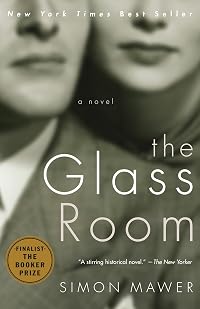
The Glass Room
by Simon Mawer
On This Page
Description
Honeymooners Viktor and Liesel Landauer are filled with the optimism and cultural vibrancy of central Europe of the 1920s when they meet modernist architect Rainer von Abt. He builds for them a home to embody their exuberant faith in the future, and the Landauer House becomes More ... an instant masterpiece. Viktor and Liesel, a rich Jewish mogul married to a thoughtful, modern gentile, pour all of their hopes for their marriage and budding family into their stunning new home, filling it show more with children, friends, and a generation of artists and thinkers eager to abandon old-world European style in favor of the new and the avant-garde. But as life intervenes, their new home also brings out their most passionate desires and darkest secrets. As Viktor searches for a warmer, less challenging comfort in the arms of another woman, and Liesel turns to her wild, mischievous friend Hana for excitement, the marriage begins to show signs of strain. The radiant honesty and idealism of 1930 quickly evaporate beneath the storm clouds of World War II. As Nazi troops enter the country, the family must leave their old life behind and attempt to escape to America before Viktor's Jewish roots draw Nazi attention, and before the family itself dissolves. As the Landauers struggle for survival abroad, their home slips from hand to hand, from Czech to Nazi to Soviet possession and finally back to the Czechoslovak state, with new inhabitants always falling under the fervent and unrelenting influence of the Glass Room. Its crystalline perfection exerts a gravitational pull on those who know it, inspiring them, freeing them, calling them back, until the Landauers themselves are finally drawn home to where their story began. show lessTags
Recommendations






































Member Recommendations
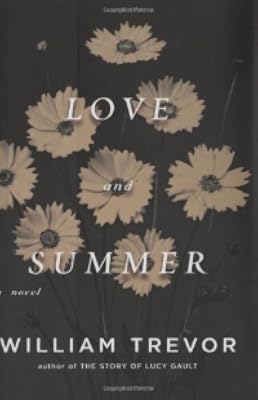
trav Slightly different time period and tone, but the writing is very similar as are the dynamics. Both Rules of Civility and The Glass Room are very well written time-period books.

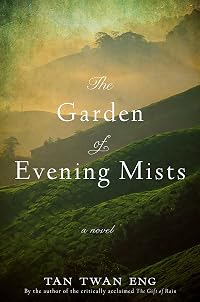
Smiler69 Another book where the house forms a central character, this time in East Germany as the occupants change through WWII and communism.
Member Reviews
Set against the shifting backdrop of early 20th-century Europe, The Glass Room tells the story of Viktor and Liesel Landauer, a wealthy couple who commission a visionary architect to build a striking modern home of glass and steel. The house, designed as a symbol of openness, beauty, and progressive ideals, stands in stark contrast to the increasingly complicated and fragile nature of their personal lives.
As love, desire, and betrayal begin to erode their relationship, the political climate across Europe darkens. With the looming threat of World War II, the Landauers are ultimately forced to abandon their dream home. The house itself becomes a silent witness to history, passing through the hands of various occupants—scientists, show more soldiers, and officials—each leaving their mark and reflecting the turbulence of the 20th century.
This is a thrilling and beautifully written novel, filled with vivid descriptions that bring both the characters and the iconic house to life. The blend of emotional drama and historical change, along with themes of love and betrayal, makes it a compelling and memorable read. show less
As love, desire, and betrayal begin to erode their relationship, the political climate across Europe darkens. With the looming threat of World War II, the Landauers are ultimately forced to abandon their dream home. The house itself becomes a silent witness to history, passing through the hands of various occupants—scientists, show more soldiers, and officials—each leaving their mark and reflecting the turbulence of the 20th century.
This is a thrilling and beautifully written novel, filled with vivid descriptions that bring both the characters and the iconic house to life. The blend of emotional drama and historical change, along with themes of love and betrayal, makes it a compelling and memorable read. show less
This is no ordinary read. Coming from a Jewish family I found this story both compelling and deeply disturbing. It takes place in what is now the Czech Republic, during the years between the 1930s and 1990. The pre-war years, the growing influence of Germany and the anti-semitism, and the way class determined what happened to people are all artfully described. I found myself deeply connected to the story of the Landauers, a wealthy family that built a magnificent dream home in the years before World War II and then following the different ways that home is used as years pass. The characters are complex, believable and drawn with great depth. Even an evil Nazi scientist comes across somewhat sympathetically.
However, there were aspects of show more the book that bothered me. The focus wanders. It seems to start as a story of a family, that then gets dropped midway through the book. Then for a while, it feels like a book about the house itself. The stories do eventually get reconnected by the end, but to me, in less than a completely satisfying way. Just a little too neatly, and therefore not quite believably.
The other aspect that bothered me were the descriptions of sexual activity. They often seemed inappropriately descriptive, given the overall subject matter and tone of the book. They were also VERY male, as though the author were working out some of his own fantasies through the characters. To me they seemed unnecessary and distracting. show less
However, there were aspects of show more the book that bothered me. The focus wanders. It seems to start as a story of a family, that then gets dropped midway through the book. Then for a while, it feels like a book about the house itself. The stories do eventually get reconnected by the end, but to me, in less than a completely satisfying way. Just a little too neatly, and therefore not quite believably.
The other aspect that bothered me were the descriptions of sexual activity. They often seemed inappropriately descriptive, given the overall subject matter and tone of the book. They were also VERY male, as though the author were working out some of his own fantasies through the characters. To me they seemed unnecessary and distracting. show less
This is no ordinary read. Coming from a Jewish family I found this story both compelling and deeply disturbing. It takes place in what is now the Czech Republic, during the years between the 1930s and 1990. The pre-war years, the growing influence of Germany and the anti-semitism, and the way class determined what happened to people are all artfully described. I found myself deeply connected to the story of the Landauers, a wealthy family that built a magnificent dream home in the years before World War II and then following the different ways that home is used as years pass. The characters are complex, believable and drawn with great depth. Even an evil Nazi scientist comes across somewhat sympathetically.
However, there were aspects of show more the book that bothered me. The focus wanders. It seems to start as a story of a family, that then gets dropped midway through the book. Then for a while, it feels like a book about the house itself. The stories do eventually get reconnected by the end, but to me, in less than a completely satisfying way. Just a little too neatly, and therefore not quite believably.
The other aspect that bothered me were the descriptions of sexual activity. They often seemed inappropriately descriptive, given the overall subject matter and tone of the book. They were also VERY male, as though the author were working out some of his own fantasies through the characters. To me they seemed unnecessary and distracting. show less
However, there were aspects of show more the book that bothered me. The focus wanders. It seems to start as a story of a family, that then gets dropped midway through the book. Then for a while, it feels like a book about the house itself. The stories do eventually get reconnected by the end, but to me, in less than a completely satisfying way. Just a little too neatly, and therefore not quite believably.
The other aspect that bothered me were the descriptions of sexual activity. They often seemed inappropriately descriptive, given the overall subject matter and tone of the book. They were also VERY male, as though the author were working out some of his own fantasies through the characters. To me they seemed unnecessary and distracting. show less
The Glass Room is a novel about a house, a real and remarkable one, although the story and characters are fictional. It begins with the return of Liesel Landauer, now elderly and blind, to the house that she, a gentile, shared with her husband Viktor, a prosperous Jewish manufacturer of fine automobiles. The Landauer House, which sits on a hill overlooking the Czechoslovakian city of Mĕsto, was designed for the young couple by a famous Viennese architect in the 1920s, and was a classic work of modern design. The centerpiece of the house is the Glass Room, which has large plate glass windows and is partitioned by a wall made of onyx that changes in appearance with the position of the sun. Mawer describes the Glass Room early in the show more book, as the Landauers see it for the first time:
"It had become a palace of light, light bouncing off the chrome pillars, light refulgent on the walls, light glistening on the dew in the garden, light reverberating from the glass. It as though they stood inside a crystal of salt."
The Glass Room becomes a place where anything and everything is possible, as previous structural and cultural restraints are lifted. The wealthy and sophisticated couple embrace their new home to the fullest, using it frequently to host friends and business colleagues. Liesel's best friend, Hana, a irreverent, beautiful and sexually hungry married woman, is a frequent visitor who provides vitality and spark to the setting.
However, changes are occurring in Europe that darken and threaten the couple's idyllic existence. Hitler's national socialism spreads through and beyond nearby Germany, and the livelihood of Jews in Czechoslovakia becomes slowly but progressively more difficult. The Landauers initially ignore the warnings, as their wealth and influence insulate them from the growing menace. The couple agrees to take in a young woman who has been forced to flee from Vienna, a woman who is well known to Viktor. Finally the couple decides to flee their beloved house and country, but by the time they decide to do so, the Germans have already occupied Czechoslovakia. Hana and her Jewish husband, however, decide to stay in Mĕsto.
The novel then alternates between the lives of the Landauers and the new occupants, leading up to Liesel's eventual return to the Landauer House.
This was a brilliant and near-perfect novel that covers Europe before and during World War II and the subsequent decline in European culture, and includes rich descriptions of architecture, art and music. Love, infidelity and devotion are infused throughout the book, but ultimately the main story and character is the Landauer House with its Glass Room, and the effects it has on its inhabitants and visitors.
I suppose the highest praise I could give this novel is that I would like to start reading it again from the beginning. It is easily the best of the 2009 Booker Prize longlisted books I've read so far, and would be a deserving winner of the award, in my opinion. show less
"It had become a palace of light, light bouncing off the chrome pillars, light refulgent on the walls, light glistening on the dew in the garden, light reverberating from the glass. It as though they stood inside a crystal of salt."
The Glass Room becomes a place where anything and everything is possible, as previous structural and cultural restraints are lifted. The wealthy and sophisticated couple embrace their new home to the fullest, using it frequently to host friends and business colleagues. Liesel's best friend, Hana, a irreverent, beautiful and sexually hungry married woman, is a frequent visitor who provides vitality and spark to the setting.
However, changes are occurring in Europe that darken and threaten the couple's idyllic existence. Hitler's national socialism spreads through and beyond nearby Germany, and the livelihood of Jews in Czechoslovakia becomes slowly but progressively more difficult. The Landauers initially ignore the warnings, as their wealth and influence insulate them from the growing menace. The couple agrees to take in a young woman who has been forced to flee from Vienna, a woman who is well known to Viktor. Finally the couple decides to flee their beloved house and country, but by the time they decide to do so, the Germans have already occupied Czechoslovakia. Hana and her Jewish husband, however, decide to stay in Mĕsto.
The novel then alternates between the lives of the Landauers and the new occupants, leading up to Liesel's eventual return to the Landauer House.
This was a brilliant and near-perfect novel that covers Europe before and during World War II and the subsequent decline in European culture, and includes rich descriptions of architecture, art and music. Love, infidelity and devotion are infused throughout the book, but ultimately the main story and character is the Landauer House with its Glass Room, and the effects it has on its inhabitants and visitors.
I suppose the highest praise I could give this novel is that I would like to start reading it again from the beginning. It is easily the best of the 2009 Booker Prize longlisted books I've read so far, and would be a deserving winner of the award, in my opinion. show less
One of the first things I noticed about this book was that the writing style reminded me of other books I had read that were translated from a language other than English, but this book was written in English, not translated. That Simon Mawer's style mimicked a novel in translation, yet was really tremendously well controlled is just one of the aspects that make this book stand out from other historical novels. For The Glass Room is an historical novel and both the sometimes subtle presence and sometimes ironic impact of historical context is integral to the story.
The story starts simply enough, a Czech couple, the Landauers, on their honeymoon journey to Italy, but before they arrive there they visit the grave of the Bride's brother show more who died in the Great War. In just a few pages we already have some of the themes: history, endings and beginnings, death and life. But this novel is just as much about the new house that is yet to be built on a plot of land that was a present from the bride's parents. It is this house, designed by the great modern architect Rainer von Abt, that will have as its centerpiece the "Glass Room" of the title. The story spans the rest of the twentieth century and involves living, loving, tragedy and more than one metamorphosis for the "Glass Room" at the heart of the story.
In addition to the smooth almost glass-like writing style I was impressed by the structure of the book as the story gathers speed, develops the central characters, provides suspense and deftly links the various subplots. Early in the novel the architect, Rainer von Abt, tells the Landauers that:
"'I am a poet of space and form. Of light' -- it seemed to be no difficulty at all to drag another quality into his aesthetic -- 'of light and space and form. Architects are people who build walls and floors and roofs. I capture and enclose the space within.'"(p 16)
The author is also a poet whose aesthetic provides similar form for this story. Yes, this is the exciting era of modern architecture, of the new era represented by artists like Mondrian and others who were establishing "de stijl". The world is constantly changing and the artists, the architects, and musicians like Janacek and Kapralova are leading the way. The political world of the story is in turmoil with changes, including another war and its aftermath, lead the Landauers to new ventures, places, and loves as the plot unfolds. However, the key to the story remains the haunting spirit of the"Glass Room".
"She dreams. She dreams of cold. She dreams of glass and light, the Glass Room washed with reflection, and the cool view across the city of rooftops, the cold view through the trees, the crack of snow beneath your boots. She dreams of a place that is without form or substance, that exists only in the manner of dreams, shifting and insubstantial, diffuse, diverse;" show less
The story starts simply enough, a Czech couple, the Landauers, on their honeymoon journey to Italy, but before they arrive there they visit the grave of the Bride's brother show more who died in the Great War. In just a few pages we already have some of the themes: history, endings and beginnings, death and life. But this novel is just as much about the new house that is yet to be built on a plot of land that was a present from the bride's parents. It is this house, designed by the great modern architect Rainer von Abt, that will have as its centerpiece the "Glass Room" of the title. The story spans the rest of the twentieth century and involves living, loving, tragedy and more than one metamorphosis for the "Glass Room" at the heart of the story.
In addition to the smooth almost glass-like writing style I was impressed by the structure of the book as the story gathers speed, develops the central characters, provides suspense and deftly links the various subplots. Early in the novel the architect, Rainer von Abt, tells the Landauers that:
"'I am a poet of space and form. Of light' -- it seemed to be no difficulty at all to drag another quality into his aesthetic -- 'of light and space and form. Architects are people who build walls and floors and roofs. I capture and enclose the space within.'"(p 16)
The author is also a poet whose aesthetic provides similar form for this story. Yes, this is the exciting era of modern architecture, of the new era represented by artists like Mondrian and others who were establishing "de stijl". The world is constantly changing and the artists, the architects, and musicians like Janacek and Kapralova are leading the way. The political world of the story is in turmoil with changes, including another war and its aftermath, lead the Landauers to new ventures, places, and loves as the plot unfolds. However, the key to the story remains the haunting spirit of the"Glass Room".
"She dreams. She dreams of cold. She dreams of glass and light, the Glass Room washed with reflection, and the cool view across the city of rooftops, the cold view through the trees, the crack of snow beneath your boots. She dreams of a place that is without form or substance, that exists only in the manner of dreams, shifting and insubstantial, diffuse, diverse;" show less
Interesting, once again, how long this book sat on my shelf unread. And yet, people I knew and trusted extolled its beauty in all sorts of ways. Somehow it always got pushed aside. Until now. Now I see what everybody was talking about. I’m not surprised this book made the short list for the 2009 Man Booker Prize. It probably would have won in another year, one where Hilary Mantel wasn’t nominated.
In the 1920s, newlyweds Liesl and Viktor Landauer hire visionary architect Rainer Von Abt to build them a house that represents the vibrant future that they see for their country. Modern and gleaming, the Landauers use their home and especially their unique and crystalline Glass Room as a place for artists and progressive thinkers to gather show more and share their avant-garde ideas.
As time passes, Viktor feels the need to seek the arms of another woman, putting his marriage on unsteady ground and, in time, the rumblings of war, and the coming invasion by the Nazis threatens the country of Czechoslovakia and the young Landauer family. As a Jew, Viktor feels they must escape to Switzerland.
”That autumn the Great Powers assisted at the dismemberment of the country. They witnessed the cutting off of limbs from the body, the severing of arteries, the snapping of ligaments and tendons, the sawing of bones. That autumn the Czechoslovak army stood down and watched while men in field grey tramped into Eger and Karlsbad, into Teplitz and Liberec. In the north, like a vulture taking an eye from a dying man, the Polish army snatched part of Czech Silesia. In the east Hungary took parts of Slovakia. Everywhere refugees fled from the advancing soldiers like herbivores scattering before a pack of predators. They shuffled along roads and across fields, pushing handcarts with their belongings, humping sorry bundles on their backs. The trains were packed, the roads crowded. It was the effect of war without the fighting, a kind of rehearsal for the future.” (Page 178)
The book spans sixty years and we follow the Glass Room as it moves on from its original owners and purposes and falls to the Czechs to the Nazis to the Communists and finally back to the Czech government. And each occupant feels the enormous influence it has on them.
Beautifully written, epic in scope and passion, The Glass Room is a book not to be missed. Highly recommended. show less
In the 1920s, newlyweds Liesl and Viktor Landauer hire visionary architect Rainer Von Abt to build them a house that represents the vibrant future that they see for their country. Modern and gleaming, the Landauers use their home and especially their unique and crystalline Glass Room as a place for artists and progressive thinkers to gather show more and share their avant-garde ideas.
As time passes, Viktor feels the need to seek the arms of another woman, putting his marriage on unsteady ground and, in time, the rumblings of war, and the coming invasion by the Nazis threatens the country of Czechoslovakia and the young Landauer family. As a Jew, Viktor feels they must escape to Switzerland.
”That autumn the Great Powers assisted at the dismemberment of the country. They witnessed the cutting off of limbs from the body, the severing of arteries, the snapping of ligaments and tendons, the sawing of bones. That autumn the Czechoslovak army stood down and watched while men in field grey tramped into Eger and Karlsbad, into Teplitz and Liberec. In the north, like a vulture taking an eye from a dying man, the Polish army snatched part of Czech Silesia. In the east Hungary took parts of Slovakia. Everywhere refugees fled from the advancing soldiers like herbivores scattering before a pack of predators. They shuffled along roads and across fields, pushing handcarts with their belongings, humping sorry bundles on their backs. The trains were packed, the roads crowded. It was the effect of war without the fighting, a kind of rehearsal for the future.” (Page 178)
The book spans sixty years and we follow the Glass Room as it moves on from its original owners and purposes and falls to the Czechs to the Nazis to the Communists and finally back to the Czech government. And each occupant feels the enormous influence it has on them.
Beautifully written, epic in scope and passion, The Glass Room is a book not to be missed. Highly recommended. show less
I read this a while ago but forgot to write a review - it was when all the Booker Prize hullabaloo was going on and I was in a mad panic to try and read them all before it was announced. What a foolish endeavour!! Did you see the size of some of those shortlisted????? Wolf Hall had to be returned to the library - there was no way I was going to finish that in time! I had just started this book when a friend said - "Oh I didn't like it - too Austrian!" Well I don't know what Austrian is - cold? unfeeling? But I did like this book very much. Perhaps it was the idea of a young couple trying to create a perfect house/world for their new family when the world was becoming unhinged. Perhaps it was the account of people not quite believing show more what was happening at the prelude to WWII and what tips them to seek safety when the truth becomes too alarmingly clear. The characters were clearly defined and I did want to know what happened to them. I do like Glass Houses (read Bau Haus type architecture) very much and I liked the idea/premise of what happens to people who choose to live in them. show less
Members
- Recently Added By
Published Reviews
ThingScore 100
The Glass Room is a book about a culture slipping from decadence into catastrophic decline. It's a study of a marriage. It concerns itself with art, music, architecture, indignity, loneliness, terror, betrayal, sex. And the Holocaust. It should, therefore, be pretentious, unbearable schlock of the most appalling kind. But it's not. It is, unexpectedly, a thing of extraordinary beauty and show more symmetry.
The Glass Room is a novel of ideas, yet strongly propelled by plot and characterised by an almost dreamlike simplicity of telling. Comparisons with the work of Michael Frayn would not be misplaced, and there are occasional moments of illuminating brilliance, when the novel becomes like the Glass Room of the title. "It had become a palace of light, light bouncing off the chrome pillars, light refulgent on the walls ... It was as though they stood inside a crystal of salt." show less
The Glass Room is a novel of ideas, yet strongly propelled by plot and characterised by an almost dreamlike simplicity of telling. Comparisons with the work of Michael Frayn would not be misplaced, and there are occasional moments of illuminating brilliance, when the novel becomes like the Glass Room of the title. "It had become a palace of light, light bouncing off the chrome pillars, light refulgent on the walls ... It was as though they stood inside a crystal of salt." show less
added by the_awesome_opossum
Lists

Recommend the 20 best books you've read in the last five years
2,168 works; 606 members

Favourite Booker Prize contenders
73 works; 21 members

Top Five Books of 2014
1,064 works; 398 members
Booker Prize
491 works; 62 members

Man Booker Prize Longlist 2009
13 works; 2 members

Books Read in 2015
3,299 works; 126 members

Booker Prize Shortlist: Titles Not Yet Read
161 works; 4 members

Books whose title names an object usually found in the kitchen
171 works; 14 members

Walter Scott Prize Winners and Shortlist
66 works; 6 members

Books Featured on Readers' Review of the Diane Rehm Show
161 works; 8 members
Author Information

17+ Works 3,671 Members
Author and biology teacher Simon Mawer was born in England in 1948. He studied at Somerset's Millfield School and Oxford's Brasenose College, receiving a degree in zoology. Mawer's first novel, Chimera, won the McKitterick Prize, while The Fall earned the 2003 Boardman Tasker Prize for Mountain Literature. He has written several other novels, as show more well as the exhibition companion volume Gregor Mendel: Planting the Seeds of Genetics. His novel, Tightrope, made the New Zealand Best Seller List in 2015 and won the Walter Scott Prize for Historical Fiction. (Bowker Author Biography) Simon Mawer has a degree from Oxford & lives in Rome. He is the author of "Mendel's Dwarf" & several other widely praised & prize winning novels. 010 r show less
Some Editions
Awards and Honors
Awards
Distinctions
Series
Belongs to Publisher Series
Common Knowledge
- Canonical title
- The Glass Room
- Original title
- The glass room
- Original publication date
- 2009
- People/Characters
- Viktor Landauer; Liesel Landauer; Rainer von Abt; Hana Hanakova; Katalin Kalman
- Important places
- Brno, Czechoslovakia; Vienna, Austria
- Important events
- World War II
- Dedication
- To Matthew and Julia
- First words
- Oh yes, we're here.
She knew, even after all these years. Something about the slope of the road, the way the trajectory of the car began to curve upwards, a perception of shape and motion that, despite being unused for... (show all) thirty years, was still engraved on her mind, to be awakened by the subtle coincidence of movement and inclination. - Last words
- (Click to show. Warning: May contain spoilers.)And all around them is the Glass Room, a place of balance and reason, an ageless place held in a rectilinear frame that handles light like a substance and volume like a tangible material and denies the very existence of time.
- Original language*
- Engels
*Some information comes from Common Knowledge in other languages. Click "Edit" for more information.
Classifications
Statistics
- Members
- 1,479
- Popularity
- 15,749
- Reviews
- 71
- Rating
- (3.88)
- Languages
- 12 — Czech, Dutch, English, French, Greek, Hebrew, Italian, Norwegian (Bokmål), Norwegian, Polish, Portuguese, Spanish
- Media
- Paper, Audiobook, Ebook
- ISBNs
- 31
- ASINs
- 11