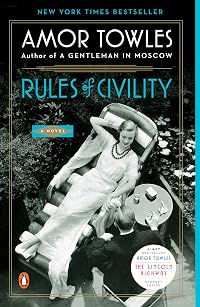
Rules of Civility
by Amor Towles
On This Page
Description
From the New York Times-bestselling author of A Gentleman in Moscow, a "sharply stylish" (Boston Globe) book about a young woman in post-Depression era New York who suddenly finds herself thrust into high society--now with over one million readers worldwide On the last night of 1937, twenty-five-year-old Katey Kontent is in a second-rate Greenwich Village jazz bar when Tinker Grey, a handsome banker, happens to sit down at the neighboring table. This chance encounter and its startling show more consequences propel Katey on a year-long journey into the upper echelons of New York society--where she will have little to rely upon other than a bracing wit and her own brand of cool nerve. With its sparkling depiction of New York's social strata, its intricate imagery and themes, and its immensely appealing characters, Rules of Civility won the hearts of readers and critics alike. show lessTags
Recommendations





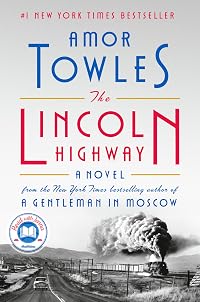

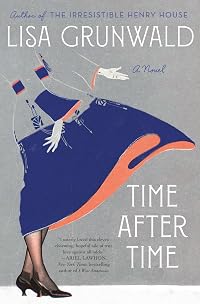










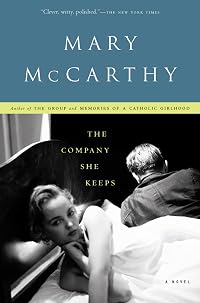

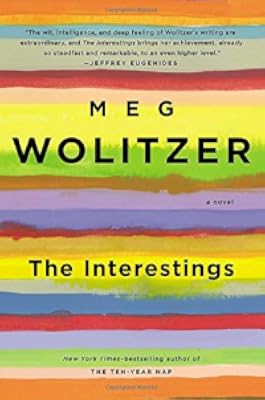













Member Recommendations


BookshelfMonstrosity Atonement, like Rules of Civility, paints a picture of events that instantly turn characters' worlds upside down. Also set in the 1930s, it highlights the lingering opulence of the age and how that can disappear amid tragedy.
60


Limelite Another look at an ambitious woman making her own way in the world and with commentary on the society of her times.
11
trav Slightly different time period and tone, but the writing is very similar as are the dynamics. Both Rules of Civility and The Glass Room are very well written time-period books.
11

Member Reviews
Summary: The year that changed the life of a young woman in New York, remembered when photographs trigger a flashback twenty-eight years later.
Katey and her husband Val are part of the social elite at an exhibition opening at the Museum of Modern Art in 1966. For the first time, photographs taken by Walker Evans on New York’s subways in the late 1930’s are on exhibit. Among those photos are two of him. One elegantly dressed, a portrait of subdued power. The other, more gaunt in the tattered clothes of a laborer, but with a smile. Tinker Grey. And it brings back the year in between and how Katey’s life changed, beginning her rise from a working class immigrant background.
At the end of 1937, Katey and her roommate Eve decide to do show more the town for New Years. Eve is from the midwest with high hopes. Katya, now Katey Kontent (accent on the second syllable) is working in a secretarial pool for a New York law firm, living by her wits and struggling to make ends meet, but also enjoying the city. They are in a jazz club and in walks Tinker Grey in a cashmere coat. They end up ringing in the New Year, and Tinker leaves his monogrammed lighter behind, giving them a chance to see him again. A subsequent night on the town ends in an accident leaving Eve with leg injuries and a scar. Tinker offers his home to recover. They fall in love, and Katey is nudged out.
It’s a story that traces Katey’s year of 1938 in her voice, one that is whip-smart and shrewd. Both her external and internal dialogue make this book, a feat for a male writer. We see her rise from the secretarial pool to editorial assistant for a new magazine launched by the publisher of Conde’ Nast. She recounts the nights at the clubs, the jazz of the Thirties, and her relationships with Wallace Wolcott and Dicky Vanderwhile, the latter on the rebound from one with Tinker Grey after Eve refused to marry him and went to Hollywood. One of the most interesting characters is Anne Grandyn, whose wealth helped make Tinker. She made him in other ways, and unbeknownst to Katey, helps make her as well. Instead of being a rival for Tinker, in an odd way, she is an ally.
Meanwhile Tinker’s life unravels. From Central Park, he moves to a flop house, in some ways following his late artist brother–and hence that second picture in the gallery. And yet the move in his life is from a learned upper crust civility, schooled by George Washington’s The Rules of Civility to rediscovery of the New York he loved best.
Not only does Towles do a masterful job at writing in a woman’s voice, he captures the resurgence of New York on the eve of World War Two as the country climbed out of the Depression. He explores questions of class and upward mobility. Both Tinker and Katey rise from modest beginnings on their wits, yet come to different ends. We wonder if the 1966 Katey, confronted with the images of Tinker, wonders about the life she’s embraced. Or perhaps she was reminded of the year in which her life turned, the gains and the losses, and the course that was set.
I went back to read this after reading Towles’s masterful A Gentleman in Moscow earlier this year. It is hard to believe this is a first novel. So often, we just live our lives. In both of Towles’s works, we see characters who not only live their lives, but, through circumstances, are brought to reflect upon their course and what they’ve meant, inviting the reader to do the same. show less
Katey and her husband Val are part of the social elite at an exhibition opening at the Museum of Modern Art in 1966. For the first time, photographs taken by Walker Evans on New York’s subways in the late 1930’s are on exhibit. Among those photos are two of him. One elegantly dressed, a portrait of subdued power. The other, more gaunt in the tattered clothes of a laborer, but with a smile. Tinker Grey. And it brings back the year in between and how Katey’s life changed, beginning her rise from a working class immigrant background.
At the end of 1937, Katey and her roommate Eve decide to do show more the town for New Years. Eve is from the midwest with high hopes. Katya, now Katey Kontent (accent on the second syllable) is working in a secretarial pool for a New York law firm, living by her wits and struggling to make ends meet, but also enjoying the city. They are in a jazz club and in walks Tinker Grey in a cashmere coat. They end up ringing in the New Year, and Tinker leaves his monogrammed lighter behind, giving them a chance to see him again. A subsequent night on the town ends in an accident leaving Eve with leg injuries and a scar. Tinker offers his home to recover. They fall in love, and Katey is nudged out.
It’s a story that traces Katey’s year of 1938 in her voice, one that is whip-smart and shrewd. Both her external and internal dialogue make this book, a feat for a male writer. We see her rise from the secretarial pool to editorial assistant for a new magazine launched by the publisher of Conde’ Nast. She recounts the nights at the clubs, the jazz of the Thirties, and her relationships with Wallace Wolcott and Dicky Vanderwhile, the latter on the rebound from one with Tinker Grey after Eve refused to marry him and went to Hollywood. One of the most interesting characters is Anne Grandyn, whose wealth helped make Tinker. She made him in other ways, and unbeknownst to Katey, helps make her as well. Instead of being a rival for Tinker, in an odd way, she is an ally.
Meanwhile Tinker’s life unravels. From Central Park, he moves to a flop house, in some ways following his late artist brother–and hence that second picture in the gallery. And yet the move in his life is from a learned upper crust civility, schooled by George Washington’s The Rules of Civility to rediscovery of the New York he loved best.
Not only does Towles do a masterful job at writing in a woman’s voice, he captures the resurgence of New York on the eve of World War Two as the country climbed out of the Depression. He explores questions of class and upward mobility. Both Tinker and Katey rise from modest beginnings on their wits, yet come to different ends. We wonder if the 1966 Katey, confronted with the images of Tinker, wonders about the life she’s embraced. Or perhaps she was reminded of the year in which her life turned, the gains and the losses, and the course that was set.
I went back to read this after reading Towles’s masterful A Gentleman in Moscow earlier this year. It is hard to believe this is a first novel. So often, we just live our lives. In both of Towles’s works, we see characters who not only live their lives, but, through circumstances, are brought to reflect upon their course and what they’ve meant, inviting the reader to do the same. show less
Manners are masquerade, something we all learned while our mothers were trying to teach us to say "please" and "thank you." You don't have to mean it to say it.
Amor Towles plays with this idea in his impressive debut novel “Rules of Civility” (2011). Spanning the year 1938 in New York City, the story brings together three attractive young people looking ahead to a promising post-Depression future. Our narrator, Katey Kontent, grew up in a lower middle-class family in the city, while Eve has a more well-to-do family back in the Midwest. They work in a secretarial pool.
One night they meet Tinker Grey, handsome, well-tailored and well-mannered. Eve claims him as her own, even though Tinker appears to prefer Katey. Yet when they go out show more at night, it is always the three of them together. Then Eve is disfigured in a traffic accident while Tinker is driving. Out of guilt, he takes responsibility for her care and moves her into his apartment, while Katey becomes more distant.
What begins with the suggestion of a love triangle evolves into something else, and this something else relates to, of all things, 110 "Rules of Civility," which George Washington studied as a young man striving to make a success of himself in the world. Tinker, too, has studied these rules, and Katey comes to realize the rules hide a different Tinker Grey. (The book includes the 110 rules in an appendix.)
Towles writes with wit, subtlety and grace while revealing that Tinker is not alone in hiding a true self behind good manners. show less
Amor Towles plays with this idea in his impressive debut novel “Rules of Civility” (2011). Spanning the year 1938 in New York City, the story brings together three attractive young people looking ahead to a promising post-Depression future. Our narrator, Katey Kontent, grew up in a lower middle-class family in the city, while Eve has a more well-to-do family back in the Midwest. They work in a secretarial pool.
One night they meet Tinker Grey, handsome, well-tailored and well-mannered. Eve claims him as her own, even though Tinker appears to prefer Katey. Yet when they go out show more at night, it is always the three of them together. Then Eve is disfigured in a traffic accident while Tinker is driving. Out of guilt, he takes responsibility for her care and moves her into his apartment, while Katey becomes more distant.
What begins with the suggestion of a love triangle evolves into something else, and this something else relates to, of all things, 110 "Rules of Civility," which George Washington studied as a young man striving to make a success of himself in the world. Tinker, too, has studied these rules, and Katey comes to realize the rules hide a different Tinker Grey. (The book includes the 110 rules in an appendix.)
Towles writes with wit, subtlety and grace while revealing that Tinker is not alone in hiding a true self behind good manners. show less
The book begins with a middle aged couple attending the 1966 opening of Walker Evans' "Many Are Called" show at The Museum of Modern Art. Among the photographs the narrator recognizes two shots, taken a year apart, of a man she used to know named Tinker Grey. Seeing these photographs sends her back to 1938 where she reminiscences about meeting Grey, who changed her world forever.
Katey Kontent and Eve Ross are boardinghouse roommates who use wit, intelligence and good looks to hobnob with members of New York society. The book's narrator, Katey, is tough and unflappable, taking both success and setback in stride. Eve, on the other hand, is complex and unpredictable. Tinker seems the most open but also the most mysterious. Named after show more George Washington's book of moral and social codes, this novel transports the reader to elegant parties on Long Island estates, luxurious suites at the Plaza, and back alley jazz clubs along with a variety of Gatsbyesque characters.
I loved this book. It was filled with sublime dialogue. The writing was so gorgeous I had to stop myself from reading too fast so that I could enjoy the melody of the language. I loved seeing New York through Katey's eyes and could visualize each one of the characters as if they were in a 1940s movie. I found it compelling, insightful, and well written, with characters fully drawn, and dialogue that was precise and economical. I found my journey with these characters sweet and thoughtful and I hated putting this story down at the end. show less
Katey Kontent and Eve Ross are boardinghouse roommates who use wit, intelligence and good looks to hobnob with members of New York society. The book's narrator, Katey, is tough and unflappable, taking both success and setback in stride. Eve, on the other hand, is complex and unpredictable. Tinker seems the most open but also the most mysterious. Named after show more George Washington's book of moral and social codes, this novel transports the reader to elegant parties on Long Island estates, luxurious suites at the Plaza, and back alley jazz clubs along with a variety of Gatsbyesque characters.
I loved this book. It was filled with sublime dialogue. The writing was so gorgeous I had to stop myself from reading too fast so that I could enjoy the melody of the language. I loved seeing New York through Katey's eyes and could visualize each one of the characters as if they were in a 1940s movie. I found it compelling, insightful, and well written, with characters fully drawn, and dialogue that was precise and economical. I found my journey with these characters sweet and thoughtful and I hated putting this story down at the end. show less
Rules of Civility is a manners novel, in which our protagonist, Katie Kontent, basically knows she’s in a manners novel. So as I read I kept highlighting these wonderful descriptive passages, usually descriptions of working-class New York looking up.
"That’s the difference between being a secretary and an assistant. A secretary exchanges her labor for a living wage. But an assistant comes from a fine home, attends Smith College, and lands her position when her mother happens to be seated beside the publisher in chief at a dinner party."
It’s such a perfect description of the class gap. And there are some of working-class New Yorkers looking down, too.
"The old woman had this evening’s lox wrapped in yesterday’s news."
The plot show more hinges on the day Katie (born Katya, and reinvented already) and her friend Evey bump into Tinker, a New Englander with the ridiculous nickname, expensive attire, vague modesty about his past in key cities, and the fat bankroll that translate into an old money family. The girls are both interested, and there’s suddenly tension just beneath the surface of their friendship, but what might turn into a rivalry is derailed when Evey, Tinker, and Katie are in a car wreck, which changes their lives forever.
Tinker, who was driving, takes responsibility for disfigured and injured Evey, and so Katie is sort of peripheral in their story. Sort of.
But the plot is really secondary to the commentary on class and on the city. Katie observes the social expectations as she climbs, and though she begins by getting invitations through Tinker, she travels through all different circles on her own.
"They sloughed off their coats into the hands of a footman and took glasses of champagne from a waiter—making eye contact with neither. With no achievements behind them, they already looked as self-assured as the flyboys would at the end of the Second World War."
There are also some pretty great moments about reading in the city, specifically Charles Dickens and Agatha Christie. I also discovered Agatha Christie pretty late, and cannot stop reading them now. There’s a real escapist enjoyment in them, and I enjoyed a character who also enjoyed this.
But, simply, this is great because it’s a manners novel where the main character knows she’s in a manners novel, and that’s such a delightful, lively, witty, occasionally snarky concept to read. show less
"That’s the difference between being a secretary and an assistant. A secretary exchanges her labor for a living wage. But an assistant comes from a fine home, attends Smith College, and lands her position when her mother happens to be seated beside the publisher in chief at a dinner party."
It’s such a perfect description of the class gap. And there are some of working-class New Yorkers looking down, too.
"The old woman had this evening’s lox wrapped in yesterday’s news."
The plot show more hinges on the day Katie (born Katya, and reinvented already) and her friend Evey bump into Tinker, a New Englander with the ridiculous nickname, expensive attire, vague modesty about his past in key cities, and the fat bankroll that translate into an old money family. The girls are both interested, and there’s suddenly tension just beneath the surface of their friendship, but what might turn into a rivalry is derailed when Evey, Tinker, and Katie are in a car wreck, which changes their lives forever.
Tinker, who was driving, takes responsibility for disfigured and injured Evey, and so Katie is sort of peripheral in their story. Sort of.
But the plot is really secondary to the commentary on class and on the city. Katie observes the social expectations as she climbs, and though she begins by getting invitations through Tinker, she travels through all different circles on her own.
"They sloughed off their coats into the hands of a footman and took glasses of champagne from a waiter—making eye contact with neither. With no achievements behind them, they already looked as self-assured as the flyboys would at the end of the Second World War."
There are also some pretty great moments about reading in the city, specifically Charles Dickens and Agatha Christie. I also discovered Agatha Christie pretty late, and cannot stop reading them now. There’s a real escapist enjoyment in them, and I enjoyed a character who also enjoyed this.
But, simply, this is great because it’s a manners novel where the main character knows she’s in a manners novel, and that’s such a delightful, lively, witty, occasionally snarky concept to read. show less
One of my absolute favorite reads for the year. Reading Amor Towles' debut novel set in the 1930's was so evocative of that era -- I had constant visions of favorite black-and-white movies, such as Stage Door and Dick Powell screwball comedies and Cole Porter and Gershwin melodies filled my head. I didn't find out until too late, but you can rachet up the atmosphere even more: Towles helpfully provides a playlist of 1930's Jazz to play in the background as you read. The plotting was well paced and the action moved right along. an added bonus was Towles' beautiful prose. practically every page had a delightful nugget to re-read, smile over and cherish. I will be recommending this one to just about everyone. (Just don't tell the people on show more my Christmas list!) show less
"Doesn't New York just turn you inside out?"
That's a question from one of the characters in this fabulous novel from Amor Towles. I hesitated to pick this one up after reading "A Gentleman in Moscow," which I gave a rare 5 stars. This one, his first novel, couldn't possibly be as good as that one....could it?
Well, it could, and it is, and I enjoyed it from start to finish. Set in New York City in the late 1930's, it has all the style and flair of a flawlessly uniformed doorman outside an elite Manhattan hotel.
Our heroine, Katherine Kontent (that's KonTENT, not KONtent, as she explains more than once), is a Brooklyn-born young woman who faces the City and its opportunities with a realistic eye and a determination to better herself. She show more and her best friend, Eve, meet at a boardinghouse where they each pursue their clerical jobs with hopes of advancement, and trade clothes on Friday nights.
Despite some reviews hinting otherwise, Katherine (Katey) is not a social climber, as much as she is someone who takes advantage of chance meetings with the upper echelons of NCY's high society. But she is not a snob - if she's invited to a fancy restaurant or party, only by virtue of being on the outskirts of a group of friends with an "in," she'll grimly paw through her meager closet and wear her best - but she'll also hang out with the girls from the boardinghouse or at her job. Neither does she mind being alone in her room with Charles Dickens or Agatha Christie if that's how the evening goes. As a young, career-minded woman in the 1930's, she has more in common with the perky Mary Tyler Moore than Eve of All About Eve.
Through a single chance meeting at the start of the book, her circle of well-to-do acquaintances widens, and so do her adventures throughout New York City. From the flophouses along the wharves to highbrow cocktail parties and weekends at country homes, we follow Katey on her journey to discover the soul of New York City - and her own.
With a martini in hand, jazz playing in the background, and the city lights twinkling above it all, Katey comes to terms with her own wants as opposed to her needs.
A real love letter to the City from Amor Towles, with his usual wit, crafty prose, and superb ear of time and place, I highly recommend this deeply satisfying, witty novel.
Doesn't New York just turn you inside out? show less
That's a question from one of the characters in this fabulous novel from Amor Towles. I hesitated to pick this one up after reading "A Gentleman in Moscow," which I gave a rare 5 stars. This one, his first novel, couldn't possibly be as good as that one....could it?
Well, it could, and it is, and I enjoyed it from start to finish. Set in New York City in the late 1930's, it has all the style and flair of a flawlessly uniformed doorman outside an elite Manhattan hotel.
Our heroine, Katherine Kontent (that's KonTENT, not KONtent, as she explains more than once), is a Brooklyn-born young woman who faces the City and its opportunities with a realistic eye and a determination to better herself. She show more and her best friend, Eve, meet at a boardinghouse where they each pursue their clerical jobs with hopes of advancement, and trade clothes on Friday nights.
Despite some reviews hinting otherwise, Katherine (Katey) is not a social climber, as much as she is someone who takes advantage of chance meetings with the upper echelons of NCY's high society. But she is not a snob - if she's invited to a fancy restaurant or party, only by virtue of being on the outskirts of a group of friends with an "in," she'll grimly paw through her meager closet and wear her best - but she'll also hang out with the girls from the boardinghouse or at her job. Neither does she mind being alone in her room with Charles Dickens or Agatha Christie if that's how the evening goes. As a young, career-minded woman in the 1930's, she has more in common with the perky Mary Tyler Moore than Eve of All About Eve.
Through a single chance meeting at the start of the book, her circle of well-to-do acquaintances widens, and so do her adventures throughout New York City. From the flophouses along the wharves to highbrow cocktail parties and weekends at country homes, we follow Katey on her journey to discover the soul of New York City - and her own.
With a martini in hand, jazz playing in the background, and the city lights twinkling above it all, Katey comes to terms with her own wants as opposed to her needs.
A real love letter to the City from Amor Towles, with his usual wit, crafty prose, and superb ear of time and place, I highly recommend this deeply satisfying, witty novel.
Doesn't New York just turn you inside out? show less
This is another book that we read for book group, but which I also feel inclined to personally review.
This is a great debut. While reading this book, I have told many who will listen that this is what I wanted The Great Gatsby to be, but wasn't. I know, blasphemy. But I had heard so much about The Great Gatsby before reading it, and I really really built it up in my head. I don't know that anything could have lived up to what I was expecting. And along came Rules of Civility.
Set in 1938 in Manhattan, the book explores the "life and times" of a young girl (late 20s), finding her way. The book is told from the perspective of Katya a/k/a Kate a/k/a Katherine a/k/a Katey, with brief and infrequent deviations from her perspective to Tinker show more Grey (Teddy/Theodore). Many authors try to garner familiarity with their characters by the forced imposition of nicknames... Towles' use flowed off the proverbial tongue. I never felt as if my feelings about the characters were being forced upon me or manufactured by clever tricks--whether that was in fact happening or not ;) Instead, I felt that there was a natural, organic discovery of the various individuals in the story, and I was able to come to my own conclusions about them as "time" (the pages of the novel) passed.
I truly enjoyed Rules of Civility. I loved reading about Kate's job as a paralegal, and then as an assistant (however briefly) in the literary world, and best of all, her role as co-executive assistant of the classed-up gossip magazine. I loved reading about Kate's various friends and acquaintances. I loved Anne Grandyn. I loved Wallace. I didn't particularly love a couple of the other characters -- including Tinker himself, but they were still intriguing ... and I'm not so sure I was meant to love them. There was depth to the story and dynamics to the characters, and I appreciated that not everyone was the 150% version of what a real person would have been at that time.
The primary thing I did not love about the book: There was a bit of time, in the middle to 2/3 point of the book, where it felt likt it was dragging just a little, where Kate's love life seemed to take on a depressing-romantic weighed down feel. But Towles moves past that point and brings the reader back into activity and movement without straying too long in the "drama" side of Kate's year.
Overall, an excellent debut that definitely made me want to read more. Definitely recommend to all readers, men and women alike. Towles did an impressive job writing from the perspective of a woman, but there's still a gentleman's touch that I think will appeal to both genders alike. show less
This is a great debut. While reading this book, I have told many who will listen that this is what I wanted The Great Gatsby to be, but wasn't. I know, blasphemy. But I had heard so much about The Great Gatsby before reading it, and I really really built it up in my head. I don't know that anything could have lived up to what I was expecting. And along came Rules of Civility.
Set in 1938 in Manhattan, the book explores the "life and times" of a young girl (late 20s), finding her way. The book is told from the perspective of Katya a/k/a Kate a/k/a Katherine a/k/a Katey, with brief and infrequent deviations from her perspective to Tinker show more Grey (Teddy/Theodore). Many authors try to garner familiarity with their characters by the forced imposition of nicknames... Towles' use flowed off the proverbial tongue. I never felt as if my feelings about the characters were being forced upon me or manufactured by clever tricks--whether that was in fact happening or not ;) Instead, I felt that there was a natural, organic discovery of the various individuals in the story, and I was able to come to my own conclusions about them as "time" (the pages of the novel) passed.
I truly enjoyed Rules of Civility. I loved reading about Kate's job as a paralegal, and then as an assistant (however briefly) in the literary world, and best of all, her role as co-executive assistant of the classed-up gossip magazine. I loved reading about Kate's various friends and acquaintances. I loved Anne Grandyn. I loved Wallace. I didn't particularly love a couple of the other characters -- including Tinker himself, but they were still intriguing ... and I'm not so sure I was meant to love them. There was depth to the story and dynamics to the characters, and I appreciated that not everyone was the 150% version of what a real person would have been at that time.
The primary thing I did not love about the book: There was a bit of time, in the middle to 2/3 point of the book, where it felt likt it was dragging just a little, where Kate's love life seemed to take on a depressing-romantic weighed down feel. But Towles moves past that point and brings the reader back into activity and movement without straying too long in the "drama" side of Kate's year.
Overall, an excellent debut that definitely made me want to read more. Definitely recommend to all readers, men and women alike. Towles did an impressive job writing from the perspective of a woman, but there's still a gentleman's touch that I think will appeal to both genders alike. show less
Members
- Recently Added By
Published Reviews
ThingScore 75
In Towles’s first novel, “Rules of Civility,” his clever heroine, who grew up in Brooklyn as “Katya,” restyles herself in 1930s Manhattan as the more clubbable “Katey,” aspiring to all-American inclusion. As World War II gears up, raising the economy from bust to boom, Katey’s wit and charm lift her from a secretarial pool at a law firm to a high-profile assistant’s perch at show more a flashy new Condé Nast magazine. One night at the novel’s outset touches off the chain reaction that will produce both Katey’s career and her husband, and define her entire adult life. She’s swept into the satin-and-cashmere embrace of the smart set — blithe young people with names like Dicky and Bitsy and Bucky and Wallace — with their Oyster Bay mansions, their Adirondack camps, their cocktails at the St. Regis and all the fog of Fishers Island. show less
added by jimcripps
If there's a problem, it's this: the parallels with Breakfast at Tiffany's are perhaps a little too overt (glamorous but down-at-heel girl falls in love with wealthy but mysterious benefactor). But that's not exactly a complaint. This is a flesh-and-blood tale you believe in, with fabulous period detail. It's all too rare to find a fun, glamorous, semi-literary tale to get lost in.
added by souloftherose
Manhattan in the late 1930s is the setting for this saga of a bright, attractive and ambitious young woman whose relationships with her insecure roommate and the privileged Adonis they meet in a jazz club are never the same after an auto accident.
added by theeclecticreview
Lists

ALA The Reading List
490 works; 28 members

Best Historical Fiction
620 works; 257 members

Historical Fiction
889 works; 91 members

Sense of place
156 works; 13 members

Books Set in New York City
127 works; 21 members

Top Five Books of 2014
1,064 works; 397 members
Favourite Books
1,819 works; 308 members

Female Protagonist
1,056 works; 57 members

Top Five Books of 2022
736 works; 272 members
Literature About Women and Girls
394 works; 39 members

Books Read in 2017
4,249 works; 130 members
Book Club 2017
8 works; 2 members

Five star books
1,757 works; 108 members

Reading Group 2012 Fall
8 works; 1 member

Great Audiobooks
96 works; 10 members

Books To Get From The Library
115 works; 5 members
First Novels
373 works; 17 members

2024 Reads
31 works; 1 member

Llibres que he llegit el 2024
77 works; 1 member

Allie's List of Books I Want To Read
93 works; 1 member

Reading List (Completed): Women Who Kick Butt
11 works; 1 member

Dim Sum Lunch Reading
43 works; 2 members

Books Read in 2018
4,360 works; 110 members

Books Read in 2013
65 works; 1 member
Talk Discussions
Past Discussions
Group Read: Rules of Civility in 75 Books Challenge for 2017 (April 2019)
Author Information

24+ Works 25,575 Members
Amor Towles grew up in Boston, Massachusetts. He graduated from Yale College and received an M.A. in English from Stanford University where he was a Scowcroft Fellow. His novel, "Rules of Civility" reached the bestseller lists of The New York Times, the Boston Globe and Los Angeles Times. The book was rated by The Wall Street Journal as one of the show more ten best works of fiction in 2011. The book has been published in 15 languages. In the fall of 2012, the novel was optioned to be made into a feature film. Viking/Penguin published Towles's next novel, A Gentleman in Moscow, on September 6, 2016. (Bowker Author Biography) show less
All Editions
Some Editions
Awards and Honors
Awards
Distinctions
Notable Lists
Series
Belongs to Publisher Series
Work Relationships
Is contained in
Common Knowledge
- Canonical title
- Rules of Civility
- Original title
- Rules of Civility
- Original publication date
- 2011-07-21
- People/Characters
- Katey Kontent; Tinker Grey; Eve Ross; Anne Grandyn; Mason Tate; Bitsy Houghton (show all 8); Richard Vanderwhile; Wallace Wolcott
- Important places
- Greenwich Village, New York, New York, USA; Manhattan, New York, New York, USA; New York, New York, USA
- Important events
- World War II
- Epigraph
- —Matthew 22:8-14
- Dedication
- For Maggie, my comet
- First words
- On the night of October 4th, 1966, Val and I, both in late middle age, attended the opening of Many Are Called at the Museum of Modern Art—the first exhibit of the portraits taken by Walker Evans in the late 1930s on the Ne... (show all)w York City subways with a hidden camera.
- Quotations
- As a quick aside, let me observe that in moments of high emotion -- whether they're triggered by anger or envy, humiliation or resentment -- if the next thing you're going to say makes you feel better, then it's probably the ... (show all)wrong thing to say. This is one of the finer maxims that I've discovered in life. And you can have it, since it's been of no use to me.
The 1930s . . .
what a grueling decade that was.
I was sixteen when the Depression began, just old enough to have had all my dreams and expectations duped by the effortless glamour of the twenties. It was as if Americ... (show all)a launched the Depression just to teach Manhattan a lesson.
It turned out to be a book of Washingtonia. The inscription on the front page indicated it was a present to Tinker fro his mother on the occasion of his fourteenth birthday. The volume had all the famous speeches and letters... (show all) arranged in chronological order, but it led off with an aspirational list composed by the founder in his teenage years:
Rules of Civility & Decent Behaviour in Company and Conversation. . . . There were 110 of them! And over half were underlined – one adolescent sharing another's enthusiasm for propriety across a chasm of 150 years. It was hard to decide which was sweeter – the fact that Tinker's mother had given it to him, or the fact that he kept it at hand.
Squirrels scattered before us among the tree trunks and yellow-tailed birds zipped from branch to branch. The air smelled of sumac and sassafras and other sweet-sounding words.
Right from the first, I could see a calmness in you – that sort of inner tranquility that they write about in books, but that almost no one seems to possess. I was wondering to myself: how does she do that? And I figured ... (show all)it could only come from having no regrets – from having made choices with . . . such poise and purpose. It stopped me in my tracks a little. And I just couldn't wait to see it again.
...in Agatha Christie's universe everyone eventually gets what they deserve.
Inheritance or penury, love or loss, a blow to the head or the hangman's noose, in the pages of Agatha Christie's books men and women, whatever t... (show all)heir ages, whatever their caste, are ultimately brought face-to-face with a destiny that suits them. Poirot and Marple are not really central characters in the traditional sense. They are simply the agencies of an intricate moral equilibrium that was established by the Primary Mover at the dawn of time.
For however inhospitable the wind, from this vantage point Manhattan was simply so improbable, so wonderful, so obviously full of promise – that you wanted to approach it for the rest of your life without ever quite arrivin... (show all)g.
Should old acquaintance be forgot, and never brought to mind?
Sometimes, it sure seems that's what life intends. After all, it's basically like a centrifuge that spins every few years casting proximate bodies in disparate... (show all) directions. And when the spinning stops, almost before we can catch our breath, life crowds us with a calendar of new concerns. Even if we wanted to retrace our steps and rekindle our old acquaintances, how could we possibly find the time?
In that sense, life is less like a journey than it is a game of honeymoon bridge. In our twenties, when there is still so much time ahead of us, time that seems ample for a hundred indecisions, for a hundred visions and revi... (show all)sions – we draw a card, and we must decide right then and there whether to keep that card and discard the next, or discard the first card and keep the second. And before we know it, the deck has been played out and the decisions we have just made will shape our lives for decades to come.
I have no doubt that they were the right choices for me. And at the same time, I know that right choices by definition are the means by which life crystallizes loss.
I caught up with the others outside, giving a little prayer of thanks to no one in particular. Because when some incident sheds a favorable light on an old and absent friend, that's about as good a gift as chance intends to o... (show all)ffer.
And yet, I found my thoughts reaching into the past. Turning their backs on all the hard-wrought perfections of the hour, they were searching for the sweet uncertainties of a bygone era and for all its chance encounters –... (show all) encounters which in the moment had seemed so haphazard and effervescent but which with time took on some semblance of fate. - Last words
- (Click to show. Warning: May contain spoilers.)And so I have on so many mornings since.
- Publisher's editor
- Slovak, Paul
- Blurbers
- Nicholls, David; Sullivan, J. Courtney; Baker, Kevin
- Original language
- English
- Canonical DDC/MDS
- 813.6
- Canonical LCC
- PS3620.O945
Classifications
Statistics
- Members
- 6,374
- Popularity
- 1,925
- Reviews
- 361
- Rating
- (4.02)
- Languages
- 16 — Chinese, Danish, Dutch, English, Finnish, French, German, Italian, Korean, Norwegian (Bokmål), Polish, Portuguese, Romanian, Spanish, Swedish, Turkish
- Media
- Paper, Audiobook, Ebook
- ISBNs
- 62
- ASINs
- 11