
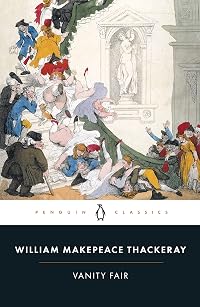
Vanity Fair
by William Makepeace Thackeray 
On This Page
Description
Vanity Fair: A Novel without a Hero is William Thackeray's celebrated satirical novel of 19th century British society. Vanity Fair follows the rags-to-riches tale of the captivating and ruthless Becky Sharpe as she navigates her way through London society with fearsome determination and ambition..
Tags
Recommendations


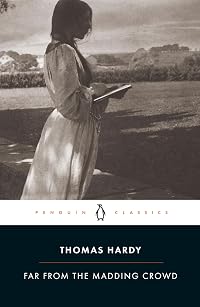

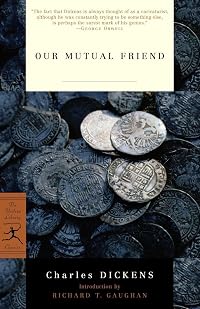
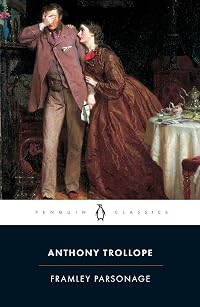
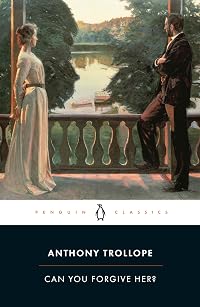
Member Recommendations
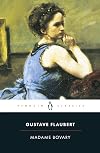
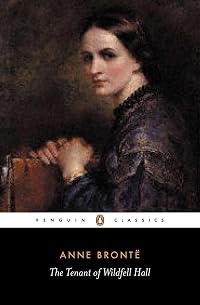
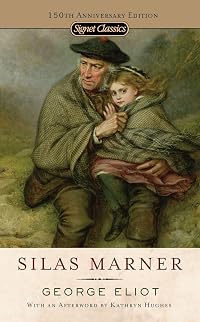
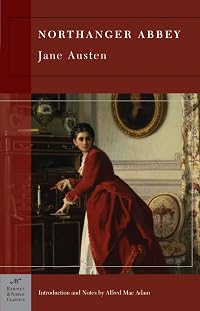
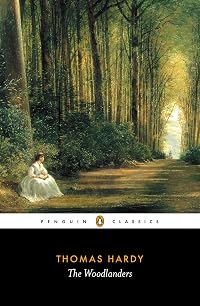
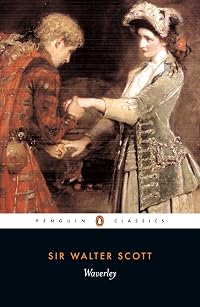
HollyMS Both works are about women who would do anything to gain a life of luxury.
141
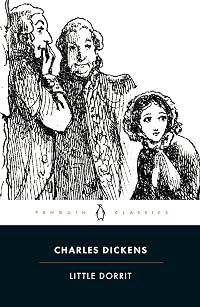
anonymous user Obra soberbia de Dickens. Más "luminosa" que otras de sus obras. Historia larga, pero atrapante.
12
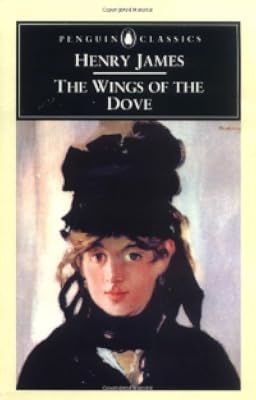
anonymous user It's all about what people do for entertainment, status, and sport. Along the way, the entire spectrum of society is satirized.
02
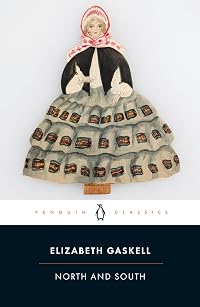
Morryman84 Female Protagonists were polar opposites
Member Reviews
A very readable tale that had me up late in the night to arrive at the very satisfactory ending. The novel is tightly structured, with some fabulous 'set pieces' and sparking dialogue. Thackeray himself is very present; he introduces himself at the very beginning of the book as 'the Manager of the Performance' and certainly doesn't leave the reader in any doubt as to his thoughts on his characters. They are by no means simply as good or bad as they first seem and his star creation, Becky Sharpe, is quite clearly intelligent, vital, entertaining and is cheerful in any and every circumstance in which she finds herself. Some of the worst slurs on her character actually don't ring true and she clearly comes to despise High Society just as show more she achieves her greatest triumphs in it. He finds her as fascinating as does almost every other character in the novel and though he never refers to it directly (no doubt due to the sensibilities of the time) we imagine she gets nearly as low as a lady possibly can. His asides on Becky's seemingly angelic friend Amelia, also show he loses patience with her martyrdom on many occasions.
We can see Vanity Fair as an allegory or moral fable that reveals certain universal truths about the human condition. Many of the minor characters actually have names that denote their personal circumstances or moral attributes. For instance, Tom Eaves, a gossip, is a combination of 'peeping Tom' and 'eavesdropper'. The Crawleys are prepared to do just that to gain admittance to the rank of society above the small gentry where they find themselves. Meanwhile, some of the names of the families over in the European phase of the novel are just plain hilarious in their pomposity.
But it is Becky Sharpe that is the star of the show. She is one of the great female characters in English literature. She may be wicked but it is difficult not to forgive her, to see that sparkle in her eyes and be dazzled by her vitality. 'She runs away with the author's intention (and) steals the show'. (Gilbert Phelps, from the introduction of my very ancient Pan edition of Vanity Fair) show less
We can see Vanity Fair as an allegory or moral fable that reveals certain universal truths about the human condition. Many of the minor characters actually have names that denote their personal circumstances or moral attributes. For instance, Tom Eaves, a gossip, is a combination of 'peeping Tom' and 'eavesdropper'. The Crawleys are prepared to do just that to gain admittance to the rank of society above the small gentry where they find themselves. Meanwhile, some of the names of the families over in the European phase of the novel are just plain hilarious in their pomposity.
But it is Becky Sharpe that is the star of the show. She is one of the great female characters in English literature. She may be wicked but it is difficult not to forgive her, to see that sparkle in her eyes and be dazzled by her vitality. 'She runs away with the author's intention (and) steals the show'. (Gilbert Phelps, from the introduction of my very ancient Pan edition of Vanity Fair) show less
I found this book to be truly wonderful, perhaps my new favorite. Thackeray makes his characters come alive, and the story is just so well told with its twists and turns. It's also interesting to have a central character--especially a leading woman in a 19th Century novel--who is so rotten. Becky is a sociopath but, as a friend also reading the book pointed out, she is the product of a sociopathic culture.
Amelia and Dobbin I cared about deeply, although, again, Amelia isn't an Elizabeth Bennet who the reader can get behind wholeheartedly--she's too weak-willed for that.
These fascinating, flawed, characters will stay with me for a long time. Despite Thackeray's 900 pages, I still long to know more!
I will add, however, that there was at show more least one passage where I just wanted to get past the description and back to the characters I was so fascinated by. I suspect, however, that Thackeray's long description of Germany in the last 10% of the book is meant to build the reader's anticipation for the denouement of the book. show less
Amelia and Dobbin I cared about deeply, although, again, Amelia isn't an Elizabeth Bennet who the reader can get behind wholeheartedly--she's too weak-willed for that.
These fascinating, flawed, characters will stay with me for a long time. Despite Thackeray's 900 pages, I still long to know more!
I will add, however, that there was at show more least one passage where I just wanted to get past the description and back to the characters I was so fascinated by. I suspect, however, that Thackeray's long description of Germany in the last 10% of the book is meant to build the reader's anticipation for the denouement of the book. show less
In discussing the origins of The Bonfire of the Vanities, his brilliant satire of the social and economic mores of New York City in the 1980s, Tom Wolfe was always quick to cite Thackeray’s Vanity Fair as his inspiration. Wolfe seemed particularly taken with that earlier work’s subtitle--A Novel Without a Hero--which he took to be a perfect characterization for the story that he himself wanted to tell. He even went so far as to arrange to have his work published in serial form in a magazine (Rolling Stone in Wolfe’s case), just as Thackeray did with his magnum opus a century and a half before. There can hardly be higher praise than that for one author to give to another.
Vanity Fair itself owes a considerable debt to a classic work show more that preceded it by 150 years, John Bunyan’s The Pilgrim’s Progress. In that religious allegory, a person on the path to Heaven first had to pass through the town of Vanity in which there was a fair that appealed to all the basest traits of humanity: greed, infidelity, deceit, avarice, envy, duplicity, and so on. Thackeray saw this as an apt metaphor for his story of the state of English society at the time of the Napoleonic Wars and the dawn of the Victorian Age. In fact, the frame that begins and ends Vanity Fair has two young girls putting on a puppet show during which all of the action in the book takes place. Toward the end of the novel, the author even reveals himself to be the narrator of the tale, and a most unreliable one at that.
If that level of historical detail is not absolutely necessary to summarize Vanity Fair, it is perhaps useful context for a prospective reader to understand what taking on this tome will entail. Because, make no mistake, this book requires a significant investment of time and attention to get through it to the end. It is indeed a meandering and occasionally sprawling tale, written in the style of a time far removed from what the modern audience is used to. But it is also remarkably observant about the human condition as well as wickedly funny; those two things alone make reading it today well worthwhile. Further, in the character of Becky Sharp, Thackeray has created an anti-heroine for the ages—with her resilient and scheming nature, she could hold her own now just as well as she did back then.
How the specific events in the story transpire is not the most important thing about the novel, serving as they do as the backdrop for the societal skewering that was the author’s true purpose. In short, Becky comes from an impoverished background in a culture where that is a serious impediment to advancement. Her school friend Amelia Sedley is from a well-to-do family, but she herself is a rather simple and unambitious girl. Both of these friends enter into disappointing marriages, Becky to a rich but rough-hewn fellow whose family disapproves of her while Amelia devotes herself to a philandering cad and ignores the less-dashing colleague who truly loves her. When Amelia’s family falls on hard economic times, it sets off chain of events that takes several hundred pages to unfold. In those pages, though, there is some real literary gold as Thackeray uses his razor-honed wit and gentle word play to expose a multitude of vanities and foibles as he saw them. I certainly can recommend this book, but only for those who understand what they are getting into first! show less
Vanity Fair itself owes a considerable debt to a classic work show more that preceded it by 150 years, John Bunyan’s The Pilgrim’s Progress. In that religious allegory, a person on the path to Heaven first had to pass through the town of Vanity in which there was a fair that appealed to all the basest traits of humanity: greed, infidelity, deceit, avarice, envy, duplicity, and so on. Thackeray saw this as an apt metaphor for his story of the state of English society at the time of the Napoleonic Wars and the dawn of the Victorian Age. In fact, the frame that begins and ends Vanity Fair has two young girls putting on a puppet show during which all of the action in the book takes place. Toward the end of the novel, the author even reveals himself to be the narrator of the tale, and a most unreliable one at that.
If that level of historical detail is not absolutely necessary to summarize Vanity Fair, it is perhaps useful context for a prospective reader to understand what taking on this tome will entail. Because, make no mistake, this book requires a significant investment of time and attention to get through it to the end. It is indeed a meandering and occasionally sprawling tale, written in the style of a time far removed from what the modern audience is used to. But it is also remarkably observant about the human condition as well as wickedly funny; those two things alone make reading it today well worthwhile. Further, in the character of Becky Sharp, Thackeray has created an anti-heroine for the ages—with her resilient and scheming nature, she could hold her own now just as well as she did back then.
How the specific events in the story transpire is not the most important thing about the novel, serving as they do as the backdrop for the societal skewering that was the author’s true purpose. In short, Becky comes from an impoverished background in a culture where that is a serious impediment to advancement. Her school friend Amelia Sedley is from a well-to-do family, but she herself is a rather simple and unambitious girl. Both of these friends enter into disappointing marriages, Becky to a rich but rough-hewn fellow whose family disapproves of her while Amelia devotes herself to a philandering cad and ignores the less-dashing colleague who truly loves her. When Amelia’s family falls on hard economic times, it sets off chain of events that takes several hundred pages to unfold. In those pages, though, there is some real literary gold as Thackeray uses his razor-honed wit and gentle word play to expose a multitude of vanities and foibles as he saw them. I certainly can recommend this book, but only for those who understand what they are getting into first! show less
This novel makes example of Becky's story as a demonstration that she can be the more interesting character versus Amelia; that is, that a reader will be most intrigued by whichever character is most active and eventful, rather than merely the most moral. If this helped widen the door to authors introducing more wicked protagonists in future, so much the better. Charlotte Bronte deeply admired this work and author, so I wonder how she didn't see this parallel with her sister Emily's "Wuthering Heights" which only seemed to trouble her.
Perhaps the humour is the difference. Vanity Fair is almost entirely filled with unlikeable characters (Captain Dobbin is the reader's life preserver in this morass, and Amelia to a lesser extent), but at show more least we can laugh at them, and the author acknowledges their faults by inserting some amusing commentary, ostensibly in their defence. His base argument is that such is life, and only a fool would expect nothing but Amelia to represent the real world around us. We do get a handful of more serious interludes, centred on war and death. I found Mr. Osbourne strangely sympathetic (when he wasn't encouraging his grandson to be a bully). Thackeray can be poignant when he isn't purposely undermining it.
PS - I'm mildly sorry I didn't read Tom Jones prior to this, since Thackeray apparently borrowed much from Henry Fielding's authorial style; and here I'd thought the name Vanity Fair was Thackeray's invention, but discover he rented it from "Pilgrim's Progress" and that society by Thackeray's time had already embraced it as an expression to encompass our world entire. show less
Perhaps the humour is the difference. Vanity Fair is almost entirely filled with unlikeable characters (Captain Dobbin is the reader's life preserver in this morass, and Amelia to a lesser extent), but at show more least we can laugh at them, and the author acknowledges their faults by inserting some amusing commentary, ostensibly in their defence. His base argument is that such is life, and only a fool would expect nothing but Amelia to represent the real world around us. We do get a handful of more serious interludes, centred on war and death. I found Mr. Osbourne strangely sympathetic (when he wasn't encouraging his grandson to be a bully). Thackeray can be poignant when he isn't purposely undermining it.
PS - I'm mildly sorry I didn't read Tom Jones prior to this, since Thackeray apparently borrowed much from Henry Fielding's authorial style; and here I'd thought the name Vanity Fair was Thackeray's invention, but discover he rented it from "Pilgrim's Progress" and that society by Thackeray's time had already embraced it as an expression to encompass our world entire. show less
No one is better equipped in the struggle for wealth and worldly success than the alluring and ruthless Becky Sharp, who defies her impoverished background to clamber up the class ladder. Her sentimental companion amelia, however, longs only for caddish soldier George. As the two heroines make their way through the tawdry glamour of Regency society, battles—military and domestic—are fought, fortunes made and lost. The one steadfast and honourable figure in this corrupt world is Dobbin with his devotion to Amelia, bringing pathos and depth to Thackeray's gloriously satirical epic of love and social adventure.
This was a reread for me of a book that I know I loved the first time around but could remember almost nothing about. As I read, the plot came back to me, but much of it was pretty unfamiliar. Fortunately, my remembrance of loving it held true.
This is a novel of contrasting characters. There is the steadfast, honest, naive Amelia vs. the smart, conniving, enigma Becky Sharp. There is the all-show, no substance George vs. the loyal, talented, but modest William Dobbin. How these characters and the substantial supporting cast of parents, brothers, friends, and family interact composes this novel.
You can't read this Victorian novel without comparing to Dickens (at least I couldn't!) and I felt that it came out very favourably. I found the show more characters, especially the supporting ones, to be of much more substance and less of caricature than Dickens's characters. I also appreciated that the saintly Amelia is shown at the end to have been not so innocent in her treatment and usage of the faithful Dobbin and that though Becky is often the villian, she is a character that I loved to hate.
I found a lot of depth to go with the entertainment found in this book. It is a book that I will most likely reread again at some point. show less
This is a novel of contrasting characters. There is the steadfast, honest, naive Amelia vs. the smart, conniving, enigma Becky Sharp. There is the all-show, no substance George vs. the loyal, talented, but modest William Dobbin. How these characters and the substantial supporting cast of parents, brothers, friends, and family interact composes this novel.
You can't read this Victorian novel without comparing to Dickens (at least I couldn't!) and I felt that it came out very favourably. I found the show more characters, especially the supporting ones, to be of much more substance and less of caricature than Dickens's characters. I also appreciated that the saintly Amelia is shown at the end to have been not so innocent in her treatment and usage of the faithful Dobbin and that though Becky is often the villian, she is a character that I loved to hate.
I found a lot of depth to go with the entertainment found in this book. It is a book that I will most likely reread again at some point. show less
This novel, set in part around the famed Battle of Waterloo in which Napoleon gets his ultimate defeat at the hands of the British, goes through 66 chapters of set up for a tumultuous (and brilliant) final chapter in which every supposition in the prior chapters is set on its head. As a whole, this book is witty, wonderful, and enchanting. It is fit to be a classic - indeed, one of the best books I've ever read.
It is set around the main character, born Becky Sharp. She is a social climber who built her life up from poverty. However, as the subtitle of this book intones, she is an ignoble protagonist. She stirs her hand in every section of the book as a manipulator and as a fraud, yet somehow much good is wrought by her improprieties in show more the lives of many of her compatriots.
This book provides an interesting look into the lives of England in the 1800s. English classism and the pettiness of nobles are on full display. Nonetheless, there are noble, though still flawed and human, characters such as Amelia. The story traverses from character to character as a masterful plot is wrought.
I especially enjoyed Thackeray's wit - on full display in various comments on the narrative. He writes like a journalist, but not one striving for poor objectivity as is seen in the American practice. He entertains as he tells - and is shown to be a master of the quill. show less
It is set around the main character, born Becky Sharp. She is a social climber who built her life up from poverty. However, as the subtitle of this book intones, she is an ignoble protagonist. She stirs her hand in every section of the book as a manipulator and as a fraud, yet somehow much good is wrought by her improprieties in show more the lives of many of her compatriots.
This book provides an interesting look into the lives of England in the 1800s. English classism and the pettiness of nobles are on full display. Nonetheless, there are noble, though still flawed and human, characters such as Amelia. The story traverses from character to character as a masterful plot is wrought.
I especially enjoyed Thackeray's wit - on full display in various comments on the narrative. He writes like a journalist, but not one striving for poor objectivity as is seen in the American practice. He entertains as he tells - and is shown to be a master of the quill. show less
Members
- Recently Added By
Lists

1001 Books You Must Read Before You Die
1,448 works; 1,133 members

Classics you know you should have read but probably haven't
421 works; 406 members

The Guardian's 1000 Novels Everyone Must Read
1,005 works; 550 members
501 Must-Read Books
529 works; 71 members

1898 C.K. Shorter List of Best 100 Novels
100 works; 34 members

Unread books
1,063 works; 83 members
BBC Big Read
191 works; 46 members

Favourite 19th century fiction
257 works; 62 members

Read the book and saw the movie
1,170 works; 195 members
Best of British Literature
226 works; 41 members
The Telegraph's 110 Best Books: The Perfect Library
101 works; 18 members

Favorite Long Books
330 works; 42 members
Philip Ward's Lifetime Reading Plan
592 works; 22 members

Literature About Social Class
134 works; 19 members

The Top Ten: Writers Pick Their Favorite Books
240 works; 31 members
Female Protagonist
1,056 works; 57 members
Best Satire
188 works; 29 members

The Guardian's 100 greatest novels of all time
100 works; 16 members

Best Books Set in London
157 works; 42 members
Folio Society
831 works; 53 members
150 Best Novels Selected by Brander Matthews (1883)
150 works; 7 members

Books Featured on Gilmore Girls
307 works; 21 members
LibraryThingers' 1001 Books You Must Read Before You Die
442 works; 30 members

Western World's Greatest Books - Project Gutenberg
295 works; 15 members
Anti-heroines in fiction
59 works; 9 members
Books I've Read More Than Once
602 works; 49 members
Harold Bloom - The Western Canon: C. The Democratic Age
336 works; 15 members
BBC Big Read
100 works; 10 members
Blue Pyramid 1,276 Best Books of All Time
1,248 works; 32 members

BBC Radio 4 Bookclub
340 works; 13 members

100 Most Recommended Works
100 works; 11 members

Global Reads: Books Set in the United Kingdom and Ireland
109 works; 5 members

Female Friendship
54 works; 12 members

The Guardian's 100 Best Novels Written in English
105 works; 13 members

Best Antiheroes and Antiheroines
119 works; 7 members

Newark Public Library's 1904 List of a Thousand of the Best Novels
95 works; 5 members

19th Century
190 works; 16 members

1964 College Preparatory Reading List
202 works; 8 members
A Novel Cure
742 works; 23 members
Mensa for Kids Excellence in Reading Award Program (Grades 9-12)
116 works; 5 members
Victorian Period
113 works; 10 members

1,001 BYMRBYD Concensus
723 works; 27 members
Out of Copyright
244 works; 14 members
The Greatest Books
99 works; 5 members
Lamont's Hundred Best Novels (1947)
100 works; 4 members

The Road to Freedom (Will Durant's 100 Best Books for an Education)
100 works; 8 members

Allie's Favourite 150 Books
145 works; 3 members
My list of 100 books to read next
100 works; 4 members
Mensa for Kids Excellence in Reading Award Program (Grades 9-12)
116 works; 3 members

Rory Gilmore Book Club
193 works; 5 members
The College Board: 101 Great Books Recommended for College-Bound Readers
111 works; 7 members

Authors from England
147 works; 4 members
Books tagged favorites
390 works; 30 members

BBC Top Books
78 works; 3 members

Watched the Movie, Probably Won't Read the Book
185 works; 34 members
United Kingdom
82 works; 5 members
F. B. Perkins' List of 100 Best Fiction
100 works; 5 members

Funny Classics
20 works; 2 members
Five star books
1,755 works; 108 members

Books Read in 2023
5,547 works; 145 members
1840s
10 works; 2 members
Trinity College Booklist (1951): Class Ten, English Literature
358 works; 5 members
Books Read in 2016
4,666 works; 199 members

CCE 1000 Good Books List
1,033 works; 12 members

100
56 works; 1 member

Books Read in 2022
5,166 works; 114 members

http://thegreatestbooks.org's Greatest Fiction Books
59 works; 1 member

Books Read in 2020
4,379 works; 123 members
W. S. Maugham's Reading Suggestions for Spiritual Enrichment: British
24 works; 3 members
Books You Read For University
184 works; 3 members

Classics Book Club 2024
9 works; 1 member
'Books You Can't Live Without: The Top 100', The Guardian, 2007
156 works; 7 members

The 150 Greatest Novels of All Time
150 works; 6 members

.
194 works; 2 members

Recommended Reading : 600 Classics Reviewed, Editors of Salem Press, 2015
634 works; 6 members

DigitalDreamDoor top 300
300 works; 4 members
The Complete Rory Gilmore Reading List
506 works; 5 members
School Made Us Read It
380 works; 196 members
Reading LIst
648 works; 1 member
.
396 works; 1 member
New Lifetime Reading Plan by Fadiman and Major
225 works; 5 members

Biggest Disappointments
606 works; 163 members

Mustich's 1000 Books to Read Before You Die: A Life Changing List
1,001 works; 19 members
Read These Too
458 works; 9 members

AP Lit
363 works; 6 members

Greatest Books, allegedly
484 works; 9 members
Alphabetical Books
211 works; 3 members

Tagged 19th Century
104 works; 7 members

A Reading List
100 works; 3 members
Books referenced in A Very Great Profession: The Woman's Novel 1914-39
199 works; 6 members

Books Read in 2021
5,361 works; 114 members

Books Read in 2011
684 works; 19 members

Literary Works Read in College
316 works; 15 members

Comedy of Manners
73 works; 1 member
bound
100 works; 1 member
Talk Discussions
Past Discussions
Vanity Fair by William Makepeace Thackeray – LIMITED EDITIONS CLUB 1931 in George Macy devotees (November 2023)
December: Thackeray : Vanity Fair in Monthly Author Reads (January 2011)
Author Information

William Makepeace Thackeray was born in Calcutta, India, where his father was in service to the East India Company. After the death of his father in 1816, he was sent to England to attend school. Upon reaching college age, Thackeray attended Trinity College, Cambridge, but he left before completing his degree. Instead, he devoted his time to show more traveling and journalism. Generally considered the most effective satirist and humorist of the mid-nineteenth century, Thackeray moved from humorous journalism to successful fiction with a facility that was partially the result of a genial fictional persona and a graceful, relaxed style. At his best, he held up a mirror to Victorian manners and morals, gently satirizing, with a tone of sophisticated acceptance, the inevitable failure of the individual and of society. He took up the popular fictional situation of the young person of talent who must make his way in the world and dramatized it with satiric directness in The Luck of Barry Lyndon (1844), with the highest fictional skill and appreciation of complexities inherent within the satiric vision in his masterpiece, Vanity Fair (1847), and with a great subtlety of point of view and background in his one historical novel, Henry Esmond (1852). Vanity Fair, a complex interweaving in a vast historical panorama of a large number of characters, derives its title from John Bunyan's Pilgrim's Progress and attempts to invert for satirical purposes, the traditional Christian image of the City of God. Vanity Fair, the corrupt City of Man, remains Thackeray's most appreciated and widely read novel. It contrasts the lives of two boarding-school friends, Becky Sharp and Amelia Smedley. Constantly attuned to the demands of incidental journalism and his sense of professionalism in his relationship with his public, Thackeray wrote entertaining sketches and children's stories and published his humorous lectures on eighteenth-century life and literature. His own fiction shows the influence of his dedication to such eighteenth-century models as Henry Fielding, particularly in his satire, which accepts human nature rather than condemns it and takes quite seriously the applicability of the true English gentleman as a model for moral behavior. Thackeray requested that no authorized biography of him should ever be written, but members of his family did write about him, and these accounts were subsequently published. (Bowker Author Biography) show less
William Makepeace Thackeray has a Legacy Library. Legacy libraries are the personal libraries of famous readers, entered by LibraryThing members from the Legacy Libraries group.
Some Editions
Awards and Honors
Distinctions
Notable Lists
BBC's Big Read (122)
Daniel S. Burt's Novel 100 (024 – 24)
Series
Belongs to Publisher Series
Penguin Clothbound Classics (2013)
Zephyr Books (38, 39)
Penguin English Library, 2012 series (2012-07)
Amstelboeken (100-101-102)
The Pocket Library (PL-750)
Winkler Weltliteratur Dünndruckausgabe (Thackeray)
Airmont Classics (138)
Signet Classics (CQ134)
Work Relationships
Is contained in
Contains
Is retold in
Has the adaptation
Is abridged in
Has as a study
Has as a commentary on the text
Has as a student's study guide
Common Knowledge
- Canonical title
- Vanity Fair
- Original title
- Vanity Fair; Vanity Fair - A Novel Without a Hero
- Alternate titles
- Vanity Fair: A novel without a Hero
- Original publication date
- 1847; 1848
- People/Characters
- Becky Sharp; Amelia Sedley; William Dobbin; Rawdon Crawley; George Osborne; Lord Steyne (show all 9); Joseph Sedley; Sir Pitt Crawley; Sambo
- Important places
- London, England, UK; Brussels, Belgium; Germany; Rome, Italy; Paris, France
- Important events
- Napoleonic Wars (1793 | 1815); Duchess of Richmond's ball (1815-06-15); Battle of Waterloo (1815-06-18); Regency Era; Georgian Era; 19th century (show all 9); 1810s; 1820s; 1830s
- Related movies
- Vanity Fair (1923 | IMDb); Vanity Fair (1932 | IMDb); Becky Sharp (1935 | IMDb); Vanity Fair (1967 | IMDb); Vanity Fair (1987 | IMDb); Vanity Fair (1998 | IMDb) (show all 8); Vanity Fair (2004 | IMDb | Mira Nair); Vanity Fair (2018 | IMDb)
- Dedication
- To
B.W. PROCTER
this story is affectionately dedicated - First words
- While the present century was in its teens, and on one sun-shiny morning in June, there drove up to the great iron gate of Miss Pinkerton's academy for young ladies, on Chiswick Mall, a large family coach, with two fat horses... (show all) in blazing harness, driven by a fat coachman in a three-cornered hat and wig, at the rate of four miles an hour.
- Quotations
- But, lo! and just as the coach drove off, Miss Sharp put her pale face out of the window and actually flung the book back into the garden.
- Last words
- (Click to show. Warning: May contain spoilers.)Ah! Vanitas Vanitatum! Which of us is happy in this world? Which of us has his desire? or, having it, is satisfied? - Come children, let us shut up the box and the puppets, for our play is played out.
- Original language
- English
- Canonical DDC/MDS
- 823.8
Classifications
Statistics
- Members
- 16,290
- Popularity
- 418
- Reviews
- 202
- Rating
- (3.87)
- Languages
- 19 — Catalan, Chinese, Czech, Danish, Dutch, English, Finnish, French, German, Hungarian, Italian, Polish, Portuguese, Romanian, Russian, Serbian, Slovak, Spanish, Swedish
- Media
- Paper, Audiobook, Ebook
- ISBNs
- 445
- UPCs
- 4
- ASINs
- 421