
Sister Carrie
by Theodore Dreiser
On This Page
Description
A country girl moves to the big city and lives her own version of the American Dream by becoming mistress to the men of her choice and so working her way to fame as an actress.Sinclair Lewis said of the novel in 1930, "Dreiser's great first novel, Sister Carrie, which he dared to publish thirty long years ago and which I read twenty-five years ago, came to housebound and airless America like a great free Western wind, and to our stuffy domesticity gave us the first fresh air since Mark show more Twain and Whitman."
. show less
Tags
Recommendations




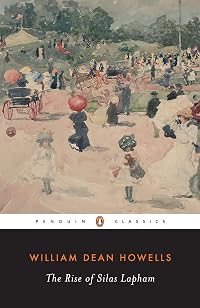

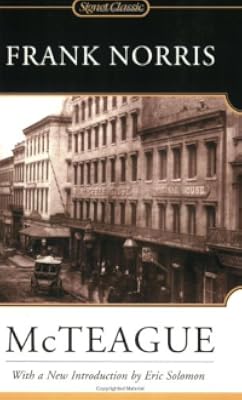














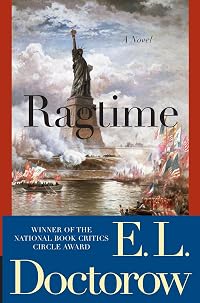











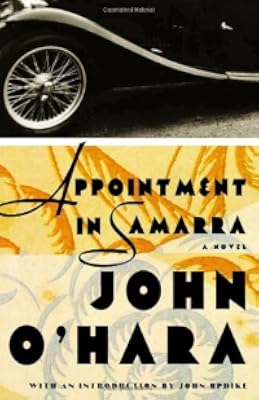












Member Recommendations


Member Reviews
This book is about a woman who winds up with a rather modern lifestyle, never marrying or having children, having a series of serious and casual romantic attachments and even living with her lovers, and eventually setting herself up in a successful entertainment career to the extent that instead of her deadbeat boyfriend supporting her on whatever cash he had not gambled away yet, she could support him. Dreiser writes her story as if it is a subtle tragedy in which despite gaining wealth, fame, financial security, and all the finer things in life, she was missing a certain 'something', perhaps the traditional life of wife/mother. This lament coming from the narrator never rang particularly true when considering the character of Carrie show more though. I could not imagine Carrie, as written, actually wanting traditional marriage or babies.
Dreiser also glosses over all the preparatory work that would have gone on during Carrie's younger life for her to be able to join in with a chorus line in a ballet so easily near the end of the book. If she is able to excel as a dancer and stage performer, surely she has had some training in the past. Dreiser portrays her stage career as if there is really no skill to it, merely innate talent and an artistic mind, plus luck that lands Carrie at the right place and time to get the right opportunities to make it big. So, her success is portrayed as almost dumb luck, unearned except perhaps in some way to atone for the messy past fate gave her by that point. Meanwhile her boyfriend, who kidnapped her and took her away to a new city to live with him, is portrayed as if his choice to not look for work seriously and his choices to gamble with the money he had left were not as important as the waves of fate that turned him into a pathetic beggar. He seems clinically depressed, as a result of chronic unemployment, sure, but I still could not really care about his demise.
So, while the story was entertaining, and I could definitely relate to some of the characters, my interpretation of the situations in this novel is not quite Dreiser's. In my reading of it, Carrie gets a happy ending, albeit a realistic one where she might be a little lonely right now, but where life really is good. show less
Dreiser also glosses over all the preparatory work that would have gone on during Carrie's younger life for her to be able to join in with a chorus line in a ballet so easily near the end of the book. If she is able to excel as a dancer and stage performer, surely she has had some training in the past. Dreiser portrays her stage career as if there is really no skill to it, merely innate talent and an artistic mind, plus luck that lands Carrie at the right place and time to get the right opportunities to make it big. So, her success is portrayed as almost dumb luck, unearned except perhaps in some way to atone for the messy past fate gave her by that point. Meanwhile her boyfriend, who kidnapped her and took her away to a new city to live with him, is portrayed as if his choice to not look for work seriously and his choices to gamble with the money he had left were not as important as the waves of fate that turned him into a pathetic beggar. He seems clinically depressed, as a result of chronic unemployment, sure, but I still could not really care about his demise.
So, while the story was entertaining, and I could definitely relate to some of the characters, my interpretation of the situations in this novel is not quite Dreiser's. In my reading of it, Carrie gets a happy ending, albeit a realistic one where she might be a little lonely right now, but where life really is good. show less
Hurstwood must be the most disillusioned man in literature. He kept thinking something will come along when he doesn't even try! In the end, he was reduced to asking Carrie for money. Carrie on the other hand tries. Certainly, she took the easy way out by living with Drouet but when it was clear that Hurstwood would not even try, she went out and got herself a job in the theatre. It is what she wants though she ended up yearning for something better.
This book is so frustrating, and yet so fascinating. Frustrating because you have to watch Hurstwood make one dumb decision after another and then suffer along with him, and fascinating because of how the city gives Carrie everything she wants, yet still leaves her with a gaping hole in her soul that she can never fill. It's frustrating to watch Hurstwood go from rich man to beggar, especially since Carrie selfishly abandoned him so she could buy more clothes, but satisfying to watch Carrie make it on her own during a time when that was unheard of. Yes, this book is incredibly frustrating, but also sort of un-put-downable.
A surprisingly modern novel, except for its reliance on exposition, originally published 1900 to a problematic reception due to its descriptions of very flawed characters without an ‘uplifting’ message; a cross between Sinclair Lewis (Babbitt) and a dash of Dickens, although the author may have aimed for Balzac. Reprinted in 19927 and currently regarded as an American classic: a precursor to A Man In Full in some ways.
The main protagonist, Carrie, flees rural WI in the late 1800s for Chicago looking for work and faces the harsh working conditions of factory life while aching for the beautiful things offered to the fortunate. Via her impoverished sister, her aspiring middle class lover and then her upper middle class lover, she is a show more reflection of the different socioeconomic sectors in a rapidly industrialized and urban culture. A committed socialist, Dreiser takes aim at the ultimately vacuous goals presented as the golden life while frankly displaying the untenable realities in not achieving those goals.
There is no Hollywood ending, the message is never too bluntly struck and the pace keeps a good momentum; the characters are mostly presented as real people not one-dimensional. The problem is there are no brief paragraphs or even summary sentences to indicate what would have sent the characters along their paths in the first place: they become stock not because of a lack of description but because their actions appear too random. This isn’t an issue with minor characters, but for Carrie (the rise) and Hurstwood (the fall) the book would have benefited from a very modest amount of backstory, especially for Hurstwood.
Dreiser has sympathy for his characters and refrains from overt moralizing. Through the character Ames, the reader is given a “Third Way”, but with zero information on what this might actually entail. ‘Sister Carrie’ is one of those books that was important to have been written, very good to have read and will stay in the canon for a long time, but I suspect not a book to be reread. show less
The main protagonist, Carrie, flees rural WI in the late 1800s for Chicago looking for work and faces the harsh working conditions of factory life while aching for the beautiful things offered to the fortunate. Via her impoverished sister, her aspiring middle class lover and then her upper middle class lover, she is a show more reflection of the different socioeconomic sectors in a rapidly industrialized and urban culture. A committed socialist, Dreiser takes aim at the ultimately vacuous goals presented as the golden life while frankly displaying the untenable realities in not achieving those goals.
There is no Hollywood ending, the message is never too bluntly struck and the pace keeps a good momentum; the characters are mostly presented as real people not one-dimensional. The problem is there are no brief paragraphs or even summary sentences to indicate what would have sent the characters along their paths in the first place: they become stock not because of a lack of description but because their actions appear too random. This isn’t an issue with minor characters, but for Carrie (the rise) and Hurstwood (the fall) the book would have benefited from a very modest amount of backstory, especially for Hurstwood.
Dreiser has sympathy for his characters and refrains from overt moralizing. Through the character Ames, the reader is given a “Third Way”, but with zero information on what this might actually entail. ‘Sister Carrie’ is one of those books that was important to have been written, very good to have read and will stay in the canon for a long time, but I suspect not a book to be reread. show less
Theodore Dreiser was an accomplished journalist and it shows in the brisk, detailed style of this, his first novel. It is a novel with a theme: we are doomed to lead empty lives because all of our striving gets us no where. All of the characters are flawed, but some lead more successful lives than others. Carrie and Drouet achieve their dreams, but still feel empty. Hurstwood sinks into poverty, but that is more by chance than any moral failing on his part. You cannot read this book thinking that the good person will win in the end. There is no thing as justice. Hurstwood performs a criminal act, but he gives the money back and still he seems to be punished. Carrie is very lucky, but her good luck doesn't make her happy.
No one can win show more in Dreiser's world because we are doomed to sit in our rocking chairs, moving back and forth but going no where. Trying to be a better person, like Ames does, is a good thing, but it won't make any difference to the outcome of your life. show less
No one can win show more in Dreiser's world because we are doomed to sit in our rocking chairs, moving back and forth but going no where. Trying to be a better person, like Ames does, is a good thing, but it won't make any difference to the outcome of your life. show less
At age eighteen, Carrie Meeber moves from a small town to the big city of Chicago, where she tries to make a living. When she runs into difficulties, rather than return home, she accepts assistance from a man who leads her to believe they will marry. She eventually becomes involved with another man who, unbeknownst to her, is already married. Carrie drifts through life with no set goals, at times encountering failure and at other times finding success. One of the primary themes appears to be the role of chance in a person’s life, especially for those who, like Carrie, are initially not particularly assertive or decisive.
This book was published in 1900 and is set mostly in the 1890’s. In this book Dreiser illustrates major changes show more taking place in society at the time, such as the increase in industrialization, rise in consumerism, changes in traditional roles for women, improvement in mobility (via train travel), and shifts in moral standards. It is fascinating to me to read books written long ago, as it provides a true picture of what life was like in those days. One of Carrier's places of employment is described as:
“The place smelled of the oil of the machines and the new leather—a combination which, added to the stale odours of the building, was not pleasant even in cold weather. The floor, though regularly swept every evening, presented a littered surface. Not the slightest provision had been made for the comfort of the employees, the idea being that something was gained by giving them as little and making the work as hard and unremunerative as possible. What we know of foot-rests, swivel-back chairs, dining-rooms for the girls, clean aprons and curling irons supplied free, and a decent cloak room, were unthought of. The washrooms were disagreeable, crude, if not foul places, and the whole atmosphere was sordid.”
The book is compelling and extremely well-constructed. It is structured around major set pieces, with natural transitions between them. The characters are realistic; they exhibit both virtues and flaws. Dreiser provides an unnamed narrator, who occasionally addresses the reader. This narrator occasionally indulges in generalizations about women and ethnic comments that may not sit well with a modern audience, though it is possible that Dreiser is showing that the narrator is a product of an earlier way of thinking, as Carrie’s trajectory diverges from the narrator’s rather generic observations.
This book is well worth reading for the way it brings to life the seeds of change that have become the norm today. It provides a vivid picture of the urban scene at the turn of the 20th century, and parts of it are very sad. Dreiser was ahead of the curve and roundly criticized, but this book stands the test of time and has become a classic. show less
This book was published in 1900 and is set mostly in the 1890’s. In this book Dreiser illustrates major changes show more taking place in society at the time, such as the increase in industrialization, rise in consumerism, changes in traditional roles for women, improvement in mobility (via train travel), and shifts in moral standards. It is fascinating to me to read books written long ago, as it provides a true picture of what life was like in those days. One of Carrier's places of employment is described as:
“The place smelled of the oil of the machines and the new leather—a combination which, added to the stale odours of the building, was not pleasant even in cold weather. The floor, though regularly swept every evening, presented a littered surface. Not the slightest provision had been made for the comfort of the employees, the idea being that something was gained by giving them as little and making the work as hard and unremunerative as possible. What we know of foot-rests, swivel-back chairs, dining-rooms for the girls, clean aprons and curling irons supplied free, and a decent cloak room, were unthought of. The washrooms were disagreeable, crude, if not foul places, and the whole atmosphere was sordid.”
The book is compelling and extremely well-constructed. It is structured around major set pieces, with natural transitions between them. The characters are realistic; they exhibit both virtues and flaws. Dreiser provides an unnamed narrator, who occasionally addresses the reader. This narrator occasionally indulges in generalizations about women and ethnic comments that may not sit well with a modern audience, though it is possible that Dreiser is showing that the narrator is a product of an earlier way of thinking, as Carrie’s trajectory diverges from the narrator’s rather generic observations.
This book is well worth reading for the way it brings to life the seeds of change that have become the norm today. It provides a vivid picture of the urban scene at the turn of the 20th century, and parts of it are very sad. Dreiser was ahead of the curve and roundly criticized, but this book stands the test of time and has become a classic. show less
At age eighteen, Carrie Meeber moves from a small town to the big city of Chicago, where she tries to make a living. When she runs into difficulties, rather than return home, she accepts assistance from a man who leads her to believe they will marry. She eventually becomes involved with another man who, unbeknownst to her, is already married. Carrie drifts through life with no set goals, at times encountering failure and at other times finding success. One of the primary themes appears to be the role of chance in a person’s life, especially for those who, like Carrie, are initially not particularly assertive or decisive.
This book was published in 1900 and is set mostly in the 1890’s. In this book Dreiser illustrates major changes show more taking place in society at the time, such as the increase in industrialization, rise in consumerism, changes in traditional roles for women, improvement in mobility (via train travel), and shifts in moral standards. It is fascinating to me to read books written long ago, as it provides a true picture of what life was like in those days. One of Carrier's places of employment is described as:
“The place smelled of the oil of the machines and the new leather—a combination which, added to the stale odours of the building, was not pleasant even in cold weather. The floor, though regularly swept every evening, presented a littered surface. Not the slightest provision had been made for the comfort of the employees, the idea being that something was gained by giving them as little and making the work as hard and unremunerative as possible. What we know of foot-rests, swivel-back chairs, dining-rooms for the girls, clean aprons and curling irons supplied free, and a decent cloak room, were unthought of. The washrooms were disagreeable, crude, if not foul places, and the whole atmosphere was sordid.”
The book is compelling and extremely well-constructed. It is structured around major set pieces, with natural transitions between them. The characters are realistic; they exhibit both virtues and flaws. Dreiser provides an unnamed narrator, who occasionally addresses the reader. This narrator occasionally indulges in generalizations about women and ethnic comments that may not sit well with a modern audience, though it is possible that Dreiser is showing that the narrator is a product of an earlier way of thinking, as Carrie’s trajectory diverges from the narrator’s rather generic observations.
This book is well worth reading for the way it brings to life the seeds of change that have become the norm today. It provides a vivid picture of the urban scene at the turn of the 20th century, and parts of it are very sad. Dreiser was ahead of the curve and roundly criticized, but this book stands the test of time and has become a classic. show less
This book was published in 1900 and is set mostly in the 1890’s. In this book Dreiser illustrates major changes show more taking place in society at the time, such as the increase in industrialization, rise in consumerism, changes in traditional roles for women, improvement in mobility (via train travel), and shifts in moral standards. It is fascinating to me to read books written long ago, as it provides a true picture of what life was like in those days. One of Carrier's places of employment is described as:
“The place smelled of the oil of the machines and the new leather—a combination which, added to the stale odours of the building, was not pleasant even in cold weather. The floor, though regularly swept every evening, presented a littered surface. Not the slightest provision had been made for the comfort of the employees, the idea being that something was gained by giving them as little and making the work as hard and unremunerative as possible. What we know of foot-rests, swivel-back chairs, dining-rooms for the girls, clean aprons and curling irons supplied free, and a decent cloak room, were unthought of. The washrooms were disagreeable, crude, if not foul places, and the whole atmosphere was sordid.”
The book is compelling and extremely well-constructed. It is structured around major set pieces, with natural transitions between them. The characters are realistic; they exhibit both virtues and flaws. Dreiser provides an unnamed narrator, who occasionally addresses the reader. This narrator occasionally indulges in generalizations about women and ethnic comments that may not sit well with a modern audience, though it is possible that Dreiser is showing that the narrator is a product of an earlier way of thinking, as Carrie’s trajectory diverges from the narrator’s rather generic observations.
This book is well worth reading for the way it brings to life the seeds of change that have become the norm today. It provides a vivid picture of the urban scene at the turn of the 20th century, and parts of it are very sad. Dreiser was ahead of the curve and roundly criticized, but this book stands the test of time and has become a classic. show less
Members
- Recently Added By
Published Reviews
ThingScore 88
I believe the novel Sister Carrie helps to describe the life of young girls in the turn of the century. The confusion of what to do, who to be with, who to trust.. running into problems, this story touches bases with all of these.
added by newfieldreads
The novel Sister Carrie was a great book to read if your into sneaky ways and like reading about Drama. The book shows how you shouldnt always base your opinions on what you see because that may lead you in the way of false pretences. Over all I enjoyed reading the book and it also gave me an outlook on how the 1900's really is not that different from the present time we live in. The novel show more teaches you inner morals to go with what your heart desires Carrie made her life the way she dreamed by following what she knew and working hard for it. show less
added by newfieldreads
Lists

1001 Books You Must Read Before You Die
1,448 works; 1,133 members

The Guardian's 1000 Novels Everyone Must Read
1,005 works; 547 members

The Top Ten: Writers Pick Their Favorite Books
240 works; 31 members
20th Century Literature
1,161 works; 54 members

Unread books
1,063 works; 87 members

Books Set in New York City
127 works; 21 members
Harold Bloom - The Western Canon: D. The Chaotic Age
833 works; 24 members

F. Scott Fitzgerald's 22 Essential Books (1936)
22 works; 3 members
The American Experience
173 works; 18 members

Five star books
1,757 works; 108 members

One Book, Many Authors
441 works; 40 members
1,001 BYMRBYD Concensus
723 works; 27 members

Amanda's Guaranteed Books
110 works; 5 members

Vote - Bookmarque's Teetering TBR Tower
33 works; 8 members

Fiction with Women's Names in the Title
378 works; 15 members

Fiction about the Working Class
74 works; 10 members

The Guardian's 100 Best Novels Written in English
105 works; 13 members

Realism
9 works; 1 member

A's favorite novels
100 works; 3 members
American Lit for Eng 11 Research Project
368 works; 6 members

Chicago Books
87 works; 4 members

My TBR
371 works; 3 members

Authors from the United States
245 works; 3 members

AP Lit
363 works; 6 members

Mustich's 1000 Books to Read Before You Die: A Life Changing List
1,001 works; 19 members

Recommended Reading : 600 Classics Reviewed, Editors of Salem Press, 2015
634 works; 6 members

DigitalDreamDoor top 300
300 works; 4 members

.
396 works; 1 member
Modern Library's 100 Best Novels
100 works; 2 members

Fiction With Familiar Settings
280 works; 93 members
Author Information

159+ Works 13,795 Members
Theodore Dreiser was born in Terre Haute, Indiana, the twelfth of 13 children. His childhood was spent in poverty, or near poverty, and his family moved often. In spite of the constant relocations, Dreiser managed to attend school, and, with the financial aid of a sympathetic high school teacher, he was able to attend Indiana University. However, show more the need for income forced him to leave college after one year and take a job as a reporter in Chicago. Over the next 10 years, Dreiser held a variety of newspaper jobs in Pittsburgh, St. Louis, and finally New York. He published his first novel, Sister Carrie in 1900, but because the publisher's wife considered its language and subject matter too "strong", it was barely advertised and went almost unnoticed. Today it is regarded as one of Dreiser's best works. It is the story of Carrie, a young woman from the Midwest, who manages to rise to fame and fortune on the strength of her personality and ambition, through her acting talent, and via her relationships with various men. Much of the book's controversy came from the fact that it portrayed a young woman who engages in sexual relationships without suffering the poverty and social downfall that were supposed to be the "punishment" for such "sin." Dreiser's reputation has increased instrumentally over the years. His best book and first popular success, An American Tragedy (1925), is now considered a major American novel, and his other works are widely taught in college courses. Like Sister Carrie, An American Tragedy also tells the story of an ambitious young person from the Midwest. In this case, however, the novel's hero is a man who is brought to ruin because of a horrible action he commits - he murders a poor young woman whom he has gotten pregnant, but whom he wants to discard in favor of a wealthy young woman who represents luxury and social advancement. As Dreiser portrays him, the young man is a victim of an economic system that torments so many with their lack of privilege and power and temps them to unspeakable acts. Dreiser is also known for the Coperwood Trilogy - The Financier (1912), The Titan (1914), and the posthumously published The Store (1947). Collectively the three books paint the portrait of a brilliant and ruthless "financial buccaneer." Dreiser is associated with Naturalism, a writing style that also includes French novelist Emile Zola. Naturalism seeks to portray all the social forces that shape the lives of the characters, usually conveying a sense of the inevitable doom that these forces must eventually bring about. Despite this apparent pessimism, Dreiser had faith in socialism as a solution to what he saw as the economic injustices of American capitalism. His socialist views were reinforced by a trip to the newly socialist Soviet Union, and in fact, Dreiser is still widely read in that country. There, as here, he is seen as a powerful chronicler of the injustices and ambitions of his time. Dreiser officially joined the Communist Party shortly before his death in 1945. (Bowker Author Biography) show less
Some Editions
Awards and Honors
Awards
Notable Lists
Series
Belongs to Publisher Series
Work Relationships
Is contained in
Has the adaptation
Is expanded in
Inspired
Has as a student's study guide
Common Knowledge
- Original publication date
- 1900
- People/Characters
- Carrie Meeber; Hurstwood; Charles Drouet; Minnie Hanson; Sven Hanson
- Important places
- Chicago, Illinois, USA; New York, New York, USA; Montréal, Québec, Canada; Columbia City, Wisconsin, USA
- Related movies
- Carrie (1952 | IMDb)
- First words
- When Caroline Meeber boarded the afternoon train for Chicago, her total outfit consisted of a small trunk, a cheap imitation alligator-skin satchel, a small lunch in a paper box, and a yellow leather snap purse, containing he... (show all)r ticket, a scrap of paper with her sister's address in Van Buren Street, and four dollars in money.
- Last words
- (Click to show. Warning: May contain spoilers.)This book has two different endings, depending on whether one is reading Dreiser's original ending or the later one.
Original final sentence:
"What's the use," he said wearily, as he stretched himself to rest.
Later final sentence:
In your rocking-chair, by your window, shall you dream such happiness as you may never feel. - Original language
- English
- Disambiguation notice
- Sister Carrie has been published in two forms: all editions between 1900 and 1981 were based on a version somewhat abridged by Dreiser and his editors. In 1981, the Pennsylvania edition based on the original manuscript... (show all) from the NYPL was published.
Work #36059 is for the standard version. Do not combine it with the unexpurgated editions (Penguin Unexpurgated, Pennsylvania Edition, or NYPL Collectors Edition) or with the Norton Critical Edition (also contains the unexpurgated material as well as several background and critical writings).
Classifications
Statistics
- Members
- 4,398
- Popularity
- 3,387
- Reviews
- 67
- Rating
- (3.76)
- Languages
- 14 — Chinese, Czech, Danish, Dutch, English, Estonian, French, German, Hungarian, Italian, Lithuanian, Polish, Russian, Spanish
- Media
- Paper, Audiobook, Ebook
- ISBNs
- 221
- UPCs
- 1
- ASINs
- 138