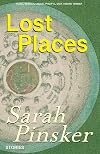
Lost Places: Stories
by Sarah Pinsker
On This Page
Description
A half-remembered children's TV show. A hotel that shouldn't exist. A mysterious ballad. A living flag. Nebula and Hugo Award-winning author Sarah Pinsker's second collection brings together a seemingly eclectic group of stories that unite behind certain themes: her touchstones of music and memory are joined by stories about secret subversions and hidden messages in art. Her stories span and transcend genre labels, looking for the truth in strange situations from possible futures to show more impossible pasts. show lessTags
Recommendations













Member Reviews
Sarah Pinsker is my favorite contemporary writer of short sf&f, so I was excited to pick up Lost Places, her new collection. It contains twelve stories, a couple of which I've read before, but most of which were new to me. Eleven were published in various venues, including some obscure (to me, anyway) anthologies, plus there's "Science Facts!", which is original to this collection.
One can sense Pinsker pushing herself here: in her first collection, Sooner or Later Everything Falls into the Sea, there were a number of long-form, character-focused pieces, with strong prose but otherwise told in what you might call a conventional style, like "In Joy, Knowing the Abyss Behind," "The Narwhal," "Wind Will Rove," "And Then There Were (N-One)," show more "Our Lady of the Open Road," and "Sooner or Later Everything Falls into the Sea." Sure, there were a number of pieces that were more experimental in tone and format, but they were sprinkled throughout the collection. Lost Places has more of those experimental pieces, fewer of those conventional narratives. Most notable is "I Frequently Hear Music in the Very Heart of the Noise," a sort of free-association jazz-induced fever dream about a fictional musician peppered with appearances by all sort of real residents of Jazz-Age New York City. I'm not sure I quite got this one, but I enjoyed the experience of reading it regardless and am certain I will come back to it someday.
But there's also "Left the Century to Sit Unmoved," about a weird swimming hole that occasionally swallows people up and "Remember This for Me," about an amnesiac artist trying to prepare a retrospective exhibition of her life. I can't say that they all worked for me, but I appreciated that Pinsker is clearly pushing herself. I did really like "A Better Way of Saying," which was my favorite piece in the collection, about a young Jewish boy who discovers a magic power than he can only use in very specific circumstances. Like much of Pinsker's work, it engages with the power of art and storytelling itself: in this case, cinema and journalism and their power to remake the world.
Two stories are low-key horror transmitted via media itself. The first is "Two Truths and a Lie," about a woman who discovers she was once a child participant on a weird local television program she had totally forgotten about; the second is "Where Oaken Hearts Do Gather," about an English folk ballad about a man whose heart is literally stolen by his lover, only the story is in the form of commenters on a lyrics website trying to analyze the story. They sort of engage with what you might call the "creepypasta" genre, but are both more interesting and clever than that.
Four stories are structured somewhat similarly in a way that I found frustrating. "Our Flag Was Still There," "Everything Is Closed Today," "Escape from Caring Seasons," and "The Mountains His Crown" all begin very promisingly. "Our Flag Was Still There" is about people who act as human flags in a future America. "Everything Is Closed" is a prescient vision of the COVID lockdowns; published in 2019, it posits a world where a series of terrorist attacks have closed most places, so everyone has nowhere to go—and many people are therefore unemployed and at loose ends. (Many communications networks are down, so people can't take solace in the Internet as we did in the real world.) The main character, a part-time librarian, teaches a group of local girls to skate and so inadvertently begins to create a network of resistance. "Escape from Caring Seasons" is a strong piece of "if this goes on—" storytelling, about algorithms that have more say in medical care for the elderly than human beings; it follows a woman making a desperate escape from the residential community she designed as all its features are weaponized against her. "The Mountains His Crown" is set in some kind of future world or on a space colony, where an emperor is imposing his top-down will on what crops local farmers must grow. All four are well-told and engaging... and come to a stop at the moment the main characters decide on an act of resistance.
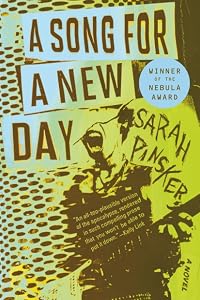
I found this acceptable once, but once it became a pattern, I became frustrated. How did these acts of resistance play out? The decision having been made, what were the consequences? What came of the flag who chose to speak up? How did the skater girls organize? Did the algorithms get revised? Did the farmers face repercussions from the emperor? It felt like kind of a cop out: resistance to the large structures that govern our lives can often feel hard to imagine. It's easy to write sf that just gives a moment of hope, but I think it can do more, it can show us how that hope might play out in practice. It's easy to say "oh a better world is possible" but what sf can do is demonstrate how through hard work that better world can come into being. Somewhat amusingly, a character in the collection's final story, "Science Facts!", summed up my discontent: "That isn't an ending. [...] That's where the story begins. A good story would go on from there to tell us what they all did next." That isn't to say these aren't good stories. But I did feel like Pinsker was holding herself back somewhat when there was another story to be told. (I guess I'm saying I want the skater girls novels? I am given to understand, though, that "Everything Is Closed" takes place in the world of her first novel, A Song for a New Day, which I haven't yet read.).
I didn't mean to touch on every story, but find that I almost have, so I'll discuss the last two to complete the set. "The Court Magician" is a dark, well-told fantasy story; like many of Pinsker's fantasies, it's about power and its dangers. Other than "Better of Way of Saying," though my favorite story in the collection was the final one, "Science Facts!" It's told in the collective first person by a group of preteen girl scouts (though not, seemingly, Girl Scouts) on a backpacking trip. Like some of Pinsker's work, the sfnal element is slight and comes into the story late, but effective in the way it sews up the themes of the story and connects everything together. A great evocation of the power of camping, the dangers of wilderness, the social dynamics of preteens, and the strangeness of the plant world.
Pinsker has written, according to ISFDB, over fifty works of short fiction. Between this volume and her first collection, I don't think even half of it has been collected yet. I look forward to more collections of it... and some day a magisterial set of The Complete Short Fiction of Sarah Pinsker hardcovers, surely? show less
One can sense Pinsker pushing herself here: in her first collection, Sooner or Later Everything Falls into the Sea, there were a number of long-form, character-focused pieces, with strong prose but otherwise told in what you might call a conventional style, like "In Joy, Knowing the Abyss Behind," "The Narwhal," "Wind Will Rove," "And Then There Were (N-One)," show more "Our Lady of the Open Road," and "Sooner or Later Everything Falls into the Sea." Sure, there were a number of pieces that were more experimental in tone and format, but they were sprinkled throughout the collection. Lost Places has more of those experimental pieces, fewer of those conventional narratives. Most notable is "I Frequently Hear Music in the Very Heart of the Noise," a sort of free-association jazz-induced fever dream about a fictional musician peppered with appearances by all sort of real residents of Jazz-Age New York City. I'm not sure I quite got this one, but I enjoyed the experience of reading it regardless and am certain I will come back to it someday.
But there's also "Left the Century to Sit Unmoved," about a weird swimming hole that occasionally swallows people up and "Remember This for Me," about an amnesiac artist trying to prepare a retrospective exhibition of her life. I can't say that they all worked for me, but I appreciated that Pinsker is clearly pushing herself. I did really like "A Better Way of Saying," which was my favorite piece in the collection, about a young Jewish boy who discovers a magic power than he can only use in very specific circumstances. Like much of Pinsker's work, it engages with the power of art and storytelling itself: in this case, cinema and journalism and their power to remake the world.
Two stories are low-key horror transmitted via media itself. The first is "Two Truths and a Lie," about a woman who discovers she was once a child participant on a weird local television program she had totally forgotten about; the second is "Where Oaken Hearts Do Gather," about an English folk ballad about a man whose heart is literally stolen by his lover, only the story is in the form of commenters on a lyrics website trying to analyze the story. They sort of engage with what you might call the "creepypasta" genre, but are both more interesting and clever than that.
Four stories are structured somewhat similarly in a way that I found frustrating. "Our Flag Was Still There," "Everything Is Closed Today," "Escape from Caring Seasons," and "The Mountains His Crown" all begin very promisingly. "Our Flag Was Still There" is about people who act as human flags in a future America. "Everything Is Closed" is a prescient vision of the COVID lockdowns; published in 2019, it posits a world where a series of terrorist attacks have closed most places, so everyone has nowhere to go—and many people are therefore unemployed and at loose ends. (Many communications networks are down, so people can't take solace in the Internet as we did in the real world.) The main character, a part-time librarian, teaches a group of local girls to skate and so inadvertently begins to create a network of resistance. "Escape from Caring Seasons" is a strong piece of "if this goes on—" storytelling, about algorithms that have more say in medical care for the elderly than human beings; it follows a woman making a desperate escape from the residential community she designed as all its features are weaponized against her. "The Mountains His Crown" is set in some kind of future world or on a space colony, where an emperor is imposing his top-down will on what crops local farmers must grow. All four are well-told and engaging... and come to a stop at the moment the main characters decide on an act of resistance.
I found this acceptable once, but once it became a pattern, I became frustrated. How did these acts of resistance play out? The decision having been made, what were the consequences? What came of the flag who chose to speak up? How did the skater girls organize? Did the algorithms get revised? Did the farmers face repercussions from the emperor? It felt like kind of a cop out: resistance to the large structures that govern our lives can often feel hard to imagine. It's easy to write sf that just gives a moment of hope, but I think it can do more, it can show us how that hope might play out in practice. It's easy to say "oh a better world is possible" but what sf can do is demonstrate how through hard work that better world can come into being. Somewhat amusingly, a character in the collection's final story, "Science Facts!", summed up my discontent: "That isn't an ending. [...] That's where the story begins. A good story would go on from there to tell us what they all did next." That isn't to say these aren't good stories. But I did feel like Pinsker was holding herself back somewhat when there was another story to be told. (I guess I'm saying I want the skater girls novels? I am given to understand, though, that "Everything Is Closed" takes place in the world of her first novel, A Song for a New Day, which I haven't yet read.).
I didn't mean to touch on every story, but find that I almost have, so I'll discuss the last two to complete the set. "The Court Magician" is a dark, well-told fantasy story; like many of Pinsker's fantasies, it's about power and its dangers. Other than "Better of Way of Saying," though my favorite story in the collection was the final one, "Science Facts!" It's told in the collective first person by a group of preteen girl scouts (though not, seemingly, Girl Scouts) on a backpacking trip. Like some of Pinsker's work, the sfnal element is slight and comes into the story late, but effective in the way it sews up the themes of the story and connects everything together. A great evocation of the power of camping, the dangers of wilderness, the social dynamics of preteens, and the strangeness of the plant world.
Pinsker has written, according to ISFDB, over fifty works of short fiction. Between this volume and her first collection, I don't think even half of it has been collected yet. I look forward to more collections of it... and some day a magisterial set of The Complete Short Fiction of Sarah Pinsker hardcovers, surely? show less
I usually don't like short fiction but keep trying it anyway, hoping each time that the experience won't be too uneven, disjointed, and/or unpleasant (why do short stories seem to end ambiguous-to-unhappy so often?). Almost every time, I have to force myself to get through the volume. Oddly, that was not my experience this time. I actually enjoyed these stories, and I think I might want to try another collection by Pinsker. What a pleasant surprise!
I hadn't realized it, but I had read one of these stories before ("A Better Way of Saying"); all the rest were new to me, though I'd heard of some of them as award-winners. I'd say they deserved the plaudits; personally, "Where Oaken Hearts Do Gather" was a particularly fascinating blend of show more internet culture and folklore. I also appreciated the variety of ekphrastic stories, centering on other forms of art, like music and painting. Often, fiction focusing on creative endeavors can be dull or confusing when shrunk down to words, and happily, these weren't.
Overall, the main and occasional drawback for me was that the overt political or social message to several of these; though I often agree or sympathize with the perspectives, a too-clear agenda can still bog down the narrative at times. For the most part, though, the stories are engaging in themselves aside from any polemic purpose. The other aspect that can be a drawback for me is many of these stories center on something dark or unsettling aspect. At least in this reading, I didn't find the collection as a whole to leave a negative aftertaste, though I might hesitate to reread the collection while depressed or anxious. Still, I'll definitely plan on revisiting these stories in the future and looking out for more of Pinsker's work in the future. show less
I hadn't realized it, but I had read one of these stories before ("A Better Way of Saying"); all the rest were new to me, though I'd heard of some of them as award-winners. I'd say they deserved the plaudits; personally, "Where Oaken Hearts Do Gather" was a particularly fascinating blend of show more internet culture and folklore. I also appreciated the variety of ekphrastic stories, centering on other forms of art, like music and painting. Often, fiction focusing on creative endeavors can be dull or confusing when shrunk down to words, and happily, these weren't.
Overall, the main and occasional drawback for me was that the overt political or social message to several of these; though I often agree or sympathize with the perspectives, a too-clear agenda can still bog down the narrative at times. For the most part, though, the stories are engaging in themselves aside from any polemic purpose. The other aspect that can be a drawback for me is many of these stories center on something dark or unsettling aspect. At least in this reading, I didn't find the collection as a whole to leave a negative aftertaste, though I might hesitate to reread the collection while depressed or anxious. Still, I'll definitely plan on revisiting these stories in the future and looking out for more of Pinsker's work in the future. show less
 This review was written for LibraryThing Early Reviewers.
I love a short story collection like one that Sarah Pinsker delivers -- when it is sci-fi/fantasy/speculative, these stories can go anywhere, do anything, limited by nothing. Usually, the only problem I end up with some of these stories is that they aren't long enough to reward me with the full, rich detail that I wish for as a greedy reader. The ideas are so good, but the stories are sometimes a few pages, so you are really only getting the idea. Again, this could be a perfect story for the WRITER, with the intent of planting that idea in the reader's head, but yep, greedy reader here. Most of these actually seem complete to me, but also so compelling that I wish there were more to them! At the same time, it's why I love speculative show more short stories - that they can contain unique ideas without needing to be an entire novel. The stories here are immediately engaging and immersive, chock full of great out-there scenarios. On a sentence level, very rich and detailed. For example, Douglas Fairbanks shooting a man with an arrow from atop a building in NYC (really happened) -- but Pinsker giving this real event a spin of her own. One story reads like it's a website with comments of fans analyzing the lyrics of a mysterious old ballad. I'm a huge fan of Pinsker's first collection 'Sooner Or Later Everything Falls Into the Sea', and with this collection, I can add a few more favorite stories to the pile. I think both of these collections aren't to be missed if you like speculative and weird short stories. I know I will be reading whatever words Sarah Pinsker throws out into the world and I will also definitely check out her music soon. show less
This review was written for LibraryThing Early Reviewers.A collection of short stories, all of which qualify as some sort of speculative fiction, but often in odd or hard-to-define ways. it's a bit difficult to review this one, because my responses to the stories vary so much. The best of them are terrific, with the absolute standout of the collection being "The Court Magician," which takes a familiar fantasy trope and handles it in a way that feels so fresh and so effective that I actually find myself completely forgetting that I've ever seen it used before at all. Other stories are decent enough, but make much less of an impact. At least a couple show great promise, but end in ways I found unsatisfying, as if the author weren't entirely sure where to go with them. And a few are trying to show more engage in social commentary in ways that just end up feeling clunky and rather dull.
But here's the thing about this collection. It feels to me very much like Pinsker is absolutely fearless about trying any kind of idea, or format, or writing style. (A story told in the form of comments on an internet forum devoted to analyzing the lyrics of folk ballads? Sure, why not!) Some of it pays off wonderfully and some of it falls a bit flat, but I think I do love that she's willing to try all of it.
Rating: I'm going to call this one 3.5/5, because it probably works as some kind of weighted average of my evaluation of each story, but I'm not entirely sure that tells you very much. show less
But here's the thing about this collection. It feels to me very much like Pinsker is absolutely fearless about trying any kind of idea, or format, or writing style. (A story told in the form of comments on an internet forum devoted to analyzing the lyrics of folk ballads? Sure, why not!) Some of it pays off wonderfully and some of it falls a bit flat, but I think I do love that she's willing to try all of it.
Rating: I'm going to call this one 3.5/5, because it probably works as some kind of weighted average of my evaluation of each story, but I'm not entirely sure that tells you very much. show less
This review was written for LibraryThing Early Reviewers.This is Sarah Pinsker's second short-story collection.
My favorite here is 2022 Hugo & Nebula winner "Where Oaken Hearts Do Gather", which takes the form of an entry on the fictional website LyricSplainer. A small collection of regulars have met there to dissect the eponymous song, an old English ballad, Child 313 (note there are actually just 305 Child Ballads), variations of which have been covered by such folk luminaries as Steeleye Span and Windhollow Faire. As the discussion proceeds by means of notes, web links, and snarky comments, we realize that, even in modern times, it's not wise to look too closely into witchy doings in the English countryside.
Or maybe my fave is the magical-realist "I Frequently Hear Music in the Very Heart show more of Noise." Pinsker starts in 1924 with George Gershwin working on "Rhapsody in Blue", and expands her story to embrace all of the musicians and artists associated with New York City in the 20th Century, and the hotels they lived and partied in, and the ballrooms where they played the music and the studios where they painted the canvases all somehow coming together on one ecstatic night, in one ballroom: people whose lives never overlapped digging the music together. Also there's a bit on mathematician David Hilbert's infinite-hotel paradox, plus a woman pianist named Bess Morris, (whom I think Pinsker made up) whose composition is at the center of it all.
The remaining ten stories are all excellent and imaginative. A woman learns unexpected things about her past from old videocassettes of a creepy children's show. A rural pond is a popular spot for diving - even though sometimes the divers disappear, never to come up. A boy is hired to read aloud the intertitles of silent movies in a theater.
Several stories are dystopias in which the possibility of hope or escape or resistance appears. Is this what kids these days call hopepunk? A nice change, perhaps, from the darker stories I read.
Definitely looking up more of her books. show less
My favorite here is 2022 Hugo & Nebula winner "Where Oaken Hearts Do Gather", which takes the form of an entry on the fictional website LyricSplainer. A small collection of regulars have met there to dissect the eponymous song, an old English ballad, Child 313 (note there are actually just 305 Child Ballads), variations of which have been covered by such folk luminaries as Steeleye Span and Windhollow Faire. As the discussion proceeds by means of notes, web links, and snarky comments, we realize that, even in modern times, it's not wise to look too closely into witchy doings in the English countryside.
Or maybe my fave is the magical-realist "I Frequently Hear Music in the Very Heart show more of Noise." Pinsker starts in 1924 with George Gershwin working on "Rhapsody in Blue", and expands her story to embrace all of the musicians and artists associated with New York City in the 20th Century, and the hotels they lived and partied in, and the ballrooms where they played the music and the studios where they painted the canvases all somehow coming together on one ecstatic night, in one ballroom: people whose lives never overlapped digging the music together. Also there's a bit on mathematician David Hilbert's infinite-hotel paradox, plus a woman pianist named Bess Morris, (whom I think Pinsker made up) whose composition is at the center of it all.
The remaining ten stories are all excellent and imaginative. A woman learns unexpected things about her past from old videocassettes of a creepy children's show. A rural pond is a popular spot for diving - even though sometimes the divers disappear, never to come up. A boy is hired to read aloud the intertitles of silent movies in a theater.
Several stories are dystopias in which the possibility of hope or escape or resistance appears. Is this what kids these days call hopepunk? A nice change, perhaps, from the darker stories I read.
Definitely looking up more of her books. show less
This was a solid story-collection. I like the themes of music, art, nature and lost chances. I did prefer her earlier collection.
This review was written for LibraryThing Early Reviewers.Disclaimer: I received an ARC via a Librarything giveaway.
Can I just say, I love the fact that Pinkser has older women as heroines in some of her short stories?
I am also very disappointed that I cannot find anything about a composer called Bess Morris and I know think that Pinsker just made her up and I am so disappointed. But Pinsker made her up well enough that I didn’t think she was made up so that is really writing talent right there. You know what I mean?
Of this collection, I had only read one story before. That was “Everything is Closed Today”. When I first read it, it was before the pandemic, so it hits a little bit differently now. It is still good.
My favorite story in the collection is “Escape from Caring show more Seasons,” and in some ways I kept thinking of Sophia and Shady Pines from the Golden Girls. But what Pinsker does is address the idea of control that AI and devices can have over us. The ending is quite good. Zora is a particularly believable character, and it really does feel like you are right there with her.
It was also strange to read “That Our Flag was Still There” while the multiple votes for Speaker of the House occurred. Pinsker short story is about real values versus the fake patriotism that so many politicians and other people claim as their own. The use of opiates for the masses also appears in this story, and it works because it could happen. You can see it happening.
The collection kicks off with “Two Truths and a Lie” which relies mostly on atmosphere to gets creep level on, but it works extremely well. That sense of menace is slightly present in “Left the Century to Sit Unmoved”.
A few of the stories in the collection, for instance ‘Escape from Caring Seasons” mentioned above deal with the issue of technology and the potential damage and sapping of free will that it can cause. It makes some of the stories in the collection to be particularly cautionary tales, it not outright fables. But Pinsker also experiments with style. For instance, “I Frequently Hear Music in the Very Heart of Noise” is in part a love letter to New York, a love letter to music, and a mediation on hotel culture. “Where Oaken Hearts do Gather” is a rather interesting look/take on a famous ballad told in an interesting way.
The one that is the most moving but least magical in terms of what defines fantasy and sci-fi for many people is “Remember This for Me” which is beautifully told with a mixture of humor and grace. show less
Can I just say, I love the fact that Pinkser has older women as heroines in some of her short stories?
I am also very disappointed that I cannot find anything about a composer called Bess Morris and I know think that Pinsker just made her up and I am so disappointed. But Pinsker made her up well enough that I didn’t think she was made up so that is really writing talent right there. You know what I mean?
Of this collection, I had only read one story before. That was “Everything is Closed Today”. When I first read it, it was before the pandemic, so it hits a little bit differently now. It is still good.
My favorite story in the collection is “Escape from Caring show more Seasons,” and in some ways I kept thinking of Sophia and Shady Pines from the Golden Girls. But what Pinsker does is address the idea of control that AI and devices can have over us. The ending is quite good. Zora is a particularly believable character, and it really does feel like you are right there with her.
It was also strange to read “That Our Flag was Still There” while the multiple votes for Speaker of the House occurred. Pinsker short story is about real values versus the fake patriotism that so many politicians and other people claim as their own. The use of opiates for the masses also appears in this story, and it works because it could happen. You can see it happening.
The collection kicks off with “Two Truths and a Lie” which relies mostly on atmosphere to gets creep level on, but it works extremely well. That sense of menace is slightly present in “Left the Century to Sit Unmoved”.
A few of the stories in the collection, for instance ‘Escape from Caring Seasons” mentioned above deal with the issue of technology and the potential damage and sapping of free will that it can cause. It makes some of the stories in the collection to be particularly cautionary tales, it not outright fables. But Pinsker also experiments with style. For instance, “I Frequently Hear Music in the Very Heart of Noise” is in part a love letter to New York, a love letter to music, and a mediation on hotel culture. “Where Oaken Hearts do Gather” is a rather interesting look/take on a famous ballad told in an interesting way.
The one that is the most moving but least magical in terms of what defines fantasy and sci-fi for many people is “Remember This for Me” which is beautifully told with a mixture of humor and grace. show less
This review was written for LibraryThing Early Reviewers.Members
- Recently Added By
Lists

Books Read in 2023
5,547 works; 145 members
Author Information

34+ Works 1,601 Members
Sarah Pinsker is based in Baltimore, Maryland. She is the author of the novelette In Joy, Knowing the Abyss Behind. It won a 2014 Sturgeon Award. Her novelette Our Lady of the Open Road won the 2016 Nebula Award for Best Novelette. She is a singer/songwriter with three albums on various independent label. The third album was made with her rock show more band, the Stalking Horses. (Bowker Author Biography) show less
Awards and Honors
Awards
Distinctions
Notable Lists
Work Relationships
Common Knowledge
- Original publication date
- 2023-05-02
- Dedication
- For the booksellers, the librarians, and the teachers,
in tough times and otherwise - First words
- In his last years, Marco's older brother Denny had become one of those people whose possessions swallowed them entirely.
- Last words
- (Click to show. Warning: May contain spoilers.)We would lie in our tents for a few more minutes, and then as one drag our sleeping bags out to the clearing, and we would drift off looking up at the stars, wondering how long it would take for our crowns to reach them.
Classifications
Statistics
- Members
- 89
- Popularity
- 359,905
- Reviews
- 13
- Rating
- (4.02)
- Languages
- English
- Media
- Paper, Ebook
- ISBNs
- 2
- ASINs
- 1