On This Page
Description
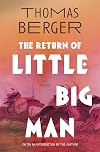
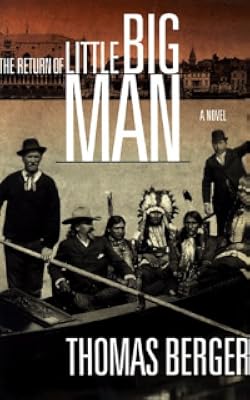
The legendary Jack Crabb takes another riotous romp through the Old West in an acclaimed novel that's "impressive and delightful . . . very Mark Twain" (Daily News, New York).Jack Crabb is now 112 years old, and he isn't done spinning yarns. In this sequel to Berger's beloved novel Little Big Man, one of literature's wiliest survivors continues his breathtaking tall tales of the Old West.
Crabb claims to have witnessed most of the great historical events of the western frontier: hiding show more behind a wagon after a drunken Doc Holliday provokes the shootout at the OK Corral; joining Buffalo Bill Cody and Annie Oakley on tour with their international Wild West show; even taking tea with Queen Victoria when she came out of seclusion after a quarter century. No matter where Crabb lays his hat, he keeps his wizened, wry, and sharp commentary at the ready. The Return of Little Big Man is a sidesplitting novel of surprising emotional depth.
This ebook features an all-new introduction by Thomas Berger, as well as an illustrated biography of the author including rare images and never-before-seen documents from his personal collection.
. show less
Tags
Recommendations





















Member Reviews
Finally got around to finishing this, having had a copy since it's original publication, and being a huge Berger fan. It's much as you would hope to expect from the title - the incredibly aged Jack Crabb outwitting his previous biographer (the late Ralph Fielding Snell) by faking his demise, and setting down more of his story on his own terms.
What made it difficult for me to read this straight through (I stopped at the near-halfway point several times) was the book's general lack of a strong central plot, being a kind of fictional autobiography. As in Little Big Man, Jack Crabb wanders here and there, always tending to stumble upon famous characters and events, which gets a little too predictable, perhaps, although the author never show more fails to bring interest and humor to these episodes.
I was pleasantly surprised once I finally pushed beyond my previous stopping points, as the story does obtain greater focus once Jack latches onto Buffalo Bill's Wild West show. This had never been an historical episode of particular interest to me, but I found this part of the story much more involving than I would have thought. It also seems a natural progression of the over-arching theme of the two books, being the place of the Indian in the face of advancing (and now conquering) white men.
The character of Sitting Bull was also a revelation, reminding the reader (and Jack) of Old Lodge Skins, though not as central as that character. The account of his murder is horrifying, and quite moving.
Probably the most enjoyable parts of the book, I would say, deal with how the Indian just thinks differently than the white man - his idea of a joke, or why talking about when something happened in the past might be considered impolite. As in the first book, Berger manages to present the Indian as human, neither exalted nor demeaned.
Crabb promises yet more "true" stories to tell by the end, and of course we believe him, and hope it won't be too long a wait. show less
What made it difficult for me to read this straight through (I stopped at the near-halfway point several times) was the book's general lack of a strong central plot, being a kind of fictional autobiography. As in Little Big Man, Jack Crabb wanders here and there, always tending to stumble upon famous characters and events, which gets a little too predictable, perhaps, although the author never show more fails to bring interest and humor to these episodes.
I was pleasantly surprised once I finally pushed beyond my previous stopping points, as the story does obtain greater focus once Jack latches onto Buffalo Bill's Wild West show. This had never been an historical episode of particular interest to me, but I found this part of the story much more involving than I would have thought. It also seems a natural progression of the over-arching theme of the two books, being the place of the Indian in the face of advancing (and now conquering) white men.
The character of Sitting Bull was also a revelation, reminding the reader (and Jack) of Old Lodge Skins, though not as central as that character. The account of his murder is horrifying, and quite moving.
Probably the most enjoyable parts of the book, I would say, deal with how the Indian just thinks differently than the white man - his idea of a joke, or why talking about when something happened in the past might be considered impolite. As in the first book, Berger manages to present the Indian as human, neither exalted nor demeaned.
Crabb promises yet more "true" stories to tell by the end, and of course we believe him, and hope it won't be too long a wait. show less
More of the same.
The dirty old swindler, Jack Crabb, faked his death to get away from the man who made him famous so he could make his own buck with his own tall tales.
He thinks Bill Cody was maybe the best thrower of bull chips as ever crossed the plains but throws suspicion from hisself in the very next paragraph seeming to indicate that he might be just that: an expert thrower of bull.
Bat Masterson? Wyatt Earp? General Custer? Wild Bill Hickok? Sitting Bull? Survived Little Bighorn? Ha! There’s a storm comin’ says the man polishing his thunder mug.
It took some doin’ to equal the previous entry of Mr. Crabb but he done it somehow. It did seem like thin molasses though in the latter parts but I never entertained the thought that show more i should of quit. show less
The dirty old swindler, Jack Crabb, faked his death to get away from the man who made him famous so he could make his own buck with his own tall tales.
He thinks Bill Cody was maybe the best thrower of bull chips as ever crossed the plains but throws suspicion from hisself in the very next paragraph seeming to indicate that he might be just that: an expert thrower of bull.
Bat Masterson? Wyatt Earp? General Custer? Wild Bill Hickok? Sitting Bull? Survived Little Bighorn? Ha! There’s a storm comin’ says the man polishing his thunder mug.
It took some doin’ to equal the previous entry of Mr. Crabb but he done it somehow. It did seem like thin molasses though in the latter parts but I never entertained the thought that show more i should of quit. show less
Well it was advertised as a sequel, and it is one. we find out how everyone is doing in 1885, mostly in New York city. The survivors of "Little Big Man" are visited. But the lightning strike of the original hasn't even left an odour of ozone on the charred ground. Aside from a few bright "Guess What?" moments, I found it hard to finish this book. It's best ignored.
If you liked Little Big Man, you'll like this book. More of the same, but mostly with Buffalo Bill Cody this go round. Lots of fun to read.
Tried to read this for a book club at the office, but couldn't finish it. The movie based on the first book was fun, the second book was just too much of the same, again, and again...The writing style was irritating.
Ratings
Members
- Recently Added By
Author Information

Thomas Berger was born in Cincinnati, Ohio on July 20, 1924. During World War II, he enlisted in the Army and served in England and Germany as part of the Medical Corps. He received a baccalaureate degree with honors from the University of Cincinnati in 1948 and pursued graduate work in English at Columbia University until 1951. He worked as a show more librarian at the Tamiment Institute and Library in New York and as a summary writer for The New York Times Index. His first novel, Crazy in Berlin, was published in 1958. He wrote numerous books during his lifetime including Killing Time, Who Is Teddy Villanova?, Adventures of the Artificial Woman, Sneaky People, The Houseguest, Meeting Evil, Suspects, Best Friends, and The Feud. Several of his novels were adapted into films including Little Big Man starring Dustin Hoffman and Neighbors starring John Belushi and Dan Aykroyd. He died on July 13, 2014 at the age of 89. (Bowker Author Biography) show less
Some Editions
Series

Belongs to Publisher Series
Work Relationships
Is contained in
Common Knowledge
- Canonical title*
- Le retour de Little Big Man
- Original publication date
- 1999 (1e édition originale américaine) (1e édition originale américaine); 2000-03-03 (1e traduction et édition française, Nuage Rouge, Editions du Rocher) (1e traduction et édition française, Nuage Rouge, Editions du Rocher)
- People/Characters
- Jack Crabb
- First words
- My name is Jack Crabb, and in the middle of the last century I come West with my people in a covered wagon, at age ten went off with and was reared by Cheyenne Indians, given the name of Little Big Man, learned to speak their... (show all) language, ride, hunt, steal ponies, and make war, and, in part of my mind, to think like them, and in my teen years was captured by the U.S. Cavalry and went on to have many adventures and personal acquaintanceship with notables of the day and place like General George A. Custer, James B. "Wild Bill" Hickok, Wyatt Earp, and many others, surviving Custer's fight at the Little Bighorn River, which the Indians called the Greasy Grass.
- Last words
- (Click to show. Warning: May contain spoilers.)If I ever wake up, you sure will hear the rest of my story.
- Original language
- English
*Some information comes from Common Knowledge in other languages. Click "Edit" for more information.
Classifications
Statistics
- Members
- 322
- Popularity
- 98,472
- Reviews
- 5
- Rating
- (3.63)
- Languages
- Czech, English, French, Polish
- Media
- Paper, Audiobook, Ebook
- ISBNs
- 17
- UPCs
- 1
- ASINs
- 3