On This Page
Description
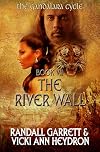
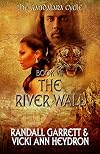
A desert realm gives up its greatest mystery in the final novel of the epic fantasy adventure series by the author of the Lord Darcy books. After a meteor explosion, Rikardon wakes in a new body and in a strange desert land named Gandalara, where he must uncover his purpose--and survive to outwit his enemies . . . Tarani is the new High Lord of Eddarta, and she intends to end its tradition of slavery and corruption. But before Tarani's rule begins in earnest, she and Rikardon have a show more mission to complete in Raithskar, where a mindgifted Lord known as Ferrathyn is using the Ra'ira's powers to manipulate the ape-like vineh. The once majestic city is overrun by chaos and fear, and Ferrathyn's ambition extends far beyond Raithskar. But another threat is looming, different and more terrifying than any they've encountered before. In the wake of a major earthquake, Rikardon finally discovers the origin of his new homeland and the reason he was brought here as Ricardo Carillo many months ago. Every battle and hard-won alliance have been leading to this: a race to save a mighty civilization from destruction, and forge a new future for Gandalara . . . Praise for the Gandalara Cycle "Entertaining and well-paced . . . full of swordplay and giant cats." --Theodore Sturgeon, The Twilight Zone Magazine "This series as a whole is possibly the best of its kind in many years." --SF Chronicle show lessTags
Recommendations























Member Reviews
The other series that I recently completed serendipitously was the Gandalara Cycle by Randall Garrett and Vicki Ann Heydron. It's another fairly obscure fantasy series from the 1980s. I think these must have had a short print run, both the original singly published trilogies and the subsequent omnibuses, because Gandalara II is the only one I've ever noticed in years of browsing bookstores, and only rarely at that. The married authors outlined the overall story arc together, but apparently Randall Garrett died before the stories were written.
I read Gandalara II back in the 1980s and kept the book for many years--it has a very memorable cover. I recall enjoying the story but I never came across Gandalara I, and eventually I let the book show more go. So when I saw both books together in the thrift store last year, I pointed them out to my querido as an interesting curiosity, nothing more. And somehow through miscommunication and not paying attention, ended up going home with them along with a few other books that I never intended to buy.
So this time I read them in order. Gandalara I consists of The Steel of Raithskar, The Glass of Dyskornis, and The Bronze of Eddarta, while The Well of Darkness, The Search for Kä, and Return to Eddarta comprise Gandalara II. And then The River Wall completes the saga. Imagine my surprise getting to the end of Gandalara II this time around and realizing that in some ways it ends on a cliff-hanger. Yes, there's a partial resolution, but the final climax lies ahead. I can't believe that I read that as a teenager and didn't have some lingering sense of incompleteness or need to hunt down the seventh book. So to fully appreciate the Gandalara stories you need to read all of them.
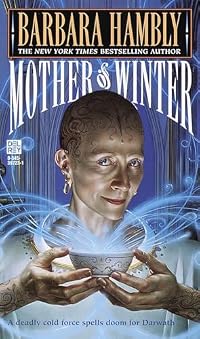
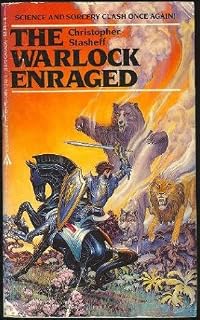
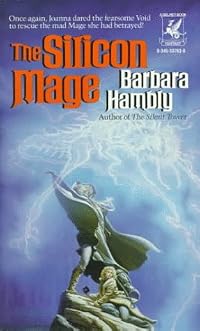
The authors employed a plot device that I think was very popular in the 1980s--a person from our society is transported mysteriously to a complete different world. Examples include Barbara Hambly's The Darwath trilogy, Magic Kingdom for Sale--Sold! by Terry Brooks, Her Majesty's Wizard by Christopher Stasheff, and several by Andre Norton, including the original Witch World, Dread Companion, Here Abide Monsters, and Quag Keep--the last involving gamers transported into their characters. The rest involve people keeping their own bodies in the new, alien world filled with pretty similar people (and magic!). I'm told this is also the plot device behind the innumerable hideous Gor novels, but I've never bothered with those.
A rarer example of people getting completely new bodies for environments that are intrinsically incompatible with human life is the science fiction story Spaceling by Doris Piserchia (her best version of this concept, in my opinion).
The alternative approach is
This is a fantasy series, but has a very scientific feel to it. It's written in third person from the point of view of the male protagonist. There's no obvious magic, civilization is at about the Bronze Age, and the hero (with his perspective as a well-educated, experienced, middle-aged man of the twentieth century) brings objective analysis and concepts from the sciences and humanities with him.
Ricardo Carillo is enjoying a ship cruise when a giant, flaming meteor appears out of nowhere headed straight for him. He wakes up in a desert next to a corpse, a scary-looking nonhuman corpse. The first living being he encounters is a giant cat. Adventures commence from there.
Our hero spends the whole series trying to understand what happened to him, why, and how. And ultimately there's a rational explanation for every aspect of the story, including the final plot twists. It's a bit of a wish-fulfillment story along the lines of youth being wasted on the young. Ricardo Carillo was retired and dying but is reborn as a young, muscular swordsman.
In general, I liked the story, and I think I'll keep these books. The plot is fairly straightforward and largely (but not completely) predictable. There are few characters, mostly simple, but there's some growth and lots of dialogue. There's the obligatory romance, and a lot of the character interactions involve the couple processing their feelings toward each other and various important secondary characters. Yes, there's plenty of action and lots of travel back and forth across the world, but lots of talking and processing during and afterward. And the most important relationship isn't the romance, it's the telepathic bond with the giant cat--remember the cat?
I think the main reason I'll keep these is the world-building apparent in the book. In fact, the plot appears to be a vehicle to expound on various elements of ecology, evolution, language, psychology, sociology, geology, etc. This is a desert world where it NEVER rains, which means that salt can be used as a construction material. And organisms are water-conserving, so while people may sob to express grief, they cannot cry. And bronze is the level of technology because the only iron ever found obviously came from meteors. There are no large trees or mammals either (besides the cats), so no timber or draft animals.
Now my quibbles: the authors raise a few problems and issues that just appear to vanish rather than being addressed. It's mighty convenient and not convincing for the most part. Romantic rivals suddenly become staunch allies. That whole entrenched slavery thing? Easily solved, or at least sidestepped. The city that's been lost for centuries? Not so hard to find, people just haven't bothered looking for it. I am not sure that this series would pass the Bechdel test, since there just aren't that many female characters. The prose and dialogue are serviceable but don't stand out. And there's lots of internal exposition to bring out the world-building. And it's all quite convenient, Ricardo is already marked for death, so he isn't really losing anything, and gaining a new, even better life. This is another story that wraps up neatly with a giant bow on top, which I tend to consider a flaw, even as I admire the symmetry of it all. But if that's the worst I can say, then this is generally a pretty good story, if not stellar. show less
I read Gandalara II back in the 1980s and kept the book for many years--it has a very memorable cover. I recall enjoying the story but I never came across Gandalara I, and eventually I let the book show more go. So when I saw both books together in the thrift store last year, I pointed them out to my querido as an interesting curiosity, nothing more. And somehow through miscommunication and not paying attention, ended up going home with them along with a few other books that I never intended to buy.
So this time I read them in order. Gandalara I consists of The Steel of Raithskar, The Glass of Dyskornis, and The Bronze of Eddarta, while The Well of Darkness, The Search for Kä, and Return to Eddarta comprise Gandalara II. And then The River Wall completes the saga. Imagine my surprise getting to the end of Gandalara II this time around and realizing that in some ways it ends on a cliff-hanger. Yes, there's a partial resolution, but the final climax lies ahead. I can't believe that I read that as a teenager and didn't have some lingering sense of incompleteness or need to hunt down the seventh book. So to fully appreciate the Gandalara stories you need to read all of them.
The authors employed a plot device that I think was very popular in the 1980s--a person from our society is transported mysteriously to a complete different world. Examples include Barbara Hambly's The Darwath trilogy, Magic Kingdom for Sale--Sold! by Terry Brooks, Her Majesty's Wizard by Christopher Stasheff, and several by Andre Norton, including the original Witch World, Dread Companion, Here Abide Monsters, and Quag Keep--the last involving gamers transported into their characters. The rest involve people keeping their own bodies in the new, alien world filled with pretty similar people (and magic!). I'm told this is also the plot device behind the innumerable hideous Gor novels, but I've never bothered with those.
A rarer example of people getting completely new bodies for environments that are intrinsically incompatible with human life is the science fiction story Spaceling by Doris Piserchia (her best version of this concept, in my opinion).
The alternative approach is
This is a fantasy series, but has a very scientific feel to it. It's written in third person from the point of view of the male protagonist. There's no obvious magic, civilization is at about the Bronze Age, and the hero (with his perspective as a well-educated, experienced, middle-aged man of the twentieth century) brings objective analysis and concepts from the sciences and humanities with him.
Ricardo Carillo is enjoying a ship cruise when a giant, flaming meteor appears out of nowhere headed straight for him. He wakes up in a desert next to a corpse, a scary-looking nonhuman corpse. The first living being he encounters is a giant cat. Adventures commence from there.
Our hero spends the whole series trying to understand what happened to him, why, and how. And ultimately there's a rational explanation for every aspect of the story, including the final plot twists. It's a bit of a wish-fulfillment story along the lines of youth being wasted on the young. Ricardo Carillo was retired and dying but is reborn as a young, muscular swordsman.
In general, I liked the story, and I think I'll keep these books. The plot is fairly straightforward and largely (but not completely) predictable. There are few characters, mostly simple, but there's some growth and lots of dialogue. There's the obligatory romance, and a lot of the character interactions involve the couple processing their feelings toward each other and various important secondary characters. Yes, there's plenty of action and lots of travel back and forth across the world, but lots of talking and processing during and afterward. And the most important relationship isn't the romance, it's the telepathic bond with the giant cat--remember the cat?
I think the main reason I'll keep these is the world-building apparent in the book. In fact, the plot appears to be a vehicle to expound on various elements of ecology, evolution, language, psychology, sociology, geology, etc. This is a desert world where it NEVER rains, which means that salt can be used as a construction material. And organisms are water-conserving, so while people may sob to express grief, they cannot cry. And bronze is the level of technology because the only iron ever found obviously came from meteors. There are no large trees or mammals either (besides the cats), so no timber or draft animals.
Now my quibbles: the authors raise a few problems and issues that just appear to vanish rather than being addressed. It's mighty convenient and not convincing for the most part. Romantic rivals suddenly become staunch allies. That whole entrenched slavery thing? Easily solved, or at least sidestepped. The city that's been lost for centuries? Not so hard to find, people just haven't bothered looking for it. I am not sure that this series would pass the Bechdel test, since there just aren't that many female characters. The prose and dialogue are serviceable but don't stand out. And there's lots of internal exposition to bring out the world-building. And it's all quite convenient, Ricardo is already marked for death, so he isn't really losing anything, and gaining a new, even better life. This is another story that wraps up neatly with a giant bow on top, which I tend to consider a flaw, even as I admire the symmetry of it all. But if that's the worst I can say, then this is generally a pretty good story, if not stellar. show less
Very good. Again, this was written by Vicki Heydron writing from Randall Garrett's outlines - though she says this book was the most hers. There is a junction between this and the previous six - more of a stopping place. They _could_ have quit after Return to Eddarta - they had plenty to do as it was. But no, Rikardon remembered that he still needed to deal with the Ra'ira. And it does come to a good conclusion in this one - not an end, exactly, but everything prepared for a new beginning. And hints in the frame of the whole series that finally make sense here, and tell the reader something of what's happened after the book ends...very nice. I don't think I've ever seen one of Vicki's books under her own name - I may have to look her up.
This seventh book finally wraps up everything, mysteries are revealed, the earth moves, the real Ra’ira is found, the last known baddies are defeated, and there’s at least a chance that all will live happily ever after.
It’s a more exciting book than its predecessors. Up to now we’ve been stepping through the long and complicated plot, not slowly but at a measured pace, and now things really start to happen.
This has to be the best of the series since the first one, which was good in a different way: it had the novelty of Ricardo’s arrival in a new and surprising world, and I suppose that Randall Garrett made a more substantial contribution to it before he was incapacitated. Whereas I guess that books 2 to 7 were largely written show more by Vicki Ann Heydron, with Randall Garrett contributing mainly to the initial outline.
The weakness of this book is that, all along, people (and even sha’um) are too easily persuaded by Rikardon and Tarani. It’s pleasant, in a way, that goodness prevails in this world, but it seems too easy: it’s unconvincing.
The baddies are not usually persuaded; they have to be defeated. However, in the real world, well-meaning goodies have to struggle with the great mass of people who are not particularly bad nor particularly good, but uncommitted, unpersuaded, and uncooperative. And it’s these in-between people who aren’t properly represented in this book.
The series as a whole is well conceived. The scenario was a good idea and the details of the environment feel right. The plot was carefully planned. It could have been a classic series, but some magic ingredient in the writing is missing, and so Garrett’s Lord Darcy stories remain more enjoyable and therefore better known than this very different exercise in fiction.
I find the central character of Ricardo/Rikardon rather annoying. He’s mostly presented as wise, good, and able. His tendency to self-doubt should be endearing. But it’s coupled with intermittent attacks of bad behaviour, stupidity, and foot-in-mouth disease. Perhaps Randall Garrett had this kind of dual personality himself, but it’s not easy to live with, even in fiction.
Although some explanation and justification is attempted, it remains hard to believe that some sha’um (great cats) of this world are willing to place themselves in the service of men for very intangible rewards, and to tolerate considerable hardships, when they could easily live free (as most of them continue to do). show less
It’s a more exciting book than its predecessors. Up to now we’ve been stepping through the long and complicated plot, not slowly but at a measured pace, and now things really start to happen.
This has to be the best of the series since the first one, which was good in a different way: it had the novelty of Ricardo’s arrival in a new and surprising world, and I suppose that Randall Garrett made a more substantial contribution to it before he was incapacitated. Whereas I guess that books 2 to 7 were largely written show more by Vicki Ann Heydron, with Randall Garrett contributing mainly to the initial outline.
The weakness of this book is that, all along, people (and even sha’um) are too easily persuaded by Rikardon and Tarani. It’s pleasant, in a way, that goodness prevails in this world, but it seems too easy: it’s unconvincing.
The baddies are not usually persuaded; they have to be defeated. However, in the real world, well-meaning goodies have to struggle with the great mass of people who are not particularly bad nor particularly good, but uncommitted, unpersuaded, and uncooperative. And it’s these in-between people who aren’t properly represented in this book.
The series as a whole is well conceived. The scenario was a good idea and the details of the environment feel right. The plot was carefully planned. It could have been a classic series, but some magic ingredient in the writing is missing, and so Garrett’s Lord Darcy stories remain more enjoyable and therefore better known than this very different exercise in fiction.
I find the central character of Ricardo/Rikardon rather annoying. He’s mostly presented as wise, good, and able. His tendency to self-doubt should be endearing. But it’s coupled with intermittent attacks of bad behaviour, stupidity, and foot-in-mouth disease. Perhaps Randall Garrett had this kind of dual personality himself, but it’s not easy to live with, even in fiction.
Although some explanation and justification is attempted, it remains hard to believe that some sha’um (great cats) of this world are willing to place themselves in the service of men for very intangible rewards, and to tolerate considerable hardships, when they could easily live free (as most of them continue to do). show less
Dec 17, 2024 (Edited)English (UK)
Ratings
Members
- Recently Added By
Lists

1980s
356 works; 23 members

Books Read in 2021
5,361 works; 114 members

Books Read in 2011
684 works; 20 members

Books With Water Words in the Title
186 works; 12 members
Author Information


Some Editions
Series

Belongs to Publisher Series
Work Relationships
Is contained in
Common Knowledge
Classifications
Statistics
- Members
- 331
- Popularity
- 95,595
- Reviews
- 3
- Rating
- (4.11)
- Languages
- English, German
- Media
- Paper, Ebook
- ISBNs
- 4
- ASINs
- 3