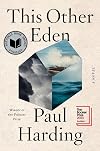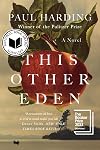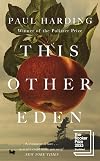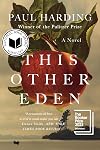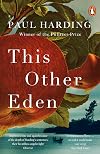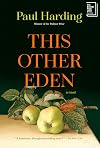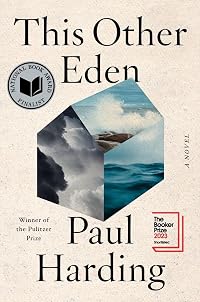
This Other Eden
by Paul Harding
On This Page
Description
"From the Pulitzer Prize-winning author of Tinkers, a novel inspired by the true story of Malaga Island, an isolated island off the coast of Maine that became one of the first racially integrated towns in the Northeast. In 1792, formerly enslaved Benjamin Honey and his Irish wife, Patience, discover an island where they can make a life together. Over a century later, the Honeys' descendants and a diverse group of neighbors are desperately poor, isolated, and often hungry, but nevertheless show more protected from the hostility awaiting them on the mainland. During the tumultuous summer of 1912, Matthew Diamond, a retired, idealistic but prejudiced schoolteacher-turned-missionary, disrupts the community's fragile balance through his efforts to educate its children. His presence attracts the attention of authorities on the mainland who, under the influence of the eugenics-thinking popular among progressives of the day, decide to forcibly evacuate the island, institutionalize its residents, and develop the island as a vacation destination. Beginning with a hurricane flood reminiscent of the story of Noah's Ark, the novel ends with yet another Ark. In prose of breathtaking beauty and power, Paul Harding brings to life an unforgettable cast of characters: Iris and Violet McDermott, sisters raising three orphaned Penobscot children; Theophilus and Candace Larks and their brood of vagabond children; the prophetic Zachary Hand to God Proverbs, a Civil War veteran who lives in a hollow tree; and more. A spellbinding story of resistance and survival, This Other Eden is an enduring testament to the struggle to preserve human dignity in the face of intolerance and injustice"-- show lessTags
Recommendations









Member Reviews
This beautifully written book is an homage to the people of Apple Island, a fictitious place based on the true story of Malaga Island. This small island, settled in 1792, by a mixed-race couple was in existence until 1912 when its inhabitants were forcibly evacuated. The study of eugenics by those in power in Maine determined that they should be relocated, some to the Maine School for the "Feeble Minded." These were multi-racial people who had lived on the island for generations surviving through sheer tenacity, a love of the island and their community.
I couldn't help thinking about the indigenous people who were deemed better off living as the Caucasian invaders took their land and relocated many. It is a sad fact that our history show more demonstrates this bigotry and prejudice. I love the history of the people of Apple Island, who neither harmed nor judged each other. Paul Harding's writing is exquisite. show less
I couldn't help thinking about the indigenous people who were deemed better off living as the Caucasian invaders took their land and relocated many. It is a sad fact that our history show more demonstrates this bigotry and prejudice. I love the history of the people of Apple Island, who neither harmed nor judged each other. Paul Harding's writing is exquisite. show less
I am often not drawn to books on the Booker prize list, but the subject of this one caught my eye. It's loosely based on a real place, Malaga Island. In Harding's novel, the island is Apple Island, settled in the late 1700s by a motley group of people who find there way there over the 1800s - a mix of escaped slaves, Penobscot Native Americans, the Irish, and others. They aren't exactly thriving when a pastor from the mainland starts visiting them. They are hungry, cold, uneducated by modern standards, one of them lives in a tree, there has been a lot of inter-marry in a small genetic pool. But even so, the pastor, Michael Diamond, finds glimmers of greatness - a girl who learns Latin with ease and a young man with real artistic talent. show more
But, the island draws the attention of the government and they decide it's time to civilize this island. It doesn't take much imagination to guess what will happen to the residents.
I liked this. It has a memorable cast of characters. I also liked how it flipped my view of the island. Really, at the beginning I was not impressed with how these people were living. They were in poor health, practically starving, one living in a tree! But by the end, I was convinced they had it right, and the life they'd built there was one they should be allowed to continue.
Recommended. show less
But, the island draws the attention of the government and they decide it's time to civilize this island. It doesn't take much imagination to guess what will happen to the residents.
I liked this. It has a memorable cast of characters. I also liked how it flipped my view of the island. Really, at the beginning I was not impressed with how these people were living. They were in poor health, practically starving, one living in a tree! But by the end, I was convinced they had it right, and the life they'd built there was one they should be allowed to continue.
Recommended. show less
Benjamin Honey settled on Apple Island in the late 1790s with his Irish wife, Patience. Although his exact history is unclear to his descendants, he was probably a formerly enslaved person. The two eked out a subsistence existence on the 42-acre island, but little more. Although other families join them, over time the island becomes more and more insular with the families intermarrying. By the early 1900s, there are only three families and two individuals left on the island. When the schoolmaster, who has taken it upon himself to teach the children on the island every summer, brings unwanted outside attention to the island and its inhabitants, disaster ensues.
I am having a hard time writing this review, because I wish everyone could show more have the experience of being drawn into this world without preconceptions. It is historical fiction, a modern retelling of Noah, an exposé of a terrible incident in Maine history, and a wonderfully-written story about a family and the price they pay for their differences. I loved the characters and the writing, and I have since gone on to learn more about the real Malaga Island and what happened there. Highly recommended. show less
I am having a hard time writing this review, because I wish everyone could show more have the experience of being drawn into this world without preconceptions. It is historical fiction, a modern retelling of Noah, an exposé of a terrible incident in Maine history, and a wonderfully-written story about a family and the price they pay for their differences. I loved the characters and the writing, and I have since gone on to learn more about the real Malaga Island and what happened there. Highly recommended. show less
Paul Harding’s novel is an inevitable tragedy based on the true events of Malaga Island off the coast of Maine in the early 1900s. In this reimagining, the island is called Apple Island where “Benjamin Honey—American, Bantu, Igbo—born enslaved—freed or fled at fifteen, only he ever knew—ship’s carpenter, aspiring orchardist, arrived on the island with his wife, Patience, née Raferty, Galway girl, in 1793.”
Their descendants and various other refugees found themselves a life growing apples, fishing, doing laundry for the people on the mainland , never bothering anyone.
“None of the islanders or their ancestors had ever paid taxes or had a bank account or a loan, gotten a birth certificate, marriage license, or fishing show more permit. They’d just lived on the island for more than a century, neither much helped nor hindered by the people on the main.”
They’re downfall started when a well meaning teacher named Matthew Diamond decides to spend his summers rowing over to the island to educate the children, to establish a school, and bring resources to the various families of the island. However, his good intentions resulted in scrutiny from the powers above, scientist who believed in eugenics, concerned busy buddies, who saw the island as a blight on their region. It is soon decided by these men in charge that the inhabitants of the island should be taken away as if for their own good, much the way our early settlers tried to take the Indian out of the Native Americans. When Matthew Diamond inevitably sees where this is headed, he manages to get one brilliant artist named Ethan Honey away from the island and sent to a wealthy benefactor so that he could pursue his painting and receive a proper education befitting of his talents. He meets an Irish servant girl and their story becomes the middle part of the novel.
The author chooses to Intersperse current day plaques and informational photograph descriptions that are part of a museum, reflecting on this community and the tragedy that Maine has now apologized for. We know how this novel ends, but Harding’s descriptions, most especially his long picturesque sentences, make for a compelling read.
The nobility of these proud people stay with you a long time .
Lines
He remembered being in an orchard as a child, although not where or when, with his mother, or with a woman whose face over the years had become what he pictured as his mother’s, and he remembered the fragrance of the trees and their fruit. The memory became a vision of the garden to which he meant to return. No mystery, it was Eden.
Benjamin Honey kept an orchard of thirty-two apple trees that began to bear fruit in the late summer of 1814, a decade after he planted them. Pippins were perfect for pies, Woodpeckers for cider. Children bit sour Greenings on dares and laughed at one another when their eyes watered and mouths puckered. Russets were best straight from the tree.
Benjamin Honey surveyed his orchard in the cooling air and sharpening, iridescent, ocean-bent sunset light, the greens and purples deepening from their radiant flat day-bright into catacombs of shadowed fruit and limb and leaf.
Snow poured from the sky. Wind scoured the island and smacked the windows like giant hands and kicked the door like a giant heel and banked the snow up the north side of the shack until it reached the roof. The island a granite pebble in the frigid Atlantic shallows, the clouds so low their bellies scraped on the tip of the Penobscot pine at the top of the bluff.
The more good he tries to do, the more outside attention he’ll bring, and that’s no good. No good at all.
The islanders were so used to diets of wind and fog, to meals of slow-roasted sunshine and poached storm clouds, so used to devouring sautéed shadows and broiled echoes; they found themselves stupefied by such an abundance of food and drink. For that evening it seemed to them as if they were sending Ethan off on all their behalves. And it seemed as if by sending him off to paint his beautiful pictures they all might somehow unhouse homelessness, might somehow bankrupt poverty. It seemed to all of them that evening as if they somehow might even starve hunger itself.
She expected looking at the portrait would be like looking into the mirror, but she came around the easel and saw the painted girl and it was like a mallet striking her heart and like her heart was a bronze gong inside her ribs and its sounding somehow unstrung and remade her. She did not see herself. show less
Their descendants and various other refugees found themselves a life growing apples, fishing, doing laundry for the people on the mainland , never bothering anyone.
“None of the islanders or their ancestors had ever paid taxes or had a bank account or a loan, gotten a birth certificate, marriage license, or fishing show more permit. They’d just lived on the island for more than a century, neither much helped nor hindered by the people on the main.”
They’re downfall started when a well meaning teacher named Matthew Diamond decides to spend his summers rowing over to the island to educate the children, to establish a school, and bring resources to the various families of the island. However, his good intentions resulted in scrutiny from the powers above, scientist who believed in eugenics, concerned busy buddies, who saw the island as a blight on their region. It is soon decided by these men in charge that the inhabitants of the island should be taken away as if for their own good, much the way our early settlers tried to take the Indian out of the Native Americans. When Matthew Diamond inevitably sees where this is headed, he manages to get one brilliant artist named Ethan Honey away from the island and sent to a wealthy benefactor so that he could pursue his painting and receive a proper education befitting of his talents. He meets an Irish servant girl and their story becomes the middle part of the novel.
The author chooses to Intersperse current day plaques and informational photograph descriptions that are part of a museum, reflecting on this community and the tragedy that Maine has now apologized for. We know how this novel ends, but Harding’s descriptions, most especially his long picturesque sentences, make for a compelling read.
The nobility of these proud people stay with you a long time .
Lines
He remembered being in an orchard as a child, although not where or when, with his mother, or with a woman whose face over the years had become what he pictured as his mother’s, and he remembered the fragrance of the trees and their fruit. The memory became a vision of the garden to which he meant to return. No mystery, it was Eden.
Benjamin Honey kept an orchard of thirty-two apple trees that began to bear fruit in the late summer of 1814, a decade after he planted them. Pippins were perfect for pies, Woodpeckers for cider. Children bit sour Greenings on dares and laughed at one another when their eyes watered and mouths puckered. Russets were best straight from the tree.
Benjamin Honey surveyed his orchard in the cooling air and sharpening, iridescent, ocean-bent sunset light, the greens and purples deepening from their radiant flat day-bright into catacombs of shadowed fruit and limb and leaf.
Snow poured from the sky. Wind scoured the island and smacked the windows like giant hands and kicked the door like a giant heel and banked the snow up the north side of the shack until it reached the roof. The island a granite pebble in the frigid Atlantic shallows, the clouds so low their bellies scraped on the tip of the Penobscot pine at the top of the bluff.
The more good he tries to do, the more outside attention he’ll bring, and that’s no good. No good at all.
The islanders were so used to diets of wind and fog, to meals of slow-roasted sunshine and poached storm clouds, so used to devouring sautéed shadows and broiled echoes; they found themselves stupefied by such an abundance of food and drink. For that evening it seemed to them as if they were sending Ethan off on all their behalves. And it seemed as if by sending him off to paint his beautiful pictures they all might somehow unhouse homelessness, might somehow bankrupt poverty. It seemed to all of them that evening as if they somehow might even starve hunger itself.
She expected looking at the portrait would be like looking into the mirror, but she came around the easel and saw the painted girl and it was like a mallet striking her heart and like her heart was a bronze gong inside her ribs and its sounding somehow unstrung and remade her. She did not see herself. show less
Terrible how terribly good intentions turn out almost every time.
from This Other Eden by Paul Harding
“Malaga Island was home to a mixed-race fishing community from the mid-1800s to 1912, when the state of Maine evicted 47 residents from their homes and exhumed and relocated their buried dead. Eight islanders were committed to the Maine School for the Feeble-Minded.” from Maine Coast Heritage Trust, quoted in This Other Eden
The novel opens with the riveting story of a terrible storm washing over a small island off the coast of Maine, with a family clinging to the branches of a large tree and watching houses and people caught in the angry waters in the flood below. The Eden that Benjamin Honey had built was destroyed in 1815. His wife show more Esther tells the tale to her grandchildren, the history of their Ark island.
The Honey family had lived there for six generations, since an African ex-slave Civil War veteran and his Irish wife settled there. Their neighbors included the Larks with their colorless children, and the McDermott sisters who took in three orphaned Native American children, and the spinster Annie Parker, and Civil War veteran Zachary Hand who preferred his hollow tree to his cabin. The mixed races of the families had produced individuals of every type, the pale and the dark, green eyes and red hair, straight hair and tightly curled.
It’s a harsh life but they have survived. Theirs is a tolerant society where brother and sister raise their children, and a man can don his mother’s dress to keep house while his wife cuts her hair and goes fishing on the ocean.
The state sent a pastor to open a school. The community is Christian, the Bible and Shakespeare among the few, tattered books in the community. The teacher discovered a girl who is a mathematical prodigy, a boy who masters Latin, and another who is a gifted, untrained artist.
The Eugenics movement was at its height. The islanders were disturbing. They were measured and assessed, labeled and judged to be degenerate by the “plain white” of the mainland. The mixing of races, the intermixing of blood, could not produce anything but imbeciles, morons, and degenerates.
The entire population of Apple Island was relocated, many to institutions.
The early book takes us into these people’s lives and personalities. Yes, there are relationships that we judge to be perverse. There are people whose sanity we may doubt. A girl who only eats wild things she finds, starfish and snakes. One woman was abused by her father, and intended to murder the resultant child. She was prevented, and her child and his children became the center of her old age. Zachary Hand carves images in his hollow tree where he finds peace. But we have sympathy for these people. They are removed from the world and a society that could not have accepted them, eking out a subsistence life, doing the best they could with what they had.
The teacher determines to ‘save’ one child of the island, a fifteen-year-old boy with straight hair and and greenish eyes. He writes an acquaintance, hoping he would take the boy in until he could enter art school. It seemed a mercy to separate Ethan Honey from his family’s fate, to allow him access to white society.
For all his good intentions, the teacher creates a series of disastrous events. Years in the future, historians will explore the buried history of the deserted island, and write about the paintings and drawings of the mysterious Ethan Honey.
Beautifully written, with stunning descriptive passages and a mounting urgency, this is a novel of history and a vision of what society could have become, a condemnation and a warning.
I received a free galley from the publisher through NetGalley. My review is fair and unbiased. show less
from This Other Eden by Paul Harding
“Malaga Island was home to a mixed-race fishing community from the mid-1800s to 1912, when the state of Maine evicted 47 residents from their homes and exhumed and relocated their buried dead. Eight islanders were committed to the Maine School for the Feeble-Minded.” from Maine Coast Heritage Trust, quoted in This Other Eden
The novel opens with the riveting story of a terrible storm washing over a small island off the coast of Maine, with a family clinging to the branches of a large tree and watching houses and people caught in the angry waters in the flood below. The Eden that Benjamin Honey had built was destroyed in 1815. His wife show more Esther tells the tale to her grandchildren, the history of their Ark island.
The Honey family had lived there for six generations, since an African ex-slave Civil War veteran and his Irish wife settled there. Their neighbors included the Larks with their colorless children, and the McDermott sisters who took in three orphaned Native American children, and the spinster Annie Parker, and Civil War veteran Zachary Hand who preferred his hollow tree to his cabin. The mixed races of the families had produced individuals of every type, the pale and the dark, green eyes and red hair, straight hair and tightly curled.
It’s a harsh life but they have survived. Theirs is a tolerant society where brother and sister raise their children, and a man can don his mother’s dress to keep house while his wife cuts her hair and goes fishing on the ocean.
The state sent a pastor to open a school. The community is Christian, the Bible and Shakespeare among the few, tattered books in the community. The teacher discovered a girl who is a mathematical prodigy, a boy who masters Latin, and another who is a gifted, untrained artist.
The Eugenics movement was at its height. The islanders were disturbing. They were measured and assessed, labeled and judged to be degenerate by the “plain white” of the mainland. The mixing of races, the intermixing of blood, could not produce anything but imbeciles, morons, and degenerates.
The entire population of Apple Island was relocated, many to institutions.
The early book takes us into these people’s lives and personalities. Yes, there are relationships that we judge to be perverse. There are people whose sanity we may doubt. A girl who only eats wild things she finds, starfish and snakes. One woman was abused by her father, and intended to murder the resultant child. She was prevented, and her child and his children became the center of her old age. Zachary Hand carves images in his hollow tree where he finds peace. But we have sympathy for these people. They are removed from the world and a society that could not have accepted them, eking out a subsistence life, doing the best they could with what they had.
The teacher determines to ‘save’ one child of the island, a fifteen-year-old boy with straight hair and and greenish eyes. He writes an acquaintance, hoping he would take the boy in until he could enter art school. It seemed a mercy to separate Ethan Honey from his family’s fate, to allow him access to white society.
For all his good intentions, the teacher creates a series of disastrous events. Years in the future, historians will explore the buried history of the deserted island, and write about the paintings and drawings of the mysterious Ethan Honey.
Beautifully written, with stunning descriptive passages and a mounting urgency, this is a novel of history and a vision of what society could have become, a condemnation and a warning.
I received a free galley from the publisher through NetGalley. My review is fair and unbiased. show less
Esther Honey is the matriarch of this island community. And Harding gives her a mystical prophetic quality. “Terrible how terribly good intentions turn out almost every time,” she muses and “no good ever came of being noticed by mainlanders.” These words haunt Harding’s fictional account of the dark historical¬ event that took place on an island off the coast of Maine in 1912—the forcible displacement of a peaceable mixed-race community. The state justified this travesty as a public health measure, but, in fact, it was based on faulty scientific and moral thinking along with suspicions of commercial greed. At bottom, however, the main driver always was racism.
Harding depicts the islanders as flawed, but basically innocent show more and loving. Despite hunger and extreme poverty, they evince close ties to family, nature, art, education, and especially their home. Esther spends her time rocking and observing events while remembering an intensely troubling relationship with her dead White father. Her son, Eha, functions as an island handyman while also caring for his mother and his three children. His son, Ethan, is a central figure in the narrative for two main reasons: he is a gifted artist and can pass as a White. The Larks are a strange lot¬. Theophilus and Candace are siblings but live as husband and wife in a role reversal. Their four children are almost feral, roaming the island at night. Iris and Violet McDermott take in washing as well as two abandoned native-American children. Zachary Hand of God Proverb is especially “queer.” He is a Union Army veteran who spends his time in a hollow tree carving scenes from the bible. Not to be outdone by the humans, three highly distinctive dogs fill out the cast of characters.
Their strangeness notwithstanding, the islanders are oblivious to how they are viewed by the outside. The mainlanders see them as degenerate and queer. Rumors of incest and infanticide persist. Their racial makeup is indeed eclectic and thus troubling to a state living in the thrall of eugenics. Harding refers to the community as a “distillate of Angolan fathers and Scottish grandpas, Irish mothers and Congolese grannies, Cape Verdean uncles and Penobscot aunts, cousins from Dingle, Glasgow, and Montserrat.”
Matthew Diamond, a White missionary, and volunteer schoolteacher, sponsors a visit to the island by a governmental committee and thus unwittingly initiates the ultimate decision to remove the community and burn down its buildings. Diamond is a conflicted character. His self-image is as of a caring person yet he holds deep-seated racist feelings, especially toward Black people. Remarkably, he notices that several of the children are gifted, nonetheless the only one he moves to save from displacement is Ethan, who can easily pass as White.
Harding deftly uses biblical imagery to bolster the view that the islanders were treated unjustly. Their founding story congers the flood. The use of apples as a key image for the island recalls the Eden myth. The expulsion of the islanders by heartless governmental bureaucrats brings to mind the expulsion of Adam and Eve from the garden by a vengeful God. Esther and Zachary as biblical prophets and Ethan as a Christ figure in the wilderness are more subtle but also powerful biblical iconography. Moreover, Harding achieves a mythic mood by using long, complex, and lyrical sentences that stand in contrast to the underlying racism and brutality on display elsewhere in the novel. show less
Harding depicts the islanders as flawed, but basically innocent show more and loving. Despite hunger and extreme poverty, they evince close ties to family, nature, art, education, and especially their home. Esther spends her time rocking and observing events while remembering an intensely troubling relationship with her dead White father. Her son, Eha, functions as an island handyman while also caring for his mother and his three children. His son, Ethan, is a central figure in the narrative for two main reasons: he is a gifted artist and can pass as a White. The Larks are a strange lot¬. Theophilus and Candace are siblings but live as husband and wife in a role reversal. Their four children are almost feral, roaming the island at night. Iris and Violet McDermott take in washing as well as two abandoned native-American children. Zachary Hand of God Proverb is especially “queer.” He is a Union Army veteran who spends his time in a hollow tree carving scenes from the bible. Not to be outdone by the humans, three highly distinctive dogs fill out the cast of characters.
Their strangeness notwithstanding, the islanders are oblivious to how they are viewed by the outside. The mainlanders see them as degenerate and queer. Rumors of incest and infanticide persist. Their racial makeup is indeed eclectic and thus troubling to a state living in the thrall of eugenics. Harding refers to the community as a “distillate of Angolan fathers and Scottish grandpas, Irish mothers and Congolese grannies, Cape Verdean uncles and Penobscot aunts, cousins from Dingle, Glasgow, and Montserrat.”
Matthew Diamond, a White missionary, and volunteer schoolteacher, sponsors a visit to the island by a governmental committee and thus unwittingly initiates the ultimate decision to remove the community and burn down its buildings. Diamond is a conflicted character. His self-image is as of a caring person yet he holds deep-seated racist feelings, especially toward Black people. Remarkably, he notices that several of the children are gifted, nonetheless the only one he moves to save from displacement is Ethan, who can easily pass as White.
Harding deftly uses biblical imagery to bolster the view that the islanders were treated unjustly. Their founding story congers the flood. The use of apples as a key image for the island recalls the Eden myth. The expulsion of the islanders by heartless governmental bureaucrats brings to mind the expulsion of Adam and Eve from the garden by a vengeful God. Esther and Zachary as biblical prophets and Ethan as a Christ figure in the wilderness are more subtle but also powerful biblical iconography. Moreover, Harding achieves a mythic mood by using long, complex, and lyrical sentences that stand in contrast to the underlying racism and brutality on display elsewhere in the novel. show less
This Other Eden tells the story of Apple Island as an imagined, somewhat simplistic, utopia and is skillfully written in a mellifluous and poetic style, giving it a complete personality of its own. While based on a real place and events, I do not consider it an historical novel but rather more speculative in nature.
The book requires concentration and focus despite being brief (just over 200 pages), yet it covers multiple characters and time periods. There are references to eugenics that was a popular movement during the beginning of the twentieth century which were definitely upsetting, yet they were necessary to the story and to present the real temper of the times. The effect on the primary characters in these passages was show more devastating, but the narrative voice handled the main characters with kindness and respect. I was drawn into its setting and era and discovered that I was moved by an emotional connection to the people living on Apple Island.
While I enjoyed the book and would recommend it to discerning readers, especially those interested in the social history of the period, mainly because it has such a deep concept, exquisite details, and lovely prose. show less
The book requires concentration and focus despite being brief (just over 200 pages), yet it covers multiple characters and time periods. There are references to eugenics that was a popular movement during the beginning of the twentieth century which were definitely upsetting, yet they were necessary to the story and to present the real temper of the times. The effect on the primary characters in these passages was show more devastating, but the narrative voice handled the main characters with kindness and respect. I was drawn into its setting and era and discovered that I was moved by an emotional connection to the people living on Apple Island.
While I enjoyed the book and would recommend it to discerning readers, especially those interested in the social history of the period, mainly because it has such a deep concept, exquisite details, and lovely prose. show less
Members
- Recently Added By
Published Reviews
ThingScore 100
In his latest novel, the Pulitzer Prize-winning author Paul Harding reimagines the history of a small mixed-race community’s devastating eviction from their homes...It’s 10 pages into Paul Harding’s new novel, “This Other Eden,” when I must surrender to the author’s lyric....I was unsure as I entered “This Other Eden”; the story opens with images of apples, the raging white of show more winter and tattered flags, which all felt grossly American....Yet the passages that put me on guard are the same ones that disarmed me. Harding’s prose is mesmerizing...Not without complication, not without terror, “This Other Eden” is ultimately a testament of love: love of kin, love of nature, love of art, love of self, love of home. show less
added by vancouverdeb
This Other Eden by Paul Harding review – a novel that impresses time and again...Harding’s gifts have found their fullest expression in This Other Eden. Pick any excerpt from these 200 pages and you will find that each sentence contains multitudes and works well by itself, and yet the chapters, the paragraphs, have also been sewn together into a numinous whole.... The novel impresses time show more and again because of the depth of Harding’s sentences, their breathless angelic light. show less
added by vancouverdeb
Lists

Books recommended by Barack Obama
295 works; 28 members

Books Read in 2023
5,547 works; 145 members

Obama Reads
181 works; 3 members

National Book Award Finalists - Fiction
377 works; 12 members

Top Five Books of 2023
767 works; 317 members
Dublin Literary Award 2024 Longlist
66 works; 4 members

Books Read in 2024
4,623 works; 126 members

Booker Prize Longlist 2023
13 works; 1 member

Llibres que he llegit el 2024
77 works; 1 member

Top Five Books of 2024
795 works; 264 members

WBS - Book Club
71 works; 1 member
Author Information

3 Works 5,560 Members
Paul Harding has an MFA from the Iowa Writers' Workshop and teaches creative writing at Harvard. He lives in Georgetown, Massachusetts.
Some Editions
Awards and Honors
Awards
Distinctions
The Guardian Book of the Day (2023-02-16)
The Guardian Book of the Day (2023-02-07)
Series
Belongs to Publisher Series
Mirmanda (249)
Common Knowledge
- Canonical title
- This Other Eden
- Original publication date
- 2023-01-24
- People/Characters
- Esther Honey; Charlotte Honey; Eha Honey; Zachery Hand to God Proverbs; Matthew Diamond; Tabitha Honey (show all 10); Ethan Honey; Annie Parker; Theophilus Lark; Candace Lark
- Important places
- Maine, USA
- Epigraph
- Magda Island . . . was home to a mixed-race fishing community from the mid -1800s to 1912, when the state of Maine evicted 47 residents from their homes and exhumed and relocated their buried dead. Eight islanders were com... (show all)mitted to the Maine School for the Feeble-Minded. "I think the best plan would be to burn down the shacks with all of their filth," then Governor Frederick Plaisted told a reporter [at] the time. . .
[In 2002], the Maine legislature passed a resolution expressing its "profound regret."
- Maine Coast Heritage Trust - Dedication
- For my wonderful mother, who made reading irresistable.
- First words
- Benjamin Honey - American, Bantu, Igbo - born enslaved - freed or fled at fifteen, only he knew - ship's carpenter, aspiring orchardist, arrived on the island with his wife, Patience, née Raferty, Galway girl, in 1793.
- Last words
- (Click to show. Warning: May contain spoilers.)His silhouette cut through the invisible current of the tide and to Thorpe he looked like a threadbare angel abandoning the wrecked ship over which he'd once been guardian, light fanning across the water behind him as he pushed against the incoming flood.
- Blurbers
- Edugyan, Esi; Seiffert, Rachel; Messud, Claire
Classifications
Statistics
- Members
- 830
- Popularity
- 33,117
- Reviews
- 41
- Rating
- (3.91)
- Languages
- 6 — Catalan, Dutch, English, French, German, Italian
- Media
- Paper, Audiobook, Ebook
- ISBNs
- 23
- ASINs
- 6