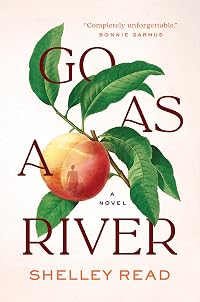
Go as a River
by Shelley Read
On This Page
Description
"Seventeen-year-old Victoria Nash runs the household on her family's peach farm in the small ranch town of Iola, Colorado--the sole surviving female in a family of troubled men. Wilson Moon is a young drifter with a mysterious past, displaced from his tribal land and determined to live as he chooses. Victoria encounters Wil by chance on a street corner, a meeting that profoundly alters both of their young lives, unknowingly igniting as much passion as danger. When tragedy strikes, Victoria show more leaves the only life she has ever known. She flees into the surrounding mountains where she struggles to survive in the wilderness with no clear notion of what her future will bring. As the seasons change, she also charts the changes in herself, finding in the beautiful but harsh landscape the meaning and strength to move forward and rebuild all that she has lost, even as the Gunnison River threatens to submerge her homeland--its ranches, farms, and the beloved peach orchard that has been in her family for generations. Inspired by true events surrounding the destruction of the town of Iola in the 1960s, Go as a River is a story of deeply held love in the face of hardship and loss, but also of finding courage, resilience, friendship, and, finally, home--where least expected. This stunning debut explores what it means to lead your life as if it were a river--gathering and flowing, finding a way forward even when a river is dammed."-- show lessTags
Recommendations


Member Reviews
This is one of the best books I've read this year. The writing was beautiful and the descriptions vivid, at times stunning and at times haunting. Although not a page flipper, parts of Go as a River felt almost epic, with a heroine fighting for survival and succeeding. The book kept me rivetted throughout and I did not want to put it down when it ended.
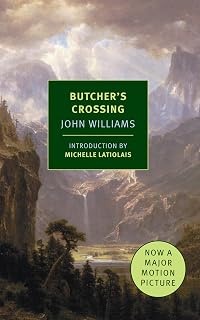
As I read, I was reminded of another book I loved (perhaps my favorite), Stoner by John Williams. Stoner, is a minimalist journey into the life of MC, William Stoner, the son of a dirt-poor farmer, who went to university to learn Agriculture and graduated with a PhD in Literature, going on to teach at his university. Not well connected, introverted, determined, and accepting of the cards show more life dealt him when others would have fought back to grab what they thought they deserved, Stoner’s journey is starkly realistic. The reader observes the minutiae of his life from youth to death.
In 1940's Go as a River, 17-year-old Victoria Nash (aka Torie or V – as known by family and friend, respectively), meets and falls in love with the dark-skinned, dark-haired, Wilson Moon (Wil), a boy close to her age who has drifted into town and is looking for the local flophouse in Iola, Colorado, where she lived. Victoria is instantly attracted to the young man, whose feelings are mutual. After a brief and passionate love affair, Wil is brutally murdered by town hooligans, because he is an (Native American) Indian. Under not surprising circumstances, Victoria leaves the farm, her home where she has been tending to the men folk of her family. Since her mother’s death five years earlier, Victoria has cooked, washed, cleaned, planted and tended the vegetable garden, and worked in the orchard picking and selling the family’s famed peaches. When she is compelled to leave and go off on her own, she worries about who will take care of her father, uncle and brother. When she returns, she finds her father alone in poor health, her uncle and brother gone. She steps back into her role and is accepted by her father, but her months in the wilderness have changed and matured her. By nature, a good and caring person, she shows compassion where others have not, and she shows strength of will that she did not possess earlier in the novel. When her father dies, she sells out to the government contractors who are buying up all the properties in the region, with the intent of damming a river, flooding the town to make a lake. All the properties in Iola are destined to the bottom of the lake, including her family farm and home. Although her brother may have been entitled to his share of the proceeds, Victoria feels that he ‘owes’ her big-time and doesn’t think twice about selling out, buying a new property, and moving the orchard with her (leaving no forwarding address).
Victoria carries the heavy burden of a secret that has left a hole in her heart and altered her life. She is consumed with worry, longing, and sorrow - for her murdered lover and the boy she left behind. Building a new life in a new town, and finally sharing her secret with her good friend, will give her the strength to finally meet a woman whose path she crossed twenty years earlier and has been in her thoughts ever since.
Stoner is a classic and perhaps not a fair comparison to Go as a River, which in retrospect may be considered a classic in the years to come, although I do not think so. I cannot put a finger on what made the story of Stoner’s life so brilliant, and this beautiful story of Victoria’s life falling just short of brilliance. As I lay down the book Stoner, I felt stunned and numb as if I had been anesthetized. As I lay down Go as a River, I was wowed by a great story that didn’t quite match the stark realism of Stoner but was a hugely satisfying read, none-the-less. show less
As I read, I was reminded of another book I loved (perhaps my favorite), Stoner by John Williams. Stoner, is a minimalist journey into the life of MC, William Stoner, the son of a dirt-poor farmer, who went to university to learn Agriculture and graduated with a PhD in Literature, going on to teach at his university. Not well connected, introverted, determined, and accepting of the cards show more life dealt him when others would have fought back to grab what they thought they deserved, Stoner’s journey is starkly realistic. The reader observes the minutiae of his life from youth to death.
In 1940's Go as a River, 17-year-old Victoria Nash (aka Torie or V – as known by family and friend, respectively), meets and falls in love with the dark-skinned, dark-haired, Wilson Moon (Wil), a boy close to her age who has drifted into town and is looking for the local flophouse in Iola, Colorado, where she lived. Victoria is instantly attracted to the young man, whose feelings are mutual. After a brief and passionate love affair, Wil is brutally murdered by town hooligans, because he is an (Native American) Indian. Under not surprising circumstances, Victoria leaves the farm, her home where she has been tending to the men folk of her family. Since her mother’s death five years earlier, Victoria has cooked, washed, cleaned, planted and tended the vegetable garden, and worked in the orchard picking and selling the family’s famed peaches. When she is compelled to leave and go off on her own, she worries about who will take care of her father, uncle and brother. When she returns, she finds her father alone in poor health, her uncle and brother gone. She steps back into her role and is accepted by her father, but her months in the wilderness have changed and matured her. By nature, a good and caring person, she shows compassion where others have not, and she shows strength of will that she did not possess earlier in the novel. When her father dies, she sells out to the government contractors who are buying up all the properties in the region, with the intent of damming a river, flooding the town to make a lake. All the properties in Iola are destined to the bottom of the lake, including her family farm and home. Although her brother may have been entitled to his share of the proceeds, Victoria feels that he ‘owes’ her big-time and doesn’t think twice about selling out, buying a new property, and moving the orchard with her (leaving no forwarding address).
Victoria carries the heavy burden of a secret that has left a hole in her heart and altered her life. She is consumed with worry, longing, and sorrow - for her murdered lover and the boy she left behind. Building a new life in a new town, and finally sharing her secret with her good friend, will give her the strength to finally meet a woman whose path she crossed twenty years earlier and has been in her thoughts ever since.
Stoner is a classic and perhaps not a fair comparison to Go as a River, which in retrospect may be considered a classic in the years to come, although I do not think so. I cannot put a finger on what made the story of Stoner’s life so brilliant, and this beautiful story of Victoria’s life falling just short of brilliance. As I lay down the book Stoner, I felt stunned and numb as if I had been anesthetized. As I lay down Go as a River, I was wowed by a great story that didn’t quite match the stark realism of Stoner but was a hugely satisfying read, none-the-less. show less
Go As A River is the story of Victoria (Tori) Nash in 1940’s Colorado who has lost her mother at a young age and is forced to become the only woman to care for her father, brother, and ailing uncle on their farm. A chance meeting with Wilson Moon, a young Native American boy, becomes a friendship and eventually a clandestine romance. Tori is warned by her family against associating with Wil. What follows is both heartbreaking and uplifting.
The lyrical writing carries the reader through the hardships, loss, and pain. The landscape is harsh, unforgiving, and the place Tori escapes to for solace. I was immediately drawn into the story, and didn’t come up until the last page was turned. Read does an excellent job with the complexities show more in the relationships, letting the story unfold at a pace that seems organic. It’s a story of resilience, of perseverance, of blind faith against all odds. It’s about grief, forgiveness of others and ourselves.
I highly recommend for those that read literary fiction, for book clubs and buddy reads. I can’t wait to see what Shelley Read writes next as I think she’s definitely an author to watch.
Thank you to Spiegal & Grau, Shelley Read, and Netgalley for the advanced review copy. show less
The lyrical writing carries the reader through the hardships, loss, and pain. The landscape is harsh, unforgiving, and the place Tori escapes to for solace. I was immediately drawn into the story, and didn’t come up until the last page was turned. Read does an excellent job with the complexities show more in the relationships, letting the story unfold at a pace that seems organic. It’s a story of resilience, of perseverance, of blind faith against all odds. It’s about grief, forgiveness of others and ourselves.
I highly recommend for those that read literary fiction, for book clubs and buddy reads. I can’t wait to see what Shelley Read writes next as I think she’s definitely an author to watch.
Thank you to Spiegal & Grau, Shelley Read, and Netgalley for the advanced review copy. show less
It’s taken me a couple weeks to sort through my thoughts on this one. It was an absolutely stunning book. One thing I loved about it was that though the main character surrounded by men, it’s truly her story. We see her grow from a young teen into a woman, mother, peach farmer, and so much more. She shows incredible vulnerability when she finally opens her heart and allows her friends to share her secrets.
I am so grateful we got to see her life through the decades, from 1948 to 1971, and not just in the midst of her worst tragedy. I loved seeing her resilience. I loved her friendship with Zelda. I was shocked when she finds the message from Inga. So many women living with quiet strength. The power of this one really snuck up on me. show more I wasn’t expecting it to hit me so deeply.
“We are one and all alike, if for no other reason than the excruciating and beautiful way, we grow piece by unpredictable, piece, falling, pushing from the debris, raising again, and hoping for the best.” show less
I am so grateful we got to see her life through the decades, from 1948 to 1971, and not just in the midst of her worst tragedy. I loved seeing her resilience. I loved her friendship with Zelda. I was shocked when she finds the message from Inga. So many women living with quiet strength. The power of this one really snuck up on me. show more I wasn’t expecting it to hit me so deeply.
“We are one and all alike, if for no other reason than the excruciating and beautiful way, we grow piece by unpredictable, piece, falling, pushing from the debris, raising again, and hoping for the best.” show less
After her older brothers leave home, Victoria Nash is left running the family’s peach farm, outside of Iola, a small town in southern Colorado. She is seventeen. One day, while in town she meets a dark-skinned young man. A drifter, passing through. They immediately connect and this turns out to be an encounter that will fatefully alter both of their lives. The background here, is that Iola, a real town was destroyed, with two other towns, in the construction of the Blue Mesa Reservoir. This is a solid debut as it follows Victoria through the decades, dealing with heartache and loss along with her exceptional courage and resilience.
Go as a River is a wonderful debut novel, a read that is made all the better for not knowing too much about the storyline before reading. It is told in the first person by Victoria, a teenager living on the family farm with her father, brother and uncle in 1940s Colorado. Victoria carries the burden of the household work and none of her family are thankful, rather it is expected and demanded of her. When she meets Wil on the street of her small town, something clicks. He understands her and suddenly her whole outlook on life is expanded outside the farm’s boundaries. What happens next and over Victoria’s life is guided by her time with Wil and as she becomes a stronger, independent woman.
The story is at times shocking, at others show more sorrowful and of course, joyous. Victoria is very pragmatic as she grows older, but she is also feisty, knowing what she wants and how to go about getting it – except where her biggest secret is concerned. She’s hiding from everyone the most painful moments in her life – not that there are many people close to her after the suffering she witnessed and experienced. She’s a very worthy heroine, flawed and well crafted down to the last detail. In comparison, her family are cruel and/or ignorant and Read (what a great surname for an author!) doesn’t hold back. The cruelty that is inflicted by Victoria’s brother on her and Wil is xenophobic and ignorant through a modern lens. Victoria’s father is broken, but hides it well behind farming duties. And Uncle Og, left disfigured by the war, has his own pent-up anger to inflict on others. In contrast, there are well meaning characters in Go as a River, who help Victoria through her darkest days. These characters such as Ruby-Alice and Wil, are seen as strange and foreign by the community, and shunned for their perceived differences. But they have the greatest kindness and don’t judge others based on surface characteristics.
One thing that gave me concern before I started this novel were the comparisons to Where the Crawdads Sing (which I really didn’t enjoy because of the changes in genres). Don’t believe the comparisons, Go as a River is much more enjoyable and realistic. There are beautiful passages about the nature in the hills and the river, but it’s not over the top. The characters are believable, as are the plot developments and chain of events Victoria is exposed to. It’s well plotted and much more memorable with its heartbreaking scenes and promise of a happier future.
Thank you to Penguin for the copy of this book. My review is honest.
http://samstillreading.wordpress.com show less
The story is at times shocking, at others show more sorrowful and of course, joyous. Victoria is very pragmatic as she grows older, but she is also feisty, knowing what she wants and how to go about getting it – except where her biggest secret is concerned. She’s hiding from everyone the most painful moments in her life – not that there are many people close to her after the suffering she witnessed and experienced. She’s a very worthy heroine, flawed and well crafted down to the last detail. In comparison, her family are cruel and/or ignorant and Read (what a great surname for an author!) doesn’t hold back. The cruelty that is inflicted by Victoria’s brother on her and Wil is xenophobic and ignorant through a modern lens. Victoria’s father is broken, but hides it well behind farming duties. And Uncle Og, left disfigured by the war, has his own pent-up anger to inflict on others. In contrast, there are well meaning characters in Go as a River, who help Victoria through her darkest days. These characters such as Ruby-Alice and Wil, are seen as strange and foreign by the community, and shunned for their perceived differences. But they have the greatest kindness and don’t judge others based on surface characteristics.
One thing that gave me concern before I started this novel were the comparisons to Where the Crawdads Sing (which I really didn’t enjoy because of the changes in genres). Don’t believe the comparisons, Go as a River is much more enjoyable and realistic. There are beautiful passages about the nature in the hills and the river, but it’s not over the top. The characters are believable, as are the plot developments and chain of events Victoria is exposed to. It’s well plotted and much more memorable with its heartbreaking scenes and promise of a happier future.
Thank you to Penguin for the copy of this book. My review is honest.
http://samstillreading.wordpress.com show less
4.25 Stars. Go As A River is truly haunting historical fiction.
Shelley Read’s debut novel has one of the most impactful Prologues I have ever read.
“My home is at the bottom of a lake. Our farm lies there, mud bound, its remants indistinguishable from boat wreckage. Sleek trout troll the remains of my bedroom and the parlor where we sat as a family on Sundays. Barns and troughs rot. Tangled barded wire rusts. The once fertile land marinates in idleness.”
This first-hand perspective really hammers home the impact of building dams has not just on the natural landscape, but also people and their history.
Go As A River is a literary novel in the sense that Shelley Read’s descriptions are uncommonly vivid, perceptive and nuanced. She show more brings alive on the page our capacity to connect with and derive energy from nature. But the Prologue aside, Victoria Nash’s heart wrenchingly stoic first-person narrative and painfully swift coming-of-age is basically told chronologically. There’s no overt structural complexity or linguistic swordplay so often found in the genre. For me this novel’s power stems from the depths to which it plumbs raw and authentic emotions. Continue reading: https://www.bookloverbookreviews.com/2023/03/go-as-a-river-shelley-read-review.h... show less
Shelley Read’s debut novel has one of the most impactful Prologues I have ever read.
“My home is at the bottom of a lake. Our farm lies there, mud bound, its remants indistinguishable from boat wreckage. Sleek trout troll the remains of my bedroom and the parlor where we sat as a family on Sundays. Barns and troughs rot. Tangled barded wire rusts. The once fertile land marinates in idleness.”
This first-hand perspective really hammers home the impact of building dams has not just on the natural landscape, but also people and their history.
Go As A River is a literary novel in the sense that Shelley Read’s descriptions are uncommonly vivid, perceptive and nuanced. She show more brings alive on the page our capacity to connect with and derive energy from nature. But the Prologue aside, Victoria Nash’s heart wrenchingly stoic first-person narrative and painfully swift coming-of-age is basically told chronologically. There’s no overt structural complexity or linguistic swordplay so often found in the genre. For me this novel’s power stems from the depths to which it plumbs raw and authentic emotions. Continue reading: https://www.bookloverbookreviews.com/2023/03/go-as-a-river-shelley-read-review.h... show less
“I’ve come to understand how the exceptional lurks beneath the ordinary, like the deep and mysterious world beneath the surface of the sea” (6).
The topography of a life tells a story, and the storied life of Victoria Nash, daughter of a Colorado peach farmer in the mid-twentieth century, is one of deep-rooted resilience, one that engrossed me from the beginning, even though it was evident that we’d be wading through the muck and mire of eventual grief: “I learned…that love is a private matter, to be nurtured, and even mourned, between two beings alone. It belongs to them and no one else, like a secret treasure, like a private poem” (9). One of my favorite things about this book is that it does feel like one long poem—not show more so much an epic but more a lamentable dirge. Still, the prose is beautifully poetic, full of budding life nourished in rich, earthy soil but also full of painful pruning and unexpected uprooting.
Besides the lovely writing, this book might be one you want to add to your TBR if any of this is appeals to your reading palette:
• A small town full of busybodies and loyalty to their own (except for the town’s outcast).
• Hard themes of racism and grief and abandonment handle with care.
• First love in all its beautiful, terrible moments.
• A story about our land, our roots: our home. show less
The topography of a life tells a story, and the storied life of Victoria Nash, daughter of a Colorado peach farmer in the mid-twentieth century, is one of deep-rooted resilience, one that engrossed me from the beginning, even though it was evident that we’d be wading through the muck and mire of eventual grief: “I learned…that love is a private matter, to be nurtured, and even mourned, between two beings alone. It belongs to them and no one else, like a secret treasure, like a private poem” (9). One of my favorite things about this book is that it does feel like one long poem—not show more so much an epic but more a lamentable dirge. Still, the prose is beautifully poetic, full of budding life nourished in rich, earthy soil but also full of painful pruning and unexpected uprooting.
Besides the lovely writing, this book might be one you want to add to your TBR if any of this is appeals to your reading palette:
• A small town full of busybodies and loyalty to their own (except for the town’s outcast).
• Hard themes of racism and grief and abandonment handle with care.
• First love in all its beautiful, terrible moments.
• A story about our land, our roots: our home. show less
Members
- Recently Added By
Lists

Rising water
19 works; 6 members

Fiction: Historical
288 works; 3 members

Top Five Books of 2024
795 works; 264 members

READ 2025
190 works; 1 member

Summer 2026
17 works; 1 member
Author Information

1 Work 1,048 Members
Some Editions
Awards and Honors
Awards
Distinctions
Notable Lists
Common Knowledge
- Canonical title
- Go as a River
- Original title
- Go As a River
- Original publication date
- 2023-2-28
- People/Characters*
- Victoria Nash; Wilson Moon; Seth Nash; Papa Nash; Oom Ogden; Sheriff Lyle (show all 25); Calamus (Cal); Tante Vivian; Moeder Nash; Mevrouw Bernette; Meneer Mitchell; Dokter Bernette; Oom Jimmy; Meneer Massey; Holden Oakley; Dominee Whitt; Ruby-Alice Akers; Meneer Jernigan; Meneer Dunlap; Mevrouw Dunlap; Chet Oakley; Ray Oakley; Forrest Davis; Ezra Martindell; Cora Mitchell
- Important places
- Colorado, USA
- Dedication*
- Voor Richard en Kathryn,
mijn ouders en leidende sterren
Voor Avery en Owen,
mijn inspiratie
En voor Eric, mijn altijd - First words
- Imagine what lingers on the black bottom of a lake.
Hoofstuk 1
Hij zag er niet erg aantrekkelijk uit. - Quotations*
- Op een bepaald moment zeg je tegen de bossen,
de zee, de bergen, de wereld,
nu ben ik er klaar voor.
- Annie Dillard - Last words
- (Click to show. Warning: May contain spoilers.)My son walked toward me, as I walked toward him, each trusting that the earth would hold us as we made our way along the pebbled shore.
- Blurbers
- Garmus, Bonnie; Stroud, Clover; Gale, Patrick; Green, Jane
- Original language*
- Engels US
*Some information comes from Common Knowledge in other languages. Click "Edit" for more information.
Classifications
Statistics
- Members
- 1,050
- Popularity
- 24,589
- Reviews
- 50
- Rating
- (4.04)
- Languages
- 9 — Danish, Dutch, English, Finnish, French, German, Romanian, Spanish, Swedish
- Media
- Paper, Audiobook, Ebook
- ISBNs
- 41
- ASINs
- 14