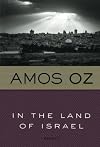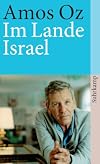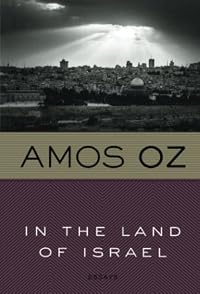
In the Land of Israel
by Amos Oz  , Maurie Goldberg-Bartura
On This Page
Description
A snapshot of Israel and the West Bank in the 1980s, through the voices of its inhabitants, from the National Jewish Book Award ?winning author of Judas . ? Notebook in hand, renowned author and onetime kibbutznik Amos Oz traveled throughout his homeland to talk with people ?workers, soldiers, religious zealots, aging pioneers, desperate Arabs, visionaries ?asking them questions about Israel ?s past, present, and future. Observant or secular, rich or poor, native-born or new immigrant, show more they shared their points of view, memories, hopes, and fears, and Oz recorded them. ? What emerges is a distinctive portrait of a changing nation and a complex society, supplemented by Oz ?s own observations and reflections, that reflects an insider ?s view of a country still forming its own identity. In the Land of Israel is ?an exemplary instance of a writer using his craft to come to grips with what is happening politically and to illuminate certain aspects of Israeli society that have generally been concealed by polemical formulas ? ( The New York Times ) . show lessTags
Recommendations



















Member Reviews
This book is full of Story, some parts more challenging to read than others, particularly because of the intermingled Israeli and Palestinian political and historical references that I'm beginning to grasp. I know I'll re-read it someday, both to savor my favorite sections -- Oz in a cafe in Ramallah speaking with two young Arab men while a third older man sits quietly until the end, with writers for an Arab newspaper in East Jerusalem, and bearing witness to the story of an old pioneer who grew up under the Ottomans and saw his country change in unimaginable ways -- and to try again to absorb the maddening, fascinating, near stream-of-consciousness accounts from settlers, fundamentalists, and idealists. My edition has an updated author show more note from 1993 (the book was originally published in 1983), and I'd love to read another updated note from Oz for the 21st century. show less
Oz is an outstanding writer, whether he is writing literature, memoir or journalistic essays, he manages to portray characters and events in all of their multilayered levels of complexity. In this book, he examines Israeli and Palestinian society during the 1980s at the height of the war in Lebanon.
In this journalistic venture, Oz travels around Israel and interviews Israelis and Palestinians from all walks of life and political persuasions. In the first five chapters, he provides background on each setting followed a more or less verbatim account of what his respondents said and how they said it.
Oz is one of the founders of Israel's peace movement, Peace Now, and in the sixth chapter, he eloquently explains his views on the need to show more end the occupation and form two states. His arguments are grounded in and his moral philosophy and a compassionate pragmatism that ring true today. show less
In this journalistic venture, Oz travels around Israel and interviews Israelis and Palestinians from all walks of life and political persuasions. In the first five chapters, he provides background on each setting followed a more or less verbatim account of what his respondents said and how they said it.
Oz is one of the founders of Israel's peace movement, Peace Now, and in the sixth chapter, he eloquently explains his views on the need to show more end the occupation and form two states. His arguments are grounded in and his moral philosophy and a compassionate pragmatism that ring true today. show less
This was interesting and very sad that so little has changed, or maybe worsened in over 30 years. I wish there had been more clarity about who was speaking.
http://nhw.livejournal.com/1097337.html
A very interesting account of attitudes in Israel in the winter of 1982, just after the first invasion of Lebanon; the leftish author mainly reports on right-wing voters who disagree with him, though he has a couple of short chapters with Palestinians in Ramallah and Jerusalem. I must say that my main reaction, having read this en route from Switzerland to Belgium after giving a conference presentation on the Balkans and the Caucasus, is that actually the Israel / Palestine conflict is a lot less special than its protagonists like to think it is.
A very interesting account of attitudes in Israel in the winter of 1982, just after the first invasion of Lebanon; the leftish author mainly reports on right-wing voters who disagree with him, though he has a couple of short chapters with Palestinians in Ramallah and Jerusalem. I must say that my main reaction, having read this en route from Switzerland to Belgium after giving a conference presentation on the Balkans and the Caucasus, is that actually the Israel / Palestine conflict is a lot less special than its protagonists like to think it is.
National characteristics, Israeli.
Es sind Berichte von Gesprächen, die Oz im Oktober und November 1982 in Israel und den 1967 besetzten Gebieten führte; sie wurden meistens während des Gespräches, zum Teil hinterher, niedergeschrieben. Er sprach mit Israeliten aus allen Gebieten: orthodoxen Juden in Nord-West-Jerusalem und Bet Schemesch, den Siedlern von Tekoa und Ofra in der besetzten Westbank (in deren Worten: Judäa und Samaria), mit zwei Palästinensern in Ramallah, mit dem reichen Z voll Hass und Verachtung für die 'sauberen Dschidden' (Juden, die einen Kompromiss anstreben), dem katholischen Mönch Pater Dubois in Jerusalem, mit Aschkenasen in Sichron-Ja'akow bei Haifa; in einem Vortrag, den Oz den Siedlern von Ofra gab, legt er seine eigenen Ansichten dar. show more So ist diese Sammlung von Gesprächen eine 'Momentaufnahme' von diversen politischen Ansichten vor nunmehr ca. 40 Jahren, doch warnt Oz, dass diese Aufzeichnungen weder als 'repräsentativ' noch 'typisch' angesehen werden sollten.
Übrigens bezeichneten fast alle Gesprächspartnern 'Palästinenser' als 'Araber'; die Palästinenser scheinen für sie nicht zu existieren. Dass die Siedlungen in den besetzten Gebieten nach internationalem Recht illegal sind, wird nicht erwähnt.
Doch aus der jetzigen Sicht, im 8ten Monat des Gaza Krieges, könnte man die Kolonisten vor 40 Jahren fast als 'tolerant' bezeichnen: https://www.bbc.co.uk/news/world-middle-east-69052857
Einige Zitate:
Oz (er lebte damals in dem Kibbutz Chulda): "Der Nationalismus als solcher ist, meiner Meinung nach, der Fluch der Menschheit" (108); "Die arabischen Menschen unter unserer Herrschaft existierten anscheinend überhaupt nicht." (111); "Das Judentum ist eine Zivilisation, eine der wenigen, die die ganze Menschheit geprägt hat." (113); "das Palästinenser-Problem: […] man kann diese oder jene Lösung vorschlagen, man kann sie ignorieren, [doch …] wer die Identität anderer ignoriert, läuft Gefahr, am Ende denjenigen zu ähneln, die seine Identität ignorieren." (121).
Abu-Chaled (Redakteur der literarischen Rubrik der Ost-Jerusalemer, palästinensischen Zeitung al-Faǧr, "Die Morgenröte"): "die Juden haben ein historisches Recht auf einen Teil Palästinas. Eure Urväter waren hier. Auch die unsrigen. […]. [Wir sind] zwei ähnliche Völker … wir sind aneinander gekettet. Ihr seid unser Schicksal, Wir sind euer Schicksal." (148) (V-24) show less
Übrigens bezeichneten fast alle Gesprächspartnern 'Palästinenser' als 'Araber'; die Palästinenser scheinen für sie nicht zu existieren. Dass die Siedlungen in den besetzten Gebieten nach internationalem Recht illegal sind, wird nicht erwähnt.
Doch aus der jetzigen Sicht, im 8ten Monat des Gaza Krieges, könnte man die Kolonisten vor 40 Jahren fast als 'tolerant' bezeichnen: https://www.bbc.co.uk/news/world-middle-east-69052857
Einige Zitate:
Oz (er lebte damals in dem Kibbutz Chulda): "Der Nationalismus als solcher ist, meiner Meinung nach, der Fluch der Menschheit" (108); "Die arabischen Menschen unter unserer Herrschaft existierten anscheinend überhaupt nicht." (111); "Das Judentum ist eine Zivilisation, eine der wenigen, die die ganze Menschheit geprägt hat." (113); "das Palästinenser-Problem: […] man kann diese oder jene Lösung vorschlagen, man kann sie ignorieren, [doch …] wer die Identität anderer ignoriert, läuft Gefahr, am Ende denjenigen zu ähneln, die seine Identität ignorieren." (121).
Abu-Chaled (Redakteur der literarischen Rubrik der Ost-Jerusalemer, palästinensischen Zeitung al-Faǧr, "Die Morgenröte"): "die Juden haben ein historisches Recht auf einen Teil Palästinas. Eure Urväter waren hier. Auch die unsrigen. […]. [Wir sind] zwei ähnliche Völker … wir sind aneinander gekettet. Ihr seid unser Schicksal, Wir sind euer Schicksal." (148) (V-24) show less
May 30, 2024German
לקט מאמרים על מפגשים ושיחות. קריא ומרתק ביותר. אוזן חדה לנימה ולחיתוך הדיבור של מרואייניו.
מפחיד קצת בתיאור ארץ ישראל מהצד השני של המתרס.
מפחיד קצת בתיאור ארץ ישראל מהצד השני של המתרס.
Dec 21, 2011Hebrew
Members
- Recently Added By
Lists

Jewish Books
367 works; 24 members
Author Information

119+ Works 12,268 Members
Amos Oz was born Amos Klausner in Jerusalem on May 4, 1939. As a young teenager, he moved to Kibbutz Hulda, where he completed his secondary education and worked on a farm. After he completed mandatory military service in 1961, the kibbutz assembly sent him to study at the Hebrew University of Jerusalem, where he received a B.A. in philosophy and show more literature. After graduation, he moved back to Hulda, where he wrote, did farm work, did guard and dining-room duty, and taught in the kibbutz high school. He fought in the 1967 and 1973 wars and spent a year as a visiting fellow at Oxford University. He wrote novels, collections of short fiction, works of nonfiction, and essays. His novels included My Michael, Black Box, and The Gospel According to Judas. His memoir, A Tale of Love and Darkness, was adapted into a movie in 2016. His last book, Dear Zealot, was made up of three essays on the theme of fanaticism. He was an advocate for peace and believed in a two-state solution, meaning the establishment of a Palestinian state alongside Israel. In the late 1970s, he helped found Peace Now. He received several awards including the Goethe Prize, the French Knight's Cross of the Légion D'Honneur, and the Israel Prize. He died after a short battle with cancer on December 28, 2018 at the age of 79. (Bowker Author Biography) show less
Amos Oz is a LibraryThing Author, an author who lists their personal library on LibraryThing.
1 Work 508 Members
Work Relationships
Is abridged in
Common Knowledge
- Canonical title
- In the Land of Israel
Classifications
- Genres
- Nonfiction, Religion & Spirituality, Travel
- DDC/MDS
- 306.095694 — Society, Government, and Culture Social sciences, sociology & anthropology Social Behavior - Dating, Marriage, Divorce Social history Asia Middle East
- LCC
- DS112 .O913 — History of Europe, Asia, Africa and Oceania Asia History of Asia Israel (Palestine). The Jews
- BISAC
Statistics
- Members
- 512
- Popularity
- 58,353
- Reviews
- 9
- Rating
- (3.94)
- Languages
- 10 — Dutch, English, Finnish, French, German, Hebrew, Norwegian (Bokmål), Polish, Spanish, Swedish
- Media
- Paper, Ebook
- ISBNs
- 19
- ASINs
- 11