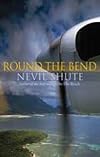
Round the Bend
by Nevil Shute
On This Page
Description
When Tom Cutter hires Constantine Shaklin as an engineer in his air freight business, he little realises the extraordinary gifts of his new recruit. Shaklin possesses a religious power which inspires everyone he meets to a new faith and hope for humanity. As Cutter's business grows across Asia, so does Shaklin's fame, until he is widely regarded as a unifying deity. Though he struggles to believe Shaklin is indeed divine, the friendship will transform Cutter's life.Tags
Recommendations













Member Reviews
There's something about Nevil Shute's prose that is quite beguiling. It's not poetic or florid; more it's a quality of the way he scrutinises the emotions of his characters. His narration is cool, but much lies under the surface. The usual mood is reserve, endurance. But under that quiet exterior there is turbulence indeed.
The narrator of Round The Bend is Alan Cutter, an aircraft engineer, pilot and entrepreneur who starts an air freight business in Bahrain. The story is the account of his friendship with Connie Shaklin, an engineer who founds a new religion.
This is the second novel of Shute's that I've read. The first was the most famous; On The Beach. As with On The Beach, Round the Bend begins slowly and in an unassuming way. But show more this quality of observation is just acute and intelligent enough to keep you reading. And then something happens that strikes a lightning bolt through the life of the narrator.
Shute reminds me of another of my favourite novelists, Andrew Miller. They share the same quality of tenderising you. Their characters' interior landscapes draw you into a place of sensitivity. Shute's characteristic flavour is emotional burdens such as guilt or yearning, and especially missed opportunities. This book's plot is quiet, but you are still gripped by a sense of increasing pressure. Despite its title it is not meandering.
One of the triumphs of this book, for me, is the setting. It has great charm. The Bahrain airstrip is a stripped-down place of sand, hangars and engines. The main characters hop between the continents, delivering goods, setting up more export bases, leaving behind personnel who spread Shaklin's infleunce. Shute would never be so clumsy as to make the comparison with angels, these people who spend so much time in the sky in their machines, but you are drawn to entertain yourself with the idea. A charming, haunting story. Tom Cutter is in love with airplanes and has been from his boyhood. He can remain in England, an employee in another man's aviation business, or he can set out on his own. With little more than personal grit and an antique aircraft, Cutter organizes an independent flying service on the Persian Gulf. He sees opportunities everywhere, also dangers. "In Cutter's growth from provincial conservative to worldly entrepreneur, Shute brings us a fine portrayal of a man willing to accept pain and danger in his search for personal growth." (B-O-T Editorial Review Board) show less
The narrator of Round The Bend is Alan Cutter, an aircraft engineer, pilot and entrepreneur who starts an air freight business in Bahrain. The story is the account of his friendship with Connie Shaklin, an engineer who founds a new religion.
This is the second novel of Shute's that I've read. The first was the most famous; On The Beach. As with On The Beach, Round the Bend begins slowly and in an unassuming way. But show more this quality of observation is just acute and intelligent enough to keep you reading. And then something happens that strikes a lightning bolt through the life of the narrator.
Shute reminds me of another of my favourite novelists, Andrew Miller. They share the same quality of tenderising you. Their characters' interior landscapes draw you into a place of sensitivity. Shute's characteristic flavour is emotional burdens such as guilt or yearning, and especially missed opportunities. This book's plot is quiet, but you are still gripped by a sense of increasing pressure. Despite its title it is not meandering.
One of the triumphs of this book, for me, is the setting. It has great charm. The Bahrain airstrip is a stripped-down place of sand, hangars and engines. The main characters hop between the continents, delivering goods, setting up more export bases, leaving behind personnel who spread Shaklin's infleunce. Shute would never be so clumsy as to make the comparison with angels, these people who spend so much time in the sky in their machines, but you are drawn to entertain yourself with the idea. A charming, haunting story. Tom Cutter is in love with airplanes and has been from his boyhood. He can remain in England, an employee in another man's aviation business, or he can set out on his own. With little more than personal grit and an antique aircraft, Cutter organizes an independent flying service on the Persian Gulf. He sees opportunities everywhere, also dangers. "In Cutter's growth from provincial conservative to worldly entrepreneur, Shute brings us a fine portrayal of a man willing to accept pain and danger in his search for personal growth." (B-O-T Editorial Review Board) show less
Well, this was fun, but then it was Nevil Shute, who is awesome. Naturally, we have airplanes or boats or both.
Actually, it's mostly airplanes, or aeroplanes I suppose, given that Shute was a Brit/Aussie. Anyway, Tom Cutter got enamored by airplanes at an early age. Basically, he ran away from home at 12 or so to join the circus, the air circus. He made friends with Connie Shaklin, also a young man in the circus. Shaklin was also half Chinese, for what that's worth.
Well, the war comes (WWII) and Tom gets into the RAF. The war ends, and Tom wonders what to do. He decides that he might get himself a small airplane and start up a flying service in the Middle East, Bahrain. So, he hooks up with the local oil companies and what not and show more flies engineers and equipment around the Mideast.
On a longer flight, he finds himself in Southeast Asia, Siam, perhaps. He ends up delivering something/someone to a hidden airfield set up by a gun runner, a guy who was supplying arms to the rebels in Cambodia and Vietnam who were trying to expel their French colonial rulers. He runs into his old friend Connie Shaklin, who was maintaining the planes for the gunrunner. The gunrunner, himself, is taken into custody. Tom does him a "favor", by taking his plane, larger than the one Tom owns, back to Bahrain. He also takes Connie with him to be his chief ground engineer.
Now that he has a larger plane, he can expand his business. Next thing you know, he decides he needs even a larger plane so as to carry more gear. He gets a loan from the local Sheik. That pisses off the British colonial rulers in the Middle East, and they try to shut Tom down, but back off when the Sheik threatens to cut off the oil...or something.
But, the important part, actually, is about Connie and his unique methods for airplane maintenance. While he is repairing something, he gives little spiritual talks to the engineers working with him. He views his calling as having come from the Creator, and he best honors the Creator by working very hard, very carefully, and very thoroughly. They start having daily prayer meetings outside the hangar at the end of each day. The other ground engineers take up the teachings, and as they disperse to other jobs through out the Middle East, they disseminate Connie's teachings. Amazingly, aircraft maintenance improves wherever Connie's disciples travel. He becomes a cult figure.
Well, there's a lot more. The central question is whether or not Connie has become a religious leader, which is a threat to the colonial authorities, or if he's just gone "round the bend", i.e. gone a bit crazy. I loved this book, but then, as I said above, it's Nevil Shute, so what's not to love? show less
Actually, it's mostly airplanes, or aeroplanes I suppose, given that Shute was a Brit/Aussie. Anyway, Tom Cutter got enamored by airplanes at an early age. Basically, he ran away from home at 12 or so to join the circus, the air circus. He made friends with Connie Shaklin, also a young man in the circus. Shaklin was also half Chinese, for what that's worth.
Well, the war comes (WWII) and Tom gets into the RAF. The war ends, and Tom wonders what to do. He decides that he might get himself a small airplane and start up a flying service in the Middle East, Bahrain. So, he hooks up with the local oil companies and what not and show more flies engineers and equipment around the Mideast.
On a longer flight, he finds himself in Southeast Asia, Siam, perhaps. He ends up delivering something/someone to a hidden airfield set up by a gun runner, a guy who was supplying arms to the rebels in Cambodia and Vietnam who were trying to expel their French colonial rulers. He runs into his old friend Connie Shaklin, who was maintaining the planes for the gunrunner. The gunrunner, himself, is taken into custody. Tom does him a "favor", by taking his plane, larger than the one Tom owns, back to Bahrain. He also takes Connie with him to be his chief ground engineer.
Now that he has a larger plane, he can expand his business. Next thing you know, he decides he needs even a larger plane so as to carry more gear. He gets a loan from the local Sheik. That pisses off the British colonial rulers in the Middle East, and they try to shut Tom down, but back off when the Sheik threatens to cut off the oil...or something.
But, the important part, actually, is about Connie and his unique methods for airplane maintenance. While he is repairing something, he gives little spiritual talks to the engineers working with him. He views his calling as having come from the Creator, and he best honors the Creator by working very hard, very carefully, and very thoroughly. They start having daily prayer meetings outside the hangar at the end of each day. The other ground engineers take up the teachings, and as they disperse to other jobs through out the Middle East, they disseminate Connie's teachings. Amazingly, aircraft maintenance improves wherever Connie's disciples travel. He becomes a cult figure.
Well, there's a lot more. The central question is whether or not Connie has become a religious leader, which is a threat to the colonial authorities, or if he's just gone "round the bend", i.e. gone a bit crazy. I loved this book, but then, as I said above, it's Nevil Shute, so what's not to love? show less
I've read this two or three times, and I can never quite make my mind up whether I like it or not. Most of the novel is a very straightforward tale told by a very straightforward young man of how he became an aircraft ground engineer and then a pilot, and set up a successful airfreight business operating out of the Persian Gulf in the 1940s. There's a lot of stuff about types of aircraft and cargoes, the financing of small businesses, demurrage (now there's a word you don't find in many novels...), spare parts, general overhauls, airworthiness certificates, hire purchase, and so forth.
Slipped in between all that, and gradually taking over as the main thread of the novel, is the rather strange story of another ground engineer, the show more narrator's friend and employee, who becomes a celebrated religious teacher, drawing together Hindus, Buddhists and Moslems in a rather conveniently Samuel Smiles, Victorian-capitalist sort of cult in which salvation is obtained by doing a good job for one's employer. Zen and the art of aircraft maintenance. Sounds like hocum, and it is, but the conjunction of the saintly Shak Lin with the supremely materialist Tom, with the use of Tom's first person narrative, does allow the author to do some interesting things. How would an ordinary, modern Englishman set about writing a gospel?
At the more mundane level, the early chapters of the book are interesting for their first-hand description of life with Sir Alan Cobham's flying circus in the early thirties, which Shute knew well. On the opening page of the book, the narrator makes a passing reference to one of Cobham's planes being "a new type of aircraft, the Airspeed Ferry" - but doesn't mention that the author in his day job had been managing director of Airspeed at the time and had designed that plane for Cobham! show less
Slipped in between all that, and gradually taking over as the main thread of the novel, is the rather strange story of another ground engineer, the show more narrator's friend and employee, who becomes a celebrated religious teacher, drawing together Hindus, Buddhists and Moslems in a rather conveniently Samuel Smiles, Victorian-capitalist sort of cult in which salvation is obtained by doing a good job for one's employer. Zen and the art of aircraft maintenance. Sounds like hocum, and it is, but the conjunction of the saintly Shak Lin with the supremely materialist Tom, with the use of Tom's first person narrative, does allow the author to do some interesting things. How would an ordinary, modern Englishman set about writing a gospel?
At the more mundane level, the early chapters of the book are interesting for their first-hand description of life with Sir Alan Cobham's flying circus in the early thirties, which Shute knew well. On the opening page of the book, the narrator makes a passing reference to one of Cobham's planes being "a new type of aircraft, the Airspeed Ferry" - but doesn't mention that the author in his day job had been managing director of Airspeed at the time and had designed that plane for Cobham! show less
As a general rule I really like Nevil Shute's novels. ( I have most of them including a few duplicates). The author is a good, natural storyteller. Like the title, however, this one went around the bend in a most unlikely fashion. There's a lot of aviation stuff in here, some early history of the Persian Gulf (late 40s) and an unusual religious development, the creation of a new religion and a modern prophet or Buddha. This part was so wonky and it is a large part of the book. The novel reads like a narrative memoir, and at the very end we find out why.
Otherwise, this, in a way, is a good look at how things were back in the 1930s to late 1940s. My least favorite Shute book.
Otherwise, this, in a way, is a good look at how things were back in the 1930s to late 1940s. My least favorite Shute book.
St. Barts 2020 #6 - Not the best of Shute, but an oddly interesting tale of early commercial air service in the mid-east post WWII. The downside of this book is that it all seemed like some in-depth background before the real story started....but it never did. Tom Cutter, a British aviator trying to start anew after some unfortunate circumstances resulting from the war, heads out with a tired old plane an goes to Bahrain to provide charter air service for mostly cargo. The tale weaves together financial challenges, the stark landscape, political challenges, a diverse Asian-sourced workforce, religious differences, language challenges, the need for more aircraft, and most importantly a childhood friend he reconnects with who becomes his show more chief ground engineer who becomes an unlikely spiritual leader throughout Asia. Again, very interesting, fairly well-written, but i just kept waiting for something else to happen. Shute's background in aviation certainly allows us to delve into the detail of maintaining aircraft and bureaucratic challenges of traveling from one small Asian Country to another, which is all well and good....but i just wanted more. I still have some unread Shute on my shelf and this will not dissuade me... show less
I can't remember who recommended this to me but it's a great read! The copy I got didn't have a cover, so I had no idea what it was going to be about when I picked it up, and I think that's a good way to read it.
Very broadly, it's about an English guy who starts up an air charter company in Bahrein in the late 40s, but that's also not what it's really about.
I think that at the time it was actually trying to be racially progressive, but nowadays it reads as Orientalist and colonialist and so on, which is sometimes a little hard to take. Still, the bones of the story are really enjoyable--up to you how much of that you can stand.
Very broadly, it's about an English guy who starts up an air charter company in Bahrein in the late 40s, but that's also not what it's really about.
I think that at the time it was actually trying to be racially progressive, but nowadays it reads as Orientalist and colonialist and so on, which is sometimes a little hard to take. Still, the bones of the story are really enjoyable--up to you how much of that you can stand.
I think this is Nevil Shute's greatest work (and so did he, I've read). In addition to being a well-told, intriguing story about people, airplanes, and exotic locales, it give the reader an inkling of how a person like Jesus might have become deified by his own contemporary followers (whether he was God or not).
Members
- Recently Added By
Lists

Favorite Childhood Books
1,646 works; 518 members

Biggest Disappointments
606 works; 168 members
Author Information

56+ Works 20,292 Members
Nevil Shute Norway was born in Ealing, London, England, on January, 17 1899. At the age of 11, Norway played truant from his first preparatory school in Hammersmith. After he was discovered, he was sent to the Dragon School, Oxford, and from there to Shrewsbury. He was on holiday in Dublin at the time of the Easter rising of 1916 and acted as an show more ambulance driver, winning a commendation for gallant conduct. He then entered the Royal Military Academy, intending to be commissioned into the Royal Flying Corps, but a bad stammer led to his being failed at his final medical examination and returned to civil life. The last few months of the war were spent on home service as a private in the Suffolk Regiment. In 1919, Norway went to Balliol College, Oxford, where he took a third class honors course in engineering science in 1922. During the vacations he worked, unpaid, as an aeronautical engineer, for the Aircraft Manufacturing Company at Hendon, and then for Geoffrey de Havilland's own firm, which he joined as an employee upon finishing at Oxford. He learned to fly and gained experience as a test observer. During the evenings he diligently wrote novels and short stories unperturbed by rejection slips from publishers. In 1924 Norway took the post of Chief Calculator to the Airship Guarantee Company, to work on the construction of the R100. In 1929 he became Deputy Chief Engineer under Barnes Wallis, and in the following year he flew to and from Canada in the R100. After the end of the airship project, jobs were hard to come by due to the depression so Shute started an aircraft manufacturing company, Airspeed Limited. This company was ultimately successful and built a large number of aircraft during the war. Shute remained joint managing director until 1938. When the business became too routine, he decided to get out of the rut and live by writing. The de Havillands, the first aviation job Shute had ever had, wound up buying Airspeed Ltd. He had by then enjoyed some success as a novelist and had sold the film rights of Lonely Road and Ruined City. At the outbreak of war in 1939, Norway joined the Royal Naval Volunteer Reserve as a Sub-Lieutenant in the Miscellaneous Weapons Department. Rising to Lieutenant Commander, he found experimenting with secret weapons a job after his own heart. But he found that his growing celebrity as a writer caused him to be in the Normandy landings on 6th June 1944, for the Ministry of Information, and to be sent to Burma as a correspondent in 1945. He entered Rangoon with the 15th Corps from Arakan. Soon after demobilisation in 1945 he emigrated to Australia and made his home in Langwarrin, Victoria. His output of novels, which began with Marazan (1926) continued to the end. Shute was one of the leading aeronautical engineers in Britain during the 30's and a fellow of the Royal Aeronautical Society. When he began writing in the 20's, he feared that a reputation as a writer of fiction might harm his engineering career. For this reason he published under his two Christian names, Nevil Shute and engineered under his "real" name, Nevil S. Norway. Nevil Shute Norway died in Melbourne on January, 12 1960. (Bowker Author Biography) show less
Awards and Honors
Distinctions
Series
Belongs to Publisher Series
Work Relationships
Is contained in
Common Knowledge
- Canonical title*
- Där vägen slutar
- Original publication date
- 1951
- Epigraph
- In my father's house are many mansions; if it were not so I would have told you. I go to prepare a place for you. St John. 14.2
Some men of noble stock were made, some glory in the murder blade,
Some praise a Science or an Art, but I like honourable Trade!
JAMES ELROY FLECKER - Last words
- (Click to show. Warning: May contain spoilers.)Because it means that on the fields and farms of England on the airstrips of the desert and the jungle in the hangars of the Persian Gulf and on the tarmacs of the southern islands, I have walked and talked with God.
*Some information comes from Common Knowledge in other languages. Click "Edit" for more information.
Classifications
Statistics
- Members
- 537
- Popularity
- 55,449
- Reviews
- 15
- Rating
- (3.73)
- Languages
- 5 — Danish, Dutch, English, Norwegian (Bokmål), Swedish
- Media
- Paper, Audiobook, Ebook
- ISBNs
- 33
- ASINs
- 27