On This Page
Description
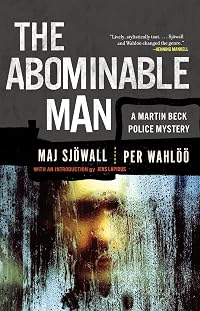
Martin Beck faces one of the greatest challenges of his professional life when his investigation unearths evidence of police corruption and brutality in this incredible seventh novel in the Martin Beck mystery series.The bloody murder of a police captain in his hospital room exposes the particularly unsavory history of a man who spent forty years practicing a horribly brutal brand of strong-arm police work. Nonetheless, Martin Beck and his colleagues scour Stockholm for the murderer, a show more demented and deadly rifleman. As Beck is gripped by an increasing feeling of impending danger, his investigation unearths evidence of police corruption. That's when an even stronger sense of responsibility, and something like shame, urges him into taking a series of drastic steps, which lead to a shocking disaster.
. show less
Tags
Recommendations





























Member Reviews
When I wrote in my post on Sjöwall’s & Wahlöö’s Murder at the Savoy that the authors were taking the whole of Swedish society into their analytical focus, I was not entirely correct – with all the harsh criticism there remained at least one area where things still seemed to be for the most part as they should be, namely the Swedish police. Certainly, there was the occasional incompetent cop, the occasional bureaucrat who cared only for his own career, but overall the novels gave the impression that police was filled with people like Martin Beck or Lennart Kollberg – far from perfect, but hard-working and well-meaning people.
All of this changes with The Abominable Man. This seventh novel in the series opens with an aged show more policeman being murdered in his hospital room, and the ensuing investigation into his death not only reveals him to be incompetent, narrow-minded, reactionary and prone to use violence, but also makes it clear that everyone knew about this, that in fact he trained many young policemen (with rather questionable methods) to his way of thinking, and that the only reason his career in the police came to a sudden standstill is the arrival of a more liberal climate in Swedish society during the sixties – a climate which by the end of that decade (when I presume the novel takes place) has already begun to fade again. And the farther the investigations proceeds, the more heinous the things uncovered about the current state of the Swedish police service – civilians being harassed, arrested on a whim, beaten up in police cars or cells, even left to die – and all of it without the least recriminations, complaints being squished by blind solidarity among police officers or swallowed up without a trace by the labyrinthine bureaucracy of the legal system.
At the same time, this is probably the most fast-paced and action-packed volume of the series so far, taking place within a single day and ending with an extended edge-of-your-seat-tension finale (and a rather high body count). A finale that also is highly symbolic – the Swedish police is so rotten to the core that it is beyond redemption and impossible to reason with, and anyone who attempts it is in mortal danger. It is hard to pick favourites here, but this might just the be the best installment in what has been a consistently excellent series (but of course there are still three more novels to go). show less
All of this changes with The Abominable Man. This seventh novel in the series opens with an aged show more policeman being murdered in his hospital room, and the ensuing investigation into his death not only reveals him to be incompetent, narrow-minded, reactionary and prone to use violence, but also makes it clear that everyone knew about this, that in fact he trained many young policemen (with rather questionable methods) to his way of thinking, and that the only reason his career in the police came to a sudden standstill is the arrival of a more liberal climate in Swedish society during the sixties – a climate which by the end of that decade (when I presume the novel takes place) has already begun to fade again. And the farther the investigations proceeds, the more heinous the things uncovered about the current state of the Swedish police service – civilians being harassed, arrested on a whim, beaten up in police cars or cells, even left to die – and all of it without the least recriminations, complaints being squished by blind solidarity among police officers or swallowed up without a trace by the labyrinthine bureaucracy of the legal system.
At the same time, this is probably the most fast-paced and action-packed volume of the series so far, taking place within a single day and ending with an extended edge-of-your-seat-tension finale (and a rather high body count). A finale that also is highly symbolic – the Swedish police is so rotten to the core that it is beyond redemption and impossible to reason with, and anyone who attempts it is in mortal danger. It is hard to pick favourites here, but this might just the be the best installment in what has been a consistently excellent series (but of course there are still three more novels to go). show less
I first read this book about four years ago but didn't recall a single thing about it. After gulping it down in two days' worth of bus reading, I have to ask myself how that was possible. The murder that opens this book is gruesome, described in chilling detail that had me covering my mouth in horror. The character of the murder is somewhat fitting, though, given that the murder victim was referred to as an Abominable Man himself -- the very worst sort of brutal, heavy-handed policeman. Still, it's a nasty way to go, and since the victim is a policeman, Sweden's finest are all over the case.
The investigation is very methodical, but it's not all dull: the last third or so had me leaving little scorch marks on the paper from turning the show more pages so fast. It was very cinematic -- indeed, one character is accused of getting all his police knowledge from the movies. The book also ends at a good spot, tying up the loose ends but you know life goes on for the characters even after you've closed the book. Very satisfying from an artistic standpoint.
This may also be the funniest Martin Beck novel I've read yet or at least recall. There's plenty of dark humour in the last few chapters, and the narration is very wry, with kudos to Thomas Teal for his translation work. (Maybe the edition I read the first time was a different translator?) There are a few social commentary digressions that could slip into soapbox territory, but the narration manages to poke fun at itself by having one of the characters think these digressions, then he comes sharply back to reality and says, "Why am I thinking about such an odd thing at a time like this?"
I would definitely recommend this book to people who already like Martin Beck, or fans of Wallander. show less
The investigation is very methodical, but it's not all dull: the last third or so had me leaving little scorch marks on the paper from turning the show more pages so fast. It was very cinematic -- indeed, one character is accused of getting all his police knowledge from the movies. The book also ends at a good spot, tying up the loose ends but you know life goes on for the characters even after you've closed the book. Very satisfying from an artistic standpoint.
This may also be the funniest Martin Beck novel I've read yet or at least recall. There's plenty of dark humour in the last few chapters, and the narration is very wry, with kudos to Thomas Teal for his translation work. (Maybe the edition I read the first time was a different translator?) There are a few social commentary digressions that could slip into soapbox territory, but the narration manages to poke fun at itself by having one of the characters think these digressions, then he comes sharply back to reality and says, "Why am I thinking about such an odd thing at a time like this?"
I would definitely recommend this book to people who already like Martin Beck, or fans of Wallander. show less
Many years too late I have got on to the Martin Beck series of detective novels. Beck and his team are great characters and struggle hard to solve all their cases. The novels are set in Sweden, mainly Stockholm, in the 1960s and 1970s at a time when the police were despised and hated, at a time of great societal change, poverty, unemployment, drug culture etc. This one deals with retribution against a senior inspector - and many more - and is gripping right up to the end. It is as relevant and disturbing now as it was when it was first published in 1971. The authors convey clear political messages through the stories and the characters. .
The Abominable Man by Maj Sjowall and Per Wahloo takes place over the course of a day. First in the early hours we are shocked by the murder of a police officer, Nyland, killed in his hospital room, cut down by a bayonet.
Martin Beck spend their time examining old records, interviewing the family and tracking down suspects. A picture of Nyland emerges and it is one of corruption and brutality. Beck learns that the police have been covering up Nyland’s abuses and ignoring the numerous complaints about this man’s treatment of others. One fellow policeman had reported on the death of his wife which he blamed on Nyland and his associates. Beck then finds out that just yesterday, this ex-policeman lost custody of his daughter due show more partially to Nyland and others on the police force. The story culminates with the suspect on the roof of his apartment building armed with numerous guns.
Originally published in the early 1970s, this is a timeless story that could have happened today. The Abominable Man was a simple story but very effective in asking the questions of who is policing the police, and why are they able to cover up their abuses and have their word accepted as the truth. This was an excellent addition to the series, but also could very well stand on it’s own. show less
Martin Beck spend their time examining old records, interviewing the family and tracking down suspects. A picture of Nyland emerges and it is one of corruption and brutality. Beck learns that the police have been covering up Nyland’s abuses and ignoring the numerous complaints about this man’s treatment of others. One fellow policeman had reported on the death of his wife which he blamed on Nyland and his associates. Beck then finds out that just yesterday, this ex-policeman lost custody of his daughter due show more partially to Nyland and others on the police force. The story culminates with the suspect on the roof of his apartment building armed with numerous guns.
Originally published in the early 1970s, this is a timeless story that could have happened today. The Abominable Man was a simple story but very effective in asking the questions of who is policing the police, and why are they able to cover up their abuses and have their word accepted as the truth. This was an excellent addition to the series, but also could very well stand on it’s own. show less
Book 7 looks critically at the problem of police brutality and how it is covered up within the infamous code of blue, even in Sweden. A senior policeman is murdered in the hospital, and as Beck investigates, he learns that the policeman often took the law into his own hands, dispensing justice. Apparently the book was published in 1971, the same year that "Dirty Harry" was released in the U.S. The final 25% was action-packed, putting the reader in the middle of a terrifying inner-city Stockholm scene: gunman-on-the-roof, lone-madman vs. the entire police force, with many innocents in between.
Nothing will incur the wrath of the police force than the death of one of their own. Even if that person turns out to be less than a paragon of virtue. Chief Inspector Nyman was one such man and everyone in the force knew his methods went far beyond acceptable levels but when he is found brutally murdered in his hospital room it's still a case of all hands on deck to find his murderer. With the lengths that an officer will go to to protect another it's no wonder that somebody has taken matters into their own hands to get rid of one of the more brutal members of this fraternity. A trip to the complaints section produces a list of potential suspects much too large for a quick resolution to the case so it's up to Martin Beck and his team show more to find the likeliest candidate.
The seventh book in this Swedish police procedural series takes a look within the police force itself and how its militaristic culture, with many recruits garnered from the armed forces, and protectionism of colleagues had an effect on Swedish society. Thematically similar to the previous book featuring a powerful man as victim who may actually deserve his fate but this instalment deals with abuse of power as opposed to wealth. The socio-commentary is still very much in evidence here no mores so than the discussions concerning the demolition of 90% of the old Stockholm to make way for a more modern city. Not because of environmental concerns but to achieve the fullest possible exploitation of the most valuable land. Although the police-work is methodical it is not as drawn out in this case and events occur at almost breakneck speed up to the final dramatic conclusion. Another excellent addition to a very good series. show less
The seventh book in this Swedish police procedural series takes a look within the police force itself and how its militaristic culture, with many recruits garnered from the armed forces, and protectionism of colleagues had an effect on Swedish society. Thematically similar to the previous book featuring a powerful man as victim who may actually deserve his fate but this instalment deals with abuse of power as opposed to wealth. The socio-commentary is still very much in evidence here no mores so than the discussions concerning the demolition of 90% of the old Stockholm to make way for a more modern city. Not because of environmental concerns but to achieve the fullest possible exploitation of the most valuable land. Although the police-work is methodical it is not as drawn out in this case and events occur at almost breakneck speed up to the final dramatic conclusion. Another excellent addition to a very good series. show less
This was a thoroughly enjoyable read. It both analyses what makes people commit horrendous crimes, and what constitutes good policing.
We learn early on that the high ranking police officer killed was not a good policeman. Martin Beck's colleague Kollberg says "he was a barbaric son of a bitch of the very worst sort." His name was never discredited, and complaints against him never got past the submission stage. And many of the current personnel in the Stockholm Police force were incredibly loyal to him because he had trained them.
As the blurb indicates, there is no shortage of people who would be glad to see this person dead, but just one has reached the point of no return, deprived of both his wife and his daughter by this man.
The show more authors also make some interesting commentary on what happened to the city of Stockholm in the 1960s when 90% of the old city was demolished to make way for "modern" development.
This series follows the changes in Martin Beck's personal life as he rises in the force. He is now the chief of the National Murder Squad, his marriage has collapsed and he unashamedly lives for his work.
One of the most enjoyable aspects of these novels is the amount of descriptive detail included, and small nuances in relationships between the men who make up Beck's team. Beck is very demanding, but he does not demand any more from them than he does of himself. show less
We learn early on that the high ranking police officer killed was not a good policeman. Martin Beck's colleague Kollberg says "he was a barbaric son of a bitch of the very worst sort." His name was never discredited, and complaints against him never got past the submission stage. And many of the current personnel in the Stockholm Police force were incredibly loyal to him because he had trained them.
As the blurb indicates, there is no shortage of people who would be glad to see this person dead, but just one has reached the point of no return, deprived of both his wife and his daughter by this man.
The show more authors also make some interesting commentary on what happened to the city of Stockholm in the 1960s when 90% of the old city was demolished to make way for "modern" development.
This series follows the changes in Martin Beck's personal life as he rises in the force. He is now the chief of the National Murder Squad, his marriage has collapsed and he unashamedly lives for his work.
One of the most enjoyable aspects of these novels is the amount of descriptive detail included, and small nuances in relationships between the men who make up Beck's team. Beck is very demanding, but he does not demand any more from them than he does of himself. show less
Members
- Recently Added By
Lists

Scandinavian Crime Fiction
224 works; 37 members
Nordic Crime Fiction
66 works; 10 members

Reading List - Scandinavian Fiction
134 works; 3 members
Swedish Crime Fiction
32 works; 6 members

Books Read in 2016
4,666 works; 199 members

Books Read in 2017
4,249 works; 130 members
Author Information

74+ Works 14,647 Members
Writer and journalist Maj Sjöwall was born in Sweden in 1935. She was a reporter and art director at several newspapers and magazines. From 1959 to 1961, she was an editor with the publishing house Wahlström and Widstrad. She met Per Wahlöö in 1961 and they married the following year. Together they wrote all ten novels in the Martin Beck show more Police Mystery series from 1965 to 1975. In 1971, The Laughing Policeman (a translation of Den Skrattande Polisen) won an Edgar Award for Best Novel. (Bowker Author Biography) show less

Writer and journalist Per Wahlöö was born in Sweden on August 5, 1926. He graduated from the University of Lund in 1946 and found work covering criminal and social issues for numerous newspapers and magazines. He also wrote a number of television and radio plays and was managing editor for several magazines. His first book, Himmelsgeten, was show more published in 1956 and numerous novels followed. He also wrote all ten novels in the Martin Beck Police Mystery series with his wife Maj Sjöwall. In 1971, The Laughing Policeman (a translation of Den Skrattande Polisen) won an Edgar Award for Best Novel. He died from cancer on June 22, 1975. (Bowker Author Biography) show less
Some Editions
Awards and Honors
Series

Belongs to Publisher Series
Work Relationships
Common Knowledge
- Canonical title
- The Abominable Man
- Original title
- Den vedervärdige mannen från Säffle
- Alternate titles*
- Mannen på taket
- Original publication date
- 1971; 1972 (English ed.) (English ed.)
- People/Characters
- Martin Beck; Einar Rönn; Gunvald Larsson; Sten Lennart Kollberg; Frederik Melander (as Fredrik); Stig Nyman (victim) (show all 14); Anna Nyman (wife of Stig); Stefan Nyman (son of Stig and Anna); Harald Hult (former colleague of Nyman); Ingrid Beck (daughter of Martin); Åke Eriksson; Kurt Kvant; Karl Kristiansson; Stig Malm
- Important places
- Stockholm, Sweden
- Related movies*
- Mannen på taket (1976 | IMDb | The Man on the Roof)
- First words
- Just after midnight he stopped thinking.
- Quotations
- If you really want to be sure of getting caught, the thing to do is kill a policeman.
- Last words
- (Click to show. Warning: May contain spoilers.)'Now come on, let's carry him down.'
- Original language
- Swedish
*Some information comes from Common Knowledge in other languages. Click "Edit" for more information.
Classifications
- Genres
- Fiction and Literature, Mystery
- DDC/MDS
- 839.7374 — Literature & rhetoric German & related literatures Other Germanic literatures Swedish literature Swedish fiction 1900-1999 1945-1999
- LCC
- PT9876.29 .J63 .V4 — Language and Literature German, Dutch and Scandinavian literatures Swedish literature Individual authors or works 1961-2000
- BISAC
Statistics
- Members
- 1,161
- Popularity
- 21,719
- Reviews
- 29
- Rating
- (3.83)
- Languages
- 14 — Czech, Danish, Dutch, English, Finnish, French, German, Italian, Norwegian (Bokmål), Norwegian, Polish, Russian, Spanish, Swedish
- Media
- Paper, Audiobook, Ebook
- ISBNs
- 78
- ASINs
- 15