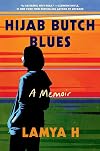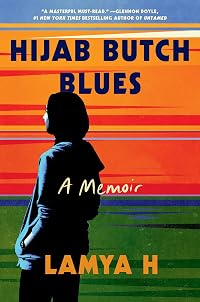
Hijab Butch Blues: A Memoir
by Lamya H.
On This Page
Description
Fourteen years old and growing up in the Middle East, Lamya is an overachiever and a class clown, qualities that help her hide in plain sight when she realizes she has a crush on her teacher--her female teacher. She's also fourteen when she reads a passage in Quran class about Maryam, known as the Virgin Mary in the Christian Bible, that changes everything. Lamya learns that Maryam was untempted by an angelically handsome man, and later, when told she is pregnant, insists no man has touched show more her. Could Maryam be... like Lamya? Spanning childhood to an elite college in the US and early adult life in New York City, each essay places Lamya's struggles and triumphs in the context of some of the most famous stories in the Quran. She juxtaposes her coming out with Musa liberating his people from the Pharoah; asks if Allah, who is neither male nor female, might instead be nonbinary; and, drawing strength from the faith and hope of Nuh building his ark, begins to build a life of her own--all the while discovering that her identity as a queer, immigrant devout Muslim is, in fact, the answer to her quest for safety and belonging. show lessTags
Recommendations








Member Reviews
Hijab Butch Blues is the memoir of a Queer Muslim woman writing under the pen name Lamya H. I majored in middle eastern history when I was in college. I’ve been wanting to read this memoir for a while now. I’m glad that I finally picked it up.
I appreciated being invited into Lamya’s writing as she shared her personal journey through her faith and coming into her identity as a queer person and a person of faith. Those two identities are not always compatible and sometimes are a recipe for misery, oppression, and self hatred. I don’t especially consider myself a person of faith, although I do sort of identify as a witch. I think this book was a fantastic example of how faith can exist alongside queerness and be a source of joy and show more comfort instead of a tool of oppression. I think Islam is hugely misunderstood by most American as we conveniently ignore all the violence done in the name of Christianity and the massive shared roots that Islam and Christianity and Judaism all share.
I loved getting to see how Lamya came to understand herself and where she fit into the world. My heart breaks for the fact that she can’t be as completely open with her family about her queerness in the way that my intersectional privileges have allowed me to be with mine. There’s a definite push in America for queer folks to always come out to their families and that they must live “openly and authentically” or else they’re doing queerness wrong. And that is a shitty and dangerous narrative to express, especially to younger queer folks and queer people of color.
Pick up this book to learn more about our queer Muslim community and to maybe learn to be a better ally to them as well. show less
I appreciated being invited into Lamya’s writing as she shared her personal journey through her faith and coming into her identity as a queer person and a person of faith. Those two identities are not always compatible and sometimes are a recipe for misery, oppression, and self hatred. I don’t especially consider myself a person of faith, although I do sort of identify as a witch. I think this book was a fantastic example of how faith can exist alongside queerness and be a source of joy and show more comfort instead of a tool of oppression. I think Islam is hugely misunderstood by most American as we conveniently ignore all the violence done in the name of Christianity and the massive shared roots that Islam and Christianity and Judaism all share.
I loved getting to see how Lamya came to understand herself and where she fit into the world. My heart breaks for the fact that she can’t be as completely open with her family about her queerness in the way that my intersectional privileges have allowed me to be with mine. There’s a definite push in America for queer folks to always come out to their families and that they must live “openly and authentically” or else they’re doing queerness wrong. And that is a shitty and dangerous narrative to express, especially to younger queer folks and queer people of color.
Pick up this book to learn more about our queer Muslim community and to maybe learn to be a better ally to them as well. show less
Lamya H.'s Hijab Butch Blues is flat out one of the best books I've ever read both in terms of content and the quality of its prose. Lamya H., born in south Asia, raised on the Arabian Peninsula, and now living as an immigrant in the U.S., writes under a pseudonym and leaves locations vague to preserve her anonymity, safety, and family connections. Why? Because as a devout Muslim, a lesbian, and an immigrant she's acutely aware of her tenuous state and aware of the lack of spaces where she can simultaneously exercise her faith and live as her true self.
To those coming from other, less tenuous situations, her need for anonymity may sound exaggerated—but for those who share her experiences and those willing to embrace the truths of her show more own life as she explains them, her concerns are well-founded. Her prose is both precise and beautiful. She challenges herself with her own thinking every bit as much as she does her readers.
What makes this book so remarkable is Lamya's integrity both as a Muslim trying to create a lens that allows her to see her faith broadly and affirmingly and as a scholar and political thinker aware of the ways colonialism and hierarchies of color shape our world.
The memoir swings, pendulum-like, between her own story and her reflections on the stories at the heart of Islam, stories that shape her understanding of what it means (or can mean) to be female and Muslim. This pairing of personal and theological truths is powerful and respectful of both individual and cultural identity.
If this description makes you think that Hijab Butch Blues will speak to you in remarkable ways, you're right. If this description makes you think that her story may have little to teach you, you're wrong. The carefully documented specifics of her life are what make this book universally essential reading. I'm urging you, if possible, to purchase a copy of this book. Publishers need to see that this is a topic and presentation valued to a wide range of readers. If you can't purchase it, request it now at your local library. We need a world of literature that is as broad as the world in which literature is written.
I received a free electronic review copy of this title from the publisher via NetGalley; the opinions are my own. show less
To those coming from other, less tenuous situations, her need for anonymity may sound exaggerated—but for those who share her experiences and those willing to embrace the truths of her show more own life as she explains them, her concerns are well-founded. Her prose is both precise and beautiful. She challenges herself with her own thinking every bit as much as she does her readers.
What makes this book so remarkable is Lamya's integrity both as a Muslim trying to create a lens that allows her to see her faith broadly and affirmingly and as a scholar and political thinker aware of the ways colonialism and hierarchies of color shape our world.
The memoir swings, pendulum-like, between her own story and her reflections on the stories at the heart of Islam, stories that shape her understanding of what it means (or can mean) to be female and Muslim. This pairing of personal and theological truths is powerful and respectful of both individual and cultural identity.
If this description makes you think that Hijab Butch Blues will speak to you in remarkable ways, you're right. If this description makes you think that her story may have little to teach you, you're wrong. The carefully documented specifics of her life are what make this book universally essential reading. I'm urging you, if possible, to purchase a copy of this book. Publishers need to see that this is a topic and presentation valued to a wide range of readers. If you can't purchase it, request it now at your local library. We need a world of literature that is as broad as the world in which literature is written.
I received a free electronic review copy of this title from the publisher via NetGalley; the opinions are my own. show less
What a fun read! Even though it tells a complex and often deeply painful story, it's sprinkled with so much humor, love and everyday messiness that it's an easy page-turner. Lamya's life story starts in South Asia, then to an Arab county, then to the US in a Muslim immigrant community, moving to a NYC queer community, and navigating the blurred lines between all of the above. Despite my not being queer, brown, Muslim or an immigrant, I found this book so relatable in the ways she navigates identity, friendship, self-critique and personal growth, self-love, and offering generosity in relationship to others in all their imperfections. After spending a few hundred pages with her, I feel like she's a fun and wise friend that I'll miss while show more I wait for her next work! show less
[Hijab Butch Blues] is a memoir by a 30-something year old, writing about her gender identity, her life as an immigrant, her Islamic faith, and how it all fits together. In some ways, it's fascinating. Lamya is devout, but questioning. She uses the stories and lessons from the Quran to frame her own questions, doubts, and observations about her life as a non-binary Muslim immigrant to the U.S.
However, somehow I just didn't connect to her story. The author jumps around a lot in her chapters, sometimes as a child in an Arab country, sometimes at various points in her life as a young adult in the U.S. And the jumping around made it hard to see a trajectory of her life and thoughts and growth. I also wasn't sure who her intended audience show more was. (I'm using she/her because she never specified her pronouns as anything else and did for others in the book) I think her audience, in the end, was herself. And I'm not generally a fan of that sort of highly internalized writing.
This book is getting a lot of positive press. For me, the topic was fascinating and I liked a lot of the message she was trying to get across, but I just didn't think the writing made it very successful.
I hope some others around here read it - I'd love to hear some alternate viewpoints! show less
However, somehow I just didn't connect to her story. The author jumps around a lot in her chapters, sometimes as a child in an Arab country, sometimes at various points in her life as a young adult in the U.S. And the jumping around made it hard to see a trajectory of her life and thoughts and growth. I also wasn't sure who her intended audience show more was. (I'm using she/her because she never specified her pronouns as anything else and did for others in the book) I think her audience, in the end, was herself. And I'm not generally a fan of that sort of highly internalized writing.
This book is getting a lot of positive press. For me, the topic was fascinating and I liked a lot of the message she was trying to get across, but I just didn't think the writing made it very successful.
I hope some others around here read it - I'd love to hear some alternate viewpoints! show less
audio nonfiction/memoir (7.5 hours) - genderqueer hijabi she/they who likes women writes about her life before/after immigrating to the US for college and her adult life, along with her feminist interpretation of Quran stories (semi-familiar because of similarities to Old Testament stories) and her experiences with racism, colorism, Islamaphobia, homophobia, etc.
very readable, with excellent narration. Lamya is funny and likeable, and her stories are relatable even if you've never had to navigate a new country as a queer, brown-skinned hijabi.
very readable, with excellent narration. Lamya is funny and likeable, and her stories are relatable even if you've never had to navigate a new country as a queer, brown-skinned hijabi.
i liked this - i don't think it's a particularly incisive piece of exegesis but that also isn't what i was expecting or hoping for (and i think to do so is, well, entirely on you. this is a memoir!). i think it offers some interesting approaches to interpreting islamic thought and i don't necessarily agree with all of them, but i'm pleased to see an author out there pushing the boundaries of what is acceptable how we think about islamic thought
what i really enjoyed about this was that the author has a very distinctive voice and a real clarity of thought. i felt compelled by her story, the world she built, the challenges of her life. maybe that's because it echoes parts of my own experience, although i am hardly as involved or practicing show more a muslim as lamya. and i'm glad this exists! i'm glad there's something out there that captures their particular experience, the particular experience of so many people i've known.
that said, i think the narrative was a little bloated in parts. probably because this is quite a young writer and i kind of firmly believe that you have to have lived a little more life for a full-length memoir. but i'm excited to see what she writes next - i hope there are many more books coming show less
what i really enjoyed about this was that the author has a very distinctive voice and a real clarity of thought. i felt compelled by her story, the world she built, the challenges of her life. maybe that's because it echoes parts of my own experience, although i am hardly as involved or practicing show more a muslim as lamya. and i'm glad this exists! i'm glad there's something out there that captures their particular experience, the particular experience of so many people i've known.
that said, i think the narrative was a little bloated in parts. probably because this is quite a young writer and i kind of firmly believe that you have to have lived a little more life for a full-length memoir. but i'm excited to see what she writes next - i hope there are many more books coming show less
I know it wasn't the best idea to read this book. I read You Truly Assumed by Laila Sabreen and I loved it despite some weird things I noticed about it, but this book was too much. I know that I'm probably not the target audience because I'm a Christian (born and raised in Saudi Arabia for fourteen years) and I don't have an Islamic perspective on books written by Muslims for Muslims.
I want you to read this blurb, which tells you all you need to know about the book before you even start reading it.
A queer hijabi Muslim immigrant survives her coming-of-age by drawing strength and hope from stories in the Quran in this daring, provocative, and radically hopeful memoir.
When fourteen-year-old Lamya H realizes she has a crush on her show more teacher--her female teacher--she covers up her attraction, an attraction she can't yet name, by playing up her roles as overachiever and class clown. Born in South Asia, she moved to the Middle East at a young age and has spent years feeling out of place, like her own desires and dreams don't matter, and it's easier to hide in plain sight. To disappear. But one day in Quran class, she reads a passage about Maryam that changes everything: when Maryam learned that she was pregnant, she insisted no man had touched her. Could Maryam, uninterested in men, be . . . like Lamya?
From that moment on, Lamya makes sense of her struggles and triumphs by comparing her experiences with some of the most famous stories in the Quran. She juxtaposes her coming out with Musa liberating his people from the pharoah; asks if Allah, who is neither male nor female, might instead be nonbinary; and, drawing on the faith and hope Nuh needed to construct his ark, begins to build a life of her own--ultimately finding that the answer to her lifelong quest for community and belonging lies in owning her identity as a queer, devout Muslim immigrant.
This searingly intimate memoir in essays, spanning Lamya's childhood to her arrival in the United States for college through early-adult life in New York City, tells a universal story of courage, trust, and love, celebrating what it means to be a seeker and an architect of one's own life.
OK... we're already going a bit too far with this.
1. Suspecting that Allah is non-binary when He is referred to with male pronouns in the Quran and all Islamic texts. This blasphemy in Islam to try to label Allah as a non-binary person, because pronouns such as they/them would suggest Allah is more than one person, which goes against the values of the Quran.
2. The Virgin Mary was not a lesbian, as the author suggests. If the Virgin Mary not being touched by any man makes her a lesbian, all Catholic nuns who make a vow of remaining chaste for life are also automatically lesbians because they live around other women and seldom associate with men.
3. Comparing openly becoming queer to Moses freeing the Israelites is a whole other level of low. And I'll explain why. The Israelites were in bondage in Egypt. They were slaves. They were tortured, beaten, forced to do free labor, and traumatized beyond imagination. Moses went through so much and had to gather plenty of courage to free his people, with the help of the Almighty God. The story of Exodus isn't comparable to someone openly expressing their queerness. Was Lamya being enslaved while closeted? Did she feel enslaved as a closeted queer? I can't read her mind, but this comparison was beyond disrespectful and disgraceful. The situation of the Israelite slaves was much worse than Lamya's. Trying to find similarities between Moses freeing the slaves from the stony Pharaoh of Egypt and coming out of the closet is like comparing a plane crash to a toddler falling off of their tricycle.
I am not a supporter of the LGBTQIA+, but I do know that coming out is a very challenging process that takes a toll on someone's mental and emotional health. It strains relationships as well. However, it can never be compared to enslavement and severe torture.
With that being said, I believe this book shouldn't have been a nominee for Best Memoir & Autobiography, and it shouldn't have gotten an award from Goodreads. It is disrespectful to not only Islam but also Christianity since she uses Bible stories to justify her queerness (the Virgin Mary & Moses Freeing the Israelites). Disappointed and I'm glad I saw the warning coming when I read the description. Never will read another book by Lamya H. because of this. show less
I want you to read this blurb, which tells you all you need to know about the book before you even start reading it.
A queer hijabi Muslim immigrant survives her coming-of-age by drawing strength and hope from stories in the Quran in this daring, provocative, and radically hopeful memoir.
When fourteen-year-old Lamya H realizes she has a crush on her show more teacher--her female teacher--she covers up her attraction, an attraction she can't yet name, by playing up her roles as overachiever and class clown. Born in South Asia, she moved to the Middle East at a young age and has spent years feeling out of place, like her own desires and dreams don't matter, and it's easier to hide in plain sight. To disappear. But one day in Quran class, she reads a passage about Maryam that changes everything: when Maryam learned that she was pregnant, she insisted no man had touched her. Could Maryam, uninterested in men, be . . . like Lamya?
From that moment on, Lamya makes sense of her struggles and triumphs by comparing her experiences with some of the most famous stories in the Quran. She juxtaposes her coming out with Musa liberating his people from the pharoah; asks if Allah, who is neither male nor female, might instead be nonbinary; and, drawing on the faith and hope Nuh needed to construct his ark, begins to build a life of her own--ultimately finding that the answer to her lifelong quest for community and belonging lies in owning her identity as a queer, devout Muslim immigrant.
This searingly intimate memoir in essays, spanning Lamya's childhood to her arrival in the United States for college through early-adult life in New York City, tells a universal story of courage, trust, and love, celebrating what it means to be a seeker and an architect of one's own life.
OK... we're already going a bit too far with this.
1. Suspecting that Allah is non-binary when He is referred to with male pronouns in the Quran and all Islamic texts. This blasphemy in Islam to try to label Allah as a non-binary person, because pronouns such as they/them would suggest Allah is more than one person, which goes against the values of the Quran.
2. The Virgin Mary was not a lesbian, as the author suggests. If the Virgin Mary not being touched by any man makes her a lesbian, all Catholic nuns who make a vow of remaining chaste for life are also automatically lesbians because they live around other women and seldom associate with men.
3. Comparing openly becoming queer to Moses freeing the Israelites is a whole other level of low. And I'll explain why. The Israelites were in bondage in Egypt. They were slaves. They were tortured, beaten, forced to do free labor, and traumatized beyond imagination. Moses went through so much and had to gather plenty of courage to free his people, with the help of the Almighty God. The story of Exodus isn't comparable to someone openly expressing their queerness. Was Lamya being enslaved while closeted? Did she feel enslaved as a closeted queer? I can't read her mind, but this comparison was beyond disrespectful and disgraceful. The situation of the Israelite slaves was much worse than Lamya's. Trying to find similarities between Moses freeing the slaves from the stony Pharaoh of Egypt and coming out of the closet is like comparing a plane crash to a toddler falling off of their tricycle.
I am not a supporter of the LGBTQIA+, but I do know that coming out is a very challenging process that takes a toll on someone's mental and emotional health. It strains relationships as well. However, it can never be compared to enslavement and severe torture.
With that being said, I believe this book shouldn't have been a nominee for Best Memoir & Autobiography, and it shouldn't have gotten an award from Goodreads. It is disrespectful to not only Islam but also Christianity since she uses Bible stories to justify her queerness (the Virgin Mary & Moses Freeing the Israelites). Disappointed and I'm glad I saw the warning coming when I read the description. Never will read another book by Lamya H. because of this. show less
Members
- Recently Added By
Lists

LGBTQ Memoir/Biography
52 works; 4 members

Sexuality & Gender
160 works; 3 members

Books Read in 2024
4,623 works; 126 members

Sapph-Lit
78 works; 4 members

Queer Nonfiction (Owned TBR)
25 works; 1 member
Author Information
1+ Work 536 Members
Some Editions
Awards and Honors
Awards
Distinctions
Common Knowledge
- First words
- ...Even Ibrahim, a prophet who talks to God, who has received revelations and miracles - even this prophet has doubts. He turns to God and ask gingerly, Will You really bring me back to life when I am dead? I believe in Y... (show all)ou, God, but there's a part of me that is unsure. My heart hesitates. My mind has questions. And I can't help but ask them.
I, too have questions for God - when I'm falling in love with a woman, when I'm figuring out my gender, when I move to the U.S. for college away from everyone I know and can't make sense of why I feel so wrong. Like Ibrahim, I, too, can't help but turn to God with my questions, my doubts, my anger, my love. Like Ibrahim, I, too, hope that my heart may be satisfied. -Preface
I am fourteen the year I read Surah Maryam. It's not like I haven't read this chapter of the Quran before, I have - I've read the entire Quran from start to finish. But I've only read it in Arabic, a language that I don't spe... (show all)ak, that I can vocalize but not understand, that I've been taught for the purpose of reading the Quran. -Chapter 1, Maryam - Canonical DDC/MDS
- 306.76
- Canonical LCC
- HQ75.H15
Classifications
- Genres
- Sexuality and Gender Studies, LGBTQ+, Biography & Memoir, General Nonfiction, Religion & Spirituality, Nonfiction
- DDC/MDS
- 306.76 — Society, government, & culture Social sciences, sociology & anthropology Social Behavior - Dating, Marriage, Divorce Sexual relations Sexual orientation, transgender identity, intersexuality
- LCC
- HQ75 .H15 — Social sciences The family. Marriage, Women and Sexuality The Family. Marriage. Women Sexual life Homosexuality. Lesbianism
- BISAC
Statistics
- Members
- 536
- Popularity
- 55,655
- Reviews
- 16
- Rating
- (4.10)
- Languages
- English
- Media
- Paper, Audiobook, Ebook
- ISBNs
- 7
- ASINs
- 4