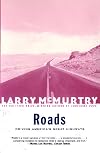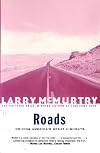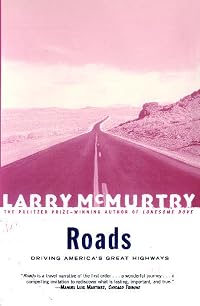
Roads : Driving America's Great Highways
by Larry McMurtry
On This Page
Description
As he crisscrosses America -- driving in search of the present, the past, and himself -- Larry McMurtry shares his fascination with this nation's great trails and the culture that has developed around them. Ever since he was a boy growing up in Texas only a mile from Highway 281, Larry McMurtry has felt the pull of the road. His town was thoroughly landlocked, making the highway his "river, its hidden reaches a mystery and an enticement. I began my life beside it and I want to drift down the show more entire length of it before I end this book." In Roads, McMurtry embarks on a cross-country trip where his route is also his destination. As he drives, McMurtry reminisces about the places he's seen, the people he's met, and the books he's read, including more than 3,000 books about travel. He explains why watching episodes of "The Mary Tyler Moore Show" might be the best way to find joie de vivre in Minnesota; the scenic differences between Route 35 and I-801; which vigilantes lived in Montana and which hailed from Idaho; and the history of Lewis and Clark, Sitting Bull, and Custer that still haunts Route 2 today. As it makes its way from South Florida to North Dakota, from eastern Long Island to Oregon, "Roads" is travel writing at its best. show lessTags
Recommendations









Member Reviews
If the name Larry McMurtry sounds familiar to you, it's probably because you've read or seen Lonesome Dove or Terms of Endearment. Or perhaps you've heard of his son, the singer-songwriter James McMurtry. Whatever you know of the man and his work, what you will discover when you read Roads is that McMurtry loves and lives two things: books and driving (well, he admits he loves women, too, but they are not the focus here).
A caveat: what you will NOT get out of this work is a nostalgic view of the backroads of America. The "roads" McMurtry refers to in the title are mostly the interstates of America--those four-to-eight lane behemoths of concrete that are praised for building America's "largeness" while simultaneously condemned for show more destroying its "small-town" feel. You will get both from McMurtry: he understands, even appreciates, the speed and efficiency of the interstates in getting people and things from place to place while acknowledging how their presence has changed the landscape of America forever.
As you ride along with him, you will get pointed observations about specific areas of this country (some favorable, many others not so); recollections about events in his life that often, but not always, correlate to the places through which he is driving; and references to history and books that will make you scratch your head and ask, "Why didn't I know about that?" You see, McMurtry is, first and foremost, an antiquarian book dealer--he has stores in DC and Texas--and as you travel the roads with him you will find references to a great number of books and authors--primarily travel, but also many others--that you won't find on any Top Sellers list of today or yesterday. If you read Roads, be sure to keep a pen and paper handy so you can jot down some of the authors and titles he mentions--afterwards, you will wish you had.
If you desire to wax nostalgic about the classic American byway, this book is not for you. But if you want to see parts of this country from a very different perspective--and fill up your "to read" list with title and authors you probably haven't heard of but should get to know--then top off the tank, grab your candy bar and soft drink, and get on the road with McMurtry. show less
A caveat: what you will NOT get out of this work is a nostalgic view of the backroads of America. The "roads" McMurtry refers to in the title are mostly the interstates of America--those four-to-eight lane behemoths of concrete that are praised for building America's "largeness" while simultaneously condemned for show more destroying its "small-town" feel. You will get both from McMurtry: he understands, even appreciates, the speed and efficiency of the interstates in getting people and things from place to place while acknowledging how their presence has changed the landscape of America forever.
As you ride along with him, you will get pointed observations about specific areas of this country (some favorable, many others not so); recollections about events in his life that often, but not always, correlate to the places through which he is driving; and references to history and books that will make you scratch your head and ask, "Why didn't I know about that?" You see, McMurtry is, first and foremost, an antiquarian book dealer--he has stores in DC and Texas--and as you travel the roads with him you will find references to a great number of books and authors--primarily travel, but also many others--that you won't find on any Top Sellers list of today or yesterday. If you read Roads, be sure to keep a pen and paper handy so you can jot down some of the authors and titles he mentions--afterwards, you will wish you had.
If you desire to wax nostalgic about the classic American byway, this book is not for you. But if you want to see parts of this country from a very different perspective--and fill up your "to read" list with title and authors you probably haven't heard of but should get to know--then top off the tank, grab your candy bar and soft drink, and get on the road with McMurtry. show less
It’s an odd book in which McMurtry makes the case for Interstate driving. I call it odd because McMurtry’s method seems to be to think about or describe places as he drives by them. The book is full of sentences like “I also passed up a chance to revisit -----.” “I wanted to drive the American roads at the century’s end, to look at the country again, from border to border and beach to beach,” McMurtry writes, and so he does, often driving 700 miles a day across the country on Interstates 10, 40, 70, 80, or 90 or down its length on 5, 25, 35, or 75. Not interested in poking into strange places, he drives “the great roads” as he calls them, “whose aim is to move you, not educate you.” He shares my prejudices for show more warmth and open spaces, preferring the south to the north and the west to the east, refusing to drive on I-95. McMurtry is old enough to appreciate the difference the Interstate roads made in enabling us to get around this huge country quickly. Getting there is the point of the road, McMurtry suggests. Though they have adventures along the way and travel before Interstates, Sal Paradise and Dean Moriarty also have this attitude about roads. They are always looking for the “final” cities, the end of everything at the end of the road: New York, Los Angeles, San Francisco, and finally Mexico City. Unlike McMurtry, they hardly even talk about what they pass by, so hurried are they to get to the end. show less
Larry McMurtry's ROADS (2000) was only mildly entertaining to me. I started reading his books forty years ago, and read his first seven novels, then a few years later, I read LONESOME DOVE, which was something of a struggle to get through. So I laid off his books for several years. Last year I read his memoir, BOOKS, which I enjoyed tremendously, although many hated it. In that book, McMurtry made the rather startling admission that he didn't much enjoy writing anymore; that his antiquarian book business was a lot more interesting to him. In ROADS that idea comes through implicitly again, and he also makes a few revealing comments about how his open heart surgery back in the 90s left him reeling, noting that he lost his 'personality' show more after that frightening operation. Not only could he not write for a while, he didn't even read for a year or two. These honest comments alone make ROADS worth the read, I think.
But McMurtry has obviously regained his love of books and reading and the literary allusions in this book had me making notes again, as he mentioned many writers who came from the various states he drove through here. Many of them I already knew, but even so, those allusions were the spice the narrative needed. His mention of Teddy 'Blue' Abbot's WE POINTED THEM NORTH prompted me to go take another look at my own copy of that book. I've had it for a few years now, but have yet to read it. Soon. I was surprised when he spoke of Michigan writers that he only mentioned Hemingway and an obscure writer named Janet Lewis. I looked up her books, but they didn't look like my kind of stuff. Jim Harrison only rated a footnote. McMurtry admitted he didn't read any Harrison until after this book was finished, quite a surprising gap from someone who reads so widely and voluminously.
The first McMurtry book I read was THE LAST PICTURE SHOW. It remains one of my favorites from this prolific author.
McMurtry does not really come across as much of a "people person." He may in fact be more comfortable with books than he is with interpersonal dealings, and ROADS serves to emphasize this. He is more interested in covering ground than he is in meeting people as he passes through multiple states. He says early on: "I doubt that I will be having folksy talks with people I meet as I travel." And he does not. Which is okay. McMurtry is, after all, a 'book-ish' type, perhaps even a bit shy. I can relate. In fact I may try those other so called 'memoirs' he's written, one about the literary life, and another about his life in films as a screenwriter. I can stand a little name-dropping. show less
But McMurtry has obviously regained his love of books and reading and the literary allusions in this book had me making notes again, as he mentioned many writers who came from the various states he drove through here. Many of them I already knew, but even so, those allusions were the spice the narrative needed. His mention of Teddy 'Blue' Abbot's WE POINTED THEM NORTH prompted me to go take another look at my own copy of that book. I've had it for a few years now, but have yet to read it. Soon. I was surprised when he spoke of Michigan writers that he only mentioned Hemingway and an obscure writer named Janet Lewis. I looked up her books, but they didn't look like my kind of stuff. Jim Harrison only rated a footnote. McMurtry admitted he didn't read any Harrison until after this book was finished, quite a surprising gap from someone who reads so widely and voluminously.
The first McMurtry book I read was THE LAST PICTURE SHOW. It remains one of my favorites from this prolific author.
McMurtry does not really come across as much of a "people person." He may in fact be more comfortable with books than he is with interpersonal dealings, and ROADS serves to emphasize this. He is more interested in covering ground than he is in meeting people as he passes through multiple states. He says early on: "I doubt that I will be having folksy talks with people I meet as I travel." And he does not. Which is okay. McMurtry is, after all, a 'book-ish' type, perhaps even a bit shy. I can relate. In fact I may try those other so called 'memoirs' he's written, one about the literary life, and another about his life in films as a screenwriter. I can stand a little name-dropping. show less
I’ll say this for McMurtry, when he puts his mind to it he can paint a landscape as well as any author, and weave a story that will keep you riveted. I wish he’d done more of this in this memoir of a year spent traveling America’s major highways. The book is like many major interstates … miles (pages) of mind-numbing sameness, occasionally interrupted by a point of interest. There are a few memorable passages – his father’s encounter with a rattler, the disappointment of what Key West has become, and the attack of the Volkswagen-Beetle-sized tumbleweeds – but mostly I was in danger of falling asleep at the wheel (bookmark). I also was puzzled by his references to “the 10” or “the 281” rather than the more usual show more “I-10” or “Hwy 281.” I have never heard the roads referred to as McMurtry does, and it made me feel disoriented. show less
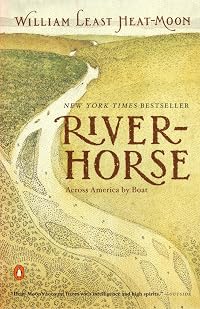
This isn't the kind of travelogue I'm used to reading. I've read a lot of William Least Heat-Moon and Bill Bryson - both of them concentrate on the interesting places and people that they meet on their journeys. I don't think McMurtry speaks more than six times in this book. He's an old Cowboy, that's for sure. He digs silence and I think he comments at some point that Steinbeck's "Travels with Charley" would have been better if he'd left the damn dog at home.
McMurry is probably one of the last living people who has gone on an American cattle drive. His first was at the age of four. Cattle went from being driven on the range to driven on highways, and so did McMurtry. The majority of this book is his ruminations and memories of places show more he's been and people he's met, things he's done and things he's seen. Sounds slow and boring, right?
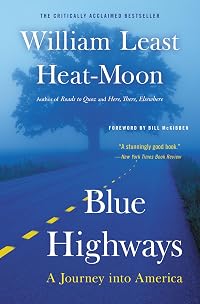
Nope! It was a good quick read, but entirely engaging. What i enjoyed best about it (and I don't know how McMurtry would feel about this) is when he muses about different travel writers. He talks about books that he's read and other writers he's met - I started out keeping a mental list and eventually started keeping a written list on the inside of the back cover. Roads is an incredible Reader's Advisory tool for travel books - even the ones he doesn't personally like! His complaining about William Least Heat-Moon is what made me go and pick up Blue Highways, one of my all time favorite books. show less
McMurry is probably one of the last living people who has gone on an American cattle drive. His first was at the age of four. Cattle went from being driven on the range to driven on highways, and so did McMurtry. The majority of this book is his ruminations and memories of places show more he's been and people he's met, things he's done and things he's seen. Sounds slow and boring, right?
Nope! It was a good quick read, but entirely engaging. What i enjoyed best about it (and I don't know how McMurtry would feel about this) is when he muses about different travel writers. He talks about books that he's read and other writers he's met - I started out keeping a mental list and eventually started keeping a written list on the inside of the back cover. Roads is an incredible Reader's Advisory tool for travel books - even the ones he doesn't personally like! His complaining about William Least Heat-Moon is what made me go and pick up Blue Highways, one of my all time favorite books. show less
I enjoy traveling. McMurtry's non-fiction travel book turned out to be a disappointment for me. He doesn't attempt to cover every highway or state in his travels, but instead of getting out on the interesting roads, he sticks to the Interstate Highway System for the most part. Then on top of that, he just drives -- sometimes 800 miles or so in a single day. He doesn't take time to savor the experience. About the only stop he made was at Hemingway's house in Key West. During the rest of the book, he sometimes reminisces about another time he was in the area and visited something. The book just kind of fell flat. He did drive through my area, but besides commenting on how awful the road construction was, he only made some remarks about show more James Agee as he drove through Knoxville. I doubt I'll try to read anything else by McMurtry. I'm not into westerns, and his non-fiction doesn't make the grade either. show less
Although Larry McMurtry had already driven many roads in the U.S. he decided in 1998 that before the 20th century came to it's end he wanted to drive through the country again, "from border to border and beach to beach." His first foray was in January when he drove the 35 (I35) from Duluth to Oklahoma City. There would be seven more trips during the year. Usually the trip began by flying into the city where the trip would begin, and when he got home he would pull out his Atlas and begin planning the next leg. Along the way we get McMurtry's thoughts and maybe some history, maybe the name of of a well known person including writers from that state or city. What I really like about McMurtry's writing are the comments he makes as a show more bookman.
I'm glad I read this but I didn't think the last few trips were as interesting as the first. But then, I tend to get tired of a trip before it's over. show less
I'm glad I read this but I didn't think the last few trips were as interesting as the first. But then, I tend to get tired of a trip before it's over. show less
Members
- Recently Added By
Lists

Non-Fiction Worth Reading
1,015 works; 261 members
Author Information

96+ Works 43,332 Members
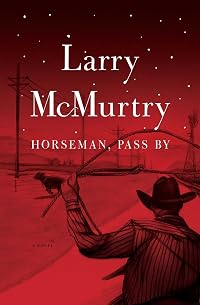
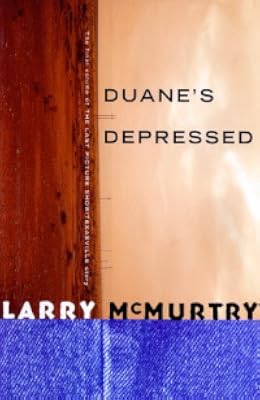
Larry McMurtry, winner of the Pulitzer Prize for Fiction, among other awards, is the author of twenty-four novels, two collections of essays, two memoirs, more than thirty screenplays, & an anthology of modern Western fiction. He lives in Archer City, Texas. (Publisher Provided) Novelist Larry McMurtry was born June 3, 1936 in Wichita Falls, show more Texas. He received a B.A. from North Texas State University in 1958, an M.A. from Rice University in 1960, and attended Stanford University. He married Josephine Ballard in 1959, divorced in 1966, and had one son, folksinger James McMurtry. Until the age of 22, McMurtry worked on his father's cattle ranch. When he was 25, he published his first novel, "Horseman, Pass By" (1961), which was turned into the Academy Award-winning movie Hud in 1962. "The Last Picture Show" (1966) was made into a screenplay with Peter Bogdanovich, and the 1971 movie was nominated for eight Oscars, including one for best screenplay adaptation. "Terms of Endearment" (1975) received little attention until the movie version won five Oscars, including Best Picture, in 1983. McMurtry's novel "Lonesome Dove" (1985) won the Pulitzer Prize in 1986 and the Spur Award and was followed by two popular TV miniseries. The other titles in the Lonesome Dove Series are "Streets of Laredo" (1993), "Dead Man's Walk" (1995), and "Comanche Moon" (1997). The other books in his Last Picture Show Trilogy are "Texasville" (1987) and "Duane's Depressed" (1999). McMurtry suffered a heart attack in 1991 and had quadruple-bypass surgery. Following that, he suffered from severe depression and it was during this time he wrote "Streets of Laredo," a dark sequel to "Lonesome Dove." His companion Diana Ossana, helping to pull him out of his depression, collaborated with him on "Pretty Boy Floyd" (1994) and "Zeke and Ned" (1997). He co-won the Best Screenplay Golden Globe and the Academy Award for Best Adapted Screenplay for Brokeback Mountain in 2006. He made The New York Times Best Seller List with his title's Custer and The Last Kind Words Saloon. McMurtry is considered one of the country's leading antiquarian book dealers. (Bowker Author Biography) show less
Classifications
- Genres
- Travel, Nonfiction, General Nonfiction, Biography & Memoir
- DDC/MDS
- 917.304929 — History & geography Geography & travel Geography of and travel in North America United States subdivisions and modified standard subdivisions Travel; guidebooks 1901- 1953-2001 1993-2001
- LCC
- E169 .Z82 .M39 — History of the United States United States General
- BISAC
Statistics
- Members
- 538
- Popularity
- 55,324
- Reviews
- 14
- Rating
- (3.16)
- Languages
- English
- Media
- Paper, Ebook
- ISBNs
- 8
- ASINs
- 5