
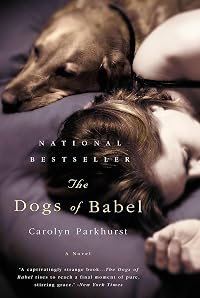
The Dogs of Babel
by Carolyn Parkhurst
On This Page
Description
Fiction. Literature. Mystery. A poignant and beautiful debut novel explores a man's quest to unravel the mystery of his wife's death with the help of the only witness--their Rhodesian ridgeback, Lorelei.Tags
Recommendations







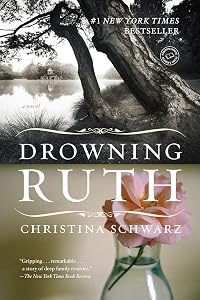
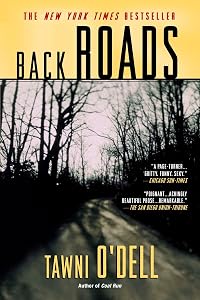
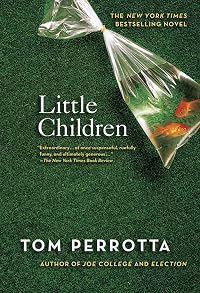

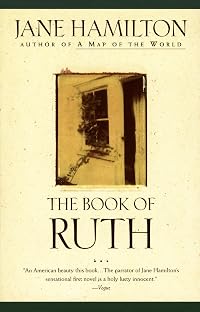










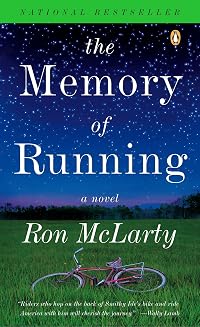



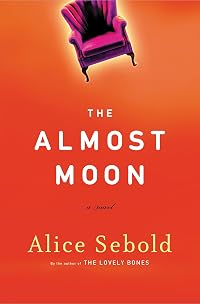
Member Recommendations

Member Reviews
Linguistics professor Paul Iverson comes home one day to find his wife, Lexy, lying dead below the apple tree. The only witness is his Rhodesian Ridgeback, Lorelei. Did Lexy fall from the tree or did she commit suicide? What was she even doing up in the apple tree? After the police rule it an accident, Paul sets out to try to teach Lorelei to speak so she can tell him what she witnessed that afternoon. During Paul's crusade to make Lorelei speak we see events from the past tell a story of how Paul and Lexy meet and fell in love. There are many beautifully written flashbacks, detailing Lexy and Paul relationship.
Paul is a pretty tragic character. You can see him working through his grief and it makes him change and do things he might show more not consider doing otherwise. For the most part, this is a story narrated by Paul and he and Lorelei are the main characters. There are other side characters in this book but Paul and Lorelei are the ones to tell the story. The whole plot was the mystery of Lexy's death, but I think that it also included the emotions and grieving process Paul was going through. It shows what a person devastated by grief might do to find out what happened, even trying to teach his dog to speak. Desperation makes people do strange things.
There are some tough subjects in this book including suicide, animal cruelty and violence. The animal cruelty is sad and sometimes described vividly and difficult to read about. The writing was very emotional and a week after finishing it, I'm still thinking about it. In the end the mystery is solved. Paul understands the truth behind his wife's death and comes to terms with it but I continued to wonder if the real victim was Lorelei.
I thought the story was beautiful and heartbreaking. It had an interesting concept and one I've never thought of before. It's part mystery and part love story and the author entwines both of them in a very convincing way. The story explores relationships at their best and often worst moments. More than a love story between Paul and his wife, it's also a story about a man in the depths of despair and the comfort he gets from his only confidant, the family pet. show less
Paul is a pretty tragic character. You can see him working through his grief and it makes him change and do things he might show more not consider doing otherwise. For the most part, this is a story narrated by Paul and he and Lorelei are the main characters. There are other side characters in this book but Paul and Lorelei are the ones to tell the story. The whole plot was the mystery of Lexy's death, but I think that it also included the emotions and grieving process Paul was going through. It shows what a person devastated by grief might do to find out what happened, even trying to teach his dog to speak. Desperation makes people do strange things.
There are some tough subjects in this book including suicide, animal cruelty and violence. The animal cruelty is sad and sometimes described vividly and difficult to read about. The writing was very emotional and a week after finishing it, I'm still thinking about it. In the end the mystery is solved. Paul understands the truth behind his wife's death and comes to terms with it but I continued to wonder if the real victim was Lorelei.
I thought the story was beautiful and heartbreaking. It had an interesting concept and one I've never thought of before. It's part mystery and part love story and the author entwines both of them in a very convincing way. The story explores relationships at their best and often worst moments. More than a love story between Paul and his wife, it's also a story about a man in the depths of despair and the comfort he gets from his only confidant, the family pet. show less
This was an odd reading experience. The book was recommended to me by a friend, but it had been standing on my shelf for over a year, I think, before I finally picked it up. And I didn't expect to like it; I thought the premise of the story was odd and it'd turn out to be a sappy, too-pathetic look back of a husband who's grieving for his wife. Well, it's a good thing I'm not always right.
The story goes as follows: after the death of his wife, a linguistics professor believes the only way to find out the truth about his wife's death is to teach their dog to talk, because she was with his wife when she died. While doing so, he reminisces about his life with his wife.
Even despite my doubts, I enjoyed this book from the beginning, because show more it flows. Flowing really is the best expression; it's a pleasure to read, and I felt like I was floating over the pages. The writing felt very soft - this was one of the instances where the writing felt very tangible. (I know this sounds strange, but for me that's the best way to put it.)
And again, despite my doubts there were many passages I underlined and even more where I could've done so. The love Paul Iverson felt for his wife feels very real, as does his grief, and his slow coming to terms with what happened. His project with his dog, bringing with it something really creepy and disturbing, never quite seemed like a fool's errand for me. It was something for him to focus on, although I see why other people - especially scientists - might find it worrying. But it was interesting to read about what he was trying to do (and not).
It's also a very, very female book, at least it felt like that to me. It'd be interesting to see whether other people feel the same, although I can only think of one person who might be interested to read it, and she's a woman. But that kind of thing isn't bad. It had the same feel to it like "The Myth of You & Me", I think; the ease with which I read it definitely reminded me of that book.
So yeah, I really loved it. It's a beautiful story about love, loss and grief. And thus, probably, life. show less
The story goes as follows: after the death of his wife, a linguistics professor believes the only way to find out the truth about his wife's death is to teach their dog to talk, because she was with his wife when she died. While doing so, he reminisces about his life with his wife.
Even despite my doubts, I enjoyed this book from the beginning, because show more it flows. Flowing really is the best expression; it's a pleasure to read, and I felt like I was floating over the pages. The writing felt very soft - this was one of the instances where the writing felt very tangible. (I know this sounds strange, but for me that's the best way to put it.)
And again, despite my doubts there were many passages I underlined and even more where I could've done so. The love Paul Iverson felt for his wife feels very real, as does his grief, and his slow coming to terms with what happened. His project with his dog, bringing with it something really creepy and disturbing, never quite seemed like a fool's errand for me. It was something for him to focus on, although I see why other people - especially scientists - might find it worrying. But it was interesting to read about what he was trying to do (and not).
It's also a very, very female book, at least it felt like that to me. It'd be interesting to see whether other people feel the same, although I can only think of one person who might be interested to read it, and she's a woman. But that kind of thing isn't bad. It had the same feel to it like "The Myth of You & Me", I think; the ease with which I read it definitely reminded me of that book.
So yeah, I really loved it. It's a beautiful story about love, loss and grief. And thus, probably, life. show less
I happened to be reading "Beyond Words: What Animals Think and Feel," a soon-to-be published book by Carl Safina, and Steven Pinker's "The Language Instinct" at the same time I read Carolyn Parkhurst's 2003 novel "The Dogs of Babel." Pinker quotes the tower of Babel story from the book of Genesis in his chapter, called "The Tower of Babel," about the incredible number of languages, many of them radically different from each other, spoken by human beings around the globe. Safina writes about how animals, without using words or speech as we know it, nevertheless manage to communicate amazingly complex messages to each other. Campbell's monkeys, for example, have one alarm call that means a leopard has been spotted in the distance and show more another that means the leopard is nearby. Other monkeys react very differently to the two distinct messages.
Parkhurst's novel has more to do with the communication between species, namely between humans and dogs. Paul Iverson is a linguist who comes home to find that his wife, Lexy, has fallen from the top of a tree and died. Was it an accident or suicide? Why would she have climbed a tree? The only witness was her dog, Lorelei. In his grief, Paul, a student of languages, determines to try to find a way for Lorelei to tell him what happened. His research gets him involved with an underground group of amateur scientists attempting to use surgical means to enable dogs to talk. One thing Lorelei is able to communicate to Paul is her extreme fear of these strange people.
Things get a bit weird, but fortunately Paul has his memories of his life with Lexy, a strange, tortured artist who specialized in masks, plus a bookcase in which she had apparently rearranged all the books just before her death. Might there be a message here more revealing than anything Lorelei might be able to communicate?
All three of these books are about communication, whether from one person to another, one animal to another or one species to another. Yet Parkhurst's novel is not just about what is said but also, perhaps more significantly, about what could be said but isn't. show less
Parkhurst's novel has more to do with the communication between species, namely between humans and dogs. Paul Iverson is a linguist who comes home to find that his wife, Lexy, has fallen from the top of a tree and died. Was it an accident or suicide? Why would she have climbed a tree? The only witness was her dog, Lorelei. In his grief, Paul, a student of languages, determines to try to find a way for Lorelei to tell him what happened. His research gets him involved with an underground group of amateur scientists attempting to use surgical means to enable dogs to talk. One thing Lorelei is able to communicate to Paul is her extreme fear of these strange people.
Things get a bit weird, but fortunately Paul has his memories of his life with Lexy, a strange, tortured artist who specialized in masks, plus a bookcase in which she had apparently rearranged all the books just before her death. Might there be a message here more revealing than anything Lorelei might be able to communicate?
All three of these books are about communication, whether from one person to another, one animal to another or one species to another. Yet Parkhurst's novel is not just about what is said but also, perhaps more significantly, about what could be said but isn't. show less
The premise: a man's wife is at home with her dog. She falls out of a tree to her death. The dog was the only witness. The man, a linguistics professor, embarks on a mission to try to teach the dog to talk, in order to get the truth about his wife's death. It sounds silly, but it isn't. It's a little like In the Lake of the Woods, another unresolved death story. And it's a story about people, and animals, and how far you will go, how far you CAN go, to communicate, or to get an answer - and whether, if an answer is gotten, it will change anything.
Paul's wife Lexy is dead, fallen from an apple tree in their back yard. The police believe it was an accident, but Paul isn't so sure, and he desperately wants to know exactly what happened that day. But the only witness was their dog, Lorelei. So Paul becomes convinced that all he needs to do is to find a way for Lorelei to talk.
It's hard to know quite what to think about this one. The whole talking-dog obsession is honestly pretty ridiculous, as are the weird clues Paul ultimately follows to draw conclusions about what happened. Plus, the dead wife herself, who we learn about through Paul's memories and flashbacks, has a little too much of the manic pixie dreamgirl about her for my taste, even if she's a manic pixie with something of show more a dark side.
None of this feels like it ought to add up to a good story. But Parkhurst's writing is so good that she darned near pulls it off. She has a real talent for including little details that feel devastatingly real, and for insightful descriptions of what things like grief and depression and desperation feel like.
Rating: I don't at all know how to rate this mixture of the brilliant and the kind-of-dumb, but I guess I'll go with a 3.5/5 show less
It's hard to know quite what to think about this one. The whole talking-dog obsession is honestly pretty ridiculous, as are the weird clues Paul ultimately follows to draw conclusions about what happened. Plus, the dead wife herself, who we learn about through Paul's memories and flashbacks, has a little too much of the manic pixie dreamgirl about her for my taste, even if she's a manic pixie with something of show more a dark side.
None of this feels like it ought to add up to a good story. But Parkhurst's writing is so good that she darned near pulls it off. She has a real talent for including little details that feel devastatingly real, and for insightful descriptions of what things like grief and depression and desperation feel like.
Rating: I don't at all know how to rate this mixture of the brilliant and the kind-of-dumb, but I guess I'll go with a 3.5/5 show less
Every once in a while, I come across a novel that causes me to throw some side-eye the author’s way. The most recent novel to do this is The Dogs of Babel by Carolyn Parkhurst.
The Dogs of Babel is the story of linguist Paul Iverson, who calls home one day to find out his wife Lexy is dead. The only witness to her death is their dog, Lorelei, and so Paul sets out to teach the dog to speak so he can find out what really happened.
Now I’d first heard of Babel on a screenwriting website. It seems someone adapted the book and the resulting screenplay was so good, it made that year’s Black List. Reportedly, they were looking for an A-list actor for the role of Paul and blah blah bliggity blue. The way the story had been reported, I show more thought Babel was going to be a comedy of some sort. Anyway, when I’d found the novel at my new favorite book store Book Off, I decided to pick it up. What the hey, the premise was certainly intriguing. Unfortunately, what made for an intriguing premise turned out to be a patience-testing exercise in banality.
First, the novel actually spends precious little time exploring Paul efforts to teach Lorelei to speak. It is, in fact, a meditation on Paul’s relationship with Lexy. How it came to be, how their love progressed, and how it may (or may not) have impacted the events of Lexy’s last day alive. I admit, the meeting between the two characters was cute – it’s the very definition of “meet cute,” if you ask me – but as we move forward, it becomes abundantly clear that Lexy is, excuse the phrase, fucking insane.
Lexy designs custom masks for a living, and is several years younger than Paul. She’s impulsive, spontaneous, and off her rocker. On their first date, she convinces Paul to drive from wherever they live (Virginia, I think) to Disney World. She also states that they cannot eat dinner because dinner always comes at the end of every date. So each meal consists of appetizers, snacks, and the like. I suppose this was an effort to make Lexy seem quirky; instead, she came off as a loon.
Throughout the novel, Lexy has emotional outbursts, and they grow increasingly violent. In one scene, after Paul offers a slight bit of criticism on her latest work, Lexy takes a knife to the mask, completely destroying it before crumpling into a sobbing ball of delirium.
It was hard for me to truly understand why Paul was so in love with her. Sure, love doesn’t always make sense, especially to those on the outside looking in. But that’s just one of the missteps Parkhurst makes here. She doesn’t make us understand why Paul is so devoted to Lexy. He just is. That’s just not enough.
Oh, yeah, we almost forgot about the dog. There’s a tiny bit of subplot thrown in about a secret society of people dedicated to “canine communication,” an unseemly lot who have no qualms about butchering dogs in an effort to see their goals come to fruition. Interestingly enough, it’s the only part of the novel that generates any excitement. But it also feels somewhat tacked on, a throwaway bit that Parkhurst included because, hey, this is supposed to be a novel about teaching a dog to talk.
The Dogs of Babel disappoints because Paul gets no closer to understanding his wife – her life or her death – come the end of the novel. And as for Lorelei, well, let’s just say she won’t be much assistance in helping Paul figure things out.
No, we’re not given hard and fast answers, and I recognize that’s how it is sometimes. But we’re also left without any resolution, without any closure. It feels like a huge waste of time. And that’s why, in the end, this novel is simply not satisfying. Though it purports to be a tale of communication and understanding, The Dogs of Babel ultimately has nothing at all to say. show less
The Dogs of Babel is the story of linguist Paul Iverson, who calls home one day to find out his wife Lexy is dead. The only witness to her death is their dog, Lorelei, and so Paul sets out to teach the dog to speak so he can find out what really happened.
Now I’d first heard of Babel on a screenwriting website. It seems someone adapted the book and the resulting screenplay was so good, it made that year’s Black List. Reportedly, they were looking for an A-list actor for the role of Paul and blah blah bliggity blue. The way the story had been reported, I show more thought Babel was going to be a comedy of some sort. Anyway, when I’d found the novel at my new favorite book store Book Off, I decided to pick it up. What the hey, the premise was certainly intriguing. Unfortunately, what made for an intriguing premise turned out to be a patience-testing exercise in banality.
First, the novel actually spends precious little time exploring Paul efforts to teach Lorelei to speak. It is, in fact, a meditation on Paul’s relationship with Lexy. How it came to be, how their love progressed, and how it may (or may not) have impacted the events of Lexy’s last day alive. I admit, the meeting between the two characters was cute – it’s the very definition of “meet cute,” if you ask me – but as we move forward, it becomes abundantly clear that Lexy is, excuse the phrase, fucking insane.
Lexy designs custom masks for a living, and is several years younger than Paul. She’s impulsive, spontaneous, and off her rocker. On their first date, she convinces Paul to drive from wherever they live (Virginia, I think) to Disney World. She also states that they cannot eat dinner because dinner always comes at the end of every date. So each meal consists of appetizers, snacks, and the like. I suppose this was an effort to make Lexy seem quirky; instead, she came off as a loon.
Throughout the novel, Lexy has emotional outbursts, and they grow increasingly violent. In one scene, after Paul offers a slight bit of criticism on her latest work, Lexy takes a knife to the mask, completely destroying it before crumpling into a sobbing ball of delirium.
It was hard for me to truly understand why Paul was so in love with her. Sure, love doesn’t always make sense, especially to those on the outside looking in. But that’s just one of the missteps Parkhurst makes here. She doesn’t make us understand why Paul is so devoted to Lexy. He just is. That’s just not enough.
Oh, yeah, we almost forgot about the dog. There’s a tiny bit of subplot thrown in about a secret society of people dedicated to “canine communication,” an unseemly lot who have no qualms about butchering dogs in an effort to see their goals come to fruition. Interestingly enough, it’s the only part of the novel that generates any excitement. But it also feels somewhat tacked on, a throwaway bit that Parkhurst included because, hey, this is supposed to be a novel about teaching a dog to talk.
The Dogs of Babel disappoints because Paul gets no closer to understanding his wife – her life or her death – come the end of the novel. And as for Lorelei, well, let’s just say she won’t be much assistance in helping Paul figure things out.
No, we’re not given hard and fast answers, and I recognize that’s how it is sometimes. But we’re also left without any resolution, without any closure. It feels like a huge waste of time. And that’s why, in the end, this novel is simply not satisfying. Though it purports to be a tale of communication and understanding, The Dogs of Babel ultimately has nothing at all to say. show less
From the first page I really liked this book. It was different. The approach was fresh, the style good, and the subject matter grabbed my attention. I usually don’t reveal what happens in a book, but when it happens on the first page I consider it fair game.
The main character’s wife climbs up an apple tree, falls, and dies. The only witness was their dog. Being a professor of linguistics, the bereaved husband decides to take a leave of absence from his teaching position in order to teach the dog to talk, so that he can find out what really happened the day his wife died.
It seems outlandish because it is. At the same time, the characters are so well developed and the writing so clean that you don’t feel like you’re reading show more something crazy. About two thirds through the book, the plot takes a twist that I didn’t enjoy. It was a necessary turn; it moves the book along and brings the story full circle. However, if the author had found another way of doing this, The Dogs of Babel may have made it to my top ten favorite novels of all time. I would recommend this book, five stars. show less
The main character’s wife climbs up an apple tree, falls, and dies. The only witness was their dog. Being a professor of linguistics, the bereaved husband decides to take a leave of absence from his teaching position in order to teach the dog to talk, so that he can find out what really happened the day his wife died.
It seems outlandish because it is. At the same time, the characters are so well developed and the writing so clean that you don’t feel like you’re reading show more something crazy. About two thirds through the book, the plot takes a twist that I didn’t enjoy. It was a necessary turn; it moves the book along and brings the story full circle. However, if the author had found another way of doing this, The Dogs of Babel may have made it to my top ten favorite novels of all time. I would recommend this book, five stars. show less
Members
- Recently Added By
Lists

Novels featuring language professionals
98 works; 12 members

BingoDOG - Animals in Adult Fiction
78 works; 19 members

Animals in the Title
498 works; 11 members
Talk Discussions
Past Discussions
Man try learn why wife suicide. Tries to get dog to talk. Dog only witness. in Name that Book (January 2020)
Author Information

5+ Works 4,996 Members
Carolyn Parkhurst was born in Manchester, New Hampshire on January 18, 1971. She received her B.A. from Wesleyan University and her M.F.A. in creative writing from American University. Her books include The Dogs of Babel, which is known as Lorelei's Secret in the UK; Lost and Found; The Nobodies Album; Harmony, and a children's book, Cooking with show more Henry and Elliebelly. (Bowker Author Biography) show less
Awards and Honors
Distinctions
Common Knowledge
- Canonical title
- The Dogs of Babel
- Original publication date
- 2003-06-13
- People/Characters
- Lexy Ransome; Lorelei, a dog; Paul Iverson
- Important places
- Florida, USA; Louisiana, USA; New Orleans, Louisiana, USA; Orange County, Florida, USA; Orlando, Florida, USA; Walt Disney World, Orlando, Florida, USA
- Related movies
- Dogs of Babel (2013 | IMDb)
- Dedication
- For Evan, with all my love
- First words
- Here is what we know, those of us who can speak to tell a story: On the afternoon of October 24, my wife, Lexy Ransome, climbed to the top of the apple tree in our backyard and fell to her death.
- Last words
- (Click to show. Warning: May contain spoilers.)And I find, more and more, as the days go by and the balm of my forgiveness washes over the cracked and parched surface of my heart, I find that remembering her as she was is a gift I can give us both.
- Publisher's editor
- Muchnick, Asya
- Blurbers
- Quindlen, Anna; Fisher, Barbara; Dooley, Susan; Morris, Holly J.; Marlowe, Kimberly B.; Kersten, Denise (show all 24); Maslin, Janet; Hardigg, Viva; Graver, Elizabeth; Waldman, Amy; Falkenstein, Linda; Weitzman, Elizabeth; McCann, Richard; Lord, M. G.; Huntley, Kristine; Dykstra, Katherine; Searles, John; Glendenning, Karin; Fisher, Alice; Schroeder, Heather Lee; Moyer, Kermit; Hoffert, Barbara; Labiner, Norah; McDonald, Jay
Classifications
Statistics
- Members
- 3,058
- Popularity
- 5,755
- Reviews
- 122
- Rating
- (3.53)
- Languages
- 10 — Chinese, Dutch, English, German, Italian, Norwegian (Bokmål), Russian, Spanish, Turkish, Portuguese (Portugal)
- Media
- Paper, Audiobook, Ebook
- ISBNs
- 34
- ASINs
- 15