We Go In A Circle
by Peggy Perry Anderson
On This Page
Description
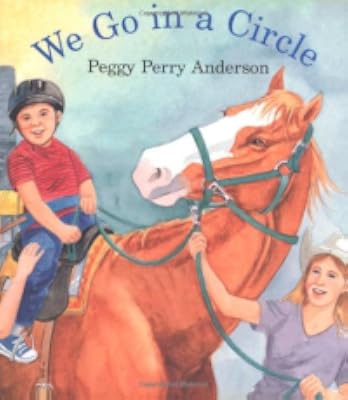
An injured race horse is rehabilitated to carry riders in hippo therapy--horseback riding used as physical therapy.Tags
Recommendations










Member Reviews
This book is told from an ex-racehorse's perspective. The horse injured his leg during a race, and they sent him away to another barn. He becomes part of the Hippo Camp project. He continues to walk in a circle, but he travels with disabled children on his back instead of a jockey. He makes them feel special and important just the way racing made him feel. Although he doesn't race anymore, he feels special and important because of the way he makes the children smile.
Told from a horse's perspective. The horse goes from being a racehorse to a therapy horse. The circular pattern takes us from the horse feeling special and important when winning races to making others feel special and important by giving them rides. It also takes us from going in a circle on the racetrack to going in a circle at the therapy ranch.
I enjoyed that the author used the POV of the horse versus human, which is almost always the case. The horse was a racehorse who got injured and couldn't race anymore. The horse was brought to another farm, and on that farm, the horse assists children in Hippo Therapy. Hippo therapy is using horseback riding as physical therapy. At the end of the story, the horse mentions many people with different types of disabilities come to ride on her to feel better. The author did an excellent job turning this story from sad to a happy one.
"We Go In A Circle" is about a racehorse hurting his leg, causing him to not race anymore and be moved to a barn. At this new place, the people took care of him and made his leg better. The horse soon realizes that people can ride him again: children who have physical and mental disabilities. This is a form of physical therapy called Hippo therapy. With every rider he has, he makes sure they smile, feel special, and feel like a winner. Overall, this book was very great to read. It portrays children in wheelchairs, children who can't speak, etc. It portrays different children with different disabilities having the opportunity to ride a horse and the illustrations definitely show how happy it makes them to do this. I would definitely read show more this book with my own students to educate them on the fact that people with disabilities can do activities just like people who are able bodied. show less
I LOVED this book. Not only does the book address the disabilities in humans, but talks about the disabilities in animals too. Told from the perspective of the horse, the reader gains a new appreciation for service animals. This horse was a prize winning race horse who is no longer able to compete due to an injury. He now works as a service animal, sir all types of disabled children, from those who can't walk to those who can't see, the rouse rides them all in circles. Through giving these children rides, he learns what is truly important (helping people) and learns to stop being bitter and appreciate what he can do.
Race horses go in circle. They race to win. This gives readers an idea of how an injured race horse may continue to have purpose. That purpose could be Hippo therapy, which is horseback riding used as physical therapy. This particular horse is introduced to children and people with disabilities. People who may not speak, walk and/or see. Race horses feel special when they win, and they can make people feel special by simply existing.
The horse who tells the tale used to be a race horse. When he won, he felt important and special. One day he hurt his leg and was sent to a farm to live. When his leg healed, he gave rides to children with disabilities so they would feel special and important as well.
I thought it was interesting to show Hippo Therapy from a horse's perspective. The author provides the benefits of this therapy at the back of the book for those who'd like to learn more. The artwork is beautiful and detailed, but it does lack racial diversity. There are one or two sentences per page, with most of the focus being on the images of the children riding the horses.
I thought it was interesting to show Hippo Therapy from a horse's perspective. The author provides the benefits of this therapy at the back of the book for those who'd like to learn more. The artwork is beautiful and detailed, but it does lack racial diversity. There are one or two sentences per page, with most of the focus being on the images of the children riding the horses.
Members
- Recently Added By
Author Information
11 Works 493 Members
Classifications
Statistics
- Members
- 74
- Popularity
- 425,009
- Reviews
- 26
- Rating
- (4.28)
- Languages
- English
- Media
- Paper, Ebook
- ISBNs
- 3
- UPCs
- 1
- ASINs
- 1