
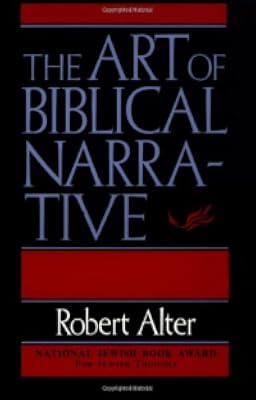
The Art of Biblical Narrative
by Robert Alter
On This Page
Description
From celebrated translator of the Hebrew Bible Robert Alter, the classic study of the Bible as literature, a winner of the National Jewish Book Award. Renowned critic and translator Robert Alter's The Art of Biblical Narrative has radically expanded our view of the Bible by recasting it as a work of literary art deserving studied criticism. In this seminal work, Alter describes how the Hebrew Bible's many authors used innovative literary styles and devices such as parallelism, contrastive show more dialogue, and narrative tempo to tell one of the most revolutionary stories of all time: the revelation of a single God. In so doing, Alter shows, these writers reshaped not only history, but also the art of storytelling itself. Robert Alter is Professor of Hebrew and Comparative Literature at the University of California at Berkeley. A member of the American Academy of Arts and Sciences and a recipient of the Robert Kirsch Award for lifetime contributions to American letters, he lives in Berkeley, California. Winner of the National Jewish Book Award for Jewish Thought "A groundbreaking study that encourages us to look beneath the theological surface of the biblical text to glimpse its beating heart."-Jonathan Kirsch, Los Angeles Times "[An] admirable is truly extraordinary that such familiar tales as those of Joseph and David should acquire so much detail and color, as if perfectly restored."-The New York Times "The results of [Alter's] work give the Bible a fresh voice for a new generation of readers."-Christian Science Monitor "This clearly written book should please anyone interested in the fundamentals of storytelling."-The Washington Post. show lessTags
Recommendations


Member Recommendations
Member Reviews
When I was a freshman in high school, my English teacher quipped that [[Edith Hamilton]] was the goddess of Greek mythology. If every pantheon has a scholar that is the god of it, then Robert Alter is the God of the Hebrew Bible. After creating and popularizing literary approaches to the Bible in this book and [The Art of Biblical Poetry], he began his brilliant translations of the Torah, Psalms, Wisdom books, and the one my group read is doing now, [The David Story].
Alter's main point in this careful polemic is that historical-critical scholarship, which dominated biblical scholarship in most of the twentieth century, is unimaginative. It places too much emphasis on the fragmented nature of the Biblical texts, and in doing so overlooks show more the nuances of language and story that unify the tomes. When it sees two different writing styles, it automatically assumes that there are multiple sources at work, rather than that one author or authorial school intentionally changed voices. The closest it ever got to literary criticism, form criticism, only created categories to place different texts in, without exploring the dynamics of how the author employed or refused to employ the genre. By assuming that the text is fragmentary and often not well-wrought, it denigrates the text.
Alter seeks to restore the genius of the writers of the Hebrew Bible not from an a priori religious framework of inspiration, but by close readings of pericopes demonstrating the subtleties of the Biblical tales that previous scholarship, done by historians and archaeologists rather than literary critics, did not pick up on. Alter situates his analysis of the literary techniques and forms of the Hebrew Bible in the overarching theological problematic of the monotheistic revolution: how do God and man interact? The Bible everywhere explores the tension between God's perfect plan and man's uncertain agency, between God's certain knowledge and man's chaotic uncertainty, between the seeming contradiction of a Godly determinism and the basic human impulse to free will. The Bible explores this not just in its content, but in its use of narrative style, dialogue, repetition, and type-scenes.
In chapter two, Alter begins his scrutiny of narrative by looking at the difference between ancient polytheistic myth and the Bible. The difference is that the pagan world of myth had a stable closure, and stories were tied to orality, to repetition, to ritual. Hebrew narrative has an indeterminacy to it, as the stories are ambiguous, leave things unsaid, and leave the reader with multiple meanings available. (This underdetermined nature of Biblical narrative was likely what led to later midrashic traditions.) He compares the creation narrative of J starting in Genesis 2:4 with the Enuma Elish, and finds that humanity in Genesis has a "morally problematic interiority," made in the image of God but also autonomous, that is not in the Babylonian creation myth. This indeterminacy and element of the chaotic humanness (which the reader always lives in) plays out in the Bible's depiction of history, which oscillates between God's hand being clearly at work (Esther) and human drama taking the spotlight (Deueteronomistic history), with no book being completely at one extreme or the other. The Hebrews were writing neither history nor fiction, but "fictionalized history" with conscious artistic intent. This fiction written in order to explore history plays out most fully in the David saga, which Alter compares to Shakespeare's fictionalized versions of English history. In its deep characterization and portrayal of the human, Alter sees in the Bible a possible birth of fiction.
The third chapter moves onto type-scenes, archetypal repetitions of events that formed part of the unspoken artistic conventions of Biblical narrative. Since we don't know of any ancient Hebrew literary theory, we can only guess what these conventions might be. These type-scenes, such as the hero's betrothal played out in Moses, Jacob, and Samson, are consciously varied to let the reader infer aspects of the particular hero of that story. For example, whereas Moses' betrothal begins with him defending helpless women and properly meeting the bride's father, Samson bluntly desires a foreign woman and simply demands his parents secure her. Moses' near-perfect morality contrasts with Samson's hot-headed and cocky swag, both here and everywhere else in their stories. These repeated type-scenes capture the cyclical rhythm of God's activity in history - the saga of human life, of following and forgetting God, of birth and death.
In chapter four, Alter makes a fascinating assertion about Biblical narration: it is scant. The reader learns far more about characters through dialogue and reported action than through an omniscient narrator's epithetic labeling. This is unique to the Bible; Homer has long monologue rather than dialogue. By focusing the reader on dialogue, the emphasis becomes characters' reactions to events rather than the events themselves. And not knowing about a character's interior motives leaves us wondering about them, leaves us in the human's-eye view of uncertainty rather than the God's-eye view of omniscience about the character. This emphasis on the spoken word even evokes the theology that as God creates and reveals with words, so God-imaged humanity reveals and creates with words. The reader of Biblical narrative is advised to look closely at the dialogue. Does a character speak in lofty near-verse or in brief, slangy utterances? When does the narrator transition between his voice and the dialogue, what is being emphasized in doing so? The narrator's hands-off treatment, prefiguring modern novels, lets human agency express itself in the midst of a God-driven world.
But not only are type-scenes repeated. Repetition moves up a scale, from words, motifs, themes, and sequences of actions, up to type-scenes. As Biblical narrative moves on, it adds new connotations and meanings to repeated units, as they evoke their past instantiations. Just as God's orderly pattern of words created an orderly universe, so God's word is repeated and made sense of in the context of Biblical narrative. For example, the motif of water repeats in Moses' life, from the water he was put in at birth to the water he draws from the stone in the desert. Elsewhere in the Bible, water will evoke Moses and how water both let them escape from Egypt and prevented them from entering Canaan. Not only is repetition key in the Bible, but so is lack of repetition - say a type-scene of a hero is omitted from one hero's story - or difference from the usual way of repeating a unit. Dialogues can be repeated by characters saying the same words but with different intentions. As Alter says, the Biblical narratives are not merely conveying information, they are using language - the vehicle of the story - as an intrinsic part of what is being narrated.
Despite the fact that little explicit characterization is done in the Bible (remember: dialogue-focused), characters still seem fully fleshed out. How? Alter explores this in the sixth chapter. Though the Biblical narrator is almost always omniscient, we only see glimpses of this, and are instead given information about a character indirectly through actions and words. Looking at when a narrator chooses to reveal their knowledge can tell us a lot about the content. For example, when David is coming to power, we only hear his public speeches and actions. Yet the narrator reveals Saul's internal motives and crazed thoughts. Only later in the David saga do we see the complex man behind the public image. This reticence to share leaves the reader both wondering about the characters (remember: human's-eye view) and allows the characters to develop. There are no Homeric epithets in the Bible.
Alter then returns to the historical-critical scholars for the seventh chapter, on "composite artistry." What is a "book" in the Bible? Can any one book be set apart from the others, or are the boundaries too porous? Is any book unified, or is it a patchwork of different authors? In what I consider the most brilliant chapter of the book, Alter finds a middle road: yes, there are differing voices and styles in the Bible, and there is a multiplicity. But the final redactors also used literary genius in bringing these different accounts together. For example, the surface contradiction between the Priestly creation's simultanous creation of man and woman and the Yahwist's creation of woman from man are in fact complementary. The Yahwist perspective coming from sexism paints women as inferior, as helpers for the men who do the important things in society. The Priestly account recognizes that women are mens' equal in morality, in strength, in intelligence. Together these provide two contrasting and complementary perspectives that can both be found elsewhere in the Bible. Same with the tension between P's rhymic, orderly, rational creation emphasizing God and J's chaotic creation emphasizing man and his free will. What seems like a contradiction - or elsewhere in the Bible, seems like sloppy editing - is only so due to the reader's inability to read literary nuances. Narrative structure allows for these "montage of views arranged in sequence" concerning God's agency vs. humanity's, the universe's chaos and its order, and the messy human drama of history and God's divine plan. Literature is paradoxical as is human life.
Last but not least, Alter examines how Biblical narrative is a form of knowledge. It reveals a fund of experience, of human life, that is both the same and wildly different from the 21st-century North American reader's. The narrator only lets us learn what he wants us to learn. The narrator's relation to the reader is like God's relation to humanity - only allowing the recipient to have some knowledge, but also forcing them to think things out for themselves. Alter looks at the scenes where Joseph re-encounters his brothers, showing his Joseph's motives are both clear and unclear. The reader, putting herself in this story and all the others of the Bible, begins to see how to relate to God in her human uncertainty and chaos. The Bible's artistry, first seen as a rejection of a purely didactic purpose, turns out to have theological import.
This multiplicity of meanings, this ongoing human saga, is what attracts me to the Bible. The Hebrew Bible far more than the New Testament contains a complete portrait of a human society, of people experiencing human dramas, of the mundane aspects of life apart from the specifically religious. Alter's book hit me like dynamite opening new caves to explore in my ongoing quest to dive into sacred texts. His ability to convey literary nuances while not expecting the reader to know Hebrew is even more amazing. My only complaint is that the book is a bit dated. The second edition only updated a few things here and there, and did not take into account all the scholarship in literary criticism and the Bible that has happened in the thirty years since Alter published his book. Still, this book is worth its weight in gold, and belongs on every literature lover's shelf. show less
Alter's main point in this careful polemic is that historical-critical scholarship, which dominated biblical scholarship in most of the twentieth century, is unimaginative. It places too much emphasis on the fragmented nature of the Biblical texts, and in doing so overlooks show more the nuances of language and story that unify the tomes. When it sees two different writing styles, it automatically assumes that there are multiple sources at work, rather than that one author or authorial school intentionally changed voices. The closest it ever got to literary criticism, form criticism, only created categories to place different texts in, without exploring the dynamics of how the author employed or refused to employ the genre. By assuming that the text is fragmentary and often not well-wrought, it denigrates the text.
Alter seeks to restore the genius of the writers of the Hebrew Bible not from an a priori religious framework of inspiration, but by close readings of pericopes demonstrating the subtleties of the Biblical tales that previous scholarship, done by historians and archaeologists rather than literary critics, did not pick up on. Alter situates his analysis of the literary techniques and forms of the Hebrew Bible in the overarching theological problematic of the monotheistic revolution: how do God and man interact? The Bible everywhere explores the tension between God's perfect plan and man's uncertain agency, between God's certain knowledge and man's chaotic uncertainty, between the seeming contradiction of a Godly determinism and the basic human impulse to free will. The Bible explores this not just in its content, but in its use of narrative style, dialogue, repetition, and type-scenes.
In chapter two, Alter begins his scrutiny of narrative by looking at the difference between ancient polytheistic myth and the Bible. The difference is that the pagan world of myth had a stable closure, and stories were tied to orality, to repetition, to ritual. Hebrew narrative has an indeterminacy to it, as the stories are ambiguous, leave things unsaid, and leave the reader with multiple meanings available. (This underdetermined nature of Biblical narrative was likely what led to later midrashic traditions.) He compares the creation narrative of J starting in Genesis 2:4 with the Enuma Elish, and finds that humanity in Genesis has a "morally problematic interiority," made in the image of God but also autonomous, that is not in the Babylonian creation myth. This indeterminacy and element of the chaotic humanness (which the reader always lives in) plays out in the Bible's depiction of history, which oscillates between God's hand being clearly at work (Esther) and human drama taking the spotlight (Deueteronomistic history), with no book being completely at one extreme or the other. The Hebrews were writing neither history nor fiction, but "fictionalized history" with conscious artistic intent. This fiction written in order to explore history plays out most fully in the David saga, which Alter compares to Shakespeare's fictionalized versions of English history. In its deep characterization and portrayal of the human, Alter sees in the Bible a possible birth of fiction.
The third chapter moves onto type-scenes, archetypal repetitions of events that formed part of the unspoken artistic conventions of Biblical narrative. Since we don't know of any ancient Hebrew literary theory, we can only guess what these conventions might be. These type-scenes, such as the hero's betrothal played out in Moses, Jacob, and Samson, are consciously varied to let the reader infer aspects of the particular hero of that story. For example, whereas Moses' betrothal begins with him defending helpless women and properly meeting the bride's father, Samson bluntly desires a foreign woman and simply demands his parents secure her. Moses' near-perfect morality contrasts with Samson's hot-headed and cocky swag, both here and everywhere else in their stories. These repeated type-scenes capture the cyclical rhythm of God's activity in history - the saga of human life, of following and forgetting God, of birth and death.
In chapter four, Alter makes a fascinating assertion about Biblical narration: it is scant. The reader learns far more about characters through dialogue and reported action than through an omniscient narrator's epithetic labeling. This is unique to the Bible; Homer has long monologue rather than dialogue. By focusing the reader on dialogue, the emphasis becomes characters' reactions to events rather than the events themselves. And not knowing about a character's interior motives leaves us wondering about them, leaves us in the human's-eye view of uncertainty rather than the God's-eye view of omniscience about the character. This emphasis on the spoken word even evokes the theology that as God creates and reveals with words, so God-imaged humanity reveals and creates with words. The reader of Biblical narrative is advised to look closely at the dialogue. Does a character speak in lofty near-verse or in brief, slangy utterances? When does the narrator transition between his voice and the dialogue, what is being emphasized in doing so? The narrator's hands-off treatment, prefiguring modern novels, lets human agency express itself in the midst of a God-driven world.
But not only are type-scenes repeated. Repetition moves up a scale, from words, motifs, themes, and sequences of actions, up to type-scenes. As Biblical narrative moves on, it adds new connotations and meanings to repeated units, as they evoke their past instantiations. Just as God's orderly pattern of words created an orderly universe, so God's word is repeated and made sense of in the context of Biblical narrative. For example, the motif of water repeats in Moses' life, from the water he was put in at birth to the water he draws from the stone in the desert. Elsewhere in the Bible, water will evoke Moses and how water both let them escape from Egypt and prevented them from entering Canaan. Not only is repetition key in the Bible, but so is lack of repetition - say a type-scene of a hero is omitted from one hero's story - or difference from the usual way of repeating a unit. Dialogues can be repeated by characters saying the same words but with different intentions. As Alter says, the Biblical narratives are not merely conveying information, they are using language - the vehicle of the story - as an intrinsic part of what is being narrated.
Despite the fact that little explicit characterization is done in the Bible (remember: dialogue-focused), characters still seem fully fleshed out. How? Alter explores this in the sixth chapter. Though the Biblical narrator is almost always omniscient, we only see glimpses of this, and are instead given information about a character indirectly through actions and words. Looking at when a narrator chooses to reveal their knowledge can tell us a lot about the content. For example, when David is coming to power, we only hear his public speeches and actions. Yet the narrator reveals Saul's internal motives and crazed thoughts. Only later in the David saga do we see the complex man behind the public image. This reticence to share leaves the reader both wondering about the characters (remember: human's-eye view) and allows the characters to develop. There are no Homeric epithets in the Bible.
Alter then returns to the historical-critical scholars for the seventh chapter, on "composite artistry." What is a "book" in the Bible? Can any one book be set apart from the others, or are the boundaries too porous? Is any book unified, or is it a patchwork of different authors? In what I consider the most brilliant chapter of the book, Alter finds a middle road: yes, there are differing voices and styles in the Bible, and there is a multiplicity. But the final redactors also used literary genius in bringing these different accounts together. For example, the surface contradiction between the Priestly creation's simultanous creation of man and woman and the Yahwist's creation of woman from man are in fact complementary. The Yahwist perspective coming from sexism paints women as inferior, as helpers for the men who do the important things in society. The Priestly account recognizes that women are mens' equal in morality, in strength, in intelligence. Together these provide two contrasting and complementary perspectives that can both be found elsewhere in the Bible. Same with the tension between P's rhymic, orderly, rational creation emphasizing God and J's chaotic creation emphasizing man and his free will. What seems like a contradiction - or elsewhere in the Bible, seems like sloppy editing - is only so due to the reader's inability to read literary nuances. Narrative structure allows for these "montage of views arranged in sequence" concerning God's agency vs. humanity's, the universe's chaos and its order, and the messy human drama of history and God's divine plan. Literature is paradoxical as is human life.
Last but not least, Alter examines how Biblical narrative is a form of knowledge. It reveals a fund of experience, of human life, that is both the same and wildly different from the 21st-century North American reader's. The narrator only lets us learn what he wants us to learn. The narrator's relation to the reader is like God's relation to humanity - only allowing the recipient to have some knowledge, but also forcing them to think things out for themselves. Alter looks at the scenes where Joseph re-encounters his brothers, showing his Joseph's motives are both clear and unclear. The reader, putting herself in this story and all the others of the Bible, begins to see how to relate to God in her human uncertainty and chaos. The Bible's artistry, first seen as a rejection of a purely didactic purpose, turns out to have theological import.
This multiplicity of meanings, this ongoing human saga, is what attracts me to the Bible. The Hebrew Bible far more than the New Testament contains a complete portrait of a human society, of people experiencing human dramas, of the mundane aspects of life apart from the specifically religious. Alter's book hit me like dynamite opening new caves to explore in my ongoing quest to dive into sacred texts. His ability to convey literary nuances while not expecting the reader to know Hebrew is even more amazing. My only complaint is that the book is a bit dated. The second edition only updated a few things here and there, and did not take into account all the scholarship in literary criticism and the Bible that has happened in the thirty years since Alter published his book. Still, this book is worth its weight in gold, and belongs on every literature lover's shelf. show less
Robert Alter believes that employing the tools of literary analysis to the scriptures increases the reader’s enjoyment of them, leading to a deeper grasp of their theological and moral message. He demonstrates this by examining various episodes, many of them taken from the masterful story cycles centered on Jacob, Joseph, and David. Alter shows how careful attention to keywords, the alternation between dialogue and narration, and compression or expansion of the narrative pace can reveal insight into the character and motivation of those who appear.
This reading is enriched by the insights both of medieval commentators such as Abraham Ibn Ezra and Rashi and more recent proponents of the historical-critical method. These might seem show more opposing approaches since the medieval commentators seem the epitome of those who treat the scriptures as the unitary revelation of the divine word. At the same time, more recent scholars are often criticized for an approach that atomizes the text, breaking it into small units from disparate sources. Yet, both approaches can yield significant insights that inform and supplement what the careful reader finds.
In one instance, Alter surprised me with the explanatory power of his literary analysis. One stumbling block for modern readers of scriptures is that some incidents are told twice. For example, there are two contradictory accounts of how the young David came to the attention of King Saul. A common explanation for this is the redactor uses material from two sources that have not been fully integrated. This might be true as far as it goes, says Alter, but it doesn’t explain why a redactor, who shows his mastery and artistry in other ways, chose to present these accounts successively. He suggests the reason is to create a collage analogous to cubist painting. The result is to illuminate different aspects of David’s character and the manner of his election as king. Alter suggests the redactor is aware that he has thereby complicated his account, but then again, people and their motives are complicated.
By the end of the book, when Alter unequivocally characterizes Bible narrative as fiction, this in no way seems dismissive. On the contrary, he reckons with its full power to bring “us into an inner zone of complex knowledge about human nature, divine intentions, and the strong but sometimes confusing threads that bind the two.”
This book is densely written and, therefore, not an easy read, but it is accessible enough to repay attentive reading. show less
This reading is enriched by the insights both of medieval commentators such as Abraham Ibn Ezra and Rashi and more recent proponents of the historical-critical method. These might seem show more opposing approaches since the medieval commentators seem the epitome of those who treat the scriptures as the unitary revelation of the divine word. At the same time, more recent scholars are often criticized for an approach that atomizes the text, breaking it into small units from disparate sources. Yet, both approaches can yield significant insights that inform and supplement what the careful reader finds.
In one instance, Alter surprised me with the explanatory power of his literary analysis. One stumbling block for modern readers of scriptures is that some incidents are told twice. For example, there are two contradictory accounts of how the young David came to the attention of King Saul. A common explanation for this is the redactor uses material from two sources that have not been fully integrated. This might be true as far as it goes, says Alter, but it doesn’t explain why a redactor, who shows his mastery and artistry in other ways, chose to present these accounts successively. He suggests the reason is to create a collage analogous to cubist painting. The result is to illuminate different aspects of David’s character and the manner of his election as king. Alter suggests the redactor is aware that he has thereby complicated his account, but then again, people and their motives are complicated.
By the end of the book, when Alter unequivocally characterizes Bible narrative as fiction, this in no way seems dismissive. On the contrary, he reckons with its full power to bring “us into an inner zone of complex knowledge about human nature, divine intentions, and the strong but sometimes confusing threads that bind the two.”
This book is densely written and, therefore, not an easy read, but it is accessible enough to repay attentive reading. show less
What an amazing work. This is a guidebook on biblical narrative for a reader or student of the bible who already has a solid understanding of the biblical stories and narratives. Without a foundational understanding of the Bible, reading this book will leave you lost. Capitalizing on his knowledge of ancient Hebrew and the incredible density with which concepts are depicted in Hebrew, this content is dense. He often uses two or three five-dollar words to convey a complex concept that has you pause and re-read to get the gist.
Robert Alter is masterful. I was first introduced to Alter during a free, online course from Hillsdale College on Genesis as Biblical Narrative, taught by Dr. Justin Jackson. He referenced Alter’s translation of show more the Hebrew Bible — his life’s work of 22 years in the making — and brought pieces of Genesis to life like I couldn’t imagine. Seeking more from Alter, I picked up this book along with his 3-volume Hebrew Bible.
Alter is like a tour guide here. Although I think of the tour as one through a familiar series of rooms, wallpapered with intricate images and textures. As he leads us along through familiar biblical passages and stories, he peels back pieces of what we thought we knew to reveal layer upon layer of interrelated stories, characters and nuances. Many times, the layers beneath turn out to be layers we thought we’d seen in another room at another time.
Several of Alter’s concepts seem self-evident but when he starts to unpack them, he causes you to recall pieces of scripture you thought you understood. Did you realize that the boys deceiving Jacob with Joseph’s tunic is a recurrence of Jacob’s masquerading as Esau to deceive his father with a garment? Or how about the extensive use of dialogue to flesh out the details of complex biblical stories, nearly devoid of the narration we see in modern writing? I suppose I noticed the dialogue but didn’t realize how pervasive is was until it was called to my attention.
Alter’s familiarity with the Hebrew language reveals incredible intricacies of the original biblical language you can’t get with our modern translations. He calls our words that sound like one another or are based on the same root word and blows your mind with a connection you didn’t know existed.
Overall I gave this book 4/5 stars, only because it was quite arduous to read. This is not easy stuff. I learned so much, but it reads like a textbook with a lot of impressive words and concepts. At only 235 pages, it reads like a book of twice that length. And let me reiterate, you’ll be pulling your hair out if you haven’t read the referenced sections of the Bible at least a half a dozen times. show less
Robert Alter is masterful. I was first introduced to Alter during a free, online course from Hillsdale College on Genesis as Biblical Narrative, taught by Dr. Justin Jackson. He referenced Alter’s translation of show more the Hebrew Bible — his life’s work of 22 years in the making — and brought pieces of Genesis to life like I couldn’t imagine. Seeking more from Alter, I picked up this book along with his 3-volume Hebrew Bible.
Alter is like a tour guide here. Although I think of the tour as one through a familiar series of rooms, wallpapered with intricate images and textures. As he leads us along through familiar biblical passages and stories, he peels back pieces of what we thought we knew to reveal layer upon layer of interrelated stories, characters and nuances. Many times, the layers beneath turn out to be layers we thought we’d seen in another room at another time.
Several of Alter’s concepts seem self-evident but when he starts to unpack them, he causes you to recall pieces of scripture you thought you understood. Did you realize that the boys deceiving Jacob with Joseph’s tunic is a recurrence of Jacob’s masquerading as Esau to deceive his father with a garment? Or how about the extensive use of dialogue to flesh out the details of complex biblical stories, nearly devoid of the narration we see in modern writing? I suppose I noticed the dialogue but didn’t realize how pervasive is was until it was called to my attention.
Alter’s familiarity with the Hebrew language reveals incredible intricacies of the original biblical language you can’t get with our modern translations. He calls our words that sound like one another or are based on the same root word and blows your mind with a connection you didn’t know existed.
Overall I gave this book 4/5 stars, only because it was quite arduous to read. This is not easy stuff. I learned so much, but it reads like a textbook with a lot of impressive words and concepts. At only 235 pages, it reads like a book of twice that length. And let me reiterate, you’ll be pulling your hair out if you haven’t read the referenced sections of the Bible at least a half a dozen times. show less
A great surprise for me in this book was that it didn't just explain how the Biblical texts were written; it also explains what those texts were trying to say. Alter argues, for example, that many of the Biblical authors wrote in prose because it was a flexible medium that allowed them to explore the moral complexities of men and women. Prose gave them a way to delineate "the wayward paths of human freedom, the quirks and contradictions of men and women seen as moral agents and complex centers of motive and feeling." Not all of the Bible, of course, was written in prose, but by beginning to embrace that form of writing, the Bible moved away from myth and toward narrative -- toward the writing of both history and fiction. Here, writes show more Alter, you can even find "the first great anticipation of novelistic dialogue."
These prose narrations, Alter argues, are filled with a tension inherent in Biblical monotheism: a tension between "human imperfection and divine perfection." These are messy stories about human beings in relationship with the divine. In pagan myths, divinities were far from perfect, while mortals were sometimes semi-divine, so the space between mortal and immortal was not as wide as in monotheism, in which very flawed people are called to believe and to live by divinely given laws: and in that tension, we have the morally messy narratives of the Bible. Alter puts it much better: monotheism "repeatedly had to make sense of the intersection of incompatibles—the relative and the absolute, human imperfection and divine perfection, the brawling chaos of historical experience and God’s promise to fulfill a design in history."
That's the theme that comes out in Alter's close readings of narratives about compelling figures like Jacob, Joseph, King David. All the while, he's showing how meaning is attached to literary questions such as: why a person's inner thought should be reported as speech; why there is, to modern ears, a great deal of repetition in these stories; why some things are understated, or not reported at all, when we would expect them to be; how conventions like the betrothal-type scene are used, and deliberately varied or subverted, to produce different meanings; etc.
At times this can get a little technical and it does require some patience, but I found it accessible, and I have no formal literary training.
The chapter I found perhaps the most eye-opening and helpful was "The Techniques of Repetition." The one I found least persuasive was "Composite Artistry," which deals with the fact that the Bible was put together by more authors and editors than was traditionally believed: this means that one must be careful about attributing a single artistic vision to any particular text within the Bible. Alter addresses this, but one chapter is not quite enough to deal with such a large issue.
All in all, however, this is well worth reading for anyone interested in the Bible and it has things to say to virtually anyone interested in literature. show less
These prose narrations, Alter argues, are filled with a tension inherent in Biblical monotheism: a tension between "human imperfection and divine perfection." These are messy stories about human beings in relationship with the divine. In pagan myths, divinities were far from perfect, while mortals were sometimes semi-divine, so the space between mortal and immortal was not as wide as in monotheism, in which very flawed people are called to believe and to live by divinely given laws: and in that tension, we have the morally messy narratives of the Bible. Alter puts it much better: monotheism "repeatedly had to make sense of the intersection of incompatibles—the relative and the absolute, human imperfection and divine perfection, the brawling chaos of historical experience and God’s promise to fulfill a design in history."
That's the theme that comes out in Alter's close readings of narratives about compelling figures like Jacob, Joseph, King David. All the while, he's showing how meaning is attached to literary questions such as: why a person's inner thought should be reported as speech; why there is, to modern ears, a great deal of repetition in these stories; why some things are understated, or not reported at all, when we would expect them to be; how conventions like the betrothal-type scene are used, and deliberately varied or subverted, to produce different meanings; etc.
At times this can get a little technical and it does require some patience, but I found it accessible, and I have no formal literary training.
The chapter I found perhaps the most eye-opening and helpful was "The Techniques of Repetition." The one I found least persuasive was "Composite Artistry," which deals with the fact that the Bible was put together by more authors and editors than was traditionally believed: this means that one must be careful about attributing a single artistic vision to any particular text within the Bible. Alter addresses this, but one chapter is not quite enough to deal with such a large issue.
All in all, however, this is well worth reading for anyone interested in the Bible and it has things to say to virtually anyone interested in literature. show less
51. [The Art of Biblical Narrative (Revised and Updated)] by Robert Alter (1981, revised and updated in 2011, 248 pages, read Aug 14 – Sept 11)
lilbrattyteen has a spectacular review of this book posted on the LibraryThing.com work page, and manages to highlight all the main points. The main thing I have to add is that this was quite fascinating, but also difficult to read. Robert Alter is thoroughly precise in everything he says, but part of what results are numerous convoluted sentences filled with adverbs and adjectives and multiple comparisons. Sometimes I had to read a sentence of a few times to get the grasp of it.
The basic premise is that the bible has rich assortment of literary elements that get lost when it is evaluated show more primarily in a spiritual, theologically critical, source critical or historical way - the main ways the bible is evaluated. He then goes through the historical books and Job highlighting numerous fundamental literary aspects.
I'll try to briefly highlight three of them...or maybe just quote Alter.
On the key tensions in the narrative. This serves both to make a thought-provoking point and to highlight the difficulty in reading Alter. (i.e. good luck)
The ancient Hebrew writers...seek through the process of narrative realization to reveal the enactment of God's purposes in historical events. This enactment, however, is continuously complicated by a perception of two, approximately parallel, dialectical tensions. One is the tension between the divine plan and the disorderly character of actual historical events, to translate this opposition into specifically biblical terms, between the divine promise and its ostensible failure to be fulfilled; the other is a tension between God's will, His providential guidance, and human freedom, the refractory nature of man
On the intimate link between the language and meaning:
Language in the biblical stories is never conceived as a transparent envelope of the narrated events or an aesthetic embellishment of them but as an integral and dynamic component—an insistent dimension—of what is being narrated. With language God creates the world; through language He reveals his design in history to men.
The most interesting chapter for me may have been on the art of reticence; on how the bible can bring out complex meaning and striking characters through a laconic language and skeletal narration.
But the underlying biblical conception of character as often unpredictable, in some ways impenetrable, constantly emerging from and slipping back into a penumbra of ambiguity, in fact has greater affinity with dominant modern notions than do the habits of conceiving character typical of the Greek epics.
What really stands out to me here is that not only does the Bible have literary elements that can only be observed when looking at in a literary way, but that efforts of decomposing these elements in a literature so different from what we are used to enlightens us in the nature of all literature.
2012
http://www.librarything.com/topic/138560#3699644 show less
lilbrattyteen has a spectacular review of this book posted on the LibraryThing.com work page, and manages to highlight all the main points. The main thing I have to add is that this was quite fascinating, but also difficult to read. Robert Alter is thoroughly precise in everything he says, but part of what results are numerous convoluted sentences filled with adverbs and adjectives and multiple comparisons. Sometimes I had to read a sentence of a few times to get the grasp of it.
The basic premise is that the bible has rich assortment of literary elements that get lost when it is evaluated show more primarily in a spiritual, theologically critical, source critical or historical way - the main ways the bible is evaluated. He then goes through the historical books and Job highlighting numerous fundamental literary aspects.
I'll try to briefly highlight three of them...or maybe just quote Alter.
On the key tensions in the narrative. This serves both to make a thought-provoking point and to highlight the difficulty in reading Alter. (i.e. good luck)
The ancient Hebrew writers...seek through the process of narrative realization to reveal the enactment of God's purposes in historical events. This enactment, however, is continuously complicated by a perception of two, approximately parallel, dialectical tensions. One is the tension between the divine plan and the disorderly character of actual historical events, to translate this opposition into specifically biblical terms, between the divine promise and its ostensible failure to be fulfilled; the other is a tension between God's will, His providential guidance, and human freedom, the refractory nature of man
On the intimate link between the language and meaning:
Language in the biblical stories is never conceived as a transparent envelope of the narrated events or an aesthetic embellishment of them but as an integral and dynamic component—an insistent dimension—of what is being narrated. With language God creates the world; through language He reveals his design in history to men.
The most interesting chapter for me may have been on the art of reticence; on how the bible can bring out complex meaning and striking characters through a laconic language and skeletal narration.
How does the Bible manage to evoke such a sense of depth and complexity in its representation of character with what would seem to be such sparse , even rudimentary means? Biblical narrative offers us, after all, nothing in the way of minute analysis of motives or detailed rendering of mental processes; whatever indications we may be vouchsafed of feeling, attitude, or intention are rather minimal; and we are given only the barest hints about the physical appearance, the tics and gestures, the dress and implements of the characters, the material milieu in which they enact their destinies. In short, all the indicators of nuanced individuality to which the Western literary tradition has accustomed us—preeminently in the novel, but ultimately going back to the Greek epics and romances—would appear to be absent from the Bible.... skipping to the end of chapter...
But the underlying biblical conception of character as often unpredictable, in some ways impenetrable, constantly emerging from and slipping back into a penumbra of ambiguity, in fact has greater affinity with dominant modern notions than do the habits of conceiving character typical of the Greek epics.
What really stands out to me here is that not only does the Bible have literary elements that can only be observed when looking at in a literary way, but that efforts of decomposing these elements in a literature so different from what we are used to enlightens us in the nature of all literature.
2012
http://www.librarything.com/topic/138560#3699644 show less
Summary: The Bible is a work of literary art and needs to be appreciated as such. The examination of the Bible as history has produced an excessive devotion to individual details while missing the beauty and meaning of the unified whole. Literary analysis will lead to a fuller appreciation and understanding.
The best way to understand the narratives are through the lens of fiction. This is not meant to address the historical accuracy of the accounts (though the author does not believe they are accurate). Rather, it provides a lens to understand the story. The characters, the plot, and the setting are all fashioned by the author to amplify the historical significance.
As literature, the Bible contains type-scenes which are formulaic events show more understood by the original audience that gave the author great expressiveness by altering the expectations as needed. These events are more than just sub-genres of literature, though like genres, they need to be understood according to their own rules in order to appreciate their significance and meaning.
Dialogue plays a crucial role in advancing Biblical narratives. Dialogue allows the reader to see the interior life of the main characters. The conventions of dialogue give insight as to the author's purpose in including certain stories.
Repetition is another useful tool. Repetition creates expectations for the reader which can be very useful in emphasizing certain parts of the story. The breaking of patterns can also be useful in providing emphasis.
Biblical narrative is often characterized by ambiguity to a degree that Western literature is unaccustomed. Rather than extensive dialogues with all the details, Biblical authors use terseness as a tool. The reader is expected to engage and supply necessary details. What is unsaid is important.
This tremendous work of literature is the conscientious work of skilled editors. They held multiple traditions, all of which were considered authoritative, and they successfully blended them into compelling, unified narratives. At times, they left conflicting accounts together out of respect for the source material.
Part of the beauty of the narrative is the skillful interplay between the narrator's omniscience and his discovery. Key details are withheld until just the right moment. This creates suspense as well as clues to emphasis.
In summary, modern readers should be examining key words, important and recurring actions, dialogues, and narrations to enter the ancient world that the text emerges from.
Pros: This is a fascinating book with an important message of the value of literary analysis. The examples are well developed and fully support the corresponding point. It is largely accessible to even the amateur.
Cons: The author does not hold to divine inspiration. The author's commitment to later editors makes little sense in light of the artistry of the text.
Evaluation: This is valuable contribution to understanding Old Testament narrative. The insights are genuinely useful and shaping to my approach. show less
The best way to understand the narratives are through the lens of fiction. This is not meant to address the historical accuracy of the accounts (though the author does not believe they are accurate). Rather, it provides a lens to understand the story. The characters, the plot, and the setting are all fashioned by the author to amplify the historical significance.
As literature, the Bible contains type-scenes which are formulaic events show more understood by the original audience that gave the author great expressiveness by altering the expectations as needed. These events are more than just sub-genres of literature, though like genres, they need to be understood according to their own rules in order to appreciate their significance and meaning.
Dialogue plays a crucial role in advancing Biblical narratives. Dialogue allows the reader to see the interior life of the main characters. The conventions of dialogue give insight as to the author's purpose in including certain stories.
Repetition is another useful tool. Repetition creates expectations for the reader which can be very useful in emphasizing certain parts of the story. The breaking of patterns can also be useful in providing emphasis.
Biblical narrative is often characterized by ambiguity to a degree that Western literature is unaccustomed. Rather than extensive dialogues with all the details, Biblical authors use terseness as a tool. The reader is expected to engage and supply necessary details. What is unsaid is important.
This tremendous work of literature is the conscientious work of skilled editors. They held multiple traditions, all of which were considered authoritative, and they successfully blended them into compelling, unified narratives. At times, they left conflicting accounts together out of respect for the source material.
Part of the beauty of the narrative is the skillful interplay between the narrator's omniscience and his discovery. Key details are withheld until just the right moment. This creates suspense as well as clues to emphasis.
In summary, modern readers should be examining key words, important and recurring actions, dialogues, and narrations to enter the ancient world that the text emerges from.
Pros: This is a fascinating book with an important message of the value of literary analysis. The examples are well developed and fully support the corresponding point. It is largely accessible to even the amateur.
Cons: The author does not hold to divine inspiration. The author's commitment to later editors makes little sense in light of the artistry of the text.
Evaluation: This is valuable contribution to understanding Old Testament narrative. The insights are genuinely useful and shaping to my approach. show less
I really enjoyed this book. Alter walks through the literary features of the Hebrew Bible (within the narrative accounts). There are so many great insights in this book.
While Alter identifies the historical impulse behind the biblical text, he doesn't hold up the historicity of everything in the biblical account which I would. However his attention to the literary artistry and examination of the Hebrew idiom and literary conventions (i.e. repetition of key words, variations in repeated words, economic prose, type scenes, etc.) provides great exegetical insights. This is not at all antagonistic to historical and theological reading of the text (in principle, though possible in particulars). The value of this book is that it argues show more persuasively for a close reading of the biblical text. show less
While Alter identifies the historical impulse behind the biblical text, he doesn't hold up the historicity of everything in the biblical account which I would. However his attention to the literary artistry and examination of the Hebrew idiom and literary conventions (i.e. repetition of key words, variations in repeated words, economic prose, type scenes, etc.) provides great exegetical insights. This is not at all antagonistic to historical and theological reading of the text (in principle, though possible in particulars). The value of this book is that it argues show more persuasively for a close reading of the biblical text. show less
Members
- Recently Added By
Lists

Reading list
170 works; 1 member

Top Five Books of 2017
757 works; 231 members

The Great Courses: The Old Testament
78 works; 1 member

Favourite Books
1,817 works; 309 members

Books That Changed Me
157 works; 47 members
Author Information

40+ Works 10,010 Members
Robert Alter is Class of 1937 Professor of Hebrew & Comparative Literature at the University of California, Berkeley. (Bowker Author Biography)
Awards and Honors
Awards
Common Knowledge
- Original title
- The art of biblical narrative
- Original publication date
- 1981
- Dedication
- For Alfred Appel
another kind of plexed artistry - First words
- What role does literary art play in the shaping of biblical narrative?
- Last words
- (Click to show. Warning: May contain spoilers.)..., we shall also come to see more clearly what they mean to tell us about God, man, and the perilously momentous realm of history.
- Blurbers
- Pagels, Elaine; Cameron, J. M.
- Original language*
- Englisch
*Some information comes from Common Knowledge in other languages. Click "Edit" for more information.
Classifications
- Genres
- Religion & Spirituality, Nonfiction, Literature Studies and Criticism
- DDC/MDS
- 221.44 — Religion The Bible Old Testament (Tanakh) Original texts and early versions; Codices Dead Sea Scrolls--Old Testament works in
- LCC
- BS1171.2 .A45 — Philosophy, Psychology and Religion The Bible The Bible Old Testament Works about the Old Testament Criticism and interpretation
- BISAC
Statistics
- Members
- 1,736
- Popularity
- 12,693
- Reviews
- 17
- Rating
- (4.15)
- Languages
- 5 — Dutch, English, French, Italian, Portuguese
- Media
- Paper, Ebook
- ISBNs
- 11
- ASINs
- 8