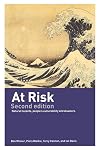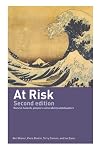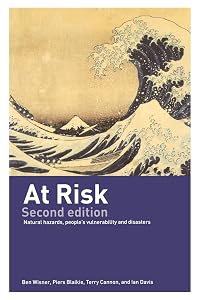
At Risk: Natural Hazards, People's Vulnerability and Disasters
by Ben Wisner
On This Page
Description
The term 'natural disaster' is often used to refer to natural events such as earthquakes, hurricanes or floods. However, the phrase 'natural disaster' suggests an uncritical acceptance of a deeply engrained ideological and cultural myth. At Risk questions this myth and argues that extreme natural events are not disasters until a vulnerable group of people is exposed. The updated new edition confronts a further ten years of ever more expensive and deadly disasters and discusses disaster not show more as an aberration, but as a signal failure of mainstream 'development'. Two analytical models are provided as tools for understanding vulnerability. One links remote and distant 'root causes' to 'unsafe conditions' in a 'progression of vulnerability'. The other uses the concepts of 'access' and 'livelihood' to understand why some households are more vulnerable than others. Examining key natural events andnbsp;incorporating strategies to create a safer world, this revised edition is an important resource for those involved in the fields of environment and development studies. show lessTags
Recommendations







Member Reviews
This report is an interesting evaluation of natural, environmental and socio-economic and political effects relating to how humanity interacts within the framework of disaster hazard, risk and vulnerability. It is essentially aimed at researching academics and those people who may have some form of influence over how governments and/or societies as a whole may plan strategically to react to disasters or potential natural hazards exacerbated by the existence of humans, most often in large numbers in unstable conditions. It aims to educate in order to lessen the effect of hazards on the general population. Unseen hazards, such as chemicals in water and on food are also discussed, but not such things as nuclear war and its aftermath. The show more entirety of the report can be summed up as follows: “Sh*t happens, sometimes it is brought on or made worse by the presence of humans, and in general, different people in different situations are affected differently, some suffering greater hardship than others depending on circumstance. How we as a species, society or individuals prepare for and respond to potential disasters is also directly dependent on circumstance.” Perhaps this is an oversimplification, but that’s what I got out of it. Read if you enjoy a theoretical approach to reality that views things in terms of models so you can then go and argue with other people who may favour another model over the one you do. show less
Ratings
Members
- Recently Added By
Author Information
5 Works 85 Members
Classifications
- Genres
- Nonfiction, Science & Nature, General Nonfiction
- DDC/MDS
- 363.34 — Society, government, & culture Social problems and social services Public Safety - Police, Crime Investigation Terrorism, Disasters, Civil Defense Disaster relief
- LCC
- GB5014 .A82 — Geography, Anthropology and Recreation Physical geography Physical geography Natural disasters
- BISAC
Statistics
- Members
- 55
- Popularity
- 557,006
- Reviews
- 1
- Rating
- (4.00)
- Languages
- English
- Media
- Paper, Ebook
- ISBNs
- 6