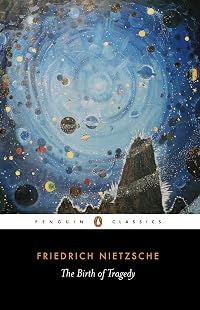
The Birth of Tragedy
by Friedrich Nietzsche 
On This Page
Description
'Yes, what is Dionysian? - This book provides an answer - "a man who knows" speaks in it, the initiate and disciple of his god.'The Birth of Tragedy (1872) is a book about the origins of Greek tragedy and its relevance to the German culture of its time. For Nietzsche, Greek tragedy is the expression of a culture which has achieved a delicate but powerful balance between Dionysian insight into the chaos and suffering whichunderlies all existence and the discipline and clarity of rational show more Apollonian form. In order to promote a return to these values, Nietzsche undertakes a critique of the complacent rationalism of late nineteenth-century German culture and makes an impassioned plea for the regenerative potential ofthe music of Wagner. In its wide-ranging discussion of the nature of art, science and religion, Nietzsche's argument raises important questions about the problematic nature of cultural origins which are still of concern today. show lessTags
Recommendations












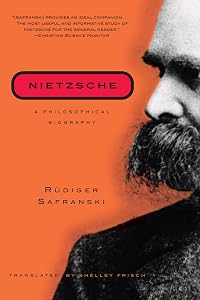


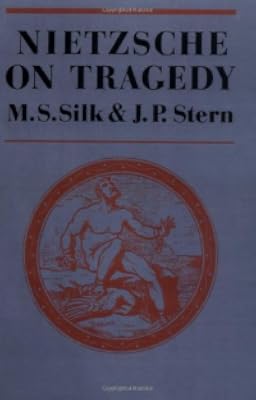




Member Recommendations

Member Reviews
In The Birth of Tragedy Nietzsche not only narrates the origin of tragedy, but he also offers a postmortem that identifies its killers. According to Nietzsche, with Euripides' help and encouragement, Socrates destroyed this pinnacle of Greek culture. However, Nietzsche goes on to predict that Wagnerian opera will bring about its revival, at least in Germany. The ideas of Schopenhauer and Kant indicate that the rationalism that was introduced by Socrates and ultimately led to the abolition of tragedy has run its course and reached its limits, which means that the time is right for tragedy to reappear. Pace logic apart, the thing itself demonstrates that it is fundamentally unknown.
Nietzsche's analysis identifies the Apolline and the show more Dionysian artistic tendencies that are united in Greek tragedy. In contrast to the Dionysian, who offers chaos, intoxication, obscurity, excess, and fusion, the Apolline symbolizes clarity, beauty, order, shape, and individuation. Greek tragedy—at least the works by Aeschylus and Sophocles—exposes its audience to existential horrors like fate's hand, the impotence of even the most admirable people, and the certainty of suffering. It rises above the pit of sorrow and pessimism, however, to affirm life in the end, or at the very least, to affirm aesthetic force and its capacity to redeem pain and suffering, by crafting these brutal facts into a great work of art. show less
Nietzsche's analysis identifies the Apolline and the show more Dionysian artistic tendencies that are united in Greek tragedy. In contrast to the Dionysian, who offers chaos, intoxication, obscurity, excess, and fusion, the Apolline symbolizes clarity, beauty, order, shape, and individuation. Greek tragedy—at least the works by Aeschylus and Sophocles—exposes its audience to existential horrors like fate's hand, the impotence of even the most admirable people, and the certainty of suffering. It rises above the pit of sorrow and pessimism, however, to affirm life in the end, or at the very least, to affirm aesthetic force and its capacity to redeem pain and suffering, by crafting these brutal facts into a great work of art. show less
This the book which ruined Nietzsche's career as a classical philologist. He had been appointed to the Chair of Greek at Basle University aged just 24 (the youngest ever Professor in Classics) and was full of all the impetuousness that youth provides. This book is a product of it, and in reading it one can see all the brash claims that brought Willamowitz, through jealousy, to ruin Nietzsche.
Certainly the history behind the book improves it. And even Nietzsche had to admit that he disagreed with much of the work, hence the much later preface he wrote which is present in the Penguin edition. If it wasn't for this book, however, and his subsequent ousting from Basle, Nietzsche may not have become the great philosopher he is - which is the show more grounding Willamowitz gave in his autobiography to justify his incredibly harsh and insulting rebuttal of the book.
Modern scholarship has now looked with a much more credible eye over this book. Many scholars, viz. Stephen Halliwell, the late W.B. Stanford, Malcolm Heath; are now calling this book misinterpreted and maligned. Indeed the main aim of Nietzsche's book was not to say that the Greek view of life was pessimistic or to explain the origins of Greek tragedy, but to attack the scientific methodology of philology. Yes, his book does support those claims and over one hundred years later people are willing to listen to what he has to say, but philology was Nietzsche's main victim of this book.
I have given it three stars. I agree with his view of philology, but his conclusions are rashly drawn and I don't entirely agree with what he says about the Dionysian-Apolline division in tragedy. show less
Certainly the history behind the book improves it. And even Nietzsche had to admit that he disagreed with much of the work, hence the much later preface he wrote which is present in the Penguin edition. If it wasn't for this book, however, and his subsequent ousting from Basle, Nietzsche may not have become the great philosopher he is - which is the show more grounding Willamowitz gave in his autobiography to justify his incredibly harsh and insulting rebuttal of the book.
Modern scholarship has now looked with a much more credible eye over this book. Many scholars, viz. Stephen Halliwell, the late W.B. Stanford, Malcolm Heath; are now calling this book misinterpreted and maligned. Indeed the main aim of Nietzsche's book was not to say that the Greek view of life was pessimistic or to explain the origins of Greek tragedy, but to attack the scientific methodology of philology. Yes, his book does support those claims and over one hundred years later people are willing to listen to what he has to say, but philology was Nietzsche's main victim of this book.
I have given it three stars. I agree with his view of philology, but his conclusions are rashly drawn and I don't entirely agree with what he says about the Dionysian-Apolline division in tragedy. show less
The Birth of Tragedy is a provocative, energetic, and original thesis, though in many corners it was heretical. I find Nietzsche's arguments plausible, given the evidence available. Plus, as always, he's refreshing to read; he's a gutsy and spiteful philosopher.
If all of that isn't enough to convince people to read this little book, keep in mind the fact that although this was Nietzsche's first published book, the responses to it by other academics was so fierce that—as historians have told us, it completely sabotaged his career as a professor! To understand how and why that happened begins with this book.
If all of that isn't enough to convince people to read this little book, keep in mind the fact that although this was Nietzsche's first published book, the responses to it by other academics was so fierce that—as historians have told us, it completely sabotaged his career as a professor! To understand how and why that happened begins with this book.
With his vivid, passionate language, 19th century German philosopher Fredrich Nietzsche wrote his books as a way to pry open a space in a reader’s psyche, a space empowering an individual to embark on a journey of inner exploration. This is precisely why I think any attempt, no matter how well intended, to rephrase, paraphrase or synopsize Nietzsche, without including a fair amount of Nietzsche’s actual words, is a terrible injustice committed against one of the greatest literary stylists in the modern world. Thus I have included the below direct quotes from the first section of his book to allow Nietzsche, even in this brief review, to speak for himself. Please take my modest comments coupled with each quote as an invitation to show more explore this classic work on your own.
“We shall have gained much for the science of aesthetics, once we perceive not merely by logical inference, but with the immediate certainty of vision, that the continuous development of art is bound up with the Apollonian and Dionysian duality – just as procreation depending on the duality of the sexes.” ---------- Nietzsche saw Greek tragedy as a prime example of how those ancient Greeks actually got it right; those ancients developed an accurate picture of the world as irrational, chaotic, primal Dionysian energy, energy that had to be softened, sweetened and otherwise contained by the Apollonian illusion of order, pattern and predictability (in a tragic play, such things as plot and character) to develop an art form acceptable to the public. The combination and balance of these two forces – chaotic Dionysian and orderly Apollonian – resulted in the Greek tragedy.
“In order to grasp these two tendencies, let us first conceive of them as the separate art worlds of dreams and intoxication.” ---------- The two tendencies are the Apollonian and the Dionysian. The nature of the Apollonian is the dream that the world follows an ordered, harmonious, rational law; the nature of the Dionysian is the world as in the grip of chaotic, dark, vile, irrational forces. The type of art associated with the Apollonian would be Greek sculpture, such as marble statues of gods and goddesses portrayed as beings of great harmony, serenity and proportion. On the other hand, an example of the Dionysian would be a wild intoxicated nocturnal dance were the dancers are goaded into a frenzied swirl by a cacophony of deafening drums and flutes.
“The beautiful illusion of the dream worlds, in the creation of which every man is truly an artist, is the prerequisite of all plastic art.” ---------- As frequently acknowledged, every child is an artist. Indeed, we all in our own way, beginning as children, create a picture world in our minds, featuring beautiful, fantastic illusions: breathtaking glass mountains, carefree, winged creatures soaring in the sky, elaborate castles, worlds of adventure and pleasure free of those irksome burdens such as sickness, hunger, disease, intense pain. It is these very marvelous, fanciful dreams that serve as the foundation for visual artworks created with paints and stone. Sidebar: It is this same artistic, imaginative tendency we all have that enables us to easily construct inner visual pictures as we read a work of fiction. Nietzsche would like us to extend our imaginative capacity, urging us to bring real style to our character and view ourselves as a work of art.
“Philosophical men even have a presentiment that the reality in which we live and have our being is also mere appearance, and that another, quite different reality lies beneath it. Schopenhauer actually indicates as the criterion of philosophical ability the occasional ability to view men and things are mere phantoms or dream images.” ---------- Here Nietzsche is hinting at how philosophy beginning with Socrates and Plato, pushed the chaotic irrational forces of the universe to one side, even calling them phantoms or dream images. What truly matters in this view of the universe is reason. Reason is king. And since reason is at the heart of this philosophic conception of the universe, the very heartbeat of reality, why continue to have tragedy performed, an art form claiming chaos is at the heart of the universe? Nietzsche goes into great detail on how Socratic philosophy brought about the death of Greek tragedy.
“Function of art: to give us a hint of a truth, a truth that the world was chaotic and meaningless but, equally, art had to shield us from this dark, dreadful reality.” ----------- This line of thinking is at the very core of why Nietzsche loved Greek tragedy: the tragic performance would give an audience a glimpse of the true nature of the world’s dark chaos but do it in a way via the dramatic art of plot, character and other theatrical devices to protect, to buffer and safeguard the audience so they could continue living and managing life in their society.
“Thus the aesthetically sensitive man stands in the same relation to the reality of dreams as the philosopher does to the reality of existence; he is a close and willing observer, for these images afford him an interpretation of life, and by reflecting on these processes he trains himself for life.” ---------- As the philosopher uses logic, reason and analysis, so the aesthetically attuned person uses the dream-worlds of sleep, hallucinogens, the arts and creative imagination to explore different dimensions of experience. Nietzsche perceived the dark, chaotic forces of the universe as prominent, at the heart of the heart of life. He could see how these irrational forces could energize human experience rather than driving people down into hopeless despair and renunciation.
“Either under the influence of the narcotic draught, of which the songs of all primitive men and peoples speak, or with the potent coming of spring that penetrates all nature with joy, these Dionysian emotions awake, or as they grow in intensity everything subjective vanishes into complete self-forgetfulness.” -----Here Nietzsche is alluding to our willing surrender of our sense of separate individuality to the swirl of joyful, ecstatic unity with the universe. In our modern world, one could think of a rave concert. Drugs and ecstasy, anyone?
“In song and in dance man expresses himself as a member of a higher community; he has forgotten how to walk and speak and is on the way toward flying into the air, dancing. His very gestures express enchantment.” ---------- Taking the raw, primal energy and filtering it through Apollonian illusion. Here Nietzsche is suggesting art gives shape, form and color; art peddles a certain untruth since ultimately there is only the dark, irrational chaos. But this artistic untruth is completely necessary; otherwise, we couldn’t face the chaos.
“The noblest clay, the most costly marble, man, is here kneaded and cut, and to the sound of the chisel strokes of the Dionysian world-artist rings out the cry of the Eleusinian mysteries: “Do you prostrate yourselves, millions? Do you sense your Maker, world?” ---------- A question worthy of consideration: Is tragedy a method and approach to life that actually works? Perhaps it is time for us modern people to reclaim the power and beauty of tragedy.
*I would like to thank a number of contemporary British philosophers for their podcasts and books on Nietzsche’s philosophy of art and tragedy. Listened to their podcasts repeatedly and reading several of their books over the last few years has really deepened and enriched my understanding and appreciation for this exciting subject. They are: Aaron Ridley, Christopher Janaway, Alex Neill, Simon May and Ken Gemes. show less
With his vivid, passionate language, 19th century German philosopher Fredrich Nietzsche wrote his books as a way to pry open a space in a reader’s psyche, a space empowering an individual to embark on a journey of inner exploration. This is precisely why I think any attempt, no matter how well intended, to rephrase, paraphrase or synopsize Nietzsche, without including a fair amount of Nietzsche’s actual words, is a terrible injustice committed against one of the greatest literary stylists in the modern world. Thus I have included the below direct quotes from the first section of his book to allow Nietzsche, even in this brief review, to speak for himself. Please take my modest comments coupled with each quote as an invitation to show more explore this classic work on your own.
“We shall have gained much for the science of aesthetics, once we perceive not merely by logical inference, but with the immediate certainty of vision, that the continuous development of art is bound up with the Apollonian and Dionysian duality – just as procreation depending on the duality of the sexes.” ---------- Nietzsche saw Greek tragedy as a prime example of how those ancient Greeks actually got it right; those ancients developed an accurate picture of the world as irrational, chaotic, primal Dionysian energy, energy that had to be softened, sweetened and otherwise contained by the Apollonian illusion of order, pattern and predictability (in a tragic play, such things as plot and character) to develop an art form acceptable to the public. The combination and balance of these two forces – chaotic Dionysian and orderly Apollonian – resulted in the Greek tragedy.
“In order to grasp these two tendencies, let us first conceive of them as the separate art worlds of dreams and intoxication.” ---------- The two tendencies are the Apollonian and the Dionysian. The nature of the Apollonian is the dream that the world follows an ordered, harmonious, rational law; the nature of the Dionysian is the world as in the grip of chaotic, dark, vile, irrational forces. The type of art associated with the Apollonian would be Greek sculpture, such as marble statues of gods and goddesses portrayed as beings of great harmony, serenity and proportion. On the other hand, an example of the Dionysian would be a wild intoxicated nocturnal dance were the dancers are goaded into a frenzied swirl by a cacophony of deafening drums and flutes.
“The beautiful illusion of the dream worlds, in the creation of which every man is truly an artist, is the prerequisite of all plastic art.” ---------- As frequently acknowledged, every child is an artist. Indeed, we all in our own way, beginning as children, create a picture world in our minds, featuring beautiful, fantastic illusions: breathtaking glass mountains, carefree, winged creatures soaring in the sky, elaborate castles, worlds of adventure and pleasure free of those irksome burdens such as sickness, hunger, disease, intense pain. It is these very marvelous, fanciful dreams that serve as the foundation for visual artworks created with paints and stone. Sidebar: It is this same artistic, imaginative tendency we all have that enables us to easily construct inner visual pictures as we read a work of fiction. Nietzsche would like us to extend our imaginative capacity, urging us to bring real style to our character and view ourselves as a work of art.
“Philosophical men even have a presentiment that the reality in which we live and have our being is also mere appearance, and that another, quite different reality lies beneath it. Schopenhauer actually indicates as the criterion of philosophical ability the occasional ability to view men and things are mere phantoms or dream images.” ---------- Here Nietzsche is hinting at how philosophy beginning with Socrates and Plato, pushed the chaotic irrational forces of the universe to one side, even calling them phantoms or dream images. What truly matters in this view of the universe is reason. Reason is king. And since reason is at the heart of this philosophic conception of the universe, the very heartbeat of reality, why continue to have tragedy performed, an art form claiming chaos is at the heart of the universe? Nietzsche goes into great detail on how Socratic philosophy brought about the death of Greek tragedy.
“Function of art: to give us a hint of a truth, a truth that the world was chaotic and meaningless but, equally, art had to shield us from this dark, dreadful reality.” ----------- This line of thinking is at the very core of why Nietzsche loved Greek tragedy: the tragic performance would give an audience a glimpse of the true nature of the world’s dark chaos but do it in a way via the dramatic art of plot, character and other theatrical devices to protect, to buffer and safeguard the audience so they could continue living and managing life in their society.
“Thus the aesthetically sensitive man stands in the same relation to the reality of dreams as the philosopher does to the reality of existence; he is a close and willing observer, for these images afford him an interpretation of life, and by reflecting on these processes he trains himself for life.” ---------- As the philosopher uses logic, reason and analysis, so the aesthetically attuned person uses the dream-worlds of sleep, hallucinogens, the arts and creative imagination to explore different dimensions of experience. Nietzsche perceived the dark, chaotic forces of the universe as prominent, at the heart of the heart of life. He could see how these irrational forces could energize human experience rather than driving people down into hopeless despair and renunciation.
“Either under the influence of the narcotic draught, of which the songs of all primitive men and peoples speak, or with the potent coming of spring that penetrates all nature with joy, these Dionysian emotions awake, or as they grow in intensity everything subjective vanishes into complete self-forgetfulness.” -----Here Nietzsche is alluding to our willing surrender of our sense of separate individuality to the swirl of joyful, ecstatic unity with the universe. In our modern world, one could think of a rave concert. Drugs and ecstasy, anyone?
“In song and in dance man expresses himself as a member of a higher community; he has forgotten how to walk and speak and is on the way toward flying into the air, dancing. His very gestures express enchantment.” ---------- Taking the raw, primal energy and filtering it through Apollonian illusion. Here Nietzsche is suggesting art gives shape, form and color; art peddles a certain untruth since ultimately there is only the dark, irrational chaos. But this artistic untruth is completely necessary; otherwise, we couldn’t face the chaos.
“The noblest clay, the most costly marble, man, is here kneaded and cut, and to the sound of the chisel strokes of the Dionysian world-artist rings out the cry of the Eleusinian mysteries: “Do you prostrate yourselves, millions? Do you sense your Maker, world?” ---------- A question worthy of consideration: Is tragedy a method and approach to life that actually works? Perhaps it is time for us modern people to reclaim the power and beauty of tragedy.
*I would like to thank a number of contemporary British philosophers for their podcasts and books on Nietzsche’s philosophy of art and tragedy. Listened to their podcasts repeatedly and reading several of their books over the last few years has really deepened and enriched my understanding and appreciation for this exciting subject. They are: Aaron Ridley, Christopher Janaway, Alex Neill, Simon May and Ken Gemes. show less
It is not without significant trepidation that I approach this otherwise short work. The cover blurb tells me this is a "challenging work". Never truer words written. I was comfortable with the basic premise of Nietzsche's later work (written after 1888) - I understand this book represents the starting point for much of Nietzsche's later Apollonian (order) versus Dionysian (chaos) modes, but I was still not convinced about his critical position towards Socrates. How little I knew. There is too much in this work to make coherent comment, but suffice to say if one were to start reading Nietzsche, start with this one. Although it might not make so much sense unless one jumps in later when his ideas are more fully developed. Maybe. The show more thought that wouldn't leave me alone while reading this was Edward de Bono's idea about the Greek Gang of Three (Socrates, Plato, and Aristotle). This really challenged my thinking. At the same time, I can't help but think of the Socrates who was also a soldier and was learning to play music just before he drank the hemlock, whereas Plato as far as I know didn't do anything else and was keen to ban certain types of music. So lumping them altogether al la de Bono might be clever but I am not convinced. I am also not convinced that de Bono (and yes, I am a fan of de Bono) was all that original. This is one of the great wonders of reading the original texts. I did identify with the varieties of self-consciousness versus meta-cognition issues that consistently arise in the work. But I was unprepared for the onslaught of the Fans of Shakespeare that dominate my thoughts recently. To have Carlyle, Bloom, Nietzsche, and then before I have even written this, Oscar Wilde, tell me how important Shakespeare is, and I realise once more how far behind I am in my reading. show less
The Birth of Tragedy is a disquisition on the Hellenic spirit, as expressed in tragedy and music, its remaining legacy, and its origins in the depths of time and consciousness. Nietzsche's philosophy throughout focuses on the aesthetic and its relation to the human condition. He attempts to assign life purpose through the value we gain from aesthetic pleasure, contrasting the opposing but equally necessary Dionysian (emotional, chaotic, communal ) and Appolonian (introspective, rational, high art), forms, into which all aesthetic experience can be divided, providing it is not a mixture of the two, in which case he argues it is not pure art. He writes in a forcefully oratorical style, with florid conviction, which to some extent eclipses show more the deep insights he gives the reader, lending them rhetorical as well as rational weight. show less
Members
- Recently Added By
Lists

Filosofía - Clásicos
217 works; 1 member

German Literature
518 works; 56 members

Harold Bloom - The Western Canon: C. The Democratic Age
336 works; 15 members

Tonikat reading completed on Librarything journals
329 works; 2 members

Books Referenced by Izetbegovic's Islam Between East and West
233 works; 2 members

Mustich's 1000 Books to Read Before You Die: A Life Changing List
1,001 works; 19 members
Author Information

1,382+ Works 78,289 Members
The son of a Lutheran pastor, Friedrich Wilhelm Nietzsche was born in 1844 in Roecken, Prussia, and studied classical philology at the Universities of Bonn and Leipzig. While at Leipzig he read the works of Schopenhauer, which greatly impressed him. He also became a disciple of the composer Richard Wagner. At the very early age of 25, Nietzsche show more was appointed professor at the University of Basel in Switzerland. In 1870, during the Franco-Prussian War, Nietzsche served in the medical corps of the Prussian army. While treating soldiers he contracted diphtheria and dysentery; he was never physically healthy afterward. Nietzsche's first book, The Birth of Tragedy Out of the Spirit of Music (1872), was a radical reinterpretation of Greek art and culture from a Schopenhaurian and Wagnerian standpoint. By 1874 Nietzsche had to retire from his university post for reasons of health. He was diagnosed at this time with a serious nervous disorder. He lived the next 15 years on his small university pension, dividing his time between Italy and Switzerland and writing constantly. He is best known for the works he produced after 1880, especially The Gay Science (1882), Thus Spake Zarathustra (1883-85), Beyond Good and Evil (1886), On the Genealogy of Morals (1887), The Antichrist (1888), and Twilight of the Idols (1888). In January 1889, Nietzsche suffered a sudden mental collapse; he lived the last 10 years of his life in a condition of insanity. After his death, his sister published many of his papers under the title The Will to Power. Nietzsche was a radical questioner who often wrote polemically with deliberate obscurity, intending to perplex, shock, and offend his readers. He attacked the entire metaphysical tradition in Western philosophy, especially Christianity and Christian morality, which he thought had reached its final and most decadent form in modern scientific humanism, with its ideals of liberalism and democracy. It has become increasingly clear that his writings are among the deepest and most prescient sources we have for acquiring a philosophical understanding of the roots of 20th-century culture. (Bowker Author Biography) show less
Friedrich Nietzsche has a Legacy Library. Legacy libraries are the personal libraries of famous readers, entered by LibraryThing members from the Legacy Libraries group.
Some Editions
Awards and Honors
Notable Lists
Series
Belongs to Publisher Series
Work Relationships
Is contained in
The Philosophy of Nietzsche: Thus Spake Zarathustra; Beyond Good and Evil; The Genealogy of Morals; Ecce Homo; The Birth of Tragedy by Friedrich Nietzsche
Schlüsselwerke der Philosophie : die philosophische Basisbibliothek ; mehr als 20.000 Seiten! ; Logik, Ethik, Erkenntni by Mathias Bertram
Die Geburt der Tragödie; Unzeitgemaeße Betrachtungen (mit Texten aus dem Nachlass) by Friedrich Nietzsche
Verita e menzogna: La nascita della tragedia: La filosofia nell'eta tragica dei Greci by Friedrich Nietzsche
Is abridged in
Has as a reference guide/companion
Has as a study
Has as a commentary on the text
Has as a student's study guide
Common Knowledge
- Canonical title
- The Birth of Tragedy
- Original title
- Die Geburt der Tragödie aus dem Geiste der Musik
- Original publication date
- 1872-01-02
- First words
- We shall do a great deal for the science of esthetics, once we perceive not merely by logical inference, but with the immediate certainty of intuition, that the continuous development of art is bound up with the Apollonian... (show all) and Dionysian duality: just as procreation depends on the duality of the sexes, involving perpetual strife with only periodically intervening reconciliations.
- Last words
- (Click to show. Warning: May contain spoilers.)"...But now follow me to a tragic play, and sacrifice with me in the temple of both the deities!"
- Original language*
- Duits
*Some information comes from Common Knowledge in other languages. Click "Edit" for more information.
Classifications
- Genres
- Nonfiction, Philosophy, General Nonfiction, Literature Studies and Criticism
- DDC/MDS
- 111.85 — Philosophy & psychology Metaphysics (existence, purpose, and the nature of reality) Ontology Properties of being Aesthetics
- LCC
- B3313 .G42 .E55 — Philosophy, Psychology and Religion Philosophy (General) By period Modern By region or country
- BISAC
Statistics
- Members
- 2,904
- Popularity
- 6,197
- Reviews
- 29
- Rating
- (3.86)
- Languages
- 23 — Chinese, Czech, Danish, Dutch, English, Estonian, Finnish, French, German, Greek, Hungarian, Italian, Japanese, Latvian, Lithuanian, Norwegian (Bokmål), Polish, Romanian, Russian, Slovenian, Spanish, Turkish, Portuguese (Portugal)
- Media
- Paper, Audiobook, Ebook
- ISBNs
- 162
- UPCs
- 2
- ASINs
- 40