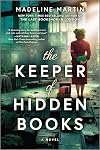
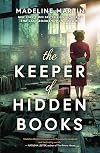
The Keeper of Hidden Books
by Madeline Martin
On This Page
Description
Fiction. Literature. Historical Fiction. HTML:*A BookBub Pick for Best Historical Fiction of Summer 2023*A heartwarming story about the power of books to bring us together, inspired by the true story of the underground library in WWII Warsaw, by the New York Times bestselling author of The Last Bookshop in London.
All her life, Zofia has found comfort in two things during times of hardship: books and her best friend, Janina. But no one could have imagined the horrors of the Nazi occupation show more in Warsaw. As the bombs rain down and Hitler's forces loot and destroy the city, Zofia finds that now books are also in need of saving.
With the death count rising and persecution intensifying, Zofia jumps to action to save her friend and salvage whatever books she can from the wreckage, hiding them away, and even starting a clandestine book club. She and her dearest friend never surrender their love of reading, even when Janina is forced into the newly formed ghetto.
But the closer Warsaw creeps toward liberation, the more dangerous life becomes for the women and their families – and escape may not be possible for everyone. As the destruction rages around them, Zofia must fight to save her friend and preserve her culture and community using the only weapon they have left - literature.
. show less
Tags
Recommendations


Member Reviews
Zofia Nowak and her friends love to read, but in Warsaw in August 1939, reading has become a radical activity. With a Nazi invasion imminent, Zofia and her friends scramble to read as many Hitler-banned books as they can before they’re confiscated. When the Nazi invasion arrives, Zofia and her father hide the banned books beneath the floor in their apartment, hoping to keep them safe until a time when Poland might be free again. When her father, a physician, is taken off to prison along with so many of Warsaw’s intellectual elite and her best friend, Janina, is confined to the Jewish ghetto, Zofia realizes she herself must join the resistance against the Nazis. The Nazis are trying to control the Polish people by controlling the show more ideas they have access to; Zofia and a few other librarians find clever ways to continue getting books into hands and education into minds of the people. As the crackdown against the Jewish people gathers strength, Zofia puts her new skills to work hiding away not only the banned books but also the Jewish people she’s helping to smuggle out of the ghetto. Madeline Martin has created a novel that is both heartbreaking and timely. Through Zofia’s eyes, the reader experiences the agonizing separation of families at the hands of the Nazis and the anger that so many Polish people had to tamp down in order to survive. The fear that so many families must have felt as friends and neighbors disappeared and there was no way to know who might be next was so vividly captured. Through it all, Zofia recognizes the hope and love this beloved clutch of hidden books represents and she knows and understands that love in itself is precisely the reason that Hitler wanted the books stamped out in the first place. Zofia reflects, “Books inspired free thought and empathy, an overall understanding and acceptance of everyone". Those of us living in what has always been a "free world" will find parts of this story difficult to read and even more difficult to understand, but may Heaven forbid this ever happen again! show less
Having read “The Last Bookshop in London,” also by Madeline Martin, I knew I wanted to read this book too. And I’m glad I did. It was disturbingly wonderful. I am in awe of authors like Martin who write historical fiction because, unlike the Stephen Kings and James Pattersons of the literary world, their imaginations make up just half of the work. Martin’s research to make this WWII novel not only entertaining but also informative and educational. Martin tells the story of the Nazi occupation of Poland from 1939 through the war and to the Soviet occupation after the war. It wasn’t until 1989 that Poland was truly free. The story is told through the efforts of the brave Polish book lovers who protected the libraries of Warsaw show more and treated the libraries’ books like their own children. In our own time of book bans and censorship by more than 50 different groups in 140 school districts in 32 states, including Florida, where book bans are common (source: EducationWeek Sept. 22, 2022), Martin’s story is especially important. All book lovers should read this book and be concerned about what the current movement to censor books in schools and public libraries throughout the United States can lead to. show less
4.5⭐️
"Good books were like amazing sunsets or awe inspiring landscapes, better enjoyed with someone else. There was no greater experience in the world than sharing the love of a book, discussing its finer points and reliving the story all over again.”
Meticulously researched and beautifully penned, The Keeper of Hidden Books by Madeline Martin is a remarkable work of historical fiction. Set in Warsaw, Poland between 1939 and 1945, the story is presented from the first-person –perspective of Zofia Nowak, a young girl, a year away from completing her secondary education in 1939 as she lives through the German occupation of Poland. This a story of friendship, loyalty, sacrifice, survival and the power of literature in fostering hope show more and inspiring courage and selflessness in difficult times.
Zofia’s world revolves around her family, her best friend Janina and her love for books. As WWII rages on, she and her friends start a book club they refer to as the “anti-Hitler” book club (later christened “The Bandit Book Club”) where they read and discuss books that have been banned by the Nazi regime. Zofia and Janina also volunteer at the Warsaw library – a place that becomes a sanctuary for those who lose their home due to the devastation in the aftermath of the bombings and those who find solace in the pages of a book. Zofia’s older brother leaves in the middle of the night to fight in the war, her father is arrested and she and her mother lose their home. Zofia bears witness to the horrors of war – air raids and destruction of their beloved city, persecution of Jews and banning, confiscation and destruction of books not approved by the regime. When Janina and her family along with other Jewish families are moved into a Jewish ghetto and the Nazis begin to take over the libraries and reading rooms around the city, Zofia and her friends take it upon themselves to help as many people as they can, save books from being pulped and develop an underground library system, finding ways for readers to access the books they want.
”But that wasn’t all she realized in poring over those pages. The dire importance of their Bandit Book Club struck her anew. And why Hitler so feared the books he banned. There was power in literature. Brilliant and undeniable. Books inspired free thought and empathy, an overall understanding and acceptance of everyone. In the pages of books that were burned and banned and ripped apart for pulping, Zofia had found herself. These were the parts of her that were human and strong and loving, parts that understood lives she had never led.”
The narrative continues through WWII as the situation in Poland worsens and Zofia and her friends take on a larger role in the Resistance. With elegant prose, compelling characters and masterful storytelling, the author skillfully combines fact and fiction to give us a heart-wrenching, informative and incredibly moving story. I enjoyed the literary references and emotions these books evoke in the hearts and minds of young readers. The brilliantly penned Author’s Note not only provides the historical context for the story but also gives us a glimpse into the real people, resistance movements and the true events that inspired this novel including Intelligenzaktion and genocide, The Polish Underground State and Home Army, the Warsaw Uprising and the people who risked their lives to save the books they loved.
Many thanks to Harlequin Trade Publishing and NetGalley for the digital review copy of this novel. All opinions expressed in this review are my own.
“We cannot let the atrocities and persecution of the Jews slip between the cracks of history. Nor can we let the memory of those brave men and women who fought for freedom and what is right disappear in the turning pages of time. The world also needs to remember to never take for granted what has been gifted to us through the sacrifice of others: the right to an education and learning, the power and luxury of freedom, and the beauty to appreciate the routine of simple, everyday life.”
Connect with me! ✏ Instagram ✏ My Blog ✏ The StoryGraph show less
"Good books were like amazing sunsets or awe inspiring landscapes, better enjoyed with someone else. There was no greater experience in the world than sharing the love of a book, discussing its finer points and reliving the story all over again.”
Meticulously researched and beautifully penned, The Keeper of Hidden Books by Madeline Martin is a remarkable work of historical fiction. Set in Warsaw, Poland between 1939 and 1945, the story is presented from the first-person –perspective of Zofia Nowak, a young girl, a year away from completing her secondary education in 1939 as she lives through the German occupation of Poland. This a story of friendship, loyalty, sacrifice, survival and the power of literature in fostering hope show more and inspiring courage and selflessness in difficult times.
Zofia’s world revolves around her family, her best friend Janina and her love for books. As WWII rages on, she and her friends start a book club they refer to as the “anti-Hitler” book club (later christened “The Bandit Book Club”) where they read and discuss books that have been banned by the Nazi regime. Zofia and Janina also volunteer at the Warsaw library – a place that becomes a sanctuary for those who lose their home due to the devastation in the aftermath of the bombings and those who find solace in the pages of a book. Zofia’s older brother leaves in the middle of the night to fight in the war, her father is arrested and she and her mother lose their home. Zofia bears witness to the horrors of war – air raids and destruction of their beloved city, persecution of Jews and banning, confiscation and destruction of books not approved by the regime. When Janina and her family along with other Jewish families are moved into a Jewish ghetto and the Nazis begin to take over the libraries and reading rooms around the city, Zofia and her friends take it upon themselves to help as many people as they can, save books from being pulped and develop an underground library system, finding ways for readers to access the books they want.
”But that wasn’t all she realized in poring over those pages. The dire importance of their Bandit Book Club struck her anew. And why Hitler so feared the books he banned. There was power in literature. Brilliant and undeniable. Books inspired free thought and empathy, an overall understanding and acceptance of everyone. In the pages of books that were burned and banned and ripped apart for pulping, Zofia had found herself. These were the parts of her that were human and strong and loving, parts that understood lives she had never led.”
The narrative continues through WWII as the situation in Poland worsens and Zofia and her friends take on a larger role in the Resistance. With elegant prose, compelling characters and masterful storytelling, the author skillfully combines fact and fiction to give us a heart-wrenching, informative and incredibly moving story. I enjoyed the literary references and emotions these books evoke in the hearts and minds of young readers. The brilliantly penned Author’s Note not only provides the historical context for the story but also gives us a glimpse into the real people, resistance movements and the true events that inspired this novel including Intelligenzaktion and genocide, The Polish Underground State and Home Army, the Warsaw Uprising and the people who risked their lives to save the books they loved.
Many thanks to Harlequin Trade Publishing and NetGalley for the digital review copy of this novel. All opinions expressed in this review are my own.
“We cannot let the atrocities and persecution of the Jews slip between the cracks of history. Nor can we let the memory of those brave men and women who fought for freedom and what is right disappear in the turning pages of time. The world also needs to remember to never take for granted what has been gifted to us through the sacrifice of others: the right to an education and learning, the power and luxury of freedom, and the beauty to appreciate the routine of simple, everyday life.”
Connect with me! ✏ Instagram ✏ My Blog ✏ The StoryGraph show less
This beautifully written and well researched book is based on a true story in Warsaw during World War II. It's the story of love and friendship, fear and danger but most importantly it's a story about the power of books.
Zofia is in school and her life is consumed with two constants - the books that she reads and her best friend Janina. As the Germans come into power in Poland, she and her friends start a book club and read books banned by the Nazis. When the Germans take over Warsaw, they also took over the library where Zofia and her friend worked, They insisted that all banned books be removed from the library and destroyed, replacing them with books in German about the Germans. The young friends are appalled at the books that have show more been banned and devise a way to keep them hidden in a partially destroyed warehouse. They also secretly loan out books from the warehouse to people who want to read them. When Janina and her family are sent to the Jewish Ghetto in Warsaw, Zofia still tries to get books to her and she hides them and loans them to other people in the Ghetto. As the Nazis tighten their hold on the Ghetto, it becomes impossible for Zofia to get in and she has to hope that her friend is ok. No matter what was going on in Warsaw, Zofia and her friends worked diligently to keep Polish history and Polish books alive.
This beautifully written book is about the ultimate power that books and knowledge hold in our lives. The Germans banned any books that they felt didn't show them as the leaders of the world. Book banning is again becoming prevalent in our world and people need to learn from the past the power that results from the freedom to read whatever book you want to.
Be sure to read the Author's Notes at the end of the book to find out more about the true story and some of the people that this book is based on. I read a lot of WWII fiction but this is the first time that I've read about people hiding banned books in Warsaw. The people who did this were resilient and knew that the written word had power that needed to be protected. show less
Zofia is in school and her life is consumed with two constants - the books that she reads and her best friend Janina. As the Germans come into power in Poland, she and her friends start a book club and read books banned by the Nazis. When the Germans take over Warsaw, they also took over the library where Zofia and her friend worked, They insisted that all banned books be removed from the library and destroyed, replacing them with books in German about the Germans. The young friends are appalled at the books that have show more been banned and devise a way to keep them hidden in a partially destroyed warehouse. They also secretly loan out books from the warehouse to people who want to read them. When Janina and her family are sent to the Jewish Ghetto in Warsaw, Zofia still tries to get books to her and she hides them and loans them to other people in the Ghetto. As the Nazis tighten their hold on the Ghetto, it becomes impossible for Zofia to get in and she has to hope that her friend is ok. No matter what was going on in Warsaw, Zofia and her friends worked diligently to keep Polish history and Polish books alive.
This beautifully written book is about the ultimate power that books and knowledge hold in our lives. The Germans banned any books that they felt didn't show them as the leaders of the world. Book banning is again becoming prevalent in our world and people need to learn from the past the power that results from the freedom to read whatever book you want to.
Be sure to read the Author's Notes at the end of the book to find out more about the true story and some of the people that this book is based on. I read a lot of WWII fiction but this is the first time that I've read about people hiding banned books in Warsaw. The people who did this were resilient and knew that the written word had power that needed to be protected. show less
With vivid descriptions of life in war-torn Warsaw during WWII, this novel highlights the valiant efforts of the active underground to save the city. However, hidden in the citizens' lives was the desperate need to maintain a sense of normalcy and, somewhat surprisingly, reading was one way to do that. The problem was that the Nazis banned long lists of Jewish and Polish books and closed most schools and many libraries. The only way to access books was through underground efforts to hide books and use clandestine methods to circulate them.
Stayed up late to finish this amazing story. If you love books and libraries, this book is for you! Set in Poland during WW2 when Germany was taking over and trying to get rid of all their books. Zofia and her best friend, Janina, are Girl Guides, love books, and begin a book club to read the banned books in secret. They are finishing their last year of secondary school when life is interrupted. Both girls are forced to leave their homes when the Germans take them over and Zofia continually tries to keep Janina safe. When Janina and her family are taken to the Jewish ghetto, Zofia joins the insurgent group and works to find a way to get them out. She works tirelessly with other library workers to save copies of books in underground show more warehouses to preserve them for the future. I could go on and on. There is so much happening in this story - it keeps you engaged and turning page after page to find out what happens next!
Zofia demonstrates amazing strength for an eighteen year old at the start of the book. She and her friends and co-workers do everything in their power to keep Poland's literary treasures safe from destruction. Throughout the book, you are cheering for the characters when they get one over the Germans, crying when someone gets hurt or killed, and contemplating how anyone survived such torment and tyranny. In the author notes, she carefully explains that the main characters are fictionalized but are based off real people and the major events are true. This book was meticulously researched and you can tell because you feel like you are in Warsaw in the midst of it all. Of all the historical fiction books from this author, I think this is her best yet!
Thank you Harlequin Trade Publishing and Net Galley for a complimentary copy. show less
Zofia demonstrates amazing strength for an eighteen year old at the start of the book. She and her friends and co-workers do everything in their power to keep Poland's literary treasures safe from destruction. Throughout the book, you are cheering for the characters when they get one over the Germans, crying when someone gets hurt or killed, and contemplating how anyone survived such torment and tyranny. In the author notes, she carefully explains that the main characters are fictionalized but are based off real people and the major events are true. This book was meticulously researched and you can tell because you feel like you are in Warsaw in the midst of it all. Of all the historical fiction books from this author, I think this is her best yet!
Thank you Harlequin Trade Publishing and Net Galley for a complimentary copy. show less
I confess: I love book-centered historical fiction and this novel fits the bill. Set in Warsaw during World War II, this book tells the story of librarians and library workers who sought to save books from Nazi destruction and to get those books into the hands of readers. I also appreciated learning more about the uprisings in Warsaw, which I'd like to see more books provide coverage of. Overall, a wonderful read that book lovers and historical fiction fans are likely to enjoy.
Members
- Recently Added By
Lists

Top Five Books of 2023
767 works; 317 members

Book Review Roundup
254 works; 2 members
Author Information

57+ Works 4,166 Members
Some Editions
Awards and Honors
Awards
Common Knowledge
- Canonical title
- The Keeper of Hidden Books
- Original title
- The Keeper of Hidden Books
- People/Characters*
- Zofia Nowak; Janina Steinman (vriendin Zofia); Maria (vriendin Zofia); Antek Nowak (broer Zofia); Danuta; Kasia (show all 26); Mevrouw Berman (bibliothecaresse); Jadzia Nowak (moeder Zofia); Jan Nowak (vader Zofia); Krystyna (leidster padvindergroep); Burgemeester Starzyski; Generaal Umiastowski; Juffrouw Laska (bibliothecaresse); Darek (vluchteling in bibliotheek); Mevrouw Mazur (tante Darek); Marta Krakowska (schrijfster, helpt in bibliotheek); Meneer Bykowski (leraar in bibliotheek); Herr Nagiel; Mevrouw Borkowska (buurvrouw Zofia); Mevrouw Rosenberg (winkelierster in getto); Muis (jongetje in getto); Ewa; Frau Schmidt; Frau Beck; Hania Steinman (moeder Janina); Jakub (vriend van Janina)
- Important places*
- Warschau, Polen
- Important events*
- WO II
- Dedication*
- Voor mama
Elke scène in De verborgen bibliotheek van Warschau
doet me denken
aan iets wat ik in Polen heb geleerd met jou aan
mijn zijde,
en dat heeft dit boek extra bijzonder voor me
gemaakt.
je oneindige liefde en steun, Ik prijs me gelukkig dat
ik jou in mijn leven heb. - First words*
- Zofia Nowak leunde achterover op haar hielen in het warme zomergras terwijl haar vriendin Janina onbeholpen een verband rond haar hoofd wikkelde.
- Original language*
- Engels US
- Disambiguation notice
- ISBN 1335453644 is actually for I Like Me Better by Robby Weber per WorldCat.org.
*Some information comes from Common Knowledge in other languages. Click "Edit" for more information.
Classifications
Statistics
- Members
- 543
- Popularity
- 54,888
- Reviews
- 26
- Rating
- (4.19)
- Languages
- Dutch, English, Norwegian
- Media
- Paper, Audiobook, Ebook
- ISBNs
- 14
- ASINs
- 4