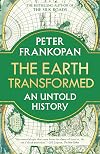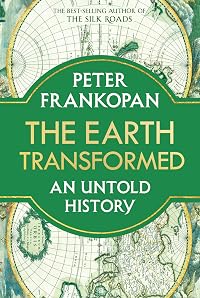
The Earth Transformed: An Untold History
by Peter Frankopan
On This Page
Description
Most people can name the influential leaders and major battles of the past. Few can name the most destructive storms, the worst winters, the most devastating droughts. In The Earth Transformed, ground-breaking historian Peter Frankopan reconnects us with our ancestors who, like us, worshipped, exploited and conserved the natural environment - and draws salutary conclusions about what the future may bring. In this revelatory book, Frankopan shows that engagement with the natural world and show more with climatic change and their effects on us are not new: exploring, for instance, how the development of religion and language and their relationships with the environment; tracing how growing demands for harvests resulted in the increased shipment of enslaved peoples; scrutinising how the desire to centralise agricultural surplus formed the origins of the bureaucratic state; and seeing how efforts to understand and manipulate the weather have a long and deep history. Understanding how past shifts in natural patterns have shaped history, and how our own species has shaped terrestrial, marine and atmospheric conditions is not just important but essential at a time of growing awareness of the severity of the climate crisis. Taking us from the beginning of recorded history to the present day, The Earth Transformed forces us to reckon with humankind's continuing efforts to make sense of the natural world. show lessTags
Recommendations




Member Reviews
In this book historian Frankopan looks at how climate has impacted on world events. In his view the two are inextricably linked and human impact is also a driver for climatic events. This is a masterly and apposite piece of world, the polymathic knowledge and research alone is staggering. It's not a quick read but it is an extremely vital one if we are to understand the path that we are now following.
The goal of the book is to explain the entire history of mankind and how it has been influenced by the environment and how the environment has been influenced by mankind. Each chapter discusses a different time period, discussing the major historical events as well as the most significant environmental events. The final chapters look at the environmental challenges facing us today and puts them into an historical perspective.
The book has been thought-provoking, adding new tidbits of information new to this reader.
Unfortunately, many of those tidbits are only mentioned in a single sentence and are not further elaborated. The early chapters of the book assume that the reader is familiar with people and places important in early show more history.
The book particularly emphasizes the environmental impact of volcanos and ocean current effects like La Nina.
The most praiseworthy aspect of the book is that it covers the entire planet. Too many comparable books tend to just focus on Europe and North America. Each section discusses events around the world. This is particularly useful because most events affected parts of the world differently but also because events on one side of the world had impacts on the opposite side.
The writing style, however, is not effective and often feels like it is a research report than a book from a knowledgeable expert in the field. The author flits from topic to topic and from location to location making it difficult to digest what is presented. The book is also agonizingly long. show less
The book has been thought-provoking, adding new tidbits of information new to this reader.
Unfortunately, many of those tidbits are only mentioned in a single sentence and are not further elaborated. The early chapters of the book assume that the reader is familiar with people and places important in early show more history.
The book particularly emphasizes the environmental impact of volcanos and ocean current effects like La Nina.
The most praiseworthy aspect of the book is that it covers the entire planet. Too many comparable books tend to just focus on Europe and North America. Each section discusses events around the world. This is particularly useful because most events affected parts of the world differently but also because events on one side of the world had impacts on the opposite side.
The writing style, however, is not effective and often feels like it is a research report than a book from a knowledgeable expert in the field. The author flits from topic to topic and from location to location making it difficult to digest what is presented. The book is also agonizingly long. show less
Just a note that for me, at age 74, this book provides a context for everything I've experienced & read (& hope to experience & read in the time left to me). I read it on a Kindle device, so the complaints in some of the reviews regarding the separation of the (staggering) bibliographic sources did not apply. I'm sure I comprehended only a small percentage of what I read intellectually, but even that was hair-raising. and at a different level, the amount of suffering & destruction implied was, to be honest, incomprehensible.
The scope of this book is huge. It encompasses such a wide timeline (from the Big Bang to Trump's dangerous banalities) that it's hard to take it all in, especially when he jumps to, oh, say Indochina to Mesoamerica in the space of a few paragraphs. But the payback is good as the message sinks in. As society changes, and as the climate changes we live, die and are transformed.
I'm still working through it. This is a massive book. More when I've completed it.
I'm still working through it. This is a massive book. More when I've completed it.
2023 book #37. 2023. An exhaustive (and exhausting) review of effect of climate changes on human history. Interesting but a slow read. Lots of facts and figures but the references are not included (they are available on line). Can't say I enjoyed it. It's actually kind of scary.
In De transformatie van de aarde biedt Peter Frankopan een vernieuwende kijk op de wereldgeschiedenis door de cruciale invloed van klimaat en natuur te belichten. Hij toont hoe vulkaanuitbarstingen, droogtes en andere natuurlijke fenomenen het verloop van beschavingen hebben bepaald, zoals de val van de Moche-beschaving door El Niño en de impact van IJslandse vulkanen op het Ottomaanse Rijk. Frankopan onderzoekt ook hoe menselijke activiteiten, zoals landbouw en kolonialisme, ecologische schade veroorzaakten. Het boek combineert historische inzichten met wetenschappelijk onderzoek en benadrukt dat klimaatverandering al eeuwenlang een bepalende factor is in de menselijke geschiedenis.
Peter Frankopan trekt in "De transformatie van de show more aarde" enkele belangrijke conclusies over de invloed van klimaat en natuur op de menselijke geschiedenis:
-1- Klimaat en natuurlijke fenomenen zijn cruciale factoren geweest in het verloop van de wereldgeschiedenis, vaak bepalender dan we ons realiseren.
-2- Grote klimaatgebeurtenissen, zoals vulkaanuitbarstingen en extreme weersomstandigheden, hebben aanzienlijke invloed gehad op de opkomst en ondergang van beschavingen.
-3- Klimaatveranderingen hebben vaak geleidelijk plaatsgevonden over decennia of eeuwen, maar hadden langdurige effecten op samenlevingen.
-4- Menselijke activiteiten, zoals landbouw en industrialisatie, hebben op hun beurt het klimaat en ecosystemen beïnvloed.
-5- Aanpassingsvermogen is cruciaal geweest voor het overleven van menselijke populaties tijdens klimaatveranderingen in het verleden.
-6- Voor de toekomst benadrukt Frankopan het belang van nieuwe technologieën en samenwerkingsvormen om klimaatuitdagingen aan te gaan.
-7- Hij waarschuwt dat als we er niet in slagen de CO2-uitstoot te verminderen, de planeet zelf kan reageren met catastrofale gevolgen voor de menselijke bevolking.
Frankopan concludeert dat begrip van deze historische klimaat-mens interacties essentieel is voor het aanpakken van huidige en toekomstige klimaatuitdagingen. show less
Peter Frankopan trekt in "De transformatie van de show more aarde" enkele belangrijke conclusies over de invloed van klimaat en natuur op de menselijke geschiedenis:
-1- Klimaat en natuurlijke fenomenen zijn cruciale factoren geweest in het verloop van de wereldgeschiedenis, vaak bepalender dan we ons realiseren.
-2- Grote klimaatgebeurtenissen, zoals vulkaanuitbarstingen en extreme weersomstandigheden, hebben aanzienlijke invloed gehad op de opkomst en ondergang van beschavingen.
-3- Klimaatveranderingen hebben vaak geleidelijk plaatsgevonden over decennia of eeuwen, maar hadden langdurige effecten op samenlevingen.
-4- Menselijke activiteiten, zoals landbouw en industrialisatie, hebben op hun beurt het klimaat en ecosystemen beïnvloed.
-5- Aanpassingsvermogen is cruciaal geweest voor het overleven van menselijke populaties tijdens klimaatveranderingen in het verleden.
-6- Voor de toekomst benadrukt Frankopan het belang van nieuwe technologieën en samenwerkingsvormen om klimaatuitdagingen aan te gaan.
-7- Hij waarschuwt dat als we er niet in slagen de CO2-uitstoot te verminderen, de planeet zelf kan reageren met catastrofale gevolgen voor de menselijke bevolking.
Frankopan concludeert dat begrip van deze historische klimaat-mens interacties essentieel is voor het aanpakken van huidige en toekomstige klimaatuitdagingen. show less
Jan 23, 2025Dutch
Ratings
Members
- Recently Added By
Lists

Top Five Books of 2024
795 works; 264 members

Books Read in 2024
4,623 works; 126 members

Books That Changed Our Perspective
423 works; 168 members

Wishlist
99 works; 1 member

Library Non-Fiction
164 works; 1 member

Science: Earth
109 works; 1 member
Author Information

11+ Works 6,062 Members
Peter Frankopan is a historian based at Oxford University. He is a senior research fellow at Worcester College, Oxford, and the director of the Oxford Centre for Byzantine Research at Oxford University. He is the author of The First Crusade: The Call from the East and The Silk Roads: A New History of the World. (Bowker Author Biography)
Awards and Honors
Common Knowledge
- Canonical title*
- Zwischen Erde und Himmel : Klima - eine Menschheitsgeschichte
- Original title
- The Earth Transformed
- Alternate titles
- Zwischen Erde und Himmel : Klima - eine Menschheitsgeschichte; La tierra transformada. Una historia medioambiental
- Original publication date
- 2023
- Epigraph
- "Toen God de eerste mens had geschapen nam Jij hem mee en leidde Hij hem langs alle bomen van de Hof van Eden ; en Hij zei tegen hem: Pas op dat je Mijn wereld niet aantast en vernietigt: als je hem aantast, valt hij na jou n... (show all)iet meer te repareren' Midrash Ecclesiaster Rabbah 7: 13
De droogte is zo enorm/En we worden gekweld door hitte> Ik ben doorgegaan met het brengen van offers../ Aan alle machten daarboven en beneden heb ik offers gebracht en offerandes begraven/ Er zijn geesten die ik die ik nie... (show all)t heb geëerd. Koning Xuan van Zhou ( reg.872-782 v.C.) Yunhan uit Shijing ( klassiek dichtwerk)
[God] heeft de hemel opgeheven en Hij heeft de weegschaal geplaatst. Op dat jullie het evenwicht niet verstoren. Koran, 55:7-8
Er doet zich [...] een verandering in ons klimaat voor [...]. Zowel warme als koude perioden worden veel gematigder Thomas Jefferson, Notes on the State of Virginia (1785)
*Some information comes from Common Knowledge in other languages. Click "Edit" for more information.
Classifications
Statistics
- Members
- 743
- Popularity
- 37,924
- Reviews
- 6
- Rating
- (3.56)
- Languages
- 6 — Dutch, English, Finnish, German, Italian, Spanish
- Media
- Paper, Audiobook, Ebook
- ISBNs
- 15
- ASINs
- 8