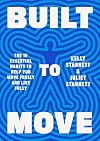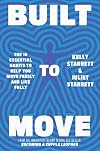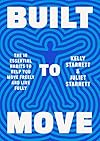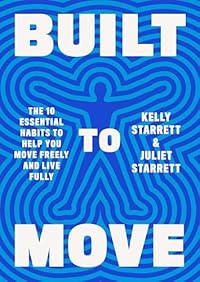
Built to Move: The Ten Essential Habits to Help You Move Freely and Live Fully
by Kelly Starrett
On This Page
Description
Simple and proven physical practices designed to improve the way your body feels—less stiffness! fewer aches and pain!— and boost the overall quality of your life, no matter how you spend your time. From the innovators behind The Ready State and the movement bible Becoming a Supple Leopard.“The definitive guide for building an all-around healthy and high-performing body and mind.” —Andrew Huberman, Professor of Neurobiology, Stanford University & Host of The Huberman Lab Podcast
show more After decades spent working with pro-athletes, Olympians, and Navy Seals, mobility pioneers Kelly and Juliet Starrett began thinking about the physical well-being of the rest of us. What makes a durable human? How do we continue to feel great and function well as we age? And how do we counteract the effects of technology-dependence, sedentary living, and other modern ways of life on our body’s natural need for activity?
The answers lie in an easy-to-use formula for basic mobility maintenance: 10 tests + 10 physical practices = 10 ways to make your body work better
The book offers:
It’s full of foundational wisdom for everyone from beginners to professional athletes and everyone in between. Built to Move introduces readers to a set of simple principles and practices that are undemanding enough to work into any busy schedule, lead to greater ease of movement, better health, and a happier life doing whatever it is you love to do—and want to continue doing as long as you live. This book is your game plan for the long game.
* This audiobook edition contains a bonus PDF of exercises, daily routine breakdowns, food prep charts, and other useful resources from the book.. show less
Tags
Recommendations
Member Reviews
Like many of you, I've been working hard to improve my physical health and wellbeing for years, and this book has come at just the right time.
In Built To Move, authors Kelly Starrett and Juliet Starrett introduce the 'The 10 Essential Habits to Help you Move Freely and Live Fully'. Their joint focus centres around mobilisations in favour of stretching or exercising and the appeal of Built to Move is that it caters to all types of physical activity and capability levels.
There's something here for every single reader, from elite athletes to sedentary workers, the injured and the disabled, the elderly and the young.
"And, contrary to what you might expect, achieving good mobility doesn't call for exercise. No cardio. No strength training. show more Instead, it's a series of simple activities that enhance your capacity for free and easy movement, and in doing so also improve all the systems in your body (digestive, circulatory, immune, lymphatic) that are impacted by putting yourself in motion. You use your body's infrastructure, so you don't lose your body's infrastructure. Mobility also primes the body for exercise, if that's what you want to do. But more important, it primes the body for life." Page 6
I'm fortunate enough to see a Personal Trainer and Exercise Physiologist and enjoyed chatting about this book with each of them. The authors were already known to one, and much of what they've each taught me over the years is in this book. It was terrific to cement their teachings by reading Built to Move, and some key points to remember included the importance of using the big toe to walk and the huge benefits of sitting on the floor, squatting and extending the hips.
My health program consists of many exercises across these categories which has enabled me to improve strength and flexibility and subsequently reduce pain and stiffness in my back, shins, calves, achilles and plantar fascia. This requires constant focus and discipline and the merest deviation can often result in pain and stiffness, which serves as a reminder for next time.
It was interesting to learn more about wearing thongs and specifically why wearing thongs for too long or walking too far in slippers exacerbates my plantar fasciitis.
"But if you're walking any distance in them, you will feel the consequences. Flip-flops don't allow the big toe to flex, which allows the foot to push off the ground. So the body compensates, hyperstiffening the plantar fascia (tissue connecting the heel bone to the toes) and ankle, which can cause pain down the line. Slides present the same problem. Make sure the shoes you're walking in have a back." Page 122
Sometimes an explanation like that helps remind us to alter our behaviour accordingly, while others can provide a whole new angle, like this tidbit about the importance of your glutes:
"Research shows that glute weakness is associated with knee injuries, chronic lower back pain, shin pain, falls among the elderly, and more. Glute strength, on the other hand, has been shown to remedy many of these same situations." Page 86
Who knew a few butt clenches could help relieve or alleviate all of that? C'mon, do a couple with me right now.
I wasn't expecting to read anything controversial here, but this husband and wife team don't believe in icing. They point out the fact that Dr. Gabe Mirkin (the sports medicine physician who came up with RICE - rest, ice, compression, elevation) no longer endorses icing, which was complete news to me.
"Here was the upshot: Don't ice sore or injured muscles. Ever." Page 191
According to the authors, icing interrupts the body's natural reaction, possibly even delaying the healing process and they also question the use of anti-inflammatories. Their points are convincing, but given how hardwired we are to ice a sprained ankle, it's hard to accept.
I learned plenty of new and unexpected things about the body too, including this shocker:
"...but consider that jumping not only keeps your balance systems in shape, it also gets the organs in your viscera cavity moving around, which is beneficial for the health of pretty much all the crucial systems keeping you alive." Page 221
Hang on, what? My viscera needs to 'move' for good health? I knew jumping was good for the heart rate, circulation, cardio fitness, bone strength, balance and more, but I didn't know it was also good for my internal organs. For those that can't jump, I learned that bouncing without lifting your feet off the ground still achieves great benefits for the body, so there's something for everyone.
I've read many books on sleep, so it was good to be reminded of the impact our sleep habits have on our health and the relationship it has with pain.
"How much pain you feel from any musculoskeletal issues you're dealing with can also be influenced by your sleep habits. With sleep deprivation, two things can happen. One is that the part of the brain that telegraphs pain to your consciousness becomes more sensitive. At the same time, the areas that dull the perception of pain - kind of like your body's own inner aspirin - become less active. ...Sleep is the first line of defense against pain." Page 252
I know this first hand, and it's a key tool in my own management of a chronic pain condition.
Reading Built to Move - The 10 Essential Habits to Help you Move Freely and Live Fully by Kelly Starrett & Juliet Starrett inspired me to move in the same way that watching Old People's Home for 4 Year Olds on the ABC did; which can only be a good thing.
It also incorporates key lessons and teachings from my physio, personal trainer and exercise physiologist and I'm sure they would like more of their patients to improve their own self knowledge and awareness through reading books like this one.
I found this highly valuable and recommend it to all readers.
* Copy courtesy of Hachette Australia * show less
In Built To Move, authors Kelly Starrett and Juliet Starrett introduce the 'The 10 Essential Habits to Help you Move Freely and Live Fully'. Their joint focus centres around mobilisations in favour of stretching or exercising and the appeal of Built to Move is that it caters to all types of physical activity and capability levels.
There's something here for every single reader, from elite athletes to sedentary workers, the injured and the disabled, the elderly and the young.
"And, contrary to what you might expect, achieving good mobility doesn't call for exercise. No cardio. No strength training. show more Instead, it's a series of simple activities that enhance your capacity for free and easy movement, and in doing so also improve all the systems in your body (digestive, circulatory, immune, lymphatic) that are impacted by putting yourself in motion. You use your body's infrastructure, so you don't lose your body's infrastructure. Mobility also primes the body for exercise, if that's what you want to do. But more important, it primes the body for life." Page 6
I'm fortunate enough to see a Personal Trainer and Exercise Physiologist and enjoyed chatting about this book with each of them. The authors were already known to one, and much of what they've each taught me over the years is in this book. It was terrific to cement their teachings by reading Built to Move, and some key points to remember included the importance of using the big toe to walk and the huge benefits of sitting on the floor, squatting and extending the hips.
My health program consists of many exercises across these categories which has enabled me to improve strength and flexibility and subsequently reduce pain and stiffness in my back, shins, calves, achilles and plantar fascia. This requires constant focus and discipline and the merest deviation can often result in pain and stiffness, which serves as a reminder for next time.
It was interesting to learn more about wearing thongs and specifically why wearing thongs for too long or walking too far in slippers exacerbates my plantar fasciitis.
"But if you're walking any distance in them, you will feel the consequences. Flip-flops don't allow the big toe to flex, which allows the foot to push off the ground. So the body compensates, hyperstiffening the plantar fascia (tissue connecting the heel bone to the toes) and ankle, which can cause pain down the line. Slides present the same problem. Make sure the shoes you're walking in have a back." Page 122
Sometimes an explanation like that helps remind us to alter our behaviour accordingly, while others can provide a whole new angle, like this tidbit about the importance of your glutes:
"Research shows that glute weakness is associated with knee injuries, chronic lower back pain, shin pain, falls among the elderly, and more. Glute strength, on the other hand, has been shown to remedy many of these same situations." Page 86
Who knew a few butt clenches could help relieve or alleviate all of that? C'mon, do a couple with me right now.
I wasn't expecting to read anything controversial here, but this husband and wife team don't believe in icing. They point out the fact that Dr. Gabe Mirkin (the sports medicine physician who came up with RICE - rest, ice, compression, elevation) no longer endorses icing, which was complete news to me.
"Here was the upshot: Don't ice sore or injured muscles. Ever." Page 191
According to the authors, icing interrupts the body's natural reaction, possibly even delaying the healing process and they also question the use of anti-inflammatories. Their points are convincing, but given how hardwired we are to ice a sprained ankle, it's hard to accept.
I learned plenty of new and unexpected things about the body too, including this shocker:
"...but consider that jumping not only keeps your balance systems in shape, it also gets the organs in your viscera cavity moving around, which is beneficial for the health of pretty much all the crucial systems keeping you alive." Page 221
Hang on, what? My viscera needs to 'move' for good health? I knew jumping was good for the heart rate, circulation, cardio fitness, bone strength, balance and more, but I didn't know it was also good for my internal organs. For those that can't jump, I learned that bouncing without lifting your feet off the ground still achieves great benefits for the body, so there's something for everyone.
I've read many books on sleep, so it was good to be reminded of the impact our sleep habits have on our health and the relationship it has with pain.
"How much pain you feel from any musculoskeletal issues you're dealing with can also be influenced by your sleep habits. With sleep deprivation, two things can happen. One is that the part of the brain that telegraphs pain to your consciousness becomes more sensitive. At the same time, the areas that dull the perception of pain - kind of like your body's own inner aspirin - become less active. ...Sleep is the first line of defense against pain." Page 252
I know this first hand, and it's a key tool in my own management of a chronic pain condition.
Reading Built to Move - The 10 Essential Habits to Help you Move Freely and Live Fully by Kelly Starrett & Juliet Starrett inspired me to move in the same way that watching Old People's Home for 4 Year Olds on the ABC did; which can only be a good thing.
It also incorporates key lessons and teachings from my physio, personal trainer and exercise physiologist and I'm sure they would like more of their patients to improve their own self knowledge and awareness through reading books like this one.
I found this highly valuable and recommend it to all readers.
* Copy courtesy of Hachette Australia * show less
This book is pretty much a dumbed down version of Starrett's "Becoming a Supple Leopard", which isn't necessarily a bad thing. That book was aimed primarily at the competitive CrossFit community, and written in the technical jargon of physical therapist for WOD devotees. This one is aimed squarely at the sedentary 40 or 50 year old, juggling long hours working at a desk, raising kids, and relaxing with a beer in front of the TV at the end of the day. Included in that category are people who exercise regularly, because 1 hour on the Peleton doesn't cancel the other 23 hours of eating too much junk food, driving everywhere, not getting quality sleep, and sitting for hours a day.
The advice is generally pretty good, if a bit basic, and show more there is simple test included for each section to determine how much work is needed in each area, allowing the reader to focus on the things that are most important for them. For example, can you sit down and stand up without using your hands, can you do a full squat, can you stand on one foot with your eyes closed, do you eat fruits and vegetables and enough protein, do you sleep enough.
They provide analog workaround for the tech-averse who refuse to wear a smart watch or fitness tracker, which may appeal to the older demographic, but I wish they emphasized how much easier it is to incorporate the habits if they are tracked automatically.
The nutrition section is often the weakest part of books like this, but they take a very moderate approach, and focus on two key metrics: eat plenty of fruits and vegetables and getting enough protein. For the latter, they provide the standard recommendation of 0.7-1 g per pound of body weight, and for the former a simple blanket target of 800 g per day, regardless of body weight. While obviously not the ideal quantity for everyone, it's easy to remember and their thinking is that by adding more good stuff to one's diet, the bad stuff will naturally be reduced. But there isn't much evidence to support this claim, and I wonder if simply adding an extra cup of Brussels sprouts to an otherwise unhealthy meal really helps all that much.
The husband and wife team take turns narrating the audiobook, but disconcertingly refer to themselves in the third person, and pepper the topics with personal anecdotes (many about their teenage daughters, whose strenuous eye rolling can almost be heard in the background, poor dears) that are superfluous and so far removed from normal people's lives as to be more dejecting and off-putting than motivational or useful. Their detachment as self-employed professional athletes living in California from the realities of actual people with jobs who live in places with seasons (what do you mean you can't walk outside five miles every day when it's 0F/100F) is made apparent in their bizarre vision of how normal people structure their days (for example, they budget a half hour for commuting home from work, changing into workout clothes, and taking a 30 minute walk, which is ambitious even if you work from home). Followed of course by 45 minutes in the backyard sauna and cold plunge tub (city dwellers and poors must make do with a hot/cold shower). The morning is even worse, with a 1 hour workout, a 30 minute walk, prepping and eating breakfast, packing lunches, getting kids off to school, shower and dressing for work, and commuting, all by 9am. Again, potentially feasible for people who have their own gym in their garage and work from home, but impossible if it takes 20 minutes to get to the gym and another 30 minutes to get to the office. I know that they just meant it as a model template to structure one's day, but the unreasonable expectations and assumptions of privilege really undermine their message that anyone can follow their example.
Bottom line: everyone should read this book, even if they are perfect specimens of health and fitness it's likely that they know someone who isn't, and there is great advice for both getting started and continuing to improve, and even highly trained athletes tend not to excel in all areas. show less
The advice is generally pretty good, if a bit basic, and show more there is simple test included for each section to determine how much work is needed in each area, allowing the reader to focus on the things that are most important for them. For example, can you sit down and stand up without using your hands, can you do a full squat, can you stand on one foot with your eyes closed, do you eat fruits and vegetables and enough protein, do you sleep enough.
They provide analog workaround for the tech-averse who refuse to wear a smart watch or fitness tracker, which may appeal to the older demographic, but I wish they emphasized how much easier it is to incorporate the habits if they are tracked automatically.
The nutrition section is often the weakest part of books like this, but they take a very moderate approach, and focus on two key metrics: eat plenty of fruits and vegetables and getting enough protein. For the latter, they provide the standard recommendation of 0.7-1 g per pound of body weight, and for the former a simple blanket target of 800 g per day, regardless of body weight. While obviously not the ideal quantity for everyone, it's easy to remember and their thinking is that by adding more good stuff to one's diet, the bad stuff will naturally be reduced. But there isn't much evidence to support this claim, and I wonder if simply adding an extra cup of Brussels sprouts to an otherwise unhealthy meal really helps all that much.
The husband and wife team take turns narrating the audiobook, but disconcertingly refer to themselves in the third person, and pepper the topics with personal anecdotes (many about their teenage daughters, whose strenuous eye rolling can almost be heard in the background, poor dears) that are superfluous and so far removed from normal people's lives as to be more dejecting and off-putting than motivational or useful. Their detachment as self-employed professional athletes living in California from the realities of actual people with jobs who live in places with seasons (what do you mean you can't walk outside five miles every day when it's 0F/100F) is made apparent in their bizarre vision of how normal people structure their days (for example, they budget a half hour for commuting home from work, changing into workout clothes, and taking a 30 minute walk, which is ambitious even if you work from home). Followed of course by 45 minutes in the backyard sauna and cold plunge tub (city dwellers and poors must make do with a hot/cold shower). The morning is even worse, with a 1 hour workout, a 30 minute walk, prepping and eating breakfast, packing lunches, getting kids off to school, shower and dressing for work, and commuting, all by 9am. Again, potentially feasible for people who have their own gym in their garage and work from home, but impossible if it takes 20 minutes to get to the gym and another 30 minutes to get to the office. I know that they just meant it as a model template to structure one's day, but the unreasonable expectations and assumptions of privilege really undermine their message that anyone can follow their example.
Bottom line: everyone should read this book, even if they are perfect specimens of health and fitness it's likely that they know someone who isn't, and there is great advice for both getting started and continuing to improve, and even highly trained athletes tend not to excel in all areas. show less
Some simple things you can do to improve your flexibility and balance. As you grow older these skills can provide a safe guard against falls. Hopefully they also help you to play more with the grandkids.
Ratings
Members
- Recently Added By
Lists

To Read
133 works; 1 member
Author Information
5 Works 1,099 Members
Classifications
- Genres
- Health & Wellness, Nonfiction, General Nonfiction, Sports and Leisure
- DDC/MDS
- 613.7 — Technology Medicine & health Personal health and safety Physical fitness
- LCC
- RA781 .S734 — Medicine Public aspects of medicine Public aspects of medicine Public health. Hygiene. Preventive medicine Personal health and hygiene
- BISAC
Statistics
- Members
- 232
- Popularity
- 139,709
- Reviews
- 3
- Rating
- (3.84)
- Languages
- Czech, English
- Media
- Paper, Audiobook, Ebook
- ISBNs
- 6
- ASINs
- 3