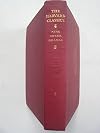
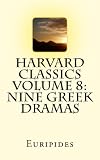
Nine Greek Dramas by Æschylus, Sophocles, Euripides and Aristophanes
by Charles William Eliot (Editor), Aristophanes (Contributor), Æschylus (Contributor), Euripides (Contributor), Sophocles (Contributor)
352 Members (4.57)
On This Page
Description
Purchase of this book includes free trial access to www.million-books.com where you can read more than a million books for free. This is an OCR edition with typos. Excerpt from book: (EDIPUS THE KING OF SOPHOCLES DRAMATIS PERSONS CEDIPUS, King of Thebes Messenger from Corinth Creon, brother of Jocasta Shepherd Teiresias, a soothsayer Second Messenger Priest of Zeus Jocasta, wife of CEoirus Chorus of Priest and Suppliants Scene?Thebes. In the background, the palace of CEoiPus; in front, the show more altar of Zeus, Priests and Boys round it in the attitude of suppliants. Enter Cedipus CEdipus. HY sit ye here, my children, brood last reared Of Cadmus famed of old, in solemn state, Uplifting in your hands the suppliants' boughs? And all the city reeks with incense smoke, And all re-echoes with your wailing hymns; And I, my children, counting it unmeet To hear report from others, I have come Myself, whom all name (Edipus the Great.? Do thou, then, aged Sire, since thine the right To speak for these, tell clearly why ye stand Awe-stricken, or adoring; speak to me As willing helper. Dull and cold this heart To see you prostrate thus, and feel no ruth. Priest. Yes, CEdipus, thou ruler of my land, Thou seest us how we sit, as suppliants, bowed Around thine altars; some as yet unfledged To wing their flight, and some weighed down with age. Priests, I, of Zeus, and these the chosen youth: And in the open spaces of the town The people sit and wail, with wreath in hand, By the twin shrine of Pallas, or the grove Oracular that bears Ismenus' name. For this our city, as thine eyes may see, Is sorely tempest-tossed, nor lifts its head From out the surging sea of blood-flecked waves, All smitten in the fruitful blooms of earth, All smitten in the herds that graze the fields, Yea, and in timeless births of woman's fruit; And still the God sends forth his darts of fire, And lays us low. The plague, abhorred and fea... show lessTags
Recommendations

























Member Reviews
Members
- Recently Added By
Author Information


Aristophanes, 448 b.c. - 385 b.c. Aristophanes is considered to be one of the greatest comedic writers ever to have taken to the stage. He was born in Athens, Greece, in the town of Cydathenaeum. Aristophanes is believed to have been well educated, which would explain his propensity towards words. It is also believed that he owned land on the show more island of Aegina. Aristophanes was first a satirist, he was well known for attacking anything from politics to poets, mainly the war between Sparta and Athens and the poet Euripides. He wrote more than 40, eleven of which are still being acted today. "The Acharnians" was his first play, written in 425, B.C.. This was the first of his plays in reaction to the war, as well as the play "Peace." But perhaps Aristophanes most famous play, Lysistrata, made his true feelings of the war known. In this play, the women seek peace by claiming celibacy until the fighting is stopped. It is the play that he is most famous for, for capturing the feeling of the people in a way that was both lighthearted and poignant. Aristophanes died three years after the war ended, in 385, B.C.,but left behind a legacy that has lasted to the present day. (Bowker Author Biography) show less

Euripides was born in Attica, Greece probably in 480 B.C. He was the youngest of the three principal fifth-century tragic poets. In his youth he cultivated gymnastic pursuits and studied philosophy and rhetoric. Soon after he received recognition for a play that he had written, Euripides left Athens for the court of Archelaus, king of Macedonia. show more Fragments of about fifty-five plays survive. Among his best-known plays are Alcestis, Medea and Philoctetes, Electra, Iphigenia in Tauris, The Trojan Women, and Iphigenia in Aulis Iphigenia. He died in Athens in 406 B.C. (Bowker Author Biography) show less

Sophocles was born around 496 B.C. in Colonus (near Athens), Greece. In 480, he was selected to lead the paean (choral chant to a god) celebrating the decisive Greek sea victory over the Persians at the Battle of Salamis. He served as a treasurer and general for Athens when it was expanding its empire and influence. He wrote approximately 123 show more plays including Ajax, Antigone, Oedipus Tyrannus, Trachiniae, Electra, Philoctetes, and Oedipus at Colonus. His last recorded act was to lead a chorus in public mourning for Euripides. He died in 406 B. C. (Bowker Author Biography) show less
All Editions
Series
Belongs to Publisher Series
Harvard Classics (08)
Work Relationships
Is contained in
Common Knowledge
- Canonical title
- Nine Greek Dramas by Æschylus, Sophocles, Euripides and Aristophanes
- People/Characters
- Agamemnon; Antigone; Oedipus
- Disambiguation notice
- Nine Greek Dramas is volume 8 of the Harvard Classics series. Please do not combine with any of the individual plays.
- Agamemnon by Aeschylus (translated by E.D.A. Morshead)
- The Libation-Bearers b... (show all)y Aeschylus (translated by E.D.A. Morshead)
- The Furies by Aeschylus (translated by E.D.A. Morshead)
- Prometheus Bound by Aeschylus (translated by E.H. Plumptre)
- Oedipus the King by Sophocles (translated by E.H. Plumptre)
- Antigone by Sophocles (translated by E.H. Plumptre)
- Hippolytus by Euripides (translated by Gilbert Murray)
- The Bacchae by Euripides (translated by Gilbert Murray)
- The Frogs by Aristophanes (translated by B. B. Rogers)
Classifications
- Genre
- Fiction and Literature
- DDC/MDS
- 808.8 — Literature & rhetoric Literature, rhetoric & criticism Rhetoric and collections of literary texts from more than two literatures Literature Collections
- LCC
- PA3626 .A2 .N5 — Language and Literature Greek language and literature. Latin language and literature Greek literature Translations
- BISAC
Statistics
- Members
- 352
- Popularity
- 89,592
- Rating
- (4.57)
- Languages
- English
- Media
- Paper, Ebook
- ISBNs
- 8
- ASINs
- 31