On This Page
Description
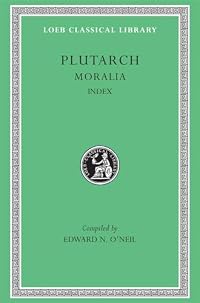
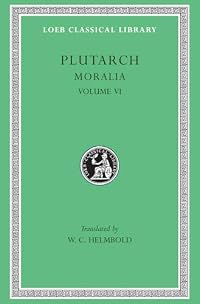
Plutarch's Moralia, Moral Essays reflecting his philosophy about living a good life, is a treasury of information concerning Greco-Roman society, traditions, ideals, ethics, and religion. But access to the riches of this collection of over seventy essays has long been hindered by lack of any comprehensive index. This problem has at last been solved: the Loeb Classical Library's edition of the Moralia is now brought to completion with an analytical Index volume. Renowned as a biographer show more because of his "Parallel Lives," Plutarch (born about 50 CE) was also a teacher of philosophy in Rome, a priest at Delphi, and an engaging essayist with a warm, urbane, and judicious style. Whether advising about marriage and education, discussing prophecy, divine providence, and life after death, setting forth rules for politicians, or commenting on personal virtues and vices, his Moral Essays reveal not just Plutarch's thinking but also the world in which he lived. Edward O'Neil's thorough index provides an invaluable roadmap for tracking the wealth of information and wisdom to be found in them. show lessTags
Recommendations



Members
- Recently Added By
Author Information

1,618+ Works 25,885 Members
PLUTARCH. c.46--c.125 Considered by many to be the most important Greek writer of the early Roman period, Plutarch was a member of a well-to-do Greek family, a chief magistrate, a priest at Delphi, and an exceptionally well-read individual. His philosophical views were based on those of Plato and, although a Greek, he esteemed the achievements and show more attributes of the Romans. By the time Plutarch's works were published for the first time in the eleventh century, some had already been lost. He wrote innumerable essays on philosophical, historical, political, religious, and literary subjects, 78 of which survive today and are known collectively as the "Moralia." He is known primarily, however, for his Parallel Lives of Greeks and Romans, which consists of 50 biographies---23 of prominent Greeks, 23 of Roman leaders, and 4 separate lives---accompanied at intervals by short comparative essays. Although historical information is included in the work, Plutarch wrote it originally to inspire emulation in youth, so the emphasis is on character, moral choice, and anecdote. Sir Thomas North's 1579 translation into English of Parallel Lives became an important source for William Shakespeare which he used for three plays, Julius Caesar, Antony and Cleopatra, and Coriolanus. (Bowker Author Biography) show less
Series

Belongs to Publisher Series
Loeb Classical Library (499)
Classifications
- Genres
- Nonfiction, History, Philosophy
- DDC/MDS
- 016.8801 — Computer science, information & general works Bibliographies (books containing lists of books) Bibliographies of works on specific subjects Literature Greek & Other Classical
- LCC
- PA3612 .P69 — Language and Literature Greek language and literature. Latin language and literature Greek literature Translations
- BISAC
Statistics
- Members
- 30
- Popularity
- 924,633
- Languages
- English, Greek (Ancient)
- Media
- Paper
- ISBNs
- 2