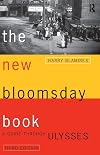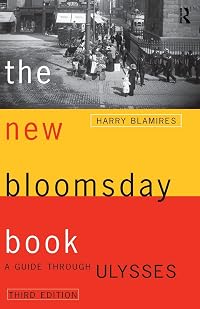
The New Bloomsday Book
by Harry Blamires
On This Page
Description
Since 1966 readers new to James Joyce have depended upon this essential guide to Ulysses. Harry Blamires helps readers to negotiate their way through this formidable, remarkable novel and gain an understanding of it which, without help, it might have taken several readings to achieve. The New Bloomsday Book is a crystal clear, page-by-page, line-by-line running commentary on the plot of Ulysses which illuminates symbolic themes and structures along the way. It is a highly accessible, show more indispensible guide for anyone reading Joyce's masterpiece for the first time. To ensure that Blamires' classic work will remain useful to new readers, this third edition contains the page numbering and references to three commonly read editions of Ulysses: the Oxford University Press 'World Classics' (1993), the Penguin 'Twentieth-Century Classics' (1992), and the Gabler 'Corrected Text' (1986) editions. show lessTags
Recommendations















Member Reviews
The most helpful, least pretentiously academic, companion book to Ulysses. Written by a now retired professor, it's intended audience is individuals that are reading Ulysses for the first time and assumes little or no scholarly background to the work. At times, it's chapter summaries read like New Yorker articles -- intelligent line by line analysis with hints as to how it fit into the whole, without being too condescending or too simplistic.
Blamires' "The New Bloomsday Book" is an incredible scholarly achievement. Line by line he gives us all the background needed to understand the context and direction of Ulysses. With detailed references he also provides all the information necessary to delve even deeper into Ulysses. Blamires' work is both accessible to the reader and invaluable for any further study of Ulysses.
A question that did come to mind in reading Blamires was what is the distinction (if any) between providing information/context on a work and interpreting a work. Blamires does both.
In all honesty, I lack the expertise, intellect, and/or credentials to credibly challenge Blamires' interpretations of Ulysses. Yet, I do begin to chafe when Blamires begins to show more "interpret" and provide the "meaning" of sections. One could say, reasonably, that if I don't want interpretation, don’t read a "guide". I accept that charge.
However, that does leave me with another question. What is the validity of "interpreting" works of fiction? And, is a novel meant to be decoded or simply experienced? Is the author simply dressing up for show her/his theories and/or perspectives in the wardrobe of elaborate prose and plotting? Or, could it be that the author actually intends the ambiguity produced in their work as it reflects the ambiguity of life/experience? Do we do a disservice to the author and the work when we provide exegesis? Do we create the illusion of orthodox and heterodox interpretations of a work?
I lean to the position of experiencing the work. But I also realize that my extremely meager formal education in literature probably both supports and requires that position. show less
A question that did come to mind in reading Blamires was what is the distinction (if any) between providing information/context on a work and interpreting a work. Blamires does both.
In all honesty, I lack the expertise, intellect, and/or credentials to credibly challenge Blamires' interpretations of Ulysses. Yet, I do begin to chafe when Blamires begins to show more "interpret" and provide the "meaning" of sections. One could say, reasonably, that if I don't want interpretation, don’t read a "guide". I accept that charge.
However, that does leave me with another question. What is the validity of "interpreting" works of fiction? And, is a novel meant to be decoded or simply experienced? Is the author simply dressing up for show her/his theories and/or perspectives in the wardrobe of elaborate prose and plotting? Or, could it be that the author actually intends the ambiguity produced in their work as it reflects the ambiguity of life/experience? Do we do a disservice to the author and the work when we provide exegesis? Do we create the illusion of orthodox and heterodox interpretations of a work?
I lean to the position of experiencing the work. But I also realize that my extremely meager formal education in literature probably both supports and requires that position. show less
After just completing my first reading of Ulysses, I am joining my voice to the GR chorus of appreciation for Blamires's guide. MJ referred to it as indispensable in his review, and I concur with his assessment.
Blamires provides short, beautifully written overviews of each episode, but these overviews are not simply summaries (although his summaries are indispensable in certain passages and episodes that otherwise could be difficult to follow). Instead, Blamires also discusses some approaches to interpreting Ulysses, indicating themes and motifs that reappear throughout the novel, providing some gentle guidance for the reader to begin appreciating the intricate connections that Joyce weaves throughout the novel.
I have described show more Blamires's The New Bloomsday Book as serving a function similar to that of synopses of operas in playbills. He provides a sense of the action and some important elements to consider when reading Ulysses, but he does so in such a way that readers remain free to respond to Ulysses on their own terms. It's a very difficult balancing act, and one that he executes perfectly. show less
Blamires provides short, beautifully written overviews of each episode, but these overviews are not simply summaries (although his summaries are indispensable in certain passages and episodes that otherwise could be difficult to follow). Instead, Blamires also discusses some approaches to interpreting Ulysses, indicating themes and motifs that reappear throughout the novel, providing some gentle guidance for the reader to begin appreciating the intricate connections that Joyce weaves throughout the novel.
I have described show more Blamires's The New Bloomsday Book as serving a function similar to that of synopses of operas in playbills. He provides a sense of the action and some important elements to consider when reading Ulysses, but he does so in such a way that readers remain free to respond to Ulysses on their own terms. It's a very difficult balancing act, and one that he executes perfectly. show less
This is a very useful companion to Ulysses. It simply explains what's going on, so I would have liked more annotation about hidden references and controversial points.
An absolute necessity to navigating through the many complex layers of Ulysses. I read Blamires plain language summary and explanation of the symbolism, allusions, and historical references after finishing each episode. It strikes the right balance of helpful literary analysis without too much spoon feeding.
This was pretty helpful as a companion to _Ulysses_. It definitely cleared up things I didn't even realize happened. I don't always agree with his interpretations, but they were still interesting.
Waste of time, even a cursory glance at Ulysses using your own res cogitans will give you the same insights this gives. Additionally it loves telling you things that happen 200 pages later making sure you get no satisfaction discovering anything yourself. This book carries the well worn trope of 'It's ok for a Jew to insult a black man for any derogitory reason but if Jews are genuinely critisised for doing anything at all, your brushed off with the misnomer anti-semitic. A plus for Blamires is that he doesn't descend into analysing things that aren't there and sticks fairly well to the text, but as I've already noted you will find reading Ulysses yourself will substitute for reading Blamires book. Life is short and you have only a show more limited amount of books you can read, don't make Ulysees or Blamires book two of them. show less
Members
- Recently Added By
Author Information

43 Works 2,961 Members
Harry Blamires is a highly respected teacher and author of important works including The Christian Mind and The Tyranny of Time.
Work Relationships
Reference guide/companion to
Common Knowledge
Classifications
Statistics
- Members
- 857
- Popularity
- 32,024
- Reviews
- 14
- Rating
- (3.76)
- Languages
- English
- Media
- Paper, Ebook
- ISBNs
- 8
- ASINs
- 5