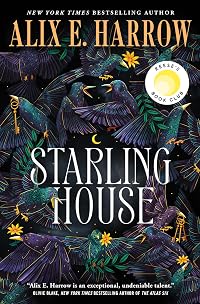
Starling House
by Alix E. Harrow
On This Page
Description
"Eden, Kentucky, is just another dying, bad-luck town, known only for the legend of E. Starling, the reclusive nineteenth-century author and illustrator who wrote The Underland--and disappeared. Before she vanished, Starling House appeared. But everyone agrees that it's best to let the uncanny house--and its last lonely heir, Arthur Starling--go to rot. Opal knows better than to mess with haunted houses or brooding men, but an unexpected job offer might be a chance to get her brother out of show more Eden. Too quickly, though, Starling House starts to feel dangerously like something she's never had: a home. As sinister forces converge on Starling House, Opal and Arthur are going to have to make a dire choice: to dig up the buried secrets of the past and confront their own fears, or let Eden be taken over by literal nightmares. If Opal wants a home, she'll have to fight for it."-- show lessTags
Recommendations
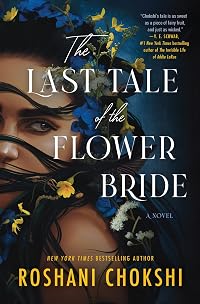
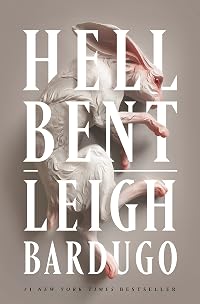

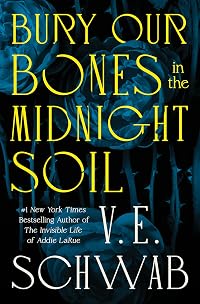
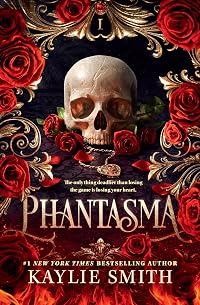
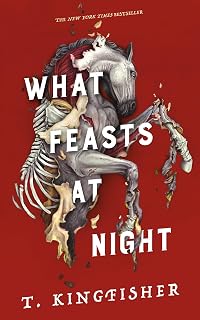
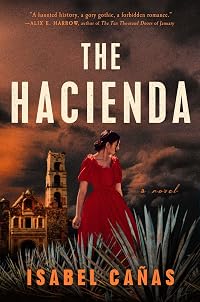
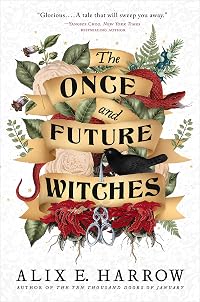
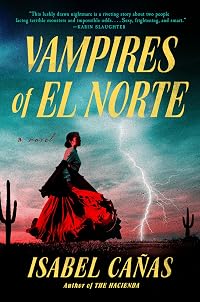


Member Reviews
Opal is broke, so she takes a job as a house cleaner in the creepiest, scariest house in the entire town of Eden, maybe in the whole state of Kentucky. She's never had an easy life. Her mother died, when she was a teenager and to keep the only family, she has together together...she fakes her way into gaining custody of her younger brother, Jasper. Years later we find Opal and Jasper still struggling to make ends meet. Jasper is an exceptionally bright and creative boy, and Opal desperately wants to get enough money together to get him out of Eden and maybe to a private school that will offer him all the resources he needs and deserves. Opal has always been mysteriously drawn to the Starling House. It's a huge old mansion shrouded in show more rumors and local legends. When she meets the reclusive owner of the house, Arthur Starling, she convinces him to give her the opportunity of a lifetime....to let her work in the house as a cleaner. He doesn't take much convincing, and soon Arthur is offering to pay Opal enough money to send Jasper to school...and in return, she gets to explore the house to her hearts content...the house she’s been dying to see for as long as she can remember. When a woman claiming to be working on behalf of the local power plant offers Opal even more money for information about Arthur Starling and about his house, Opal then begins to think that she must first discover something for herself. She has started to feel that Starling House must have a mind and a will of its own...otherwise why would such powerful people want so desperately to get inside? Author, Alex Harrow has magnificently turned Starling House into a character in itself with a mind of its own and a deeply horrifying plan. The house is strangely ALIVE...but how can that be? Page by page, line by line, word by word, the reader watches as Opal tries to untangle the many mysteries of Starling House, revealing how powerful people will twist the truth until the story suits their purposes, and sometimes gives life to what should never been alive to start with. A delightfully chilling and spooky story about how hidden truths usually always come back to haunt you. show less
{stand alone; fantasy, urban fantasy}(2023)
This is a story about the power of dreams.
Opal is a hard-bitten red-head who lost her mother, Jewell, early in life and has fought hard to keep her much younger brother (falsifying her birth certificate so she would seem old enough to keep him) and bring him up. They have grown up in the Garden of Eden motel since their mother died but before that they drifted from place to place; they obviously have different fathers but no last name.
In a dead-end town in Kentucky, called Eden, Opal works at a dead-end job so she can scrape together enough money for her brother Jasper (who is still at school) and her to leave the town. Eden is overshadowed by Gravely Power, an electrical power plant run show more irresponsibly by the Gravely family which allows the air, land and water to be polluted by the by-products of the power plant and their coal mining operations. The Gravely family seem to be the 'haves' of Eden while everyone else, especially Opal and Jasper, are the 'have nots', dependant on the Gravelys' business for income. Opal does anything she needs to to survive including petty theft.
If Opal takes the short-cut when walking to work, she goes past Starling House which holds a fascination for her even though every one else in town avoids it because they claim that the people who live there are odd. The stories told by the townspeople about Eleanor Starling, the first owner of the house, imply that she may have been a witch.
Eleanor - Eden's one celebrity, however notorious - wrote a children's book in the 19th century called 'The Underland' about a little girl called Nora Lee which she illustrated with pictures of horrific beasts which lived beneath the earth. Opal has a well-worn copy which her mum used to read to her from all the time and has dreamed about the inside of Starling House, even though she has never seen it in person. As we learn Opal's back story we gradually learn different versions of Eleanor's story, as labyrinthine as the House itself, and why Eden has had such a run of bad luck. Eleanor’s life story and the story in her book seem related in some way to each other and to the history of Eden - and, now, to Opal's life as it tangles with Starling House and Arthur Starling, its last Warden.
The House wants Opal and Arthur is persuaded, against his better judgement, to give her a (vastly overpaid) job cleaning the House which he has wilfully neglected. Because Arthur has secrets which haunt him too.
The novel is narrated in the first person, present tense from Opal's point of view although we also have some passages told in the third person, present tense from Arthur's point of view. I found this book compelling. At points, the pace increased to nail-biting. I liked the epilogue, the illustrations scattered through the book and the 'bibliography' and I thought footnotes (initially reminiscent of [The Colour of Magic] in their voluminosity) were an interesting touch. I admit that I was slightly confused about some points of the ending though; it bears going through slowly or re-reading.
I really liked the House which believes it is sentient.
January 2025
4-4.5 stars show less
This is a story about the power of dreams.
Opal is a hard-bitten red-head who lost her mother, Jewell, early in life and has fought hard to keep her much younger brother (falsifying her birth certificate so she would seem old enough to keep him) and bring him up. They have grown up in the Garden of Eden motel since their mother died but before that they drifted from place to place; they obviously have different fathers but no last name.
In a dead-end town in Kentucky, called Eden, Opal works at a dead-end job so she can scrape together enough money for her brother Jasper (who is still at school) and her to leave the town. Eden is overshadowed by Gravely Power, an electrical power plant run show more irresponsibly by the Gravely family which allows the air, land and water to be polluted by the by-products of the power plant and their coal mining operations. The Gravely family seem to be the 'haves' of Eden while everyone else, especially Opal and Jasper, are the 'have nots', dependant on the Gravelys' business for income. Opal does anything she needs to to survive including petty theft.
If Opal takes the short-cut when walking to work, she goes past Starling House which holds a fascination for her even though every one else in town avoids it because they claim that the people who live there are odd. The stories told by the townspeople about Eleanor Starling, the first owner of the house, imply that she may have been a witch.
Eleanor - Eden's one celebrity, however notorious - wrote a children's book in the 19th century called 'The Underland' about a little girl called Nora Lee which she illustrated with pictures of horrific beasts which lived beneath the earth. Opal has a well-worn copy which her mum used to read to her from all the time and has dreamed about the inside of Starling House, even though she has never seen it in person. As we learn Opal's back story we gradually learn different versions of Eleanor's story, as labyrinthine as the House itself, and why Eden has had such a run of bad luck. Eleanor’s life story and the story in her book seem related in some way to each other and to the history of Eden - and, now, to Opal's life as it tangles with Starling House and Arthur Starling, its last Warden.
The House wants Opal and Arthur is persuaded, against his better judgement, to give her a (vastly overpaid) job cleaning the House which he has wilfully neglected. Because Arthur has secrets which haunt him too.
The novel is narrated in the first person, present tense from Opal's point of view although we also have some passages told in the third person, present tense from Arthur's point of view. I found this book compelling. At points, the pace increased to nail-biting. I liked the epilogue, the illustrations scattered through the book and the 'bibliography' and I thought footnotes (initially reminiscent of [The Colour of Magic] in their voluminosity) were an interesting touch. I admit that I was slightly confused about some points of the ending though; it bears going through slowly or re-reading.
I really liked the House which believes it is sentient.
During the day the House could be mistaken for a mere building; at night, it never could. It has the obscure topography of a dream or a body, with endless, sinuous hallways and stairs that climb at unnatural angles. The walls heave in and out, a vast rib cage, and Arthur suspects if he were to press his ear to the plaster he would hear the subtle beating of a heart somewhere beneath all the oak and pine and plaster.There are echoes of [Alice in Wonderland] and [Stranger Things] in the weirdness of Eden. I was a bit worried at the beginning that it might turn into a horror story but, though it might have been a bit tense at times, it didn't (I don't do horror). It's worth giving this one a go.
Most nights Arthur finds it soothing—it’s nice to imagine that he doesn’t stand alone against the Beasts, even if his only ally is a foolish old house with ambitions of sentience—but tonight the House is restless. Every nail turns fretfully in its hole and the roof tiles clack like chattering teeth. A drainpipe bangs against the wall in the anxious rhythm of a woman drumming her nails on the table. Arthur soothes it as best he can, renewing wards and double-checking charms, but the weather is mild and the doors are locked.
January 2025
4-4.5 stars show less
There is good YA fiction, which works for readers of all ages, and then published Wattpad fantasies full of clichés and annoying teenage characters. Guess where I peg this drivel? Forget Southern Gothic, here we have Gilmore Girls does Beauty and the Beast, with a female protagonist who is supposed to be in her mid-twenties but acts the same age as her sixteen year old brother, and an 'ugly' love interest fighting imaginary monsters in small town America.
Opal's only personality traits are being a povo and taking care of said brother, their flighty rich girl turned tramp of a mother having died in a mysterious car wreck ten years previously. (I have many questions about how a teenage Opal became the guardian of her five year old show more brother, but presumably we just have to swallow that.) She complains about everything and turns independence into vindictiveness, while claiming that she 'never had the chance to wallow' in self-pity. Arthur, who lurks in Starling House, the wannabe-gothic mansion at the heart of the decaying former mining town, is also a fully fledged adult, but mopes about like a teenage goth. Neither of them are likeable and have zero chemistry, which makes the forced romance that subsumes the whole plot even more painful.
The only possible saving grace, of both the story and the characters, could have been Starling House itself, which 'had begun as stone and mortar had become something more, with ribs for rafters and stone for skin. It has no heart, but it feels; it has no brain, but it dreams.' The building communicates with its inhabitants by opening rooms and doors to people it likes and trapping or expelling foes. Yet like the concept of the book, the house is wasted on a bitter and twisted little martyr, who cossets her brother to the point where he can't fetch his own inhaler during an asthma attack and has no idea about the private education being lined up for him (at sixteen? Isn't that a bit late?), and Truman Capote who is trapped in the big house. If the author had wasted less adjectives and poor similes on Opal, omitted the footnotes (dear god, the footnotes!), and generally tightened up the purple prose, I might have been more involved in the plot and had less time to notice the terrible writing (what the hell kind of adverb is 'cliche-ly'?) And was there any need to have both Opal and Arthur's narratives, especially when we get the joy of Opal's whinging in first person?
Sorry, Starling House, you could have been up there with Manderley, but unfortunately you let the wrong ones in. show less
Opal's only personality traits are being a povo and taking care of said brother, their flighty rich girl turned tramp of a mother having died in a mysterious car wreck ten years previously. (I have many questions about how a teenage Opal became the guardian of her five year old show more brother, but presumably we just have to swallow that.) She complains about everything and turns independence into vindictiveness, while claiming that she 'never had the chance to wallow' in self-pity. Arthur, who lurks in Starling House, the wannabe-gothic mansion at the heart of the decaying former mining town, is also a fully fledged adult, but mopes about like a teenage goth. Neither of them are likeable and have zero chemistry, which makes the forced romance that subsumes the whole plot even more painful.
The only possible saving grace, of both the story and the characters, could have been Starling House itself, which 'had begun as stone and mortar had become something more, with ribs for rafters and stone for skin. It has no heart, but it feels; it has no brain, but it dreams.' The building communicates with its inhabitants by opening rooms and doors to people it likes and trapping or expelling foes. Yet like the concept of the book, the house is wasted on a bitter and twisted little martyr, who cossets her brother to the point where he can't fetch his own inhaler during an asthma attack and has no idea about the private education being lined up for him (at sixteen? Isn't that a bit late?), and Truman Capote who is trapped in the big house. If the author had wasted less adjectives and poor similes on Opal, omitted the footnotes (dear god, the footnotes!), and generally tightened up the purple prose, I might have been more involved in the plot and had less time to notice the terrible writing (what the hell kind of adverb is 'cliche-ly'?) And was there any need to have both Opal and Arthur's narratives, especially when we get the joy of Opal's whinging in first person?
Sorry, Starling House, you could have been up there with Manderley, but unfortunately you let the wrong ones in. show less
Starling House is Alix E. Harrow's fifth novel. With it, she solidifies her status as one of my favorite fantasy authors. Her writing is so evocative. Plus, she excels at establishing a novel's tone, balancing the eerie otherworldliness that is the hallmark of her novels against the mundanity of the small towns where she sets her stories.
Set in a forgotten, southern, blink-and-you-miss-it town, Starling House follows the travails of Opal as she attempts to pull her little brother out of their go-nowhere situation.
Opal is not your stereotypical heroine. She is unapproachable, secretive, and very, very angry. Her anger permeates her entire being, affecting every interaction and her decision-making. As prickly as she is, however, she is show more the type of character you can't help but love. You love her not just because she is the ultimate underdog but also because everything she does is for her brother. Her unselfishness is her most redeeming quality, and you want her to obtain some semblance of a happy ending to reward her for all her sacrifices.
In Opal's world, vulnerability is a liability, a lesson she repeatedly learned in the school of hard knocks that became her life after the death of her mother. Starling House is as much about watching Opal learn to accept this part of being human as it is about the mystery of Arthur Starling and the Starling House. It may be the heart of the story because battling everyday monsters is something everyone can learn to do.
As in her previous novels, Ms. Harrow fills Starling House with weighty themes. With its mix of human and otherworldly monsters and Opal's extreme emotions, it is not an easy novel to read. She puts Opal through the proverbial wringer, but it makes the conclusion so satisfying. Starling House is a fantastic Gothic mystery and the perfect read for October and the spooky season. show less
Set in a forgotten, southern, blink-and-you-miss-it town, Starling House follows the travails of Opal as she attempts to pull her little brother out of their go-nowhere situation.
Opal is not your stereotypical heroine. She is unapproachable, secretive, and very, very angry. Her anger permeates her entire being, affecting every interaction and her decision-making. As prickly as she is, however, she is show more the type of character you can't help but love. You love her not just because she is the ultimate underdog but also because everything she does is for her brother. Her unselfishness is her most redeeming quality, and you want her to obtain some semblance of a happy ending to reward her for all her sacrifices.
In Opal's world, vulnerability is a liability, a lesson she repeatedly learned in the school of hard knocks that became her life after the death of her mother. Starling House is as much about watching Opal learn to accept this part of being human as it is about the mystery of Arthur Starling and the Starling House. It may be the heart of the story because battling everyday monsters is something everyone can learn to do.
As in her previous novels, Ms. Harrow fills Starling House with weighty themes. With its mix of human and otherworldly monsters and Opal's extreme emotions, it is not an easy novel to read. She puts Opal through the proverbial wringer, but it makes the conclusion so satisfying. Starling House is a fantastic Gothic mystery and the perfect read for October and the spooky season. show less
I’m not one for taking book recommendations - even from people I know - but the library bingo strikes again with a challenging task to read a book recommended by library staff. In theory, any book purchased by the library is kind of recommended and any of the books that make it onto their various summer reading club genre lists are fair game, so I did make an effort to check them out. The lists compiled are random (as expected), but thankfully Starling House, which has been lingering on my TBR for longer than it should be, made the list, so we’ve accomplished another task while crossing off a proper book from the TBR list-that-never-ends! Starling House was expectedly another brilliant read from Alix E. Harrow, whom I discovered by show more accident a few years back and was instantly craving more from. Her books are always moody, magical, and decidedly unexpected, and with the promise of a haunted house, sword battling with demons, and a mystery based on a gothic children’s book I knew this was going to be another book I would devour whole within the space of a few days. And devour it I did, mimicking the speed with which protagonist Opal falls into obsession with the Starling House that has haunted her dreams since her childhood. Harrow moves through her tale with haste, packing multiple seasons into the space of 300 pages, and while I could easily linger in the hallways of Starling House as Opal determinedly polishes the house into a state of loving care (while slowly falling in love with its cranky but intriguing occupant, Arthur Starling) the story needs to move at pace through the house and into the heart of the curse that has plagued Eden for over a century. Opal and Arthur, of course, get swept up in the quest to end the curse once and for all, and Harrow artfully builds a town mythos that at once quietly treads the path of the lore of the ages and becomes something new that is caught up in typical Southern small-town drama and grudges. Balancing perfectly on the sword-edge that separates fantasy and reality, Harrow’s latest tale is one that keeps readers poised, turning page by page until the bitter end. show less
Finally I read a book that kept me up all night because I couldn't put it down. Starling House by Alix E. Harrow is kind of horror, but not too horrible. The heroine lives life with rules of her own. She's raising her younger brother on a diet guaranteed to kill off brain cells - ramen, hot chocolate, gas station doughnuts. She steals whatever she wants from whoever she wants, friend or not. And she is, as all heroines seem to be, a very hard worker. There's a maybe haunted house that she's maybe been dreaming about, maybe monsters, rich exploiters of the land and the population, and the usual closed-minded small-town population. I couldn't get enough of it. I guess the fact that it's a Reese Witherspoon book club read shows just how show more much of a low-brow I am. show less
Beautifully written. Loved the pluck, street smarts, and resilience of main character, Opal and how much she loved and cared for her younger brother, Jasper. (Great character names, by the way.) Loved the small group of community outcasts that came together as a family.
On the surface, this story is about a haunted house that calls a girl to it and the lonely orphaned boy who wants to escape the house, but can't. But, I think underneath the surface, it's really a book about people who are haunted, the power of dreams, the horrors of generational poverty, and the potential for family bonds to imprison or set free.
Dark, gothic, and moody in tone, but not graphic in content.
Recommended for fans of the author and/or those who like their show more reads good and spooky, but just shy of horror. show less
On the surface, this story is about a haunted house that calls a girl to it and the lonely orphaned boy who wants to escape the house, but can't. But, I think underneath the surface, it's really a book about people who are haunted, the power of dreams, the horrors of generational poverty, and the potential for family bonds to imprison or set free.
Dark, gothic, and moody in tone, but not graphic in content.
Recommended for fans of the author and/or those who like their show more reads good and spooky, but just shy of horror. show less
Members
- Recently Added By
Published Reviews
Harrow has a gift for turning settings into characters, as she does with both the strangely alive Starling House and the working-class town of Eden. Carefully unpacking the institutionalized power dynamics of class and race, Harrow untangles the many mysteries of Starling House, revealing how powerful people and groups will twist the truth until the story suits their purposes.
A spooky story show more about how hidden truths always come back to haunt you. show less
A spooky story show more about how hidden truths always come back to haunt you. show less
added by Lemeritus
Hugo Award winner Harrow (The Ten Thousand Doors of January) does it again in this tender and triumphant haunted house story....Harrow’s prose cuts straight to the heart as she melds a story of family legacy and historical oppression with a stirring call to speak the truth. Readers will be left chewing on this tale long after the last page, and Starling House will no doubt take its place show more alongside fiction’s most memorable haunted houses. show less
added by Lemeritus
Harrow’s captivating prose centers her flawed, cynical protagonists in a haunting plot of horrible actions, fog-hidden beasts, and moving connections between family, friends, and lovers. Fans of Shirley Jackson and Catriona Ward should pick this up. VERDICT Harrow’s (A Mirror Mended) mash-up of twisted fairy tales and Southern gothic fiction is a haunting story of longing, lies, and show more generational curses. show less
added by Lemeritus
Lists

Which house?
423 works; 16 members

Nightmares Not Included
175 works; 3 members

Top Five Books of 2023
767 works; 317 members

VA Festival of the Book 2024
9 works; 1 member

Books Read in 2024
4,727 works; 128 members

Horror Spotlight Readalong
37 works; 2 members

My Library
43 works; 1 member

Reese Witherspoon Book Club
100 works; 4 members

Books Read in 2025
4,128 works; 98 members

Reese's Book Club
122 works; 2 members

2025 Christmas Gifts
70 works; 19 members

Books Read in 2026
17 works; 1 member
Author Information

25+ Works 15,691 Members
Some Editions
Awards and Honors
Common Knowledge
- Canonical title
- Starling House
- Original publication date
- 2023
- People/Characters
- Opal; Jasper; Arthur Starling
- Important places
- Eden, Kentucky, USA
- Dedication
- for my brothers
- First words
- I dream sometimes about a house I've never seen.
- Last words
- (Click to show. Warning: May contain spoilers.)In the dream, you're home.
- Blurbers
- Blake, Olivie; Stewart, Andrea; Howard, Kat
- Canonical DDC/MDS
- 813.6
- Canonical LCC
- PS3608.A783854
Classifications
Statistics
- Members
- 3,644
- Popularity
- 4,468
- Reviews
- 93
- Rating
- (3.94)
- Languages
- 6 — Chinese, English, German, Hungarian, Italian, Spanish
- Media
- Paper, Audiobook, Ebook
- ISBNs
- 24
- ASINs
- 6