
Quirkology: The Curious Science Of Everyday Lives
by Richard Wiseman
On This Page
Description
An award-winning psychologist exposes the truth behind life's little oddities, absurdities, and scams?including astrology, séances, lie detectors, fake childhood memories, altruism, and more.Tags
Recommendations

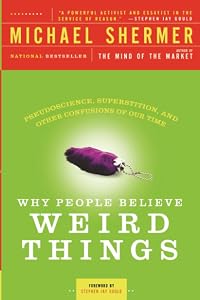
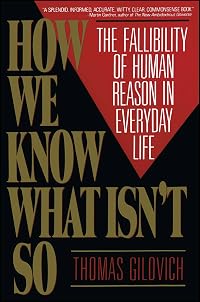
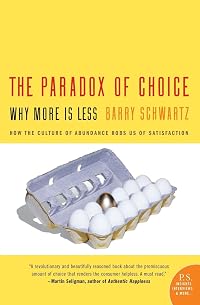
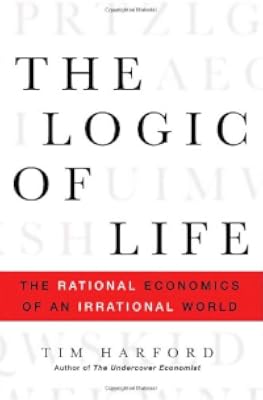
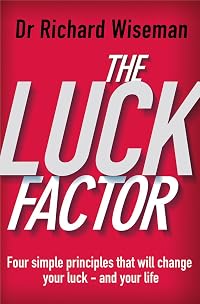
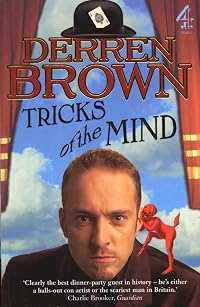
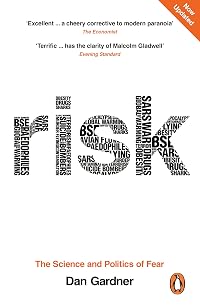
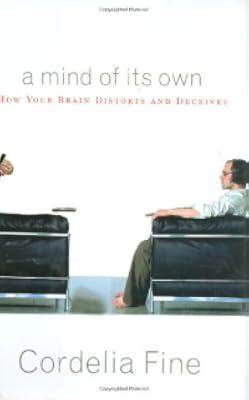
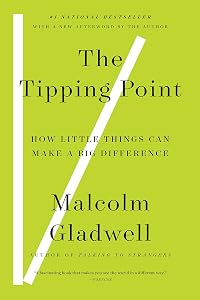
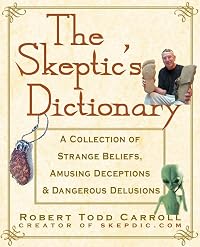
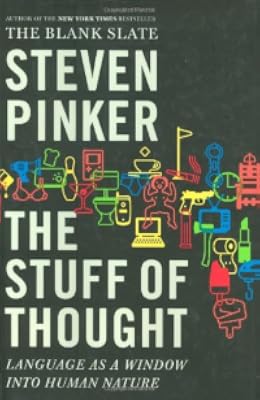
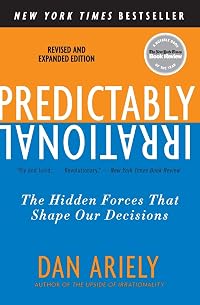



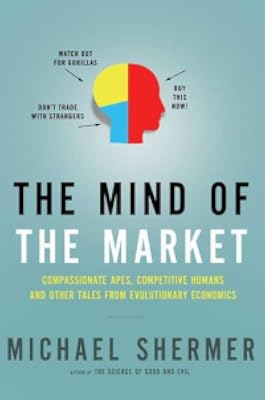
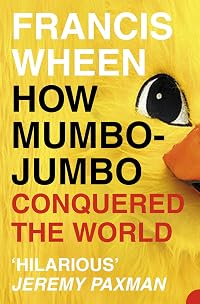
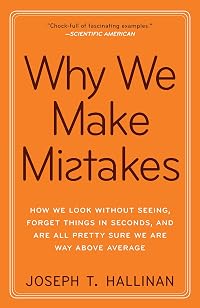
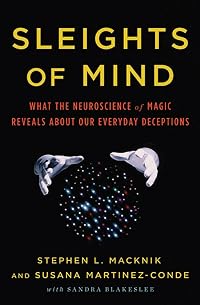
Member Recommendations
Member Reviews
An amusing look at some of the stranger science, where scientists study things that are, well, quirky. Does country music have a high correlation with suicide? How fast do people walk in different cities? What is the world's funniest joke? While some of these are questionable in their methods in terms of efficacy (and a few in terms of ethics - watching people walk while you time them and they are unaware they are part of a science experiment? Problematic, to say the least). He also traces the history of "quirkology" back to what may be its origins (at least as far back as Aristotle). Some of the findings are not surprising; some of them are, well, let's just say, unbelievable. The interesting thing is, the ones that are the hardest to show more believe are the ones he gives the fewest details on how the studies were done, making them at least somewhat suspect. The book would have gotten an extra half star except he kept referring to things as "scientifically proven", outing himself as someone who is not in one of the hard sciences, since hard scientists do not use that phrase unironically. Overall, a fun and quick read. show less
Not much to review here, because there is so much information contained in this book that it really has to speak for itself. Suffice to say, it is just what I like best - a fascinating look at the quirky side of human psychology. Wiseman has compiled a huge amount of research on the funny little aspects of human life that we might not otherwise think twice about, weaving them together in a very accessible and humorous way that compliments the subject matter.
Do you want to find out why there are so many fishermen named Fisher, or so many people called Louis in St. Louis? The funniest joke in the world, and how you can be led to remember events that never happened? Why Friday 13th is really unlucky, and which religion produces the best show more Good Samaritans? How much life has really sped up over recent years, and how to tell whether someone is lying? If the answer is yes, read this book! show less
Do you want to find out why there are so many fishermen named Fisher, or so many people called Louis in St. Louis? The funniest joke in the world, and how you can be led to remember events that never happened? Why Friday 13th is really unlucky, and which religion produces the best show more Good Samaritans? How much life has really sped up over recent years, and how to tell whether someone is lying? If the answer is yes, read this book! show less
Every so often I feel obliged to read a non-fiction book, and I'm sure I don't know why because I never manage to retain anything from them. Unfortunately one fact I have retained from this that I wish I hadn't is that – you know that experiment where people were told they were giving volunteers electric shocks? Apparently someone repeated that using real electric shocks and puppies and every. Single. Person pressed the button. Human race, I hate you. Anyway! This is a collection of Quite Interesting facts and anecdotes, and some debunking of popular suppositions and mythologies, but … I was unconvinced. In a great many cases, the 'science' seemed weaker and more far-fetched than the superstitions it was trying to debunk. Not that I show more subscribe to the superstitions either; I'm just saying.
The high point of the book? The typo (?) on page 188 which states "Although Freud claimed to be a scientist, many of his ideas are completely untesticle." Now, is that a deliberate Freudian slip … or what?
Donated to Nairne, as it was on her wishlist. show less
The high point of the book? The typo (?) on page 188 which states "Although Freud claimed to be a scientist, many of his ideas are completely untesticle." Now, is that a deliberate Freudian slip … or what?
Donated to Nairne, as it was on her wishlist. show less
The author starts with a disclaimer that the science within is questionable but that's like starting a biography by saying all characters are fictional. Most experiments cited are sadly debunked and bad science in general but they read well and come to pleasing conclusions.
My initial impression as I began reading this book was that this was all sort of silly pretend science telling me little that I didn't already know or wouldn't have guessed. My respect for the book and research grew as I read it although in the end it is a book of intriguing facts. It did become clear that human beings are much more susceptible to suggestion than one could imagine. We respond to people, making serious life and death decisions in politics and courtrooms on the bases of nose shape, last name, number of blinks let alone race and gender. Humans, also performed miserably in terms of honesty and giving.
I found the chapter on "funny jokes" fell particularly flat. None of them warranted more than half a chuckle.
I found the chapter on "funny jokes" fell particularly flat. None of them warranted more than half a chuckle.
How does your surname influence your life? What does the way you walk reveal about your personality? Why should women have men write their personal ads? What is the funniest joke in the world, and do religious fundamentalists have a sense of humour? Why are people in Delhi more helpful than Londoners? How can you be persuaded to remember events that never actually happened? Why do incompetent politicians win elections?
For over twenty years, psychologist Professor Richard Wiseman has examined the quirky science of everyday life. He has spents nights in allegedly haunted houses, conducted clandestine experiments in over thirty countries, and dressed up in a giant chicken suit. Here, he describes his adventures into the backwaters of human show more behaviour, and pays tribute to others who have carried out similarly weird and wonderful work. Presenting a fresh look at the fascinating phenomenon that is your life, this is the definitive guide to what happens when behavioural scientists misbehave. show less
For over twenty years, psychologist Professor Richard Wiseman has examined the quirky science of everyday life. He has spents nights in allegedly haunted houses, conducted clandestine experiments in over thirty countries, and dressed up in a giant chicken suit. Here, he describes his adventures into the backwaters of human show more behaviour, and pays tribute to others who have carried out similarly weird and wonderful work. Presenting a fresh look at the fascinating phenomenon that is your life, this is the definitive guide to what happens when behavioural scientists misbehave. show less
A very amusing look into the quirkiness of human psychology.
Members
- Recently Added By
Author Information

22+ Works 3,730 Members
Richard Wiseman, Ph.D. is Professor of Public Understanding of Psychology at the University of Hertfordshire
Some Editions
Common Knowledge
- Canonical title
- Quirkology: The Curious Science Of Everyday Lives
- Original publication date
- 2007
- Epigraph
- What is the use of such a study? The criticism implied in this question has never bothered me, for any activity seems to me of value if it satisfies curiosity, stimulates ideas, and gives a new slant to our understanding of ... (show all)the social world.
--Stanley Milgram, The Individual in a Social World - Dedication
- To Mum and Dad
- First words
- Before we begin, please take a moment to complete the following exercise.
- Last words
- (Click to show. Warning: May contain spoilers.)Together, we can terminate tedious talk and pep up the dullest of evenings.
Classifications
Statistics
- Members
- 1,038
- Popularity
- 24,906
- Reviews
- 20
- Rating
- (3.61)
- Languages
- 9 — Chinese, Dutch, English, French, German, Italian, Portuguese, Spanish, Swedish
- Media
- Paper, Audiobook, Ebook
- ISBNs
- 27
- ASINs
- 10