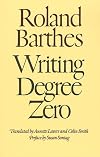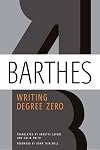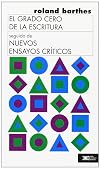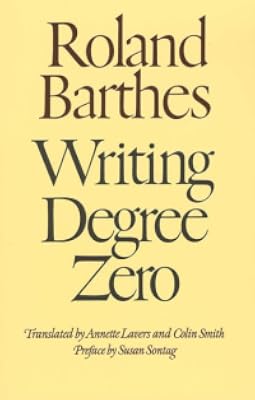
Writing Degree Zero
by Roland Barthes
On This Page
Description
"Is there any such thing as revolutionary literature? Can literature, in fact, be political at all? These are the questions Roland Barthes addresses in Writing Degree Zero, his first published book and a landmark in his oeuvre. The debate had engaged the European literary community since the 1930s; with this fierce manifesto, Barthes challenged the notion of literature's obligation to be socially committed. Yes, Barthes allows, the writer has a political and ethical responsibility. But the show more history of French literature shows that the writer has often failed to meet it--and from Barthes's perspective, literature is committed to little more than the myth of itself. Expert and uncompromising, Writing Degree Zero introduced the themes that would soon establish Barthes as one of the leading voices in literary criticism."--P. [4] of cover. show lessTags
Recommendations



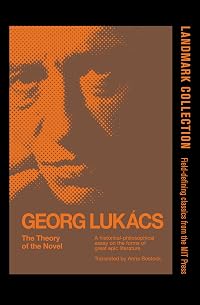
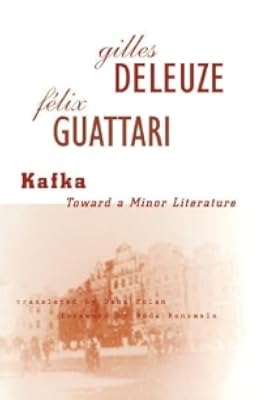
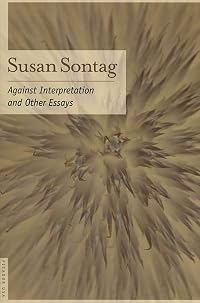
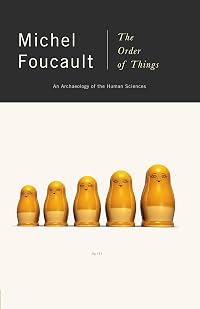



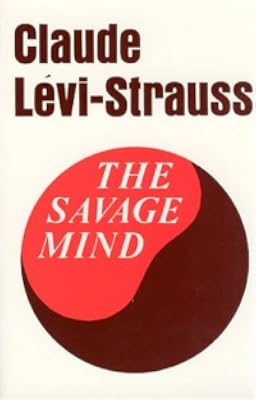
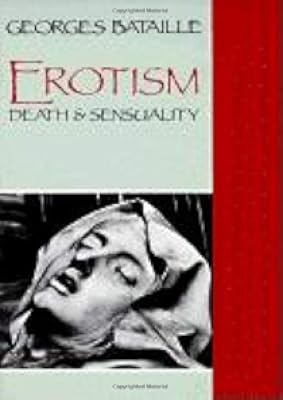
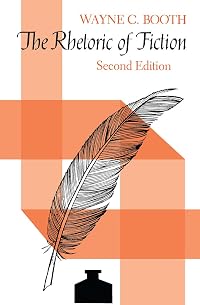

Member Recommendations

by anonymous user
Member Reviews
GB-3
Oct 21, 2020Catalan
Sabemos que a língua é um corpo de prescrições e de hábitos, comum a todos os escritores de uma época. Isto quer dizer que a língua é como uma natureza que passa inteiramente através da fala do escritor, sem, contudo, lhe dar nenhuma forma, e sem mesmo a alimentar - é como um círculo abstrato de verdades, fora do qual começa a depositar-se a densidade de um verbo solitário.
Jun 18, 2021Portuguese (Portugal)
Barthes tiene la intención de afirmar la existencia de una realidad independiente del lenguaje de la forma y el estilo, trata de mostrar cómo funciona esta tercera dimensión formales que une el escritor a su sociedad
Mar 19, 2014Spanish
Ensayos de Barthes de las escrituras neutras o el grado cero de la escritura. El autor responde a la pregunta ¿ué es la escritura? y la escritura y política, entre otros temas.
Sep 7, 2020Spanish
Roland Barthes, född 12 november 1915, död 25 mars 1980, fransk författare, litteraturforskare och semiotiker. Barthes var professor vid École Pratique des Hautes Études i Paris. Han avled efter att ha blivit påkörd av en tvättbil.
Barthes räknas till strukturalismens centralgestalter. Han skrev en rad tongivande texter inom semiotik, semantik och lingvistik. Barthes var tydligt påverkad av existentialismen.
Genom att introducera termen translingvistisk, kunde Barthes tillämpa semiotikens språkliga begreppsapparat på de flesta mänskliga aktiviteter - från myter och matvanor till visuella miljöer i vidaste bemärkelse. Men det är kanske med sin insats inom bildanalysen som Barthes fick sitt största inflytande: Hans show more klassiska artikel Rhétorique de l'image (Bildens retorik) i tidskriften Communications 1964 redogör för en bilds olika artikulationsnivåer, konnotationsförhållanden och retoriska figurer.
Senare texter, såsom Balzac-analysen i S/Z, har också varit centrala för den poststrukturalistiska utvecklingen inom litteraturvetenskapen. show less
Barthes räknas till strukturalismens centralgestalter. Han skrev en rad tongivande texter inom semiotik, semantik och lingvistik. Barthes var tydligt påverkad av existentialismen.
Genom att introducera termen translingvistisk, kunde Barthes tillämpa semiotikens språkliga begreppsapparat på de flesta mänskliga aktiviteter - från myter och matvanor till visuella miljöer i vidaste bemärkelse. Men det är kanske med sin insats inom bildanalysen som Barthes fick sitt största inflytande: Hans show more klassiska artikel Rhétorique de l'image (Bildens retorik) i tidskriften Communications 1964 redogör för en bilds olika artikulationsnivåer, konnotationsförhållanden och retoriska figurer.
Senare texter, såsom Balzac-analysen i S/Z, har också varit centrala för den poststrukturalistiska utvecklingen inom litteraturvetenskapen. show less
May 17, 2010Swedish
Ratings
Members
- Recently Added By
Published Reviews
added by AngelsAngladaLibrary
Lists

Le Monde - Les 100 livres du siècle
121 works; 25 members

Filosofía - Clásicos
217 works; 1 member

Favourite Books
1,819 works; 316 members

Books That Changed Me
158 works; 47 members

Books We'd Want on a Desert Island
203 works; 131 members
Author Information

191+ Works 22,346 Members
Roland Barthes (1915-1980), a French critic and intellectual, was a seminal figure in late twentieth-century literary criticism. Barthes's primary theory is that language is not simply words, but a series of indicators of a given society's assumptions. He derived his critical method from structuralism, which studies the rules behind language, and show more semiotics, which analyzes culture through signs and holds that meaning results from social conventions. Barthes believed that such techniques permit the reader to participate in the work of art under study, rather than merely react to it. Barthes's first books, Writing Degree Zero (1953), and Mythologies (1957), introduced his ideas to a European audience. During the 1960s his work began to appear in the United States in translation and became a strong influence on a generation of American literary critics and theorists. Other important works by Barthes are Elements of Semiology (1968), Critical Essays (1972), The Pleasure of the Text (1973), and The Empire of Signs (1982). The Barthes Reader (1983), edited by Susan Sontag, contains a wide selection of the critic's work in English translation. (Bowker Author Biography) show less
Some Editions
Awards and Honors
Notable Lists
Series
Belongs to Publisher Series
Common Knowledge
- Canonical title*
- 零度の文学
- Original title
- Le degré zéro de l'écriture
- Original publication date
- 1953
- Original language
- French
*Some information comes from Common Knowledge in other languages. Click "Edit" for more information.
Classifications
Statistics
- Members
- 822
- Popularity
- 33,598
- Reviews
- 5
- Rating
- (3.69)
- Languages
- 13 — Catalan, English, Finnish, French, German, Italian, Japanese, Norwegian (Bokmål), Polish, Portuguese, Spanish, Swedish, Turkish
- Media
- Paper, Ebook
- ISBNs
- 41
- ASINs
- 15