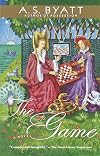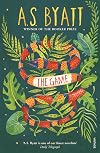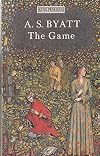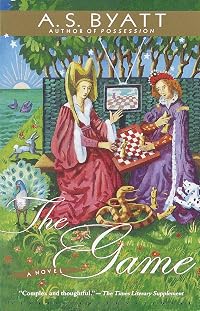
The Game
by A. S. Byatt
On This Page
Description
When they were little girls, Cassandra and Julia played a game in which they entered an alternate world modeled on the landscapes of Arthurian romance. Now, the sisters are grown and have become hostile strangers--until a figure from their past, a man they once both loved and suffered over, reenters their lives. It is the skittish, snake-obsessed Simon who draws Julia and Cassandra into his charismatic orbit... and into menacing proximity to each other, their discarded selves, and the game show more that neither of them has completely forgotten. show lessTags
Recommendations












Member Recommendations
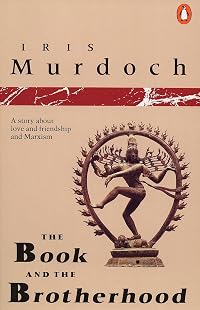
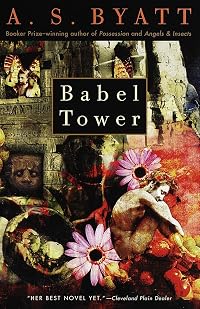
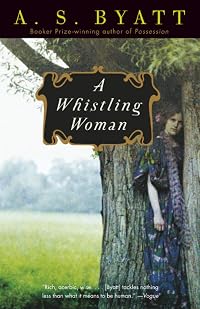
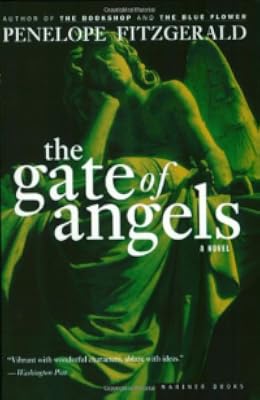
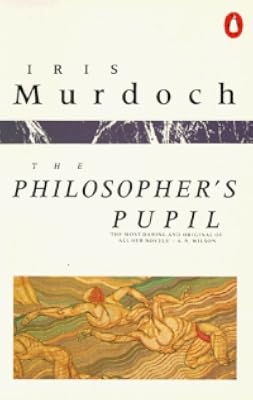
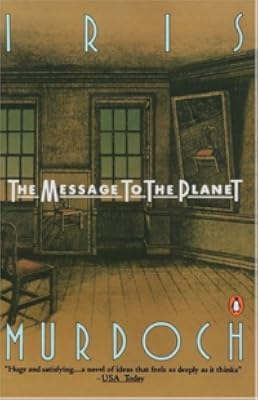
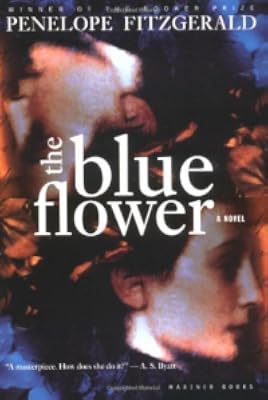
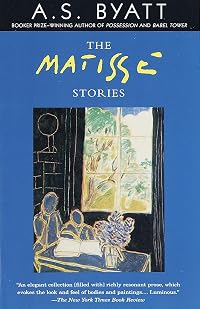
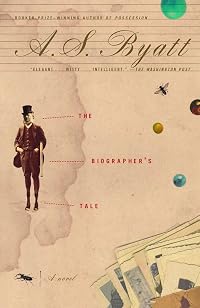
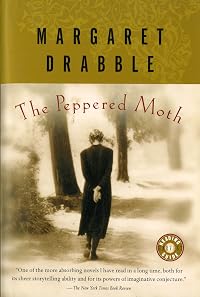
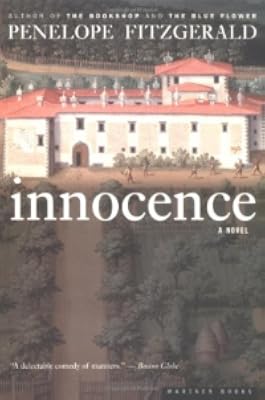
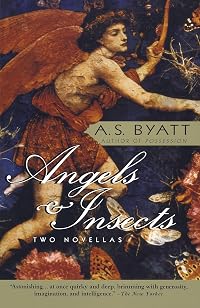
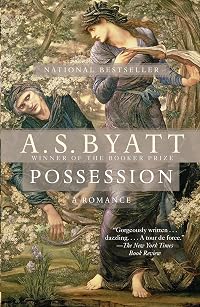
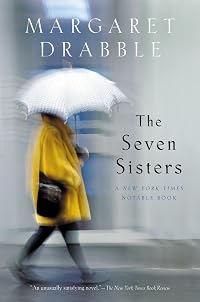
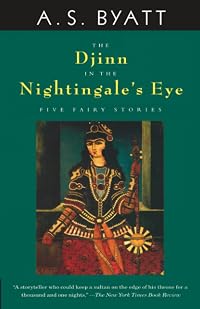
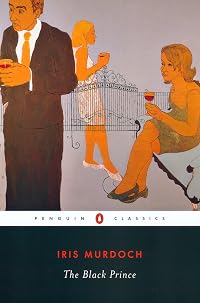
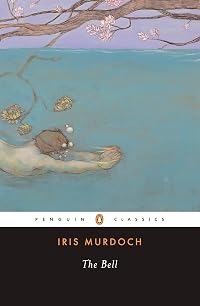
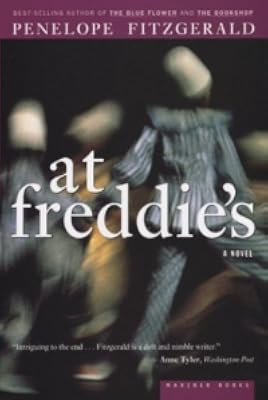
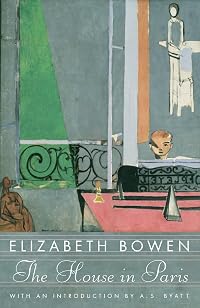
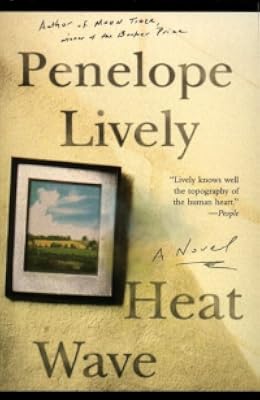
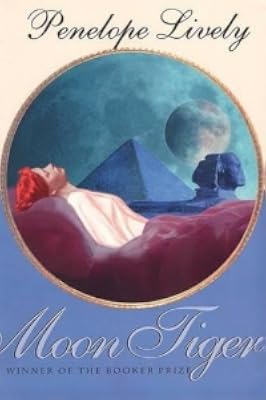
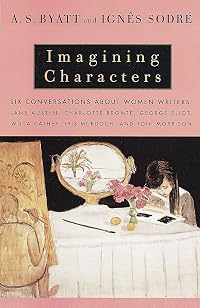
KayCliff Both novels deal with the publication of private family matters.
Member Reviews
Like certain reptiles she had learned to survive by leaving in Julia's hand the dead stump of the tail by which she had been grasped. One could even, she thought, sacrifice a more necessary limb, a hand, a foot, which would not grow again, and still survive. One could do this for ever, so long as one was not touched to the quick. Let Julia store and catalogue the limp relicts of what had been Cassandra. Successive skins, discarded hair and nails, the dead stuff of witchcraft, like the photographs, like the fiction.
At the start of the story, it seemed that Simon would be the snake who came between sisters Cassandra and Julia and ruined their relationship with each other, but then I realised that Simon had problems of his own and was in show more many ways just another piece in the Looking-Glass chess game whose moves and maps had been laid out long before his arrival. Oxford don Cassandra has spent her life trying to protect her own privacy and keep her little sister out, while Julia was desperate to be allowed in, but was careless with her sister's secrets.
When SImon comes back into their lives twenty years nearly twenty years after leaving to study snakes, it seems that they may be able to repair their relationship but then Julia ruins everything. Julia is a novelist who uses her husband and child as raw material for her best-selling novels and seems lacking in empathy, constantly having to ask her husband whether she is behaving badly, and asking another friend if she has written a wicked novel, when she should have realised herself that writing it was the ultimate betrayal. I prefer Cassandra but that is probably because she is the character most like me, as she isn't really any more likeable than Julia or SImon. show less
At the start of the story, it seemed that Simon would be the snake who came between sisters Cassandra and Julia and ruined their relationship with each other, but then I realised that Simon had problems of his own and was in show more many ways just another piece in the Looking-Glass chess game whose moves and maps had been laid out long before his arrival. Oxford don Cassandra has spent her life trying to protect her own privacy and keep her little sister out, while Julia was desperate to be allowed in, but was careless with her sister's secrets.
When SImon comes back into their lives twenty years nearly twenty years after leaving to study snakes, it seems that they may be able to repair their relationship but then Julia ruins everything. Julia is a novelist who uses her husband and child as raw material for her best-selling novels and seems lacking in empathy, constantly having to ask her husband whether she is behaving badly, and asking another friend if she has written a wicked novel, when she should have realised herself that writing it was the ultimate betrayal. I prefer Cassandra but that is probably because she is the character most like me, as she isn't really any more likeable than Julia or SImon. show less
This was Byatt's second novel of the sixties, whose writing overlapped with The shadow of the sun. It picks up different aspects of the same theme, the way social expectations at the time wouldn't allow a woman to be both an academic and a creative artist, or indeed both an academic and a wife and mother. But where The shadow of the sun does this by presenting a young woman with (false) choices, The Game shows us two sisters in their thirties, after their lives have been sent off down diverging tramlines, with Cassandra — the imaginative, dogmatic one — turned into a spinsterish don in an Oxford ladies' college and Julia — the one who's connected to the real world — into a successful social-realist novelist with a family and a show more slot on a TV arts programme.
There are plenty of hints in the text that we are meant to read these two women as different sides of the same person, but of course we're also going to be jumping to conclusions about possible autobiographical elements, and Byatt exploits that knowledge by talking about the way that novelists can't help stealing from real life, and having Julia precipitate the novel's crisis by writing a book about a character obviously based on Cassandra.
There's also a lot in the book about engagement with the real world, and what it means: Julia and Cassandra are both, in different ways, still stuck in the Brontë-ish fantasy country of the Game they played as children, which was clearly at least in part an escape from the well-meaning rootedness of their Quaker family. At the same time, Simon, the boy they fought over many years ago, is off in the rain-forest trying to convince us all that what a snake is to the world and to itself is more important than what the image of a snake suggests to a human, and Julia's charity-organiser husband Thor burns with frustration at his inability to solve the real problems that he sees around him.
Iris Murdoch's footprints are all over this, of course (Byatt was also working on a critical study of her early novels at the time), but it isn't quite a pastiche Iris Murdoch novel. One very striking element (which I'm sure some readers hate) is the way the novelist and the critic constantly seem to be fighting in the background, forcing us to be constantly aware that this is a novel we're reading: characters are forever realising why they've just said what they did, and what effect they must have been trying to achieve with those words; towards the end of the book Byatt amuses herself by parodying a Sunday Times review of Julia's book-within-a-book, in which the reviewer picks out for particular criticism some of the most memorable images in the "real" story, like Cassandra's crucifix necklace dangling in the college spaghetti. show less
There are plenty of hints in the text that we are meant to read these two women as different sides of the same person, but of course we're also going to be jumping to conclusions about possible autobiographical elements, and Byatt exploits that knowledge by talking about the way that novelists can't help stealing from real life, and having Julia precipitate the novel's crisis by writing a book about a character obviously based on Cassandra.
There's also a lot in the book about engagement with the real world, and what it means: Julia and Cassandra are both, in different ways, still stuck in the Brontë-ish fantasy country of the Game they played as children, which was clearly at least in part an escape from the well-meaning rootedness of their Quaker family. At the same time, Simon, the boy they fought over many years ago, is off in the rain-forest trying to convince us all that what a snake is to the world and to itself is more important than what the image of a snake suggests to a human, and Julia's charity-organiser husband Thor burns with frustration at his inability to solve the real problems that he sees around him.
Iris Murdoch's footprints are all over this, of course (Byatt was also working on a critical study of her early novels at the time), but it isn't quite a pastiche Iris Murdoch novel. One very striking element (which I'm sure some readers hate) is the way the novelist and the critic constantly seem to be fighting in the background, forcing us to be constantly aware that this is a novel we're reading: characters are forever realising why they've just said what they did, and what effect they must have been trying to achieve with those words; towards the end of the book Byatt amuses herself by parodying a Sunday Times review of Julia's book-within-a-book, in which the reviewer picks out for particular criticism some of the most memorable images in the "real" story, like Cassandra's crucifix necklace dangling in the college spaghetti. show less
But why?
Why is this book called The Game?
There is a game the two sisters played as children, and this game is still important in their later lives. I also know that the one sister needs the other one to weave a web, and that snakes always try to deceive women, but which man is the snake? I further know biting a apple isn't always biting an apple and that bananas often represent something that isn't a fruit.
Byatt seems to love the romantic poets. Nobody can blame her for that, but in this novel she seems to get stuck in her own metaphorical web. I think I was disappointed because I really loved The Children's Book.
Nevertheless, this book is food for thought, and in some passages you recognise the fact that Byatt is a good writer. I show more wouldn't suggest this book to anyone, but that doesn't mean you shouldn't read Byatt. I still have Possession on my shelf. I wont read it know, but reading this book doesn't mean I'll never read it. show less
Why is this book called The Game?
There is a game the two sisters played as children, and this game is still important in their later lives. I also know that the one sister needs the other one to weave a web, and that snakes always try to deceive women, but which man is the snake? I further know biting a apple isn't always biting an apple and that bananas often represent something that isn't a fruit.
Byatt seems to love the romantic poets. Nobody can blame her for that, but in this novel she seems to get stuck in her own metaphorical web. I think I was disappointed because I really loved The Children's Book.
Nevertheless, this book is food for thought, and in some passages you recognise the fact that Byatt is a good writer. I show more wouldn't suggest this book to anyone, but that doesn't mean you shouldn't read Byatt. I still have Possession on my shelf. I wont read it know, but reading this book doesn't mean I'll never read it. show less
This book is less immediately engaging than the later books which made A S Byatt popular, but it is intriguing and disciplined. It's possible to see her use of interlocking plots and relationships illuminating wider themes; her interest in science and religion as forms of creativity; and her detailed and precise excavation of personal relationships. In this case, the relationship between two sisters is the heart of the novel, illuminated by various other interactions. Awkward comedy sits alongside high seriousness, and the writing is detailed and demanding - I often found myself repeating sections of prose to try to understand the nuances. I enjoyed reading a novel where everything fits a purpose and there is very little additional show more baggage - I suspect some of its images will stay with me for a long time - Cassandra painting furiously in the botanical gardens; the awful college dinner party then skewered in fiction; Julia eating avocado with her lover in front of the fire... show less
This is a masterful bit of writing. The relationship between the sisters is both compelling and disturbing. I can not say that I "enjoyed" the book, but I did admire it.
This was my first book by Byatt, and a very early one in her career. Had I not known of her relationship to her sister Margaret Drabble, I would have guessed something like it anyway. The two have been involved in a long feud since before they were published writers, it seems, and this novel puts that kind of feud on top of a set of adolescent crushes (over the same boy), a therapeutic marriage, Oxford, and TV parody. Julia and Cassandra are sisters that barely speak - Julia is a popular novelist (in the more scornful sense of the phrase), married to a serious Scandinavian Quaker, while Cassandra is a solitary, spinster Oxford don specializing in early English work like the Romance of the Rose. Who gets the better of these portrayals show more is, I guess, up to the reader, but as Cassandra is the older (like Byatt) and Julia the popular younger writer (like Drabble at the time this was written), the direction of the intended arrow is fairly clear. According to news accounts, Byatt sent Drabble a copy with an apology when it was published - but not before, you notice. (In this story, the direction is reversed!)
Until half-way through the story, I really struggled to keep going; I just didn't care about the sisters. Then the action speeds up (or I wasn't interrupted as i was before - take your pick), and I finished in a whoosh.
Byatt won the Booker for a much later book, Possession, which even her sister claims is a great work. This one, not so much. show less
Until half-way through the story, I really struggled to keep going; I just didn't care about the sisters. Then the action speeds up (or I wasn't interrupted as i was before - take your pick), and I finished in a whoosh.
Byatt won the Booker for a much later book, Possession, which even her sister claims is a great work. This one, not so much. show less
While ostensibly being about the sibling rivalry between two sisters, largely centered on the affections of one man, Byatt uses this situation to elaborate on possibility and limitation. At one point, I was even reminded of quantum physics and the collapse of the wave function--the actual fact (the "tyranny of objects," as one of the characters states) limiting and defining the possibilities of imagination. Ocassionally, this theme was stressed a bit too strongly or obviously, but this novel was the product of a younger novelist and the story is so compelling that it's easily overlooked.
Byatt is not an overwrought author, and her prose can somtimes read a bit cold even when she is describing the most tragic of circumstances, but this show more isn't a complaint. Rather, it's refreshing not to be subjected to the rampant sensationalism substituting as emotional honesty that can be so easily found nowadays. More, she is a novelist of ideas and has the talent to weave these ideas into the fabric of the story itself rather than force the story into an ill-fitting box or, worse yet, simply overlay an idea onto an unrelated and hope nobody notices.
All in all, another fine book from an important author. show less
Byatt is not an overwrought author, and her prose can somtimes read a bit cold even when she is describing the most tragic of circumstances, but this show more isn't a complaint. Rather, it's refreshing not to be subjected to the rampant sensationalism substituting as emotional honesty that can be so easily found nowadays. More, she is a novelist of ideas and has the talent to weave these ideas into the fabric of the story itself rather than force the story into an ill-fitting box or, worse yet, simply overlay an idea onto an unrelated and hope nobody notices.
All in all, another fine book from an important author. show less
Members
- Recently Added By
Author Information

83+ Works 38,399 Members
A.S. Byatt was born on August 24, 1936 in Sheffield, England. She received a B.A. from Newnham College, Cambridge in 1957, did graduate study at Bryn Mawr College from 1957-58, and attended Somerville College, Oxford from 1958-59. She was a staff member in the extra-mural department at the University of London from 1962-71. From 1968-69, she was show more also a part-time lecturer in the liberal studies department of the Central School of Art and Design, London. She was a lecturer at University College from 1972-80 and then senior lecturer from 1981-83. She became a full-time writer in 1983. Her works include The Biographer's Tale, The Virgin in the Garden, Babel Tower, A Whistling Woman, and The Children's Book. She also wrote numerous collections of short stories including Sugar and Other Stories, The Matisse Stories, The Djinn in the Nightingale's Eye, Elementals, and Little Black Book of Stories. Byatt received the English Speaking Union fellowship in 1957-58, the Fellow of the Royal Society of Literature in 1983, the Silver Pen Award for Still Life, and the Booker Prize for Possession: A Romance in 1990. (Bowker Author Biography) show less
Some Editions
Common Knowledge
- Canonical title
- The Game
- Original title
- The Game
- Original publication date
- 1967
- People/Characters
- Cassandra Corbett; Julia Corbett; Simon Moffit
- Important places
- University of Oxford, Oxford, Oxfordshire, England, UK; Oxford, Oxfordshire, England, UK; Oxfordshire, England, UK
- First words
- "Come again soon", Julia said, arresting them again at the top of the stairs, smiling and pleading.
- Quotations
- I think
no one has the necessary right to publish what they know - however good it
might be for them to write it. - Last words
- (Click to show. Warning: May contain spoilers.)Behind Julia and Simon, in the dark boot of the car, closed into crates, unread, unopened, Cassandra's private papers bumped and slid.
Classifications
Statistics
- Members
- 791
- Popularity
- 35,380
- Reviews
- 15
- Rating
- (3.27)
- Languages
- English, Spanish, Turkish
- Media
- Paper, Audiobook, Ebook
- ISBNs
- 15
- ASINs
- 6