On This Page
Description
From the Publisher: True fear is a gift. Unwarranted fear is a curse. Learn how to tell the difference. A date won't take "no" for an answer. The new nanny gives a mother an uneasy feeling. A stranger in a deserted parking lot offers unsolicited help. The threat of violence surrounds us every day. But we can protect ourselves, by learning to trust-and act on-our gut instincts. In this empowering book, Gavin de Becker, the man Oprah Winfrey calls the nation's leading expert on violent show more behavior, shows you how to spot even subtle signs of danger-before it's too late. Shattering the myth that most violent acts are unpredictable, de Becker, whose clients include top Hollywood stars and government agencies, offers specific ways to protect yourself and those you love, including-how to act when approached by a stranger-when you should fear someone close to you-what to do if you are being stalked-how to uncover the source of anonymous threats or phone calls-the biggest mistake you can make with a threatening person and more. Learn to spot the danger signals others miss. It might just save your life. show lessTags
Recommendations















Member Reviews
***NO SPOILERS***
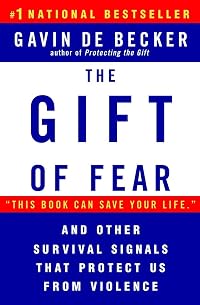
Something about the title and cover design of The Gift of Fear gives the impression that it’s a self-help book about self-defense. It isn’t. The only good thing on the cover is the quotation separating title from subtitle: “This Book Can Save Your Life.” That’s true.
The author is a specialist in security issues and threat assessment who owns a successful private security firm in Los Angeles called Gavin de Becker & Associates. His clients include many high-profile figures. (The acknowledgements section shares an impressive array of many famous names.) His love for the topic is evident, and his reasoning and explanations intelligent and clear.
Really explaining The Gift of Fear in a way that does it justice show more will easily overwhelm this review space, but its main idea is that human intuition (or “gut feeling”) is more powerful and helpful than it gets credit for and absolutely can save one’s life. Logic is always viewed as superior to “mere feelings,” and intuition is feeling; however, de Becker explains that it’s when one employs logic in situations that feel uncomfortable or “off” in some way that those situations can turn dangerous. De Becker says so much about intuition that sounds radical to those who have been taught that logic is paramount.
Fans of true-crime stories will enjoy The Gift of Fear. De Becker intermingled numerous stories—all true, some famous and some not—throughout. Some of the stories illustrate instances when someone’s intuition protected them; other stories are the opposite. De Becker examined the criminal mind and broke apart many famous cases to bolster his chapters on assassins, stalking, domestic violence, violent children, and workplace violence, among others.
He strongly opposes how some movies and TV shows depict romantic relationships, particularly how men are portrayed pursuing women.* He also opposes how media report crime and portray criminals and explains why, after one kind of crime occurs, copycat crimes occur not long thereafter. Criminals receive lionizing media attention, and de Becker argues for a sea change:
"I propose that we don’t show the bullets on the bureau in the seedy hotel room; show instead the dirty underwear and socks on the bathroom floor. I propose that we don’t arrange photo opportunities that show the offender being escorted by ten federal agents from a helicopter to a motorcade of waiting cars. [...]
"Conversely, guarded by federal agents (just like the president), whisked into waiting helicopters (just like the president), his childhood home shown on TV (just like the president), the type of gun he owned fired on the news by munitions experts extolling its killing power, the plans he made described as “meticulous”—these presentations promote the glorious aspects of assassination and other media crimes. Getting caught for some awful violence should be the start of oblivion, not the biggest day of one’s life.
"But it was the biggest day in the life of accused Oklahoma City bomber Timothy McVeigh, who was paraded in front of the waiting press surrounded by FBI agents, rushed to a motorcade, and then whisked away in a two-helicopter armada. We saw this even more with accused Unabomber Ted Kaczynski, whose close-up appeared on the covers of Time, U.S. News & World Report, and Newsweek (twice). The cover text of all three described Kaczynski as a “genius.”
"Reporters usually refer to assassins with triple names, like Mark David Chapman, Lee Harvey Oswald, Arthur Richard Jackson. One might come to believe that assassins actually used these pretentious triple names in their pre-attack lives; they didn’t. They were Mark, Lee, and Arthur.
"I propose promoting the least glamorous incarnation of their names. Call a criminal Ted Smith instead of Theodore Bryant Smith. Better still, find some nickname used in his pre-attack life:
"Federal agent: His name is Theodore Smith, but he was known as Chubby Ted."
Furthermore, although media are fond of reporting that criminals “snapped” or claim “nobody could have seen this coming,” de Becker explains that there are, unequivocally, “pre-incident indicators” before violent acts. He lists and explains these in detail.
The Gift of Fear was published in 1997 but fortunately has aged well. The only topic not covered that definitely would be covered in an updated edition is cyber-stalking and general internet safety. As the book stands now, however, the chapter on stalking contains information that can apply to cyber-stalking. Statistics on various types of violence have no doubt changed also. (For instance, the book says 75 women are raped every hour in the U.S., but as of this writing, it’s a little more: 78 every hour, according to the National Center on Domestic and Sexual Violence.)
Ironically, those living in fear are the ones most in need of The Gift of Fear. It’s captivating, educational, and stunning, but even more than that, it really is empowering, life-altering, and life-saving.
*He would appreciate this article:
"How Rom-Coms Undermine Women": http://www.theatlantic.com/entertainment/archive/2016/11/its-rom-coms-fault-too/...
Update, September 13, 2017: "Stalking, actually: why men who reject rejection are not romantic heroes": https://www.theguardian.com/commentisfree/2017/sep/12/stalking-men-rejection-rom... show less
Something about the title and cover design of The Gift of Fear gives the impression that it’s a self-help book about self-defense. It isn’t. The only good thing on the cover is the quotation separating title from subtitle: “This Book Can Save Your Life.” That’s true.
The author is a specialist in security issues and threat assessment who owns a successful private security firm in Los Angeles called Gavin de Becker & Associates. His clients include many high-profile figures. (The acknowledgements section shares an impressive array of many famous names.) His love for the topic is evident, and his reasoning and explanations intelligent and clear.
Really explaining The Gift of Fear in a way that does it justice show more will easily overwhelm this review space, but its main idea is that human intuition (or “gut feeling”) is more powerful and helpful than it gets credit for and absolutely can save one’s life. Logic is always viewed as superior to “mere feelings,” and intuition is feeling; however, de Becker explains that it’s when one employs logic in situations that feel uncomfortable or “off” in some way that those situations can turn dangerous. De Becker says so much about intuition that sounds radical to those who have been taught that logic is paramount.
Fans of true-crime stories will enjoy The Gift of Fear. De Becker intermingled numerous stories—all true, some famous and some not—throughout. Some of the stories illustrate instances when someone’s intuition protected them; other stories are the opposite. De Becker examined the criminal mind and broke apart many famous cases to bolster his chapters on assassins, stalking, domestic violence, violent children, and workplace violence, among others.
He strongly opposes how some movies and TV shows depict romantic relationships, particularly how men are portrayed pursuing women.* He also opposes how media report crime and portray criminals and explains why, after one kind of crime occurs, copycat crimes occur not long thereafter. Criminals receive lionizing media attention, and de Becker argues for a sea change:
"I propose that we don’t show the bullets on the bureau in the seedy hotel room; show instead the dirty underwear and socks on the bathroom floor. I propose that we don’t arrange photo opportunities that show the offender being escorted by ten federal agents from a helicopter to a motorcade of waiting cars. [...]
"Conversely, guarded by federal agents (just like the president), whisked into waiting helicopters (just like the president), his childhood home shown on TV (just like the president), the type of gun he owned fired on the news by munitions experts extolling its killing power, the plans he made described as “meticulous”—these presentations promote the glorious aspects of assassination and other media crimes. Getting caught for some awful violence should be the start of oblivion, not the biggest day of one’s life.
"But it was the biggest day in the life of accused Oklahoma City bomber Timothy McVeigh, who was paraded in front of the waiting press surrounded by FBI agents, rushed to a motorcade, and then whisked away in a two-helicopter armada. We saw this even more with accused Unabomber Ted Kaczynski, whose close-up appeared on the covers of Time, U.S. News & World Report, and Newsweek (twice). The cover text of all three described Kaczynski as a “genius.”
"Reporters usually refer to assassins with triple names, like Mark David Chapman, Lee Harvey Oswald, Arthur Richard Jackson. One might come to believe that assassins actually used these pretentious triple names in their pre-attack lives; they didn’t. They were Mark, Lee, and Arthur.
"I propose promoting the least glamorous incarnation of their names. Call a criminal Ted Smith instead of Theodore Bryant Smith. Better still, find some nickname used in his pre-attack life:
"Federal agent: His name is Theodore Smith, but he was known as Chubby Ted."
Furthermore, although media are fond of reporting that criminals “snapped” or claim “nobody could have seen this coming,” de Becker explains that there are, unequivocally, “pre-incident indicators” before violent acts. He lists and explains these in detail.
The Gift of Fear was published in 1997 but fortunately has aged well. The only topic not covered that definitely would be covered in an updated edition is cyber-stalking and general internet safety. As the book stands now, however, the chapter on stalking contains information that can apply to cyber-stalking. Statistics on various types of violence have no doubt changed also. (For instance, the book says 75 women are raped every hour in the U.S., but as of this writing, it’s a little more: 78 every hour, according to the National Center on Domestic and Sexual Violence.)
Ironically, those living in fear are the ones most in need of The Gift of Fear. It’s captivating, educational, and stunning, but even more than that, it really is empowering, life-altering, and life-saving.
*He would appreciate this article:
"How Rom-Coms Undermine Women": http://www.theatlantic.com/entertainment/archive/2016/11/its-rom-coms-fault-too/...
Update, September 13, 2017: "Stalking, actually: why men who reject rejection are not romantic heroes": https://www.theguardian.com/commentisfree/2017/sep/12/stalking-men-rejection-rom... show less
I really liked a lot of his points - that violence is predictable and preventable, and not doing either is a choice we make - but some of it seemed pretty insensitive to larger concerns. Partly I think it's just dated; it's been more than fifteen years since this book was written, and the way we talk about rape and battered women has changed a little.
Partly, though, de Becker is simply just concerned with safety on an individual level, and doesn't consider any larger societal or political implications. For instance: in one story he points out a university's failure to examine a package delivered to a student from a gun company, which did contain a gun which the student later used to shoot several classmates. That is absolutely a show more warning sign of violence - but I'm on the side of the dean who said that the school can't be in the business of opening its students' mail.
He also never brought up one particular failure of intuition which I'm sure lots of people have been thinking about. De Becker puts a lot of weight on intuition, saying that if you're afraid, it's because you've noticed something that's a sign of danger. Well, look, I live in a racist society and my intuition jumps when I see a black guy just out and walking around. Granted I'm a pretty harmless white girl and the worst thing that will happen if I act on my "intuition" is that I'll make some guy's day a little more miserable, but we've all seen recently what happens with people who feel a little more entitled to act out based on their "intuition" of danger. show less
Partly, though, de Becker is simply just concerned with safety on an individual level, and doesn't consider any larger societal or political implications. For instance: in one story he points out a university's failure to examine a package delivered to a student from a gun company, which did contain a gun which the student later used to shoot several classmates. That is absolutely a show more warning sign of violence - but I'm on the side of the dean who said that the school can't be in the business of opening its students' mail.
He also never brought up one particular failure of intuition which I'm sure lots of people have been thinking about. De Becker puts a lot of weight on intuition, saying that if you're afraid, it's because you've noticed something that's a sign of danger. Well, look, I live in a racist society and my intuition jumps when I see a black guy just out and walking around. Granted I'm a pretty harmless white girl and the worst thing that will happen if I act on my "intuition" is that I'll make some guy's day a little more miserable, but we've all seen recently what happens with people who feel a little more entitled to act out based on their "intuition" of danger. show less
Read: June 2017
I struggled with giving The Gift of Fear a 'star' rating. I didn't 'really like it' as the four stars would imply; in fact it left me feeling, ironically, pretty fearful about the state of the world we live in. This book is a must-read for others like me; who worry about what other people think of them, who want to be seen as polite, considerate and friendly, even if deep down something doesn't feel right about whatever situation we're in.
What I really took from this book were two important points: 1) I should always trust my gut feelings but remember that there is a difference between a 'worry' and a 'fear' and 2) those who want to do us harm rely on the fact that social conditioning can sometimes prevail over our show more instincts, especially for women who may worry more than men about raising their voice or being confrontational. When my daughter is old enough she will definitely recieve a copy of this book from me to read for herself because I think the points Becker raises are very important for everyone to know. show less
I struggled with giving The Gift of Fear a 'star' rating. I didn't 'really like it' as the four stars would imply; in fact it left me feeling, ironically, pretty fearful about the state of the world we live in. This book is a must-read for others like me; who worry about what other people think of them, who want to be seen as polite, considerate and friendly, even if deep down something doesn't feel right about whatever situation we're in.
What I really took from this book were two important points: 1) I should always trust my gut feelings but remember that there is a difference between a 'worry' and a 'fear' and 2) those who want to do us harm rely on the fact that social conditioning can sometimes prevail over our show more instincts, especially for women who may worry more than men about raising their voice or being confrontational. When my daughter is old enough she will definitely recieve a copy of this book from me to read for herself because I think the points Becker raises are very important for everyone to know. show less
I have mixed feelings on this book.
I'm an ardent feminist and my approach to rape and violence against women is to highlight the societal causes. Rather than admonishing women to protect themselves better, I think it's more constructive to explore how society creates rapists.
I think my biggest problem with this book is with the buzz surrounding it. It got passed around the women in my family, and I often see reviews declaring that every woman should read this book. Despite the fact that the book isn't entirely focused on advice for women, people take it as such. This exacerbates a rape culture wherein women are tasked with preventing crimes from happening against them.
On the other hand, de Becker's book doesn't actually read like one of show more those annoying "How not to get raped" email lists. He doesn't suggest restrictions on women's freedom. Indeed, he argues for the exact opposite. He criticizes the baseless fear that women often feel and encourages them to let it go.
While this, I feel, is a good message, I don't think it can be fully presented without an acknowledgement of the rape culture we exist in wherein if a woman doesn't take "proper precautions", she's thereafter blamed for anything that may happen to her. De Becker neglects to address this angle, which plays a large role in complicating matters.
Feminist literature focuses on how the world needs to shift to make things safer. This book - as well as other mainstream sources - focus on how the individual needs to change to be safer within the world. I feel both are necessary to a degree, but I prefer to think in terms of the former.
That all being said, it's a good book for what it purports to do, and there is a lot more in there than just advice for women. It delves into criminal psychology, stalkers, assassins, and child murderers. I have a fascination with these topics, so I found it quite compelling. A couple sections gave me pause, his chapter on domestic violence, in particular.
Still, this guy knows his stuff, and he provides plenty of examples to illustrate his points. It's not a bad book in that regard, and it's surely worth a read if you're interested in the subject matter. show less
I'm an ardent feminist and my approach to rape and violence against women is to highlight the societal causes. Rather than admonishing women to protect themselves better, I think it's more constructive to explore how society creates rapists.
I think my biggest problem with this book is with the buzz surrounding it. It got passed around the women in my family, and I often see reviews declaring that every woman should read this book. Despite the fact that the book isn't entirely focused on advice for women, people take it as such. This exacerbates a rape culture wherein women are tasked with preventing crimes from happening against them.
On the other hand, de Becker's book doesn't actually read like one of show more those annoying "How not to get raped" email lists. He doesn't suggest restrictions on women's freedom. Indeed, he argues for the exact opposite. He criticizes the baseless fear that women often feel and encourages them to let it go.
While this, I feel, is a good message, I don't think it can be fully presented without an acknowledgement of the rape culture we exist in wherein if a woman doesn't take "proper precautions", she's thereafter blamed for anything that may happen to her. De Becker neglects to address this angle, which plays a large role in complicating matters.
Feminist literature focuses on how the world needs to shift to make things safer. This book - as well as other mainstream sources - focus on how the individual needs to change to be safer within the world. I feel both are necessary to a degree, but I prefer to think in terms of the former.
That all being said, it's a good book for what it purports to do, and there is a lot more in there than just advice for women. It delves into criminal psychology, stalkers, assassins, and child murderers. I have a fascination with these topics, so I found it quite compelling. A couple sections gave me pause, his chapter on domestic violence, in particular.
Still, this guy knows his stuff, and he provides plenty of examples to illustrate his points. It's not a bad book in that regard, and it's surely worth a read if you're interested in the subject matter. show less
This was pretty darn good! I wasn’t expecting much and was quite pleasantly surprised. I picked it up because it was the only book Amy Pohler mentions in ‘Yes, Please!’
De Becker is a personal security consultant and the guy who designed MOSAIC threat assessment software.
His bottom line message is that your brain is a supercomputer designed to keep you alive. The biggest threat to humans comes from other humans, and you have social intuition that helps spot threats. Listen to that intuition. If the guy in the elevator creeps you out, he might be dangerous and you should stay away. If that creepy guy starts chatting you up, you should listen to you intuition and get away. He says that people, and women in particular, are socialized show more to be accommodating and to suppress our intuition for the sake of politeness. This is often a mistake as we have brains evolved to defend us from our only remaining predator, other people. He does caveat by saying that you can ruin the sensitivity of intuition by being frightened or anxious all the time.
His examples are mostly anecdotal, but he does provide a few hard data points.
He does wander from practical advice for the everyman into some particulars of his business which spends a lot of time on VIP security and dealing with celebrity stalkers.
He has a great chapters on creepy pressure tactics illustrated by a 40 year old skeezer trying to pick up a teen girl on a plane. He describes and illustrates several verbal techniques used to nudge the girl into compliance. The ones that stand out are type casting “you seem so independent,” or “you don’t look like the adventurous type,” and fishing for details by volunteering information. De Becker seems generally suspicious of anyone making unsolicited small talk.
He also reads a lot into extraneous details. He mentions them several times as an indication that the speaker is lying. We think adding detail makes a story seem more believable, but if we are telling a story we think is true most people aren’t compelled to add useless detail. However, he also cites irrelevant detail as a subconscious assertion of our powerful intuition. He asserts that his clients almost always know who is stalking, harassing, or blackmailing them, they just may not consciously realize that they know. show less
De Becker is a personal security consultant and the guy who designed MOSAIC threat assessment software.
His bottom line message is that your brain is a supercomputer designed to keep you alive. The biggest threat to humans comes from other humans, and you have social intuition that helps spot threats. Listen to that intuition. If the guy in the elevator creeps you out, he might be dangerous and you should stay away. If that creepy guy starts chatting you up, you should listen to you intuition and get away. He says that people, and women in particular, are socialized show more to be accommodating and to suppress our intuition for the sake of politeness. This is often a mistake as we have brains evolved to defend us from our only remaining predator, other people. He does caveat by saying that you can ruin the sensitivity of intuition by being frightened or anxious all the time.
His examples are mostly anecdotal, but he does provide a few hard data points.
He does wander from practical advice for the everyman into some particulars of his business which spends a lot of time on VIP security and dealing with celebrity stalkers.
He has a great chapters on creepy pressure tactics illustrated by a 40 year old skeezer trying to pick up a teen girl on a plane. He describes and illustrates several verbal techniques used to nudge the girl into compliance. The ones that stand out are type casting “you seem so independent,” or “you don’t look like the adventurous type,” and fishing for details by volunteering information. De Becker seems generally suspicious of anyone making unsolicited small talk.
He also reads a lot into extraneous details. He mentions them several times as an indication that the speaker is lying. We think adding detail makes a story seem more believable, but if we are telling a story we think is true most people aren’t compelled to add useless detail. However, he also cites irrelevant detail as a subconscious assertion of our powerful intuition. He asserts that his clients almost always know who is stalking, harassing, or blackmailing them, they just may not consciously realize that they know. show less
This book examines the survival impulse that is fear and how it comes into play in life or death situations to assist us in predicting and responding to violence. The author draws on a lifetime of experience protecting people from known threats and identifying unknown ones. He explains the difference between worry and fear and how to tell the difference. He offers case studies from his career, helpful lists of warning signs and an encouraging message to trust our instincts and act to protect ourselves.
I found this book very thought provoking and valuable in assessing my own anxieties. I've never been in a situation such as what he describes, but I've often worried about them. And that is perhaps one of the most important points: most show more people will never experience these extreme situations, so worrying about them constantly is not helpful or particularly effective. Instead, we all ought to stay calm and observant of our surroundings. If something bothers us we should pay increased attention to it and consider why it unnerves us.
Like I said, there's a lot to analyze here, so I might benefit from listening to it again in a few months or a year. show less
I found this book very thought provoking and valuable in assessing my own anxieties. I've never been in a situation such as what he describes, but I've often worried about them. And that is perhaps one of the most important points: most show more people will never experience these extreme situations, so worrying about them constantly is not helpful or particularly effective. Instead, we all ought to stay calm and observant of our surroundings. If something bothers us we should pay increased attention to it and consider why it unnerves us.
Like I said, there's a lot to analyze here, so I might benefit from listening to it again in a few months or a year. show less
A staggering read. Vital for anyone raising children, or whose work regularly brings them in contact with 'the public '. A lot of this is things we all know instinctively, but it is unbelievably useful to see it all pulled together and analysed by a professional with unquestionable resources at his disposal. If you have ever been a victim of unwanted attention or a violent attack you will be amazed to see that it did not 'suddenly come out of nowhere'. Nothing is random. But ultimately, we are all much safer than we might think. The ultimate lesson is: Don't give in to fear, harness it.
Members
- Recently Added By
Lists

Psicología - Clásicos
165 works; 2 members

Mind Expanding Books by hackerkid
581 works; 8 members

Recovery from Psychopath
132 works; 1 member
Author Information

15 Works 4,518 Members
Gavin de Becker is widely regarded as the nation's foremost authority on the protection of public figures. His 900-person firm advises and protects many of the most prominent people and families in the world. He designed the Mosaic Threat Assessment method used to analyze threats to justices of the U.S. Supreme Court and members of Congress, and show more his work has earned him three presidential appointments. In addition to advising many law enforcement and government agencies on predicting violence, de Beeker's firm also serves regular citizens who are victims of domestic abuse and stalking. The Gift of Fear has been published in eighteen languages. show less
Awards and Honors
Awards
Distinctions
Series

Common Knowledge
- Original publication date
- 1997
- Epigraph
- This above all, to refuse to be a victim. - Margaret Atwood
- Dedication
- To the two people who taught me the most about
courage and kindness: my sisters, Chrysti and Melissa.
And for my mother, and grandfather, and father.
And for Ochun. - First words
- He had probably been watching her for awhile.
- Last words
- (Click to show. Warning: May contain spoilers.)Most important, I hope you'll see hazard only in those stormclouds where it exists and live life more fully in the clear skies between them.
(Click to show. Warning: May contain spoilers.)[Epilogue 5/98]
You know that fear will come and get your attention if necessary, and otherwise, it will leave you alone.
Classifications
- Genres
- General Nonfiction, Nonfiction
- DDC/MDS
- 362.88 — Society, government, & culture Social problems and social services Social Welfare Problems of and services to other groups People affected by criminal acts
- LCC
- HM281 .D36 — Social sciences Sociology (General) Sociology These are obsolete numbers no longer used
- BISAC
Statistics
- Members
- 3,724
- Popularity
- 4,339
- Reviews
- 78
- Rating
- (3.99)
- Languages
- 5 — Dutch, English, French, Portuguese, Spanish
- Media
- Paper, Audiobook, Ebook
- ISBNs
- 17
- ASINs
- 29