On This Page
Description
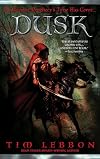
Kosar the thief senses that Rafe Baburn is no ordinary boy. After witnessing a madman plunder Rafe's village and murder his parents, Kosar knows the boy needs his help. And now, for a reason he cannot fathom, others are seeking the boy's destruction. Uncertain where to begin, Kosar turns to A'Meer, an ex-lover and Shantasi warrior whose people, unbeknownst to him, have been chosen to safeguard magic's return. A'Meer knows instantly that it is Rafe who bears this miracle of magic. Now Kosar show more and a band of unexpected allies embark on a battle to protect one special boy. For dark forces are closing in–including the Mages, who have been plotting their own triumphant return. From the Trade Paperback edition. show lessTags
Recommendations


Member Reviews
The cover blurb from author Paul Kearney promised that “Dusk Is Fantasy For Grown-Ups… An Excellent Book.” I agree and cannot think of a better topline summary.
For Grown-Ups? Yes. Dusk is chock-full of: explicit gore, adult sexual situations, profane language, alluring drug trips, etc. This book is not for young adults. It is also not for adults looking for a light read.
Is it Fantasy? Yes. A brief summary (minus the “adults-only warning”) would even seem to describe a typical young adult fantasy book:
-Naïve Farm Boy: Rafe is a central character, an orphaned farm boy who singularly holds the keys to bringing hope to Noreela (read “world”). There is a loose prophecy associated with his existence.
-Fellowship: Also, there show more is a band (a.k.a. obligatory fellowship) of unlikely individuals with unique skill sets that resemble the expected motifs (thanks to Tolkien and Dungeons & Dragons): 1) vulnerable, naive farm boy; 2) a human thief; 3) a Shantasi warrior (read “Elf”); 4) a human witch; 5) a drug-addicted, miner (read “Dwarf”); and lastly another empathetic girl, a human scholar.
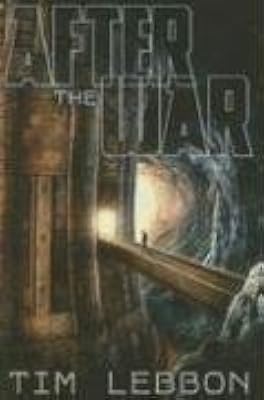
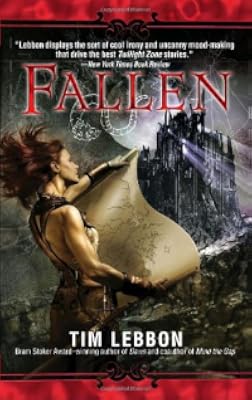
-Series Worthy: Lastly, this is the first in a series of Novels (the others: “#2 Dawn” “#3After the War: Two Tales of Noreela” “#4 Fallen” “#5 Island” )
Cliché or not Cliché: But this is not a coming of age novel, nor is it common fantasy fare. It is the first in a series for the horror-fantasy sub-genre that stereotypically works best in short stories, novellas, or single novels. But Dusk works well as a series opener, perhaps because it employs the framework of common fantasy series.
Clarifying “Magic”: Lebbon presents a strange world, Noreela, that has lost its “magic”; but he defines magic differently than what you may expect. This is a problem for some readers since there are many arguably magical things present in this magic-devoid world. This could undermine the conflict in the book (i.e. who cares if Rafe can bring magic back to Noreela if it is still a fantastical place?). The success of the book hinges on a satisfying demonstration of what magical means. So let me clarify to set future reader’s expectations:
In Noreela, the baseline magicless assertion still allows for:
-Out-of-body mind trips, telepathy, and mind reading (if you take the drug called fledge, or are a Mage)
-Seeing/sensing wraiths (souls disembodied from their corpses)
-Communing speaking with animals (ravens) is doable with alchemy and practice
-Swords that hunger for blood (these are nearly sentient swords that cannot be sheathed until sated)
-Being butchered alive without being hindered, well beyond the limits of biology and physics (Red Monk capability)
-Living hundreds of years (for some humanoids, Shantasi, Red Monks, and a select undead Krote warrior)
-Creatures like giant-hawks and metallic-tumbleweeds exist
So what does “magic” encompass? What is missing that is so valuable? Magic is akin to the Star War's Force, it being a limitless potential of energy. Here, it is inextricably connected to the land’s health. Without it, humans have turned toward apathetic lifestyles, dependent on drugs, without hope of regaining civility. With magic present, select individuals can horde the power and become a god (a Mage): a mage can heal people, raise the dead for sure…but more impressively a mage can control the flow of rivers, animate stone/metal/vegetation to raise armies of golem-like machines, control the weather and even time (well probably).
Lebbon delivers on his strange promises: For every strange perspective presented, for every conflict of importance, he closes the loop. He does so with bizarre, horrific style, but the motivations and workings of Noreela remain consistent. Read this, and even if you consider yourself a veteran fantasy reader, you will be taken to appealing strange worlds. Below are several excerpts that serve as taste-testers. If you enjoy these terrifying and dreadful appetizers, then you will enjoy Dusk!:
Crazy creatures constantly harass our heroes:
-“The tumbler left an intermittent bloody track across the cleaned stone square as it rolled. Crushed into its plant-like hide was a second man, dead, pierced by the thing’s many natural spikes and hooks. One arm flipped free as the tumbler rolled, thumping the stone in a rhythm that gave that silent place a grotesque heartbeat.”
-“A shape burst from the opening, a Red Monk, its decidedly feminine mouth wide open in a frozen grimace of agony and shock…its hood was snagged back by a spear of wood, and Kosar could see its bald head, veins standing out like worm-trail, red, leaking where they split the skin. Its eyes were wide and surely sightless, such was the rate of their expansion and the scarlet pooling of blood in their whites…”
Despair permeates the land of Noreela:
-"Few in Noreela had any inclination to even come in [the library] and read a book, let alone await the opportunity to slink in and steal one when her back was turned. Sometimes she wondered whether there was any intellect left in the world where famine also starved the mind, and dust and fading gods ate away at the tenacity of the people… nobody would notice, and if they did they wouldn’t say anything. And if they did it would not matter.”
-“[The machines] were all incorporated in some way, chopped and changed and altered as if those that had used them were frustrated at their lack of animation. The channels were there within these machines, the empty reservoirs and sacs and current routes that had given them the strange life they once lived, but they were dead. Dead as the sand beneath the dweller’s feet, dead as the air they exhaled, dead as the corpse Rafe saw in the gutter in one or two places. There was a fledger, his or her body twisted and ripped from whatever had killed it. There was something else, something that once could have been fodder because of its size, exposed ribs torn back and knotted by the accelerated growth, slabs of flesh and muscle ripped from its wet corpse…" show less
For Grown-Ups? Yes. Dusk is chock-full of: explicit gore, adult sexual situations, profane language, alluring drug trips, etc. This book is not for young adults. It is also not for adults looking for a light read.
Is it Fantasy? Yes. A brief summary (minus the “adults-only warning”) would even seem to describe a typical young adult fantasy book:
-Naïve Farm Boy: Rafe is a central character, an orphaned farm boy who singularly holds the keys to bringing hope to Noreela (read “world”). There is a loose prophecy associated with his existence.
-Fellowship: Also, there show more is a band (a.k.a. obligatory fellowship) of unlikely individuals with unique skill sets that resemble the expected motifs (thanks to Tolkien and Dungeons & Dragons): 1) vulnerable, naive farm boy; 2) a human thief; 3) a Shantasi warrior (read “Elf”); 4) a human witch; 5) a drug-addicted, miner (read “Dwarf”); and lastly another empathetic girl, a human scholar.
-Series Worthy: Lastly, this is the first in a series of Novels (the others: “#2 Dawn” “#3After the War: Two Tales of Noreela” “#4 Fallen” “#5 Island” )
Cliché or not Cliché: But this is not a coming of age novel, nor is it common fantasy fare. It is the first in a series for the horror-fantasy sub-genre that stereotypically works best in short stories, novellas, or single novels. But Dusk works well as a series opener, perhaps because it employs the framework of common fantasy series.
Clarifying “Magic”: Lebbon presents a strange world, Noreela, that has lost its “magic”; but he defines magic differently than what you may expect. This is a problem for some readers since there are many arguably magical things present in this magic-devoid world. This could undermine the conflict in the book (i.e. who cares if Rafe can bring magic back to Noreela if it is still a fantastical place?). The success of the book hinges on a satisfying demonstration of what magical means. So let me clarify to set future reader’s expectations:
In Noreela, the baseline magicless assertion still allows for:
-Out-of-body mind trips, telepathy, and mind reading (if you take the drug called fledge, or are a Mage)
-Seeing/sensing wraiths (souls disembodied from their corpses)
-Communing speaking with animals (ravens) is doable with alchemy and practice
-Swords that hunger for blood (these are nearly sentient swords that cannot be sheathed until sated)
-Being butchered alive without being hindered, well beyond the limits of biology and physics (Red Monk capability)
-Living hundreds of years (for some humanoids, Shantasi, Red Monks, and a select undead Krote warrior)
-Creatures like giant-hawks and metallic-tumbleweeds exist
So what does “magic” encompass? What is missing that is so valuable? Magic is akin to the Star War's Force, it being a limitless potential of energy. Here, it is inextricably connected to the land’s health. Without it, humans have turned toward apathetic lifestyles, dependent on drugs, without hope of regaining civility. With magic present, select individuals can horde the power and become a god (a Mage): a mage can heal people, raise the dead for sure…but more impressively a mage can control the flow of rivers, animate stone/metal/vegetation to raise armies of golem-like machines, control the weather and even time (well probably).
Lebbon delivers on his strange promises: For every strange perspective presented, for every conflict of importance, he closes the loop. He does so with bizarre, horrific style, but the motivations and workings of Noreela remain consistent. Read this, and even if you consider yourself a veteran fantasy reader, you will be taken to appealing strange worlds. Below are several excerpts that serve as taste-testers. If you enjoy these terrifying and dreadful appetizers, then you will enjoy Dusk!:
Crazy creatures constantly harass our heroes:
-“The tumbler left an intermittent bloody track across the cleaned stone square as it rolled. Crushed into its plant-like hide was a second man, dead, pierced by the thing’s many natural spikes and hooks. One arm flipped free as the tumbler rolled, thumping the stone in a rhythm that gave that silent place a grotesque heartbeat.”
-“A shape burst from the opening, a Red Monk, its decidedly feminine mouth wide open in a frozen grimace of agony and shock…its hood was snagged back by a spear of wood, and Kosar could see its bald head, veins standing out like worm-trail, red, leaking where they split the skin. Its eyes were wide and surely sightless, such was the rate of their expansion and the scarlet pooling of blood in their whites…”
Despair permeates the land of Noreela:
-"Few in Noreela had any inclination to even come in [the library] and read a book, let alone await the opportunity to slink in and steal one when her back was turned. Sometimes she wondered whether there was any intellect left in the world where famine also starved the mind, and dust and fading gods ate away at the tenacity of the people… nobody would notice, and if they did they wouldn’t say anything. And if they did it would not matter.”
-“[The machines] were all incorporated in some way, chopped and changed and altered as if those that had used them were frustrated at their lack of animation. The channels were there within these machines, the empty reservoirs and sacs and current routes that had given them the strange life they once lived, but they were dead. Dead as the sand beneath the dweller’s feet, dead as the air they exhaled, dead as the corpse Rafe saw in the gutter in one or two places. There was a fledger, his or her body twisted and ripped from whatever had killed it. There was something else, something that once could have been fodder because of its size, exposed ribs torn back and knotted by the accelerated growth, slabs of flesh and muscle ripped from its wet corpse…" show less
Very dark. The set pieces - weird beasts, strange cultures and people, and a depiction of a decaying land - all came together memorably. The actual characterization and plotting, however, didn't do that much for me.
I'm not a horror story reader but this was good. It's very dark and at time doesn't seem to know where its going but eventually pulls itself together at the end.
Last night I finished Dusk by Tim Lebbon. It took me about two weeks to finish, and some of that lag was due to a lower amount of reading time than normal. I've been relatively busy, and thus not able to commit as much time to reading. I just wanted to point out that it was not necessarily a reflection of the book.
Dusk starts out with a Red Monk, who you know nothing about coming into a small sleepy town, slaughtering the whole town trying to get to one person, who actually gets away. The Red Monk ends up dying in the town, after being shot a billion times (and after killing everyone but a thief and the boy he was after). The boy and the thief seperately make their way to the next town, Passive, where the thief (Kosar) meets an old show more flame (A'Meer), and the boy (Rafe) meets a witch(Hope). In this time, we meet a librarian named Alicia and a miner named Trey. Through the book, the six of them come together for form a travelling group. Many fantastic things happen to them along the way, usually magic induced.
Magic has left the land for the last 300 years, after the Mages took control of it, and used it for selfish gain. There was a large battle (Cataclysmic War), which drove the Mages to the furthest north as they could go, exiling them for the past three hundred centuries. Many people believed that the Mages were dead or never existed, and had little believe in magic anyway. The only proof that they had were the Red Monks (who lived to destroy magic), and the dead machines (a mixture of robot and bionic life). There were people who watched for the return of magic, like the Shantasi's who wanted to nurture the return of magic and protect it from the Mages. The miner's lived underground, mining the fledge drug that alters the consiousness of who ever takes it, causing them to travel on what would be known as the "astral plain", seeking other minds out. They live in nearly complete darkness, relying on their other senses to help them. Very few miners head top-side (out of the mine), until something horrible happens and forces them to leave.
I enjoyed many aspects of this book. I thought that the creatures were very interesting, as well as the take on magic. I found the corruption and decay of society to be intreguing, knowing that most of the decay was from the lack of magic. I also liked how the world was kind of having issues with magic returning (river flowing backwards, the forest without colours). I like that it wasn't all just peachy keen, and that there were problems with change. I like a few of the characters like Alicia, Kosar, and A'Meer. I thought that the over all plot was good, although a little bit recycled. It didn't bother me that it wasn't brand new, as I find very few books these days are.
I also liked the concept of the Red Monks. While it is unbelievable that madness could drive a person to live for hundreds of years, and sustain fatal wounds and still fight, the concept was well played out. I think that I have a stronger ability to suspend belief then a lot of other people, so that might be part of why I liked them. I enjoyed the sections where you would get a peek into their minds, and taste the madness that lived there. I enjoyed the meeting of the Nax with the head of the Red Monks. I enjoyed the scene in the library with the one old monk (even though I hated what he had done).
One thing that I didn't like about the book was the lack of description. I never got a real feeling for what many of the creatures looked like. What exactly are Tumblers? When he described the hawks, I got an image of flying octapus' with bird heads! The Nax felt very... bleak, like there was nothing to describe, and if that is physically the case, I think there should have been more information about the Nax supplied.
I disliked the language of the book. I felt that it was jarring to read, that no one in fantasy says "screw" for sex, or whatever. I felt like his lingo and slang was very current, and that it jarred with the tone of the book.
I didn't like how many of the characters seemed kind of flat, or undescribed. I know that it's the first part of a two part series (I am assuming - there could be more after Dawn comes out), and thus you have to save some character development for the second book. I guess that you have to find the balance between making a character believable and relatable, and retaining enough information to keep some development back for subsequent stories. I had problems with identifying an age for Rafe. It seemed that sometimes he was 12, and other times, he was on the cusp of manhood (closer to 16 or older). I found it hard to believe that 5 adults would just do what he said, that they would just instantly believe in magic and put all their faith in it. Maybe if Rafe had been a better character, it would have been more believable... but they was it was done was poor. I also dislike how the author treated Hope. He insinuated that she was mad in a couple of places, but didn't give enough behaviours of a person that wasn't all there.
All in all, I felt that it was a good story. It had a definite plot, there was movement in the story, and an interesting premise. Mr. Lebbon did a good job developing his world and introducing interesting points, even if I would have desired more description.
I give this book and R rating. While there wasn't much sex, there was frank discussion of it, often using crude terms. There is a lot of violence, even though it is unbelievable at times, it is still there.
I give it three stars out of five. It could have been better for the reasons I listed above, but it gets a three because it was still a good read. show less
Dusk starts out with a Red Monk, who you know nothing about coming into a small sleepy town, slaughtering the whole town trying to get to one person, who actually gets away. The Red Monk ends up dying in the town, after being shot a billion times (and after killing everyone but a thief and the boy he was after). The boy and the thief seperately make their way to the next town, Passive, where the thief (Kosar) meets an old show more flame (A'Meer), and the boy (Rafe) meets a witch(Hope). In this time, we meet a librarian named Alicia and a miner named Trey. Through the book, the six of them come together for form a travelling group. Many fantastic things happen to them along the way, usually magic induced.
Magic has left the land for the last 300 years, after the Mages took control of it, and used it for selfish gain. There was a large battle (Cataclysmic War), which drove the Mages to the furthest north as they could go, exiling them for the past three hundred centuries. Many people believed that the Mages were dead or never existed, and had little believe in magic anyway. The only proof that they had were the Red Monks (who lived to destroy magic), and the dead machines (a mixture of robot and bionic life). There were people who watched for the return of magic, like the Shantasi's who wanted to nurture the return of magic and protect it from the Mages. The miner's lived underground, mining the fledge drug that alters the consiousness of who ever takes it, causing them to travel on what would be known as the "astral plain", seeking other minds out. They live in nearly complete darkness, relying on their other senses to help them. Very few miners head top-side (out of the mine), until something horrible happens and forces them to leave.
I enjoyed many aspects of this book. I thought that the creatures were very interesting, as well as the take on magic. I found the corruption and decay of society to be intreguing, knowing that most of the decay was from the lack of magic. I also liked how the world was kind of having issues with magic returning (river flowing backwards, the forest without colours). I like that it wasn't all just peachy keen, and that there were problems with change. I like a few of the characters like Alicia, Kosar, and A'Meer. I thought that the over all plot was good, although a little bit recycled. It didn't bother me that it wasn't brand new, as I find very few books these days are.
I also liked the concept of the Red Monks. While it is unbelievable that madness could drive a person to live for hundreds of years, and sustain fatal wounds and still fight, the concept was well played out. I think that I have a stronger ability to suspend belief then a lot of other people, so that might be part of why I liked them. I enjoyed the sections where you would get a peek into their minds, and taste the madness that lived there. I enjoyed the meeting of the Nax with the head of the Red Monks. I enjoyed the scene in the library with the one old monk (even though I hated what he had done).
One thing that I didn't like about the book was the lack of description. I never got a real feeling for what many of the creatures looked like. What exactly are Tumblers? When he described the hawks, I got an image of flying octapus' with bird heads! The Nax felt very... bleak, like there was nothing to describe, and if that is physically the case, I think there should have been more information about the Nax supplied.
I disliked the language of the book. I felt that it was jarring to read, that no one in fantasy says "screw" for sex, or whatever. I felt like his lingo and slang was very current, and that it jarred with the tone of the book.
I didn't like how many of the characters seemed kind of flat, or undescribed. I know that it's the first part of a two part series (I am assuming - there could be more after Dawn comes out), and thus you have to save some character development for the second book. I guess that you have to find the balance between making a character believable and relatable, and retaining enough information to keep some development back for subsequent stories. I had problems with identifying an age for Rafe. It seemed that sometimes he was 12, and other times, he was on the cusp of manhood (closer to 16 or older). I found it hard to believe that 5 adults would just do what he said, that they would just instantly believe in magic and put all their faith in it. Maybe if Rafe had been a better character, it would have been more believable... but they was it was done was poor. I also dislike how the author treated Hope. He insinuated that she was mad in a couple of places, but didn't give enough behaviours of a person that wasn't all there.
All in all, I felt that it was a good story. It had a definite plot, there was movement in the story, and an interesting premise. Mr. Lebbon did a good job developing his world and introducing interesting points, even if I would have desired more description.
I give this book and R rating. While there wasn't much sex, there was frank discussion of it, often using crude terms. There is a lot of violence, even though it is unbelievable at times, it is still there.
I give it three stars out of five. It could have been better for the reasons I listed above, but it gets a three because it was still a good read. show less
Great story, captivating imagery, and an interesting tale bringing so many differently abled individuals together in a story is enchanting. I look forward to the sequel.
This is one of the best fantasy novels ever written.It is not the generic fantasy novel, with orcs, elves, and dwarfs. I recommend that anyone who likes fantasy, especially dark fantasy.
Never in my life have I been more eager to read a sequel than I am to read Dawn, the sequel to Dusk. I didn’t want to put Dusk down, not even when I got to the end. I even read the end pages, the sneak preview of the sequel – something I never do -- because I wanted more of this story. Tim Lebbon has written a book that is compelling, haunting, terrifying and shocking, fully creating a world no one would want to live in but about which everyone will want to read. This genre-bender, skillfully melding horror with fantasy and with (maybe, if you squint a bit) just a soupcon of science fiction, is a fine addition to the New Weird, the wave of new literature of the fantastic that is doing wonderful things infusing new life into genres show more that were becoming mired in computers, elves and gore.
Like many New Weird tales, Dusk is about a place at least as much as it is about people. Noreela is an ailing island; the soil is losing its potency for growing crops, there are sinkholes that resemble whirlpools, and some areas have become so barren that nothing but bedrock remains. The cause of this degradation is the departure of magic from Noreela three centuries ago, coinciding with end of the Cataclysmic War. At the end of the war, the Mages were driven north, past the archipelago and into the unknown world that is outside Noreela. Magic left them at the same time it left the land. At the same time, all machines – powered by magic – ceased to function.
The Red Monks are ever on the lookout for the return of magic, so that they might destroy it once again before it ever takes hold, thereby depriving the Mages of the weapon they used in despicable ways to enslave the land and its people. The Shantasi warriors, on the other hand, are also on the lookout for magic in order to nurture and protect it, keeping it safe from the Mages but giving new life to the land. And in between are the witches, who lost their magic but found natural ways of practicing it, along with those who find magic in huge, lost libraries, and those who mine fledge, the drug that takes them into the minds of the earth, the air, the rocks and all those who inhabit them.
Into this world is born Rafe Baburn, a boy who, for reasons he cannot fathom, leads a Red Monk to attack his village and insanely slaughter all those who live therein. The only survivors are him and a thief, a man who follows him when he flees to Pavisse for protection with his uncle. Rafe meets there with a witch, and Kosar meets with A’Meer, a Shantasi warrior, and together the four flee south and east to escape the pursuing Red Monks. There they meet with a librarian and a fledge miner who has himself escaped horrors newly arrived underground. The band of six, wholly inadequate to the trials they are to face, move on toward Kang Kang and The Blurring. Soon they are running not just from the Red Monks, but from the Mages, who have reawakened to the promise of renewed magic that seems to run through Rafe.
This is not a land of beauty or joy, and it repeatedly shows the frightened and wholly inadequate band of travelers how inept and hopeless their quest truly is. How can you have a quest with no object? Where can they go to find safety from the powerful forces that pursue them? When even the land cries out in misery, how can six people find some measure of protection from the evil that pursues them so relentlessly from every direction?
The slaughter that begins the book describes the tenor of the novel: life is nasty, brutish and short, and people die for absolutely no good reason, in the most horrific ways. Pleasure seems hard to find in Noreela, much less joy. Lebbon’s reputation as a horror writer of great skill is clearly on display in this novel in which strange, unknowable creatures – tumblers, who resemble tumbleweeds with terrible spikes and a malicious intelligence; the Nax, slumbering but vicious creatures of the fledge mines; machines composed of flesh as well as metal; and the Mages themselves, beautiful and powerful and unspeakably hideous, not physically, but in who and what they are. But this is not a pure horror novel; it is a novel of dark fantasy, a novel that partakes of the tropes of the quest, of the Land, and of the magical child.
The writing is exquisite. The characters are fully formed. The sense of place is so strong that you feel you are living there. Several different societies are lovingly described and take firm hold in the imagination. The fear, the horror, the wonder are clearly felt. The mysteries await solutions. As dusk descends on the land in a truly shocking ending, one weirder and more horrifying than any I’ve ever read, all that remains for the reader is an all-encompassing desire to know: what happens next? show less
Like many New Weird tales, Dusk is about a place at least as much as it is about people. Noreela is an ailing island; the soil is losing its potency for growing crops, there are sinkholes that resemble whirlpools, and some areas have become so barren that nothing but bedrock remains. The cause of this degradation is the departure of magic from Noreela three centuries ago, coinciding with end of the Cataclysmic War. At the end of the war, the Mages were driven north, past the archipelago and into the unknown world that is outside Noreela. Magic left them at the same time it left the land. At the same time, all machines – powered by magic – ceased to function.
The Red Monks are ever on the lookout for the return of magic, so that they might destroy it once again before it ever takes hold, thereby depriving the Mages of the weapon they used in despicable ways to enslave the land and its people. The Shantasi warriors, on the other hand, are also on the lookout for magic in order to nurture and protect it, keeping it safe from the Mages but giving new life to the land. And in between are the witches, who lost their magic but found natural ways of practicing it, along with those who find magic in huge, lost libraries, and those who mine fledge, the drug that takes them into the minds of the earth, the air, the rocks and all those who inhabit them.
Into this world is born Rafe Baburn, a boy who, for reasons he cannot fathom, leads a Red Monk to attack his village and insanely slaughter all those who live therein. The only survivors are him and a thief, a man who follows him when he flees to Pavisse for protection with his uncle. Rafe meets there with a witch, and Kosar meets with A’Meer, a Shantasi warrior, and together the four flee south and east to escape the pursuing Red Monks. There they meet with a librarian and a fledge miner who has himself escaped horrors newly arrived underground. The band of six, wholly inadequate to the trials they are to face, move on toward Kang Kang and The Blurring. Soon they are running not just from the Red Monks, but from the Mages, who have reawakened to the promise of renewed magic that seems to run through Rafe.
This is not a land of beauty or joy, and it repeatedly shows the frightened and wholly inadequate band of travelers how inept and hopeless their quest truly is. How can you have a quest with no object? Where can they go to find safety from the powerful forces that pursue them? When even the land cries out in misery, how can six people find some measure of protection from the evil that pursues them so relentlessly from every direction?
The slaughter that begins the book describes the tenor of the novel: life is nasty, brutish and short, and people die for absolutely no good reason, in the most horrific ways. Pleasure seems hard to find in Noreela, much less joy. Lebbon’s reputation as a horror writer of great skill is clearly on display in this novel in which strange, unknowable creatures – tumblers, who resemble tumbleweeds with terrible spikes and a malicious intelligence; the Nax, slumbering but vicious creatures of the fledge mines; machines composed of flesh as well as metal; and the Mages themselves, beautiful and powerful and unspeakably hideous, not physically, but in who and what they are. But this is not a pure horror novel; it is a novel of dark fantasy, a novel that partakes of the tropes of the quest, of the Land, and of the magical child.
The writing is exquisite. The characters are fully formed. The sense of place is so strong that you feel you are living there. Several different societies are lovingly described and take firm hold in the imagination. The fear, the horror, the wonder are clearly felt. The mysteries await solutions. As dusk descends on the land in a truly shocking ending, one weirder and more horrifying than any I’ve ever read, all that remains for the reader is an all-encompassing desire to know: what happens next? show less
Members
- Recently Added By
Author Information

125+ Works 6,874 Members
Awards and Honors
Series

Common Knowledge
- Canonical title
- Dusk
- Original publication date
- 2006
- People/Characters
- Rafe Braburn; Kosar the Thief; A'meer Pott; Royston Braburn; Vance Braburn; Hope (show all 18); Alishia; Trey Barossa; Lucien Malini; Carfallo; Lenora; S'Hivez; Angel; Mogart; Slight; Jayke Bigg; Jossua Elmantoz; Eldriss Mahay
- Important places
- Trengborne, Noreela; Panisse, Noreela; Noreela City, Noreela; Bethwitch; Fledge Mines, Widow's Peak Mountains, Noreela; Dana'Man (show all 9); Land's End, Noreela; San, Noreela; Confirmation, Noreela
- Dedication
- For Tracey, Ellie and Dan, with love
- First words
- When Kosar saw the horseman, the world began to end again.
- Last words
- (Click to show. Warning: May contain spoilers.)Such dark, fearsome dreams.
Classifications
Statistics
- Members
- 261
- Popularity
- 123,804
- Reviews
- 7
- Rating
- (3.37)
- Languages
- English, Lithuanian, Polish
- Media
- Paper, Ebook
- ISBNs
- 5
- ASINs
- 2