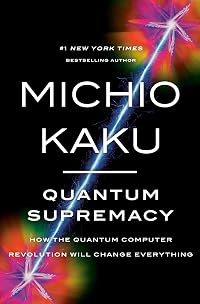
Quantum Supremacy: How the Quantum Computer Revolution Will Change Everything
by Michio Kaku
On This Page
Description
"An exhilarating tour of humanity's next great technological achievement-quantum computing-which may eventually unravel the deepest mysteries of science and solve some of humanity's biggest problems, like global warming, world hunger, and incurable disease, by the bestselling author of The God Equation. The runaway success of the microchip processor may be reaching its end. Running up against the physical constraints of smaller and smaller sizes, traditional silicon chips are not likely to show more prove useful in solving humanity's greatest challenges, from climate change, to global starvation, to incurable diseases. But the quantum computer, which harnesses the power and complexity of the atomic realm, already promises to be every bit as revolutionary as the transistor and microchip once were. Its unprecedented gains in computing power herald advancements that could change every aspect of our daily lives. Automotive companies, medical researchers, and consulting firms are betting on quantum computing, hoping to exploit its power to design more efficient vehicles, create life-saving new drugs, and streamline industries to revolutionize the economy. But this is only the beginning. Quantum computers could allow us to finally create nuclear fusion reactors that create clean, renewable energy without radioactive waste or threats of meltdown. They could help us crack the biological processes that generate natural, cheap fertilizer and enable us to feed the world's growing populations. And they could unravel the fiendishly difficult protein folding that lies at the heart of previously incurable diseases like Alzheimer's, ALS, and Parkinson's, helping us to live longer, healthier lives. There is not a single problem humanity faces that couldn't be addressed by quantum computing. Told with Kaku's signature clarity and enthusiasm, Quantum Supremacy is the story of this exciting frontier and the race to claim humanity's future"-- show lessTags
Recommendations



Member Reviews
Bland recycled pop-sci drivel about a bunch of unrelated topics, none of which have anything whatsoever to do with quantum computers, the purported subject of the book. Kaku starts with an unnecessary of the ancient precursors of modern computers, from the ancient Greeks to Babbage & Lovelace and Godel & Turing. But Von Neumann is only mentioned once in passing, in the section introducing quantum mechanics, and not in the context of computer architecture. Claude Shannon and information theory don't merit even that.
We do get a single chapter about quantum computers, but it reads like a compilation of press releases by Google, IBM, D-Wave, et al. There is no attempt to explain how they actually work, or what makes them so revolutionary. show more There's a bit of enthusiastic hand waving about qubits and superposition, but he spends a lot more time on marginally related topics like Everett's Many Worlds interpretation of quantum mechanics than on quantum computers.
The rest of the book flits from topic to topic, presented quick overviews of everything from nuclear fusion, protein folding, climate change, exoplanets, and string theory. At the end of each section is one or two sentences stating the hope that in the future quantum computers may be able to further our progress, without any details as to how that would happen.
Also missing is any thought given to potential downsides or misuse of the technology. Kaku mentions that quantum computers will render current encryption techniques obsolete, and demonstrates how powerful it is. But if a technology can be used to quickly identify new pathogens and develop vaccines overnight, they likely can also be used by terrorists and rogue states to create biological weapons. If they can simulate what happens in the interior of stars and model plasma reactions in fusion reactors, they can also be used to develop bombs. As with AI (or any new advanced technology for that matter), it's important to understand all of the ramifications in order to ensure a safe and productive integration into society, lest it be abused and cause harm. show less
We do get a single chapter about quantum computers, but it reads like a compilation of press releases by Google, IBM, D-Wave, et al. There is no attempt to explain how they actually work, or what makes them so revolutionary. show more There's a bit of enthusiastic hand waving about qubits and superposition, but he spends a lot more time on marginally related topics like Everett's Many Worlds interpretation of quantum mechanics than on quantum computers.
The rest of the book flits from topic to topic, presented quick overviews of everything from nuclear fusion, protein folding, climate change, exoplanets, and string theory. At the end of each section is one or two sentences stating the hope that in the future quantum computers may be able to further our progress, without any details as to how that would happen.
Also missing is any thought given to potential downsides or misuse of the technology. Kaku mentions that quantum computers will render current encryption techniques obsolete, and demonstrates how powerful it is. But if a technology can be used to quickly identify new pathogens and develop vaccines overnight, they likely can also be used by terrorists and rogue states to create biological weapons. If they can simulate what happens in the interior of stars and model plasma reactions in fusion reactors, they can also be used to develop bombs. As with AI (or any new advanced technology for that matter), it's important to understand all of the ramifications in order to ensure a safe and productive integration into society, lest it be abused and cause harm. show less
For more reviews and bookish posts visit: https://www.ManOfLaBook.com
Quantum Supremacy: How the Quantum Computer Revolution Will Change Everything by Michio Kaku is an accessible, and probably too optimistic look, at how quantum computing could solve many humanities problems. Mr. Kaku is an educator, futurist, and theoretical physicist.
The main argument the author makes in this book is that the age of silicon is over, and qubits (quantum bits) will change our lives. The reason is that this will allow computers to process data at much faster speeds (what would take hundreds of years will take seconds) and solve problems so complex it would otherwise take multiple lifetimes to do so.
In Quantum Supremacy, Michio Kaku argues that these show more supercomputers will be able to simulate nature. This will allow us to “crack the code” of everything from astrophysics to biology.
While I don’t trust optimists, I enjoyed the vision in this book. I still think we have immense issues before we get to where he suggests, not the least of it is how we’re going to power these machines, as well as other technical limitations on quantum computing and the fact that we really don’t fully understand it.
I did think the book oversimplified many things, and while I certainly don’t think I’m in any position to correct Dr. Kaku I would have liked to have less topics, but more in-depth explanations.
While repetitive, every chapter ends with a section on how quantum computing will solve the discussed issues, I found the book immensely interesting and thought provoking. I like the future Dr. Kaku predicts and am excited about the technological aspects of it. However, this is by no means a technically accurate explanation of quantum computing, or a rigorous study of technology. But it is an excellent way to get a larger picture of this exciting technology, and why it matters in an easy to digest narrative. show less
Quantum Supremacy: How the Quantum Computer Revolution Will Change Everything by Michio Kaku is an accessible, and probably too optimistic look, at how quantum computing could solve many humanities problems. Mr. Kaku is an educator, futurist, and theoretical physicist.
The main argument the author makes in this book is that the age of silicon is over, and qubits (quantum bits) will change our lives. The reason is that this will allow computers to process data at much faster speeds (what would take hundreds of years will take seconds) and solve problems so complex it would otherwise take multiple lifetimes to do so.
In Quantum Supremacy, Michio Kaku argues that these show more supercomputers will be able to simulate nature. This will allow us to “crack the code” of everything from astrophysics to biology.
While I don’t trust optimists, I enjoyed the vision in this book. I still think we have immense issues before we get to where he suggests, not the least of it is how we’re going to power these machines, as well as other technical limitations on quantum computing and the fact that we really don’t fully understand it.
I did think the book oversimplified many things, and while I certainly don’t think I’m in any position to correct Dr. Kaku I would have liked to have less topics, but more in-depth explanations.
While repetitive, every chapter ends with a section on how quantum computing will solve the discussed issues, I found the book immensely interesting and thought provoking. I like the future Dr. Kaku predicts and am excited about the technological aspects of it. However, this is by no means a technically accurate explanation of quantum computing, or a rigorous study of technology. But it is an excellent way to get a larger picture of this exciting technology, and why it matters in an easy to digest narrative. show less
Hope he's right, but the words "might" and "may" do a WHOLE LOT of heavy lifting here. Would like something a bit more in-depth, this just scratches the surface.
Disclaimer: If you want to know exactly how quantum computers work, this is not that book.
The author here provides a high-level understanding of Quantum Mechanics and the application of Quantum Computers to potentially solve the problems we're having.
It also talks about the challenges faced by even the most powerful digital computers we have and how QCs can advance us to the next level.
Of course, things look rosy at this level (Oh and Quantum Computers will find a cure for ALS and allow us to predict weather accurately and give us clean energy through better designs for fission reactors and find out if aliens exist and this and that..). But yea, the truth is that we'll need to see what issues come up when we actually start implementing show more those.
Overall, I enjoyed the book as it talked about the breadth of impact it can have on our living. How much would it actually impact.. only time will tell. show less
The author here provides a high-level understanding of Quantum Mechanics and the application of Quantum Computers to potentially solve the problems we're having.
It also talks about the challenges faced by even the most powerful digital computers we have and how QCs can advance us to the next level.
Of course, things look rosy at this level (Oh and Quantum Computers will find a cure for ALS and allow us to predict weather accurately and give us clean energy through better designs for fission reactors and find out if aliens exist and this and that..). But yea, the truth is that we'll need to see what issues come up when we actually start implementing show more those.
Overall, I enjoyed the book as it talked about the breadth of impact it can have on our living. How much would it actually impact.. only time will tell. show less
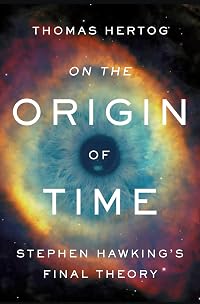
It would not be entirely fair to let a just-completed reading of Hertog's meaty _On the Origin of Time_ lead one to say that physicist Kaku's book consists of shallow froth. True, he does seem to have pitched it at the level of readers who know little or nothing about science, accordingly allowing too much imprecision to infect the section on computer science and quantum theory. (E.g., he sloppily equates the superposition and uncertainty principles.) But in the later sections, where his style is occasionally more reportorial, he usefully surveys possible application areas for future quantum computers. Examples include Alzheimer's disease, AI, antibiotics, batteries, black holes, cancer, cosmology, fusion power, global warming, human show more aging, immunotherapy, nitrogen fixing, origin of life, photosynthesis, proteins, stars, viruses, and weather. But how likely is it that the machines will really contribute to all these areas and many others? show less
According to this book quantum computers will solve every problem humans have created for themselves. The author’s generalizations are too broad to treat this work as anything but an index for further inquiry when he’s not engaged in wild speculation.
Really poorly done. Basically just describes every major scientific problem we look to solve and says maybe a quantum computer can solve that.
Members
- Recently Added By
Author Information

39+ Works 15,098 Members
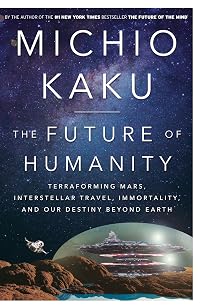
Michio Kaku was born January 24, 1947 in San Jose California. Kaku attended Cubberley High School in Palo Alto in the early 1960s and played first board on their chess team. At the National Science Fair in Albuquerque, New Mexico, he attracted the attention of physicist Edward Teller, who took Kaku as a protégé, awarding him the Hertz show more Engineering Scholarship. Kaku graduated summa cum laude from Harvard University with a B.S. degree in 1968 and was first in his physics class. He attended the Berkeley Radiation Laboratory at the University of California, Berkeley and received a Ph.D. in 1972 and held a lectureship at Princeton University in 1973. During the Vietnam War, Kaku completed his U.S. Army basic training at Fort Benning, Georgia and his advanced infantry training at Fort Lewis, Washington. Kaku currently holds the Henry Semat Chair and Professorship in theoretical physics and a joint appointment at City College of New York, and the Graduate Center of the City University of New York, where he has lectured for more than 30 years. He is engaged in defining the "Theory of Everything", which seeks to unify the four fundamental forces of the universe: the strong nuclear force, the weak nuclear force, gravity and electromagnetism. He was a visiting professor at the Institute for Advanced Study in Princeton, and New York University. He is a Fellow of the American Physical Society. He is listed in Who's Who in Science and Engineering, and American Men and Women of Science. He has published research articles on string theory from 1969 to 2000. In 1974, along with Prof. K. Kikkawa, he wrote the first paper on string field theory, now a major branch of string theory, which summarizes each of the five string theories into a single equation. In addition to his work on string field theory, he also authored some of the first papers on multi-loop amplitudes in string theory. Kaku is the author of several doctoral textbooks on string theory and quantum field theory and has published 170 articles in journals covering topics such as superstring theory, supergravity, supersymmetry, and hadronic physics. He is also author of the popular science books: Visions, Hyperspace, Einstein's Cosmos, Parallel Worlds, The Future of the Mind, and The Future of Humanity: Terraforming Mars, Interstellar Travel, Immortality, and Our Destiny Beyond. (Bowker Author Biography) show less
Awards and Honors
Distinctions
Classifications
- Genres
- Technology, Science & Nature, Nonfiction, General Nonfiction
- DDC/MDS
- 006.3 — Computer science, information & general works Computer science, knowledge & systems Special computer methods (AI, barcoding, VR, web design, social media) Artificial Intelligence
- LCC
- QA76.889 .K36 — Science Mathematics Mathematics Instruments and machines
- BISAC
Statistics
- Members
- 248
- Popularity
- 130,842
- Reviews
- 8
- Rating
- (3.35)
- Languages
- 5 — Czech, English, German, Portuguese, Spanish
- Media
- Paper, Audiobook, Ebook
- ISBNs
- 14
- ASINs
- 4