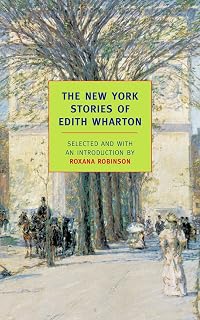
The New York Stories of Edith Wharton
by Edith Wharton, Roxana Robinson (Editor)
On This Page
Description
Edith Wharton wrote about New York as only a native can. Her Manhattan is a city of well-appointed drawing rooms, hansoms and broughams, all-night cotillions, and resplendent Fifth Avenue flats. Bishops? nieces mingle with bachelor industrialists; respectable wives turn into excellent mistresses. All are governed by a code of behavior as rigid as it is precarious. What fascinates Wharton are the points of weakness in the structure of Old New York: the artists and writers at its fringes, the show more free-love advocates testing its limits, widows and divorc?es struggling to hold their own. The New York Stories of Edith Wharton gathers twenty stories of the city, written over the course of Wharton?s career. From her first published story, Mrs. Manstey?s View, to one of her last and most celebrated, Roman Fever, this new collection charts the growth of an American master and enriches our understanding of the central themes of her work, among them the meaning of marriage, the struggle for artistic integrity, the bonds between parent and child, and the plight of the aged. show lessTags
Recommendations










Member Reviews
The stories in this collection all show the hand of a master – the vivid and nuanced prose, the sharp descriptions of setting, characters and the social milieu. Sometimes I read short story collections rather fitfully, but with this one, I read large chunks at a time like a novel. Wharton draws you in almost immediately with her strong writing. The stories move from her very early ones to the late masterpiece “Roman Fever” and it is interesting to see the progression. Some of the stories have awkward time or plot shifts and there is a tendency to rely on predictable or melodramatic twists. However, they are all worth reading for the superb writing and depictions of places and people.
As in her best known novels, Wharton often show more depicts the cloistered world of Old New York – a bygone time and place based on family, reputation and repression. Wharton’s life influenced many of the stories. Her husband, Teddy Wharton, was much older than her and eventually became chronically ill – this is reflected in the nightmarish “A Journey”, about a woman who is taking her terminally ill husband back home. The claustrophobic train ride soon become intolerable and the woman’s feverish musings are well-done. Two other subjects that personally affected Wharton show up frequently – the struggles of the artist (especially the conflict between staying true to art vs. selling out) and divorce. Some of the stories show social catastrophes and covertly vicious triumphs, again as in her well-known novels, but a number of the stories have a semi-comic tone. However, two of the best are the excruciatingly painful gems “The Dilettante” and “Autres Temps…”. There are also a number of sympathetic depictions of older women, even in the early stories – the very first one, “Mrs. Manstey’s View”, shows one such woman, forgotten by the world but still able to enjoy what she has.
Some of the stories about divorce (and artists) had comic touches – “The Other Two” has a man married to a twice-divorced woman thrown into the company of her two exes. This story doesn’t suggest he’s made a horrible mistake – instead, it ends on a note of bemused acceptance. Divorce was an institution that changed over the course of Wharton’s lifetime, from an unmentionable horror to something that was almost acceptable. “Autres Temps…” shows this, as a woman who was shunned after her divorce rushes to the aid of her newly divorced daughter only to find that the times have changed. In this one, the author skillfully portrays the painful life of a pariah from society. Divorce became more common, but some were even farther out – “The Reckoning” has a divorced woman as an advocate for free love but she soon regrets it. This one fell a little flat – the woman’s relationship was too generally described. Some divorces left the woman alone and shamed, as in “Autres Temps…” but “The Long Run” looks at the other side – a man who chose not to break up the marriage of the woman he loved. His ending can hardly be envied.
The divorced or married woman who became another man’s mistress is also an unenviable role – illustrated in “The Dilettante” and “Diagnosis”. The main character in “Diagnosis” is proud of the fact that he has remained free and unmarried while still receiving emotional support from his divorced mistress. He has vague plans to marry some young innocent thing someday but these are disrupted by a diagnosis of a terminal illness. The same sort of character is “The Dilettante” but it becomes clear that his former relationship with his mistress was almost one of emotional abuse. He gets some comeuppance but from this tangled situation there are really no winners.
Even outwardly happy marriages get the side-eye from Wharton. The seemingly solid marriage at the center of “The Quicksand” is a contrast to a quarrelling pair of lovers but the truth about the marriage is considerably darker. The great “Roman Fever” compares two solid marriages, both acceptable to good New York society. The whole story is a conversation between the two widows on a comfortable terrace in Rome, but both end up reevaluating their lives. Wharton’s depiction is also a perfect example of “frenemies”. “Pomegranate Seed” starts out looking like the other stories – the second wife starts to suspect her happiness with her husband is only on the surface when he starts receiving some mysterious letters – but ends up in a completely different place. show less
As in her best known novels, Wharton often show more depicts the cloistered world of Old New York – a bygone time and place based on family, reputation and repression. Wharton’s life influenced many of the stories. Her husband, Teddy Wharton, was much older than her and eventually became chronically ill – this is reflected in the nightmarish “A Journey”, about a woman who is taking her terminally ill husband back home. The claustrophobic train ride soon become intolerable and the woman’s feverish musings are well-done. Two other subjects that personally affected Wharton show up frequently – the struggles of the artist (especially the conflict between staying true to art vs. selling out) and divorce. Some of the stories show social catastrophes and covertly vicious triumphs, again as in her well-known novels, but a number of the stories have a semi-comic tone. However, two of the best are the excruciatingly painful gems “The Dilettante” and “Autres Temps…”. There are also a number of sympathetic depictions of older women, even in the early stories – the very first one, “Mrs. Manstey’s View”, shows one such woman, forgotten by the world but still able to enjoy what she has.
Some of the stories about divorce (and artists) had comic touches – “The Other Two” has a man married to a twice-divorced woman thrown into the company of her two exes. This story doesn’t suggest he’s made a horrible mistake – instead, it ends on a note of bemused acceptance. Divorce was an institution that changed over the course of Wharton’s lifetime, from an unmentionable horror to something that was almost acceptable. “Autres Temps…” shows this, as a woman who was shunned after her divorce rushes to the aid of her newly divorced daughter only to find that the times have changed. In this one, the author skillfully portrays the painful life of a pariah from society. Divorce became more common, but some were even farther out – “The Reckoning” has a divorced woman as an advocate for free love but she soon regrets it. This one fell a little flat – the woman’s relationship was too generally described. Some divorces left the woman alone and shamed, as in “Autres Temps…” but “The Long Run” looks at the other side – a man who chose not to break up the marriage of the woman he loved. His ending can hardly be envied.
The divorced or married woman who became another man’s mistress is also an unenviable role – illustrated in “The Dilettante” and “Diagnosis”. The main character in “Diagnosis” is proud of the fact that he has remained free and unmarried while still receiving emotional support from his divorced mistress. He has vague plans to marry some young innocent thing someday but these are disrupted by a diagnosis of a terminal illness. The same sort of character is “The Dilettante” but it becomes clear that his former relationship with his mistress was almost one of emotional abuse. He gets some comeuppance but from this tangled situation there are really no winners.
Even outwardly happy marriages get the side-eye from Wharton. The seemingly solid marriage at the center of “The Quicksand” is a contrast to a quarrelling pair of lovers but the truth about the marriage is considerably darker. The great “Roman Fever” compares two solid marriages, both acceptable to good New York society. The whole story is a conversation between the two widows on a comfortable terrace in Rome, but both end up reevaluating their lives. Wharton’s depiction is also a perfect example of “frenemies”. “Pomegranate Seed” starts out looking like the other stories – the second wife starts to suspect her happiness with her husband is only on the surface when he starts receiving some mysterious letters – but ends up in a completely different place. show less
This New York Review Books edition collects twenty classic Edith Wharton (1862-1937) short stories spanning the entire range of her writing career and also includes a most informative twenty-two page Introduction by Roxana Robinson, providing biographical detail and extensive social and cultural context for her fiction.
Reading through this collection was really my first exposure to the author and I must say I was quite taken not only with the clarity of the language, the subtle ways in which she developments her men and women and the sharp, nuanced observations as they engage in social interactions, but also the sheer power of her telling, most especially the manner in which the stories end. No wonder Edith Wharton is one of the most show more anthologized of American authors and several pieces in this collection are considered among the greatest short stories every written. Below are my comments on three of my favorites along with some concluding remarks by Roxana Robinson:
MRS. MANSTEY'S VIEW
“The view from Mrs. Manstey’s window was not a striking one, but to her at least it was full of interest and beauty.” So begins this tale, the very first Edith Wharton short story to appear in print. And what a story! I suspect nearly all of us have encountered what Nietzsche described as the “improvers of mankind,” the unending stream of land developers who tear out trees, shrubs, flowers and anything else standing in the way of “progress" - and that’s progress in the sense of more buildings, more houses, more roads, more of everything that can, among other virtues, add to that supreme virtue – money making!
Anyway, old, lonely Mrs. Manstey (her husband died and her daughter moved far away) is confronted with Mrs. Black’s plan to build a new multi-story extension thus blotting out the beautiful view Mrs. Manstey has enjoyed over the past many years at her window at the rear of her third floor apartment. The meeting and confrontation of Mrs. Manstey with Mrs. Black is so telling about the American economic mindset.
I’m sure the dynamics of money vs. community interests, including value placed on something as uneconomical as beauty and aesthetic appreciation has played itself out thousands of time since the publication of this short story. And what does Mrs. Manstey actually do to combat the extension? Never underestimate a lonely, old lady who is about to lose her one last connection to life and beauty!
THE REMBRANDT
A tale of conflicting values, where the unnamed narrator, one of the top purchasers for a leading New York museum, is forced to make hard decisions. Here he is during his first visit to the apartment of a Mrs. Fontage, an older lady desperately in need of money, considering selling her beloved Rembrandt picture: “The critical moment was upon me. To escape the challenge of Mrs. Fontage’s brilliant composure I turned once more to the picture. If my courage needed reinforcement, the picture amply furnished it. Looking at that lamentable canvas seemed the surest way of gathering strength to denounce it; but behind me, all the while, I felt Mrs. Fontage’s shuddering pride drawn up in a final effort of self-defense. I hated myself for my sentimental perversion of the situation. Reason argued that it was more cruel to deceive Mrs. Fontage than to tell her the truth; but that merely proved the inferiority of reason to instinct in situations involving any concession to the emotions.”
Mrs. Fontage is but one person in the equation. There is also Eleanor Copt, his cousin who introduced him to this lady in the first place, Eleanor’s rich friend and last but hardly least, Crozier, a key member of the museum’s influential committee. One of the most sophisticated stories you will ever read about weighing human emotions on one side and individual financial responsibility on the other.
ROMAN FEVER
A conversation between two lifelong friends, Mrs. Slade and Mrs. Ansley, both older widows, both joining their daughters on holiday, as they sit outside on a terrace overlooking the city of Rome. At one point, Edith Wharton writes: “Yes; being the Slade’s widow was a dullish business after that. In living up to such a husband all her faculties had been engaged: now she has only her daughter to live up to, for the son who seemed to have inherited his father’s gifts had died suddenly in boyhood.”
Turns out, Mrs. Slade has something of an ax to grind, that is, she has a decided tendency to play the game of one-upmanship and she simply can’t check herself in establishing her superiority over her friend Mrs. Ansley. I wouldn’t want to say anything further about the story (it is simply too wonderful to spoil a reader's own experience); rather, I will note the more I read, the more I was pulled in. And the ending – no question, this must be one of the strongest ending sentences a short story writer has ever penned. Wow! What a phenomenal punch!
As a special tribute to Roxana Robinson's extraordinary Introduction, I’ll conclude with two of her quotes:
“She was deeply committed to the concept of a moral order, though she recognized the complexities implied by its rule. She used the world into which she was born – the inner circle of Old New York – to create her own unique and individual landscape, as all great writers do. Wharton’s characters are flawed and struggling, weak and noble, loving and heartless. Her New York is diverse, precise, and entirely her own. It is a place of beauty, complication, and authenticity.”
“The twenty stories collected here show Edith Wharton’s world as she knew it. They show the crystalline brilliance of her literary style; they show the intellectual reach and complexity of her mind. The show the courage, depth, and compassion of her heart. They show her to be one of our greatest short-story writers.” show less
The New York Stories of Edith Wharton is a collection of 20 stories that Edith Wharton wrote over the course of her career. The stories are presented in the order in which they were published, so you get to see how Wharton’s style grew over time. Her stories cover a wide range of people and places, from industrialists to artists and from ballrooms to tenements.
In her novels, such as The House of Mirth or The Age of Innocence, Wharton tends to focus on the upper classes of turn-of-the-century New York, but what I like about her short stories is that she focuses on a wide range of people. Many of the stories have been published in other volumes (ie, “Pomegranate Seed” also appears in the Ghost Stories of Edith Wharton), but what I show more like about this collection really shows how she matured as a writer, from her first published story, “Mrs. Manstey’s View” to “Roman Fever,” her last.
The collection also showcases how New York, and in a larger sense, American, society changed between the mid-19th and early 20th centuries. Although Edith Wharton frequently satirizes the society of which she knew so much, there’s still a deep love and respect for it—after all, Wharton wrote what she knew the most about. According to the Introduction, “Edith learned the rules of this formal, restrained world, but she felt the presence of another unacknowledged one that seethed around her like an invisible mist. This was the one of emotions and ideas.” The conflict between the world she grew up in and the second is at the heart of these stories. I was interested in watching how many of her characters struggle with being an outsider or having an obsession with money, both qualities held Woburn in “A Cup of Cold Water.” In all, a fine collection of stories. show less
In her novels, such as The House of Mirth or The Age of Innocence, Wharton tends to focus on the upper classes of turn-of-the-century New York, but what I like about her short stories is that she focuses on a wide range of people. Many of the stories have been published in other volumes (ie, “Pomegranate Seed” also appears in the Ghost Stories of Edith Wharton), but what I show more like about this collection really shows how she matured as a writer, from her first published story, “Mrs. Manstey’s View” to “Roman Fever,” her last.
The collection also showcases how New York, and in a larger sense, American, society changed between the mid-19th and early 20th centuries. Although Edith Wharton frequently satirizes the society of which she knew so much, there’s still a deep love and respect for it—after all, Wharton wrote what she knew the most about. According to the Introduction, “Edith learned the rules of this formal, restrained world, but she felt the presence of another unacknowledged one that seethed around her like an invisible mist. This was the one of emotions and ideas.” The conflict between the world she grew up in and the second is at the heart of these stories. I was interested in watching how many of her characters struggle with being an outsider or having an obsession with money, both qualities held Woburn in “A Cup of Cold Water.” In all, a fine collection of stories. show less
I overall enjoyed these stories, some more than others and seeing the range of stories she can tell. A Cup of Cold Water really stuck with me and I am unclear what I was meant to make of Pomegranate Seed by the end but all were great.
Twenty sparkling stories, shining a critical, satirical eye on NY society relationships in the first third of the 20th century. Wharton is an engaging storyteller who doesn’t over-explain or give trite, tidy, predictable endings. Eight 5*, seven 4*, and five 3*. There are similarities of themes and style, including echoes of Wilde. See my ‘Write Your Own Wharton’ HERE, which includes a brief bio.
Reviews, Ratings & Quotes
Hidden for brevity. Plot spoilers are nested in another spoiler tag.
Mrs Manstey’s View, 5*
“The view surrounded and shaped her life as the sea does a lonely island.”
An understated gem about finding and defending beauty where others don't even look. Mrs Manstey is an impoverished widow who rarely leaves her lodgings, but loves her “view in which the most optimistic eye would at first have failed to discover anything admirable”. Rear Window came to mind.
* “Patches of earth showed through the snow, like ink-spots spread on a sheet of white blotting paper.”
* “Wet and radiant, the blue reappeared through torn rags of cloud.”
* “The sunset was perfect and a roseate light, transfiguring the distant spire, lingered in the west.”
That Good May Come, 3*
An unengaging start to an exploration of ends and means: doing something bad so “that good may come”. Can dishonourably earned money be purified by being spent on higher things, or are those things, and their creator, tainted?
I preferred the writing and imagery to the story of two youngish men, trying to make it as writers, one supporting a widowed mother and teenage sister. The contrast of purity versus commerce is heightened by money being needed for a confirmation dress.
* “The raw, sunless daylight, mellowed by the jeweled opacity of stained-glass windows, fell with a caressing brilliance across the aisles, streaming the clustered shafts with heraldic emblazonments of gules and azure and leaving the intervening spaces swathed in a velvety dusk.”
The Portrait, 4*
Should a portrait be the ideal (“rose-water pastels”) or warts and all? Lillo infamously does the latter, but struggles with a known crook, who is idolised by his ever-present daughter. Should he paint what he sees, or what she sees? The disconnect between portrait and reality reminded me of Dorian Grey, despite no magical-realism.
* “Other painters do the surface - he does the depths; they paint the ripples on the pond, he drags the bottom.”
* “In the spreading light of reassurance that made her eyes like rainy dawn, I saw, with terrible distinctness, the rout of her disbanded hopes.”
A Cup of Cold Water, 5*
Exquisite, affectionate attention to the minutiae of NY society: a waspish examination of attitudes to money and marriage, wrapped a moral tale that is beautiful, tragic, and hopeful, without being sentimental.
Woburn is a modest young man with expensive tastes and high ambitions.He embezzles to pursue a high society marriage - a society he doesn’t really seem to approve of. Redemption comes by sacrificially helping another.
* “Lamps... blinked Narcissus-like at their watery images in the hollows of the sidewalk.”
* “Poverty might make a man fascinating; but a settled income was the best evidence of stability of character, If there was anything in heredity, how could a nice girl trust a man whose parents had been careless enough to leave him unprovided for?” (Lady Bracknell could have said that.)
* “Her ideas had the brilliant bloom and audacious irrelevance of those tropical orchids which strike root in air.”
* “The Freemasonry of failure” among the people on the street.
* “A waiter who had the melancholy air of being the last survivor of an exterminated race.”
A Journey, 5*
“The hours dragged on in a dreary inoccupation.”
A claustrophobic story of a literal and metaphorical journey. A couple are crushed by: illness transforming their recent marriage; the physical confines of a sleeper train; the need to be polite to well-intentioned strangers; and by terror of what's to come. The ambiguous ending was welcome release.
* “Their imperceptible estrangement… the conductivity between them was broken”, as if separated by a pane of glass.
* A teacher “forced innutritious facts upon reluctant children”.
* Newlyweds start with “prodigal confidence in an exhaustless future”.
* “There were moments, indeed, when warm gushes of pity swept away her instinctive resentment.”
The Rembrandt, 4*
An art-related dilemma about valuing a Rembrandt, belonging to an impoverished woman. Professional honesty versus natural compassion, and the likely consequences of each.
The plot is mostly predictable, but Mrs Fontage is a glorious, self-composed, imposing creation: the story is a joy.
* The “beneficent despotism” of a cousin for whom “none of the ready-made virtues ever had fitted”.
* “The silence seemed to shape itself into a receptacle for my verdict.”
* “One glance at his glossy exterior conveyed the assurance that his morals were as immaculate as his complexion and his linen.”
The Other Two, 4*
The social and personal problems of a partner's multiple exes: the effect they had in the past, and the ongoing effect on your life together. It’s very civilised, but turns almost to farce.
The wife admits to being 35. (“Thirty-five is a very attractive age. London society is full of women of the very highest birth who have, of their own free choice, remained thirty-five for years” Lady Bracknell in Wilde’s Importance of Being Earnest (my review here). She has two previous husbands, both living, one of whom is the father of her daughter. The story juggles feminist and traditional themes, reflecting the social changes of the time (1904).
The story arc is like a humorous interpretation of the 1969 Kübler-Ross model of the five stages of grief:
* “New York divorce is in itself a diploma of virtue.” Like one of Wilde’s contrary quips.
* “She was ‘as easy as an old shoe’ - a shoe that too many feet had worn.”
* “She reminded him of a juggler tossing knives; but the knives were blunt.”
* “Occupying a chair in his usual provisional way.”
The Quicksand, 4*
“She wears the newest thing in ethics.”
A dilemma about the power of money, comfort, and the gutter press to beguile and corrupt, and whether one can appease by applying rose-tinted spectacles, preventing others making similar mistakes, and/or through philanthropy.
It has a moral without being moralistic: be true to yourself, eschew “the habit of luxury”, and find comfort in beauty, rather than riches.
* “Her friends were not always worthy of the chairs they sat in.”
* “The depressing drawing room. It was the kind of room in which no member of the family is likely to be found except after dinner or after death. The chairs and tables looked like the poor relations who had repaid their upkeep by a long career of grudging usefulness: they seemed banded together against intruders in a sullen conspiracy of discomfort.”
* “She could drug anxiety with a picture as some women can soothe it with a bonnet.”
The Dilettante, 3*
The title suggests a charming rogue, but the man is more of a Pick-Up Artist. He enjoys casual relationships, based on untruths, and trains his subjects to his whims.
“He had developed a science of evasion in which the woman of the moment became a mere implement of the game.”
Focus on how cold and clinical every word bar the fillers is.
The finale’s unexpected inversion of societal norms is worthy of Wilde.His presumed pure fianceé is shocked that he (untruthfully) claims his intimate relationships were never consummated. Instead, she wants a man with a past. They are equally dishonest, so maybe they deserve each other?
The Reckoning, 4*
“The ceremony was an unimportant concession to social prejudice; now the door of divorce stood open, no marriage need be an imprisonment.”
A very modern couple preach the gospel of “fidelity to oneself” over conventional ties to a spouse. But theory is easier than practice, and trying to turn “disobedience into a law” inevitably elevates a petard.
* “All the audacities were artistic… a teacher who pronounced marriage immoral was somehow as distinguished as a painter who depicted purple grass and a green sky.”
* “It was a room with which she had never been able to establish a closer relation than that between a traveler and a railway station.”
* “No girl knows how to take care of herself - till it’s too late.”
* “Her husband’s personality seemed to be closing gradually in on her, obscuring the sky and cutting off the air, till she felt herself shut up among the decaying bodies of her starved hopes.”
* “If marriage was the slow life-long acquittal of a debt contracted in ignorance, then marriage was a crime against human nature.”
* “She was the pre-destined victim of the code she had devised.”
* “The day was radiant, metallic: one of those searching American days so calculated to reveal the shortcomings of our street-cleaning and the excesses of our architecture. The streets looked bare and hideous; everything stared and glittered.”
Expiation, 3*
A dull plot, with witty, incisive social observations: the perils being misunderstood by an sympathetic spouse; the significance of how one enters a room; literary success achieved via controversy, censure, and perhaps rivalry; and a duller subplot about a new chancery window.
Mrs Fetherel’s mission is to expose “the hollowness of social conventions” via her novel with the scandalous title, “Fast and Loose” (also the title of a story Wharton wrote, aged 15). Her doting uncle (a bishop and fellow writer) feels it his duty to have words with her.
* “The bishop always entered a room well; but, when unannounced, or preceded by a Low Church butler who gave him his surname, his appearance lacked the impressiveness conferred on it by the due specification of his diocesan dignity.”
* “Paula Fetherel would have been very pretty if she hadn’t looked so like a moral axiom in a copy-book hand.”
* “Mrs Clinch once more brought the plebeian aroma of heated tram-cars and muddy street-crossings into the violet-scented atmosphere of her cousin's drawing-room.”
* “The misunderstood wife whose husband persists in understanding her… what she most suffered from was this fatuous approval.”
* “Mrs Fetherel’s relations with her husband were complicated by an irrepressible tendency to be fond of him.”
The Pot-Boiler, 5*
“Why can’t a man do two kinds of work - one to please himself and the other to boil the pot?”
Is it better to prostitute one’s talent, or have no talent to sacrifice?
I wasn’t instantly enamoured of this story, and reading the cod Yiddish? accent of the art dealer annoyed me. But I was won over by the impoverished artists, torn between staying true to their ideals and the need to heat and eat by painting “ladies in syrup… with marshmallow children against their knees”, to fit the fashion. There’s love, rivalry, and bitter irony.
* One “Produced bad art in the service of the loftiest of convictions.” The other stands accused: “You’ve sold your talent… You did it deliberately… And you’re not ashamed.”
* “There was always a kind of biblical breadth in the expression of her emotions, and to-day she suggested a text from Isaiah.”
His Father’s Son, 5*
Mason Grew is a successful, self-made man who lives vicariously through the professional and social success of his son, followed via newspaper columns. “He was what Mr Grew had dreamed of being.” He also lives in the past, with memories and mementos of his late wife. The lines blur. The first twist is predictable, the second, left me wondering what was true and what was fiction.
* “The sleep of conjugal indifference.”
* “Mrs Grew slept in the Wingfield Cemetery, under a life-size theological virtue of her own choosing.”
Full Circle, 4*
Is it preferable to be poor and brilliant, or lauded for mediocrity? A man's first novel means "his success began to submerge him", unlike his friend, a superior writer, who remains “unpardonably, irremediably poor”. Guilt, face-saving, and empathy twist and writhe.
The title is a bit of a give-away, but it’s an excellent exploration of friendship, the perils of pride, and the difficulty of juggling artistic integrity with the need to boil the pot.The successful writer, having failed to pass on the destitute writer’s manuscript, guiltily hires him to reply to his burdensome fan mail. His second book is not as popular, he’s upset by the response, and ashamed for his friend/secretary to see negative letters. So he writes a few...
* “A shining sanctuary where his great porcelain bath proffered its renovating flood.” He no longer needed to “identify one’s soap and nailbrush among the promiscuous implements of ablution”.
* “His new relation to his correspondents had the glow of a love-affair unchilled by the contingency of marriage.”
Autres Temps…, 5*
A brilliant, heart-wrenching encapsulation of changing attitudes to marriage and divorce, comparing the experiences of mother and daughter.
After divorce, Mrs Lidcote went into voluntary exile in Europe. She returns to NY, anxious about the wedding of her divorced daughter, Leila. The mother doesn’t know her place in the new order: her daughter is not shamed, so doesn’t need support. Worse, a shabby mother is an embarrassment in Leila’s elevated social circles. Mrs Lidcote begins to resent her own lost years, and wonder if it’s too late. Two people appear sympathetic to her predicaments: one tells tactful untruths to veil painful reality; the other is selfishly, subtly manipulative, using duplicity disguised as concern.
* “The past was bad enough, but the present and future were worse, because they were less comprehensible.”
* “Having so signally failed to be of use to Leila in other ways, she would at least serve her as a warning.”
* “Their relation seemed as comfortable as their furniture and as respectable as their balance at the bank.”
The Long Run, 3*
“Love is deeper than friendship, but friendship is a good deal wider.”
What’s the difference between friendship and love, and should one imperil one’s place in society, or “play the game”, with everyone knowing, but turning a blind eye?
This is a first-person narration (two, really), unlike the others here. A man returns to NY, after a dozen years away, renewing friendships with a friend from university and a former muse.
There were some great one-liners, but as a story, it lacked something. Or perhaps I’d overdosed on Wharton.
* “He hugged the empty vessel of our friendship without perceiving that the last drop of its essence was dry.”
* “Most people are just that to us: pictures, furniture, the inanimate accessories of our little island-area of sensation.”
* “How we sneer at women for wanting the thing that gives them half their attraction” (a home and a little luxury).
* “One way to find out whether a risk is worth taking is not to take it” and see what happens in the long run.
* “Her gray dress was handsome but ineffective.”
* “Even Mrs Cumnor’s door-knobs had tact and didn’t tell”, so it’s easy to slip away.
* “The quality of a love may be tested by the amount of friendship it contains.”
After Holbein, 5*
“A rather remarkable man… only intermittently.”
I thought this was going to be horror, with echoes of Jekyll and Hyde, but it takes a different turn: poignant, heartbreaking, beautiful. It’s a glimpse into failing minds, cushioned by old retainers, devotedly playing along. Not just white lies, but golden ones. Reality is as slippery for the reader as the protagonists. The situation is worse for the one who has some awareness of what's slipping away.
* “He had reached the time of life when Alps and cathedrals become as transient as flowers.”
Diagnosis, 5*
On 3 June 2017, my husband was on London Bridge, as a terrorist drove a van into people, came towards him, then swerved away. Two days later, I read this story, and was grateful he escaped untouched - and heartbroken for those who did not.
Death can be sudden and unexpected. Or not. Don't be so afraid of dying that you stop living. Seize the day. All the days. Be kind and grateful.
An ageing bachelor's ill-health, makes him unable to enjoy life as he used to. Unlike Ebenezer Le Page who “died alive” (see my review here), Paul Dorrance lives as if dead. Matters are exacerbated by his being too trusting of his doctors, rather like Bunbury in The Importance of Being Earnest (my review here), who "seems to have had great confidence in the opinion of his physicians."
Assuming he will die, he marries his “faded” mistress, for whom he long ago “ceased to feel anything but a friendly tenderness”, so he will have someone to care for him, unaware that she knows the diagnosis was wrong, but didn’t want to be left on the shelf.
* “The very qualities which had made her a perfect mistress… made her… a perfect wife for a man cut off from everything but the contemplation of his own end.”
* “He knew no more how to prepare for the return to life than he had for the leaving of it.”
* “She was a woman for a sentimental parenthesis, not for the pitiless continuity of marriage.”
Pomegranate Seed, 4*
The final twist puts it in a different genre (think of pomegranate seeds in Greek myth). However, it was du Maurier’s Rebecca that came firmly to mind, and though du Maurier was younger than Wharton, her novel was published in 1928, three years before this. Here, a heartbroken widower and father has been married for a year to a new wife, to whom he is devoted. But there is one troubling thing that he won’t discuss:occasional letters, in grey envelopes, with distinctive handwriting .
* “Her passionate need to feel herself the sovereign even of his past.”
* “He began to make conversation with an assumption of ease that was more oppressive than his silence.”
* “She’s everywhere in this house, and the closer to him because to everyone else she’s become invisible.”
Roman Fever, 3*
“These two ladies visualized each other, each through the wrong end of her little telescope.”
Two middle-aged widows, who’ve been intimate since a chance encounter in Rome as children, and lived opposite each other for their early married years, meet again in Rome. They compare lives and daughters out loud and in their minds. How little they really know each other. Small irritations aggravate envy and and expose secrets. The final sentence packs a punch.
* “Contemplating it [view] in silence, with a sort of diffused serenity which might have been borrowed from the spring effulgence of the Roman skies.”
* Sunset “filling her troubled eyes with the tranquilizing magic of the hour.”
Buddies
My first buddy read, prompted by Laysee’s review, here. See Kevin’s review here. show less
Reviews, Ratings & Quotes
Hidden for brevity. Plot spoilers are nested in another spoiler tag.
Mrs Manstey’s View, 5*
“The view surrounded and shaped her life as the sea does a lonely island.”
An understated gem about finding and defending beauty where others don't even look. Mrs Manstey is an impoverished widow who rarely leaves
* “Patches of earth showed through the snow, like ink-spots spread on a sheet of white blotting paper.”
* “Wet and radiant, the blue reappeared through torn rags of cloud.”
* “The sunset was perfect and a roseate light, transfiguring the distant spire, lingered in the west.”
That Good May Come, 3*
An unengaging start to an exploration of ends and means: doing something bad so “that good may come”. Can dishonourably earned money be purified by being spent on higher things, or are those things, and their creator, tainted?
I preferred the writing and imagery to the story of two youngish men, trying to make it as writers, one supporting a widowed mother and teenage sister. The contrast of purity versus commerce is heightened by money being needed for a confirmation dress.
* “The raw, sunless daylight, mellowed by the jeweled opacity of stained-glass windows, fell with a caressing brilliance across the aisles, streaming the clustered shafts with heraldic emblazonments of gules and azure and leaving the intervening spaces swathed in a velvety dusk.”
The Portrait, 4*
Should a portrait be the ideal (“rose-water pastels”) or warts and all? Lillo infamously does the latter, but struggles with a known crook, who is idolised by his ever-present daughter. Should he paint what he sees, or what she sees? The disconnect between portrait and reality reminded me of Dorian Grey, despite no magical-realism.
* “Other painters do the surface - he does the depths; they paint the ripples on the pond, he drags the bottom.”
* “In the spreading light of reassurance that made her eyes like rainy dawn, I saw, with terrible distinctness, the rout of her disbanded hopes.”
A Cup of Cold Water, 5*
Exquisite, affectionate attention to the minutiae of NY society: a waspish examination of attitudes to money and marriage, wrapped a moral tale that is beautiful, tragic, and hopeful, without being sentimental.
Woburn is a modest young man with expensive tastes and high ambitions.
* “Lamps... blinked Narcissus-like at their watery images in the hollows of the sidewalk.”
* “Poverty might make a man fascinating; but a settled income was the best evidence of stability of character, If there was anything in heredity, how could a nice girl trust a man whose parents had been careless enough to leave him unprovided for?” (Lady Bracknell could have said that.)
* “Her ideas had the brilliant bloom and audacious irrelevance of those tropical orchids which strike root in air.”
* “The Freemasonry of failure” among the people on the street.
* “A waiter who had the melancholy air of being the last survivor of an exterminated race.”
A Journey, 5*
“The hours dragged on in a dreary inoccupation.”
A claustrophobic story of a literal and metaphorical journey. A couple are crushed by: illness transforming their recent marriage; the physical confines of a sleeper train; the need to be polite to well-intentioned strangers; and by terror of what's to come. The ambiguous ending was welcome release.
* “Their imperceptible estrangement… the conductivity between them was broken”, as if separated by a pane of glass.
* A teacher “forced innutritious facts upon reluctant children”.
* Newlyweds start with “prodigal confidence in an exhaustless future”.
* “There were moments, indeed, when warm gushes of pity swept away her instinctive resentment.”
The Rembrandt, 4*
An art-related dilemma about valuing a Rembrandt, belonging to an impoverished woman. Professional honesty versus natural compassion, and the likely consequences of each.
The plot is mostly predictable, but Mrs Fontage is a glorious, self-composed, imposing creation: the story is a joy.
* The “beneficent despotism” of a cousin for whom “none of the ready-made virtues ever had fitted”.
* “The silence seemed to shape itself into a receptacle for my verdict.”
* “One glance at his glossy exterior conveyed the assurance that his morals were as immaculate as his complexion and his linen.”
The Other Two, 4*
The social and personal problems of a partner's multiple exes: the effect they had in the past, and the ongoing effect on your life together. It’s very civilised, but turns almost to farce.
The wife admits to being 35. (“Thirty-five is a very attractive age. London society is full of women of the very highest birth who have, of their own free choice, remained thirty-five for years” Lady Bracknell in Wilde’s Importance of Being Earnest (my review here). She has two previous husbands, both living, one of whom is the father of her daughter. The story juggles feminist and traditional themes, reflecting the social changes of the time (1904).
The story arc is like a humorous interpretation of the 1969 Kübler-Ross model of the five stages of grief:
* “New York divorce is in itself a diploma of virtue.” Like one of Wilde’s contrary quips.
* “She was ‘as easy as an old shoe’ - a shoe that too many feet had worn.”
* “She reminded him of a juggler tossing knives; but the knives were blunt.”
* “Occupying a chair in his usual provisional way.”
The Quicksand, 4*
“She wears the newest thing in ethics.”
A dilemma about the power of money, comfort, and the gutter press to beguile and corrupt, and whether one can appease by applying rose-tinted spectacles, preventing others making similar mistakes, and/or through philanthropy.
It has a moral without being moralistic: be true to yourself, eschew “the habit of luxury”, and find comfort in beauty, rather than riches.
* “Her friends were not always worthy of the chairs they sat in.”
* “The depressing drawing room. It was the kind of room in which no member of the family is likely to be found except after dinner or after death. The chairs and tables looked like the poor relations who had repaid their upkeep by a long career of grudging usefulness: they seemed banded together against intruders in a sullen conspiracy of discomfort.”
* “She could drug anxiety with a picture as some women can soothe it with a bonnet.”
The Dilettante, 3*
The title suggests a charming rogue, but the man is more of a Pick-Up Artist. He enjoys casual relationships, based on untruths, and trains his subjects to his whims.
“He had developed a science of evasion in which the woman of the moment became a mere implement of the game.”
Focus on how cold and clinical every word bar the fillers is.
The finale’s unexpected inversion of societal norms is worthy of Wilde.
The Reckoning, 4*
“The ceremony was an unimportant concession to social prejudice; now the door of divorce stood open, no marriage need be an imprisonment.”
A very modern couple preach the gospel of “fidelity to oneself” over conventional ties to a spouse. But theory is easier than practice, and trying to turn “disobedience into a law” inevitably elevates a petard.
* “All the audacities were artistic… a teacher who pronounced marriage immoral was somehow as distinguished as a painter who depicted purple grass and a green sky.”
* “It was a room with which she had never been able to establish a closer relation than that between a traveler and a railway station.”
* “No girl knows how to take care of herself - till it’s too late.”
* “Her husband’s personality seemed to be closing gradually in on her, obscuring the sky and cutting off the air, till she felt herself shut up among the decaying bodies of her starved hopes.”
* “If marriage was the slow life-long acquittal of a debt contracted in ignorance, then marriage was a crime against human nature.”
* “She was the pre-destined victim of the code she had devised.”
* “The day was radiant, metallic: one of those searching American days so calculated to reveal the shortcomings of our street-cleaning and the excesses of our architecture. The streets looked bare and hideous; everything stared and glittered.”
Expiation, 3*
A dull plot, with witty, incisive social observations: the perils being misunderstood by an sympathetic spouse; the significance of how one enters a room; literary success achieved via controversy, censure, and perhaps rivalry; and a duller subplot about a new chancery window.
Mrs Fetherel’s mission is to expose “the hollowness of social conventions” via her novel with the scandalous title, “Fast and Loose” (also the title of a story Wharton wrote, aged 15). Her doting uncle (a bishop and fellow writer) feels it his duty to have words with her.
* “The bishop always entered a room well; but, when unannounced, or preceded by a Low Church butler who gave him his surname, his appearance lacked the impressiveness conferred on it by the due specification of his diocesan dignity.”
* “Paula Fetherel would have been very pretty if she hadn’t looked so like a moral axiom in a copy-book hand.”
* “Mrs Clinch once more brought the plebeian aroma of heated tram-cars and muddy street-crossings into the violet-scented atmosphere of her cousin's drawing-room.”
* “The misunderstood wife whose husband persists in understanding her… what she most suffered from was this fatuous approval.”
* “Mrs Fetherel’s relations with her husband were complicated by an irrepressible tendency to be fond of him.”
The Pot-Boiler, 5*
“Why can’t a man do two kinds of work - one to please himself and the other to boil the pot?”
Is it better to prostitute one’s talent, or have no talent to sacrifice?
I wasn’t instantly enamoured of this story, and reading the cod Yiddish? accent of the art dealer annoyed me. But I was won over by the impoverished artists, torn between staying true to their ideals and the need to heat and eat by painting “ladies in syrup… with marshmallow children against their knees”, to fit the fashion. There’s love, rivalry, and bitter irony.
* One “Produced bad art in the service of the loftiest of convictions.” The other stands accused: “You’ve sold your talent… You did it deliberately… And you’re not ashamed.”
* “There was always a kind of biblical breadth in the expression of her emotions, and to-day she suggested a text from Isaiah.”
His Father’s Son, 5*
Mason Grew is a successful, self-made man who lives vicariously through the professional and social success of his son, followed via newspaper columns. “He was what Mr Grew had dreamed of being.” He also lives in the past, with memories and mementos of his late wife. The lines blur. The first twist is predictable, the second, left me wondering what was true and what was fiction.
* “The sleep of conjugal indifference.”
* “Mrs Grew slept in the Wingfield Cemetery, under a life-size theological virtue of her own choosing.”
Full Circle, 4*
Is it preferable to be poor and brilliant, or lauded for mediocrity? A man's first novel means "his success began to submerge him", unlike his friend, a superior writer, who remains “unpardonably, irremediably poor”. Guilt, face-saving, and empathy twist and writhe.
The title is a bit of a give-away, but it’s an excellent exploration of friendship, the perils of pride, and the difficulty of juggling artistic integrity with the need to boil the pot.
* “A shining sanctuary where his great porcelain bath proffered its renovating flood.” He no longer needed to “identify one’s soap and nailbrush among the promiscuous implements of ablution”.
* “His new relation to his correspondents had the glow of a love-affair unchilled by the contingency of marriage.”
Autres Temps…, 5*
A brilliant, heart-wrenching encapsulation of changing attitudes to marriage and divorce, comparing the experiences of mother and daughter.
After divorce, Mrs Lidcote went into voluntary exile in Europe. She returns to NY, anxious about the wedding of her divorced daughter, Leila. The mother doesn’t know her place in the new order: her daughter is not shamed, so doesn’t need support. Worse, a shabby mother is an embarrassment in Leila’s elevated social circles. Mrs Lidcote begins to resent her own lost years, and wonder if it’s too late. Two people appear sympathetic to her predicaments: one tells tactful untruths to veil painful reality; the other is selfishly, subtly manipulative, using duplicity disguised as concern.
* “The past was bad enough, but the present and future were worse, because they were less comprehensible.”
* “Having so signally failed to be of use to Leila in other ways, she would at least serve her as a warning.”
* “Their relation seemed as comfortable as their furniture and as respectable as their balance at the bank.”
The Long Run, 3*
“Love is deeper than friendship, but friendship is a good deal wider.”
What’s the difference between friendship and love, and should one imperil one’s place in society, or “play the game”, with everyone knowing, but turning a blind eye?
This is a first-person narration (two, really), unlike the others here. A man returns to NY, after a dozen years away, renewing friendships with a friend from university and a former muse.
There were some great one-liners, but as a story, it lacked something. Or perhaps I’d overdosed on Wharton.
* “He hugged the empty vessel of our friendship without perceiving that the last drop of its essence was dry.”
* “Most people are just that to us: pictures, furniture, the inanimate accessories of our little island-area of sensation.”
* “How we sneer at women for wanting the thing that gives them half their attraction” (a home and a little luxury).
* “One way to find out whether a risk is worth taking is not to take it” and see what happens in the long run.
* “Her gray dress was handsome but ineffective.”
* “Even Mrs Cumnor’s door-knobs had tact and didn’t tell”, so it’s easy to slip away.
* “The quality of a love may be tested by the amount of friendship it contains.”
After Holbein, 5*
“A rather remarkable man… only intermittently.”
I thought this was going to be horror, with echoes of Jekyll and Hyde, but it takes a different turn: poignant, heartbreaking, beautiful. It’s a glimpse into failing minds, cushioned by old retainers, devotedly playing along. Not just white lies, but golden ones. Reality is as slippery for the reader as the protagonists. The situation is worse for the one who has some awareness of what's slipping away.
* “He had reached the time of life when Alps and cathedrals become as transient as flowers.”
Diagnosis, 5*
On 3 June 2017, my husband was on London Bridge, as a terrorist drove a van into people, came towards him, then swerved away. Two days later, I read this story, and was grateful he escaped untouched - and heartbroken for those who did not.
Death can be sudden and unexpected. Or not. Don't be so afraid of dying that you stop living. Seize the day. All the days. Be kind and grateful.
An ageing bachelor's ill-health, makes him unable to enjoy life as he used to. Unlike Ebenezer Le Page who “died alive” (see my review here), Paul Dorrance lives as if dead. Matters are exacerbated by his being too trusting of his doctors, rather like Bunbury in The Importance of Being Earnest (my review here), who "seems to have had great confidence in the opinion of his physicians."
* “The very qualities which had made her a perfect mistress… made her… a perfect wife for a man cut off from everything but the contemplation of his own end.”
* “He knew no more how to prepare for the return to life than he had for the leaving of it.”
* “She was a woman for a sentimental parenthesis, not for the pitiless continuity of marriage.”
Pomegranate Seed, 4*
The final twist puts it in a different genre (think of pomegranate seeds in Greek myth). However, it was du Maurier’s Rebecca that came firmly to mind, and though du Maurier was younger than Wharton, her novel was published in 1928, three years before this. Here, a heartbroken widower and father has been married for a year to a new wife, to whom he is devoted. But there is one troubling thing that he won’t discuss:
* “Her passionate need to feel herself the sovereign even of his past.”
* “He began to make conversation with an assumption of ease that was more oppressive than his silence.”
* “She’s everywhere in this house, and the closer to him because to everyone else she’s become invisible.”
Roman Fever, 3*
“These two ladies visualized each other, each through the wrong end of her little telescope.”
Two middle-aged widows, who’ve been intimate since a chance encounter in Rome as children, and lived opposite each other for their early married years, meet again in Rome. They compare lives and daughters out loud and in their minds. How little they really know each other. Small irritations aggravate envy and and expose secrets. The final sentence packs a punch.
* “Contemplating it [view] in silence, with a sort of diffused serenity which might have been borrowed from the spring effulgence of the Roman skies.”
* Sunset “filling her troubled eyes with the tranquilizing magic of the hour.”
Buddies
My first buddy read, prompted by Laysee’s review, here. See Kevin’s review here. show less
I enjoyed getting a glimpse of the upper crust of NYC at the beginning of the 20th Century but some of the stories were disappointing and ended abruptly. However, the last two in the book, about a second wife whose husband starts getting mysterious letters and about two women on holiday with their daughters were entertaining and good.
Ratings
Members
- Recently Added By
Author Information

377+ Works 63,627 Members
Edith Wharton was a woman of extreme contrasts; brought up to be a leisured aristocrat, she was also dedicated to her career as a writer. She wrote novels of manners about the old New York society from which she came, but her attitude was consistently critical. Her irony and her satiric touches, as well as her insight into human character, show more continue to appeal to readers today. As a child, Wharton found refuge from the demands of her mother's social world in her father's library and in making up stories. Her marriage at age 23 to Edward ("Teddy") Wharton seemed to confirm her place in the conventional role of wealthy society woman, but she became increasingly dissatisfied with the "mundanities" of her marriage and turned to writing, which drew her into an intellectual community and strengthened her sense of self. After publishing two collections of short stories, The Greater Inclination (1899) and Crucial Instances (1901), she wrote her first novel, The Valley of Decision (1902), a long, historical romance set in eighteenth-century Italy. Her next work, the immensely popular The House of Mirth (1905), was a scathing criticism of her own "frivolous" New York society and its capacity to destroy her heroine, the beautiful Lily Bart. As Wharton became more established as a successful writer, Teddy's mental health declined and their marriage deteriorated. In 1907 she left America altogether and settled in Paris, where she wrote some of her most memorable stories of harsh New England rural life---Ethan Frome (1911) and Summer (1917)---as well as The Reef (1912), which is set in France. All describe characters forced to make moral choices in which the rights of individuals are pitted against their responsibilities to others. She also completed her most biting satire, The Custom of the Country (1913), the story of Undine Spragg's climb, marriage by marriage, from a midwestern town to New York to a French chateau. During World War I, Wharton dedicated herself to the war effort and was honored by the French government for her work with Belgian refugees. After the war, the world Wharton had known was gone. Even her Pulitzer Prize-winning novel, The Age of Innocence (1920), a story set in old New York, could not recapture the former time. Although the new age welcomed her---Wharton was both a critical and popular success, honored by Yale University and elected to The National Institute of Arts and Letters---her later novels show her struggling to come to terms with a new era. In The Writing of Fiction (1925), Wharton acknowledged her debt to her friend Henry James, whose writings share with hers the descriptions of fine distinctions within a social class and the individual's burdens of making proper moral decisions. R.W.B. Lewis's biography of Wharton, published in 1975, along with a wealth of new biographical material, inspired an extensive reevaluation of Wharton. Feminist readings and reactions to them have focused renewed attention on her as a woman and as an artist. Although many of her books have recently been reprinted, there is still no complete collected edition of her work. (Bowker Author Biography) show less

Roxana Robinson is an art historian and novelist and the author of ten books. Four of these were chosen as New York Times Notable Books, two as New York Times Editors' Choices. Her fiction has appeared in the New Yorker, the Atlantic, Harper's Best American Short Stories, Tin House, and has been anthologized and broadcast on National Public Radio, show more and she is a recipient of both NEA and Guggenheim Fellowships. show less
Series
Belongs to Publisher Series
Common Knowledge
- Canonical title
- The New York Stories of Edith Wharton
- Blurbers
- Auchincloss, Louis
Classifications
Statistics
- Members
- 397
- Popularity
- 78,433
- Reviews
- 6
- Rating
- (4.18)
- Languages
- English
- Media
- Paper, Ebook
- ISBNs
- 2
- ASINs
- 2