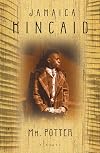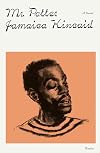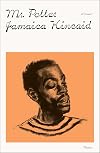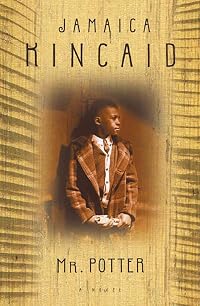
Mr. Potter
by Jamaica Kincaid
On This Page
Description
Jamaica Kincaid's first obsession, the island of Antigua, comes vibrantly to life under the gaze of Mr. Potter, an illiterate taxi chauffeur who makes his living along the wide, open roads that pass the only towns he has ever seen and the graveyard where he will be buried. The sun shines squarely overhead, the ocean lies on every side, and suppressed passion fills the air. Misery infects the unstudied, slow pace of this island and of Mr. Potter's days. As Kincaid's narrative unfolds in show more linked vignettes, his story becomes the story of a vital, crippled community. Kincaid strings together a moving picture of Mr. Potter's ancestors -- beginning with memories of his father, a poor fisherman, and his mother, who committed suicide -- and the outside world that presses in on his life, in the form of his Lebanese employer and, later, a couple fleeing World War II. Within these surroundings, Mr. Potter struggles to live at ease: to purchase a car, to have girlfriends, to shake off the encumbrance of his daughters -- one of whom will return to Antigua after he dies, and will tell his story with equal measures of distance and sympathy. In Mr. Potter, her most luminous, ambitious work to date, Kincaid breathes life into a figure unlike any in contemporary fiction, an individual consciousness emerging gloriously out of an unexamined life. show lessTags
Recommendations
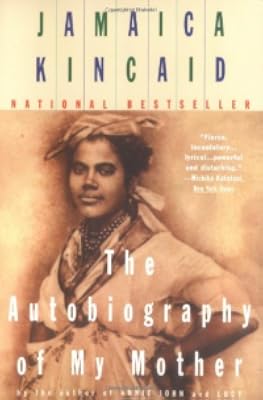
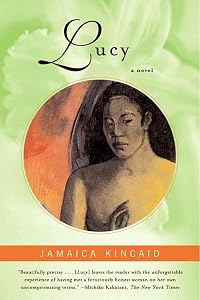




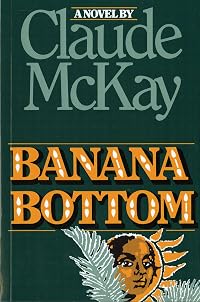
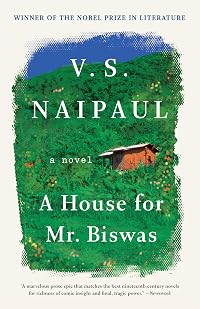









Member Recommendations
Member Reviews
See Mr. Potter.
See Mr. Potter sit.
See Mr. Potter sit and think.
See Mr. Potter think about sun shining.
And then it was sunny.
And it was sunny all day long.
And oh my how it was sunny again and again.
But then the clouds came.
The clouds were very dark.
They darkened Mr. Potter's soul.
Mr. Potter did not want to sit and think anymore.
Mr. Potter dies because he cannot sit and think anymore.
The dull, nonsensical, repetitive, sing-song quality of the prose is still screaming in my head.
I wanted Mr. Potter to die. The first paragraph was enough for me to wish Mr. Potter dead. I wanted Mr. Potter to die a dull but painful death -- in the very same manner he killed my own will to live after reading this.
Who invented Mr. Potter?
Who invented Jamaica show more Kincaid?
Mr. Potter did.
Would that it had not been so.
The tragedy of this is that there is a very poignant, moving story behind ridiculously repetitive prose but that it is drowned in the reverberation of the crashing waves that scream over the writer's voice. This is like listening to a wonderful song, where the acoustics are all "off": the music drowns the singer, and instead of a beautiful melody, it is merely a harsh, disappointing cacophony.
I did much skimming, I must admit, because I was afraid if I didn't, they might be carrying me off to Bellevue, singing ring-around-the-rosie at the top of my lungs. show less
See Mr. Potter sit.
See Mr. Potter sit and think.
See Mr. Potter think about sun shining.
And then it was sunny.
And it was sunny all day long.
And oh my how it was sunny again and again.
But then the clouds came.
The clouds were very dark.
They darkened Mr. Potter's soul.
Mr. Potter did not want to sit and think anymore.
Mr. Potter dies because he cannot sit and think anymore.
The dull, nonsensical, repetitive, sing-song quality of the prose is still screaming in my head.
I wanted Mr. Potter to die. The first paragraph was enough for me to wish Mr. Potter dead. I wanted Mr. Potter to die a dull but painful death -- in the very same manner he killed my own will to live after reading this.
Who invented Mr. Potter?
Who invented Jamaica show more Kincaid?
Mr. Potter did.
Would that it had not been so.
The tragedy of this is that there is a very poignant, moving story behind ridiculously repetitive prose but that it is drowned in the reverberation of the crashing waves that scream over the writer's voice. This is like listening to a wonderful song, where the acoustics are all "off": the music drowns the singer, and instead of a beautiful melody, it is merely a harsh, disappointing cacophony.
I did much skimming, I must admit, because I was afraid if I didn't, they might be carrying me off to Bellevue, singing ring-around-the-rosie at the top of my lungs. show less
Extraordinary book. Kinkaid has a looping, almost cyclical, style, zooming in to read her characters thoughts and shifting back to encompass the politics of race and vicissitudes of history. The novel is as much about her ability to read and write and thus be in control of the illiterate Mr Potter's story, as it is about growing up fatherless.
I really enjoyed this book, though it's different from anything I've ever read before and took me a while to get into it. I don't know how much the difference is due to the author experimenting versus me just being unfamiliar with Antinguan/Caribbean story-telling. It is gentle, lilting, very poetic and not at all plot driven. It is the story of the life of the narrator's father, Mr. Potter. The language is beautiful and placed me very much on the island! I listened to the audiobook, I usually prefer reading but I think this book is very well suited to audio since the language is so lyrical, and I felt more like I was experiencing a piece of art rather than following a story. Robin Miles' reading is truly phenomenal, always, but show more especially in this book! I highly recommend it if you like to read different types of books with an open mind. If you require a Western story arc or give up on books that don't draw you in early, this may not be for you. show less
Set in Antigua, Mr. Potter is more of a series of snapshots of the way in which Mr. Potter interacted with others. Much of the language was repetitious. It is a far cry from the smooth narratives most of us are accustomed to reading, yet in its own way, it is effective, showing the rhythm in which persons are settled. There is also much allusion in the work. This will never become a favorite book of mine, but I can appreciate the author's unique manner of telling the story of Mr. Potter.
At first the method of repetition turned me off, but I soldiered on and halfway through I began to understand what Kincaid was up to and accept some of the repetition in the following ways:1. A refrain or chorus that is repeated throughout, such as the repeating of Mr. Potter's birth and death dates, who his parents were, who Elaine (the narrator's) parents were, that Potter could not read and could not write but Elaine could, and so forth--all facts that as they repeat and repeat accumulate in meaning until by book's end you realize why the narrator dwells on such facts as she tries to make sense of this father she never knew, this father who never claimed her. If the book were a song or a suite of songs or an opera, they'd be melodies show more and choruses and refrains that would convey meaning to us whenever they appeared in the structure.2. Anaphora where the same words or phrases are repeated at the beginning of sections or chapters or even within a paragraph lifting the prose into not quite poetry but quite poetic passages. "There was a line drawn through me" was one of the more successful moments of this.3. A way of thinking that spins out an idea or fact and repeats the idea or fact in the same words but a different order, almost as if Elaine is stating the facts and then turning them over and over again in her hands, looking at them from different angles, dissembling the parts and rebuilding the shapes to see if the shapes change, to make sense of the shapes.And I liked this quote:"...often a thing that is ugly is ugly in itself, and often a thing that is ugly is only a thing that is forgotten, kept from view and kept from memory, and often a thing that is ugly is not only a definition of beauty itself but also renders beauty as something beyond words or beyond any kind of description." show less
"And this line that runs through Mr. Potter and that he then gave to me, I have not given to anyone, I have not ceded to anyone, I have brought it to an end, I have made it stop with me, for I can read and I can now write and I now say, in writing, that this line drawn through the space where the name of the father ought to be has come to an end, and that from Mr. Potter to me, no one after that shall have a line drawn through the space where the name of the father ought to be, and that through him coming through me, everyone after that shall have a father and a mother and so will inherit twofold the great cauldron of misery and small cup of joy that is all of life."
A wonderful story to read for its lyrical prose and streams of show more consciousness writing style, but a very difficult book to try and pin down in a review. The story, told from the point of view of one of the subject's unacknowledged offspring, depicts Mr. Potter's life as an uneducated chauffeur in Antiqua, the impact on our narrator of having no father and her impressions of the father she never knew. The story tends to repeat itself in places, almost like a mantra, cementing the information being conveyed in the reader's mind.
As I said, the writing is quite beautiful and has a wonderful relaxing flow to it, but I don't quite know what to say about the story itself. Is it the story of a daughter getting in the last word, and writing a family history that otherwise wouldn't be written? Or is it a story, warts and all, that just needs to be told? Kincaid inserts part of her own life into the story - which parts you may ask? - well, for a start her real birth name and birth date are the name and birth date for our narrator. Both were born in St. John's, Antigua, grew up on the island and both did not have contact with their birth fathers. Does that makes this story autobiographical in nature? Probably not. Best just to say that Kincaid draws upon her own life experiences when she writes and leave it at that.
Favorite quote: "And the world in its entirety and the individuals who contribute to its entirety are small and smaller yet again, and how sad, how sad, how very sad is life, for its glorious beginnings end and the end is always an occasion for sadness, no matter what anyone says."
Overall, an exquisitely written story set in Antigua that should be read when you know you will have a stretch of uninterrupted time on your hands... if you suddenly have to stop reading mid-stream, it is a bit of a hassle to get back into the rhythm and flow of the story. show less
A wonderful story to read for its lyrical prose and streams of show more consciousness writing style, but a very difficult book to try and pin down in a review. The story, told from the point of view of one of the subject's unacknowledged offspring, depicts Mr. Potter's life as an uneducated chauffeur in Antiqua, the impact on our narrator of having no father and her impressions of the father she never knew. The story tends to repeat itself in places, almost like a mantra, cementing the information being conveyed in the reader's mind.
As I said, the writing is quite beautiful and has a wonderful relaxing flow to it, but I don't quite know what to say about the story itself. Is it the story of a daughter getting in the last word, and writing a family history that otherwise wouldn't be written? Or is it a story, warts and all, that just needs to be told? Kincaid inserts part of her own life into the story - which parts you may ask? - well, for a start her real birth name and birth date are the name and birth date for our narrator. Both were born in St. John's, Antigua, grew up on the island and both did not have contact with their birth fathers. Does that makes this story autobiographical in nature? Probably not. Best just to say that Kincaid draws upon her own life experiences when she writes and leave it at that.
Favorite quote: "And the world in its entirety and the individuals who contribute to its entirety are small and smaller yet again, and how sad, how sad, how very sad is life, for its glorious beginnings end and the end is always an occasion for sadness, no matter what anyone says."
Overall, an exquisitely written story set in Antigua that should be read when you know you will have a stretch of uninterrupted time on your hands... if you suddenly have to stop reading mid-stream, it is a bit of a hassle to get back into the rhythm and flow of the story. show less
In Mr. Potter, Jamaica Kincaid examines the life of the subaltern through an allegory of her narrator's father. Mr. Potter, who can neither read nor write, represents different things to the different people in his life, either his employer, his daughter, or others on the island of Antigua. Mr. Potter's experiences reflect the legacy of colonialism while allowing him to exist as an individual. Kincaid's writing uses repetition and stream-of-consciousness to convey her ideas to her readers.
Members
- Recently Added By
Author Information

51+ Works 8,462 Members
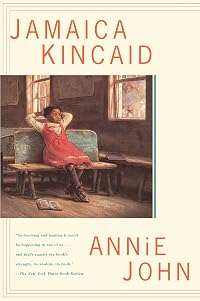
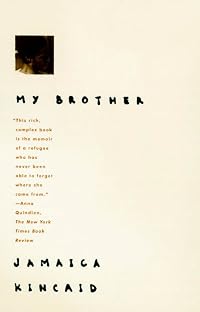
Jamaica Kincaid came to the United States in 1966 as a free-lance writer and is now on staff at the New Yorker. Her first volume of stories, At the Bottom of the River (1983), depicts men and women alienated from each other by conflict, physical separation, or death. The story "My Mother" vividly describes the painful separation between mother and show more daughter; and the stories in Annie John (1985) clearly reveal that the world of the past cannot be recaptured. Kincaid's poetic use of language and everyday images allows the reader to experience ordinary events with a new and heightened sensitivity. Kincaid is a relatively new writer whose works are beginning to receive critical attention. (Bowker Author Biography) Jamaica Kincaid, novelist, memoirist, & essayist, was born in St. John's, Antigua. Her books include At the Bottom of the River, Annie John, Lucy, The Autobiography of My Mother, and My Brother, all published by FSG. She lives with her family in Vermont. (Publisher Provided) show less
Some Editions
Awards and Honors
Notable Lists
Series
Belongs to Publisher Series
Common Knowledge
- Canonical title
- Mr. Potter
- Original title
- Mr. Potter
- Original publication date
- 2002
- Important places*
- Antigua en Barbuda
- First words
- And that day, the sun was in its usual place, up above and in the middle of the sky, and it shone in its usual way so harshly bright, making even the shadows pale, making even the shadows seek shelter...
- Last words
- (Click to show. Warning: May contain spoilers.)Mr. Potter was my father, my father's name was Mr. Potter.
- Original language*
- Inglese
*Some information comes from Common Knowledge in other languages. Click "Edit" for more information.
Classifications
Statistics
- Members
- 252
- Popularity
- 128,650
- Reviews
- 10
- Rating
- (3.15)
- Languages
- 6 — English, French, German, Italian, Spanish, Swedish
- Media
- Paper, Audiobook, Ebook
- ISBNs
- 21
- ASINs
- 6