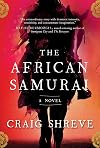
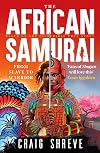
The African Samurai
by Craig Shreve
On This Page
Description
Set in late 16th-century Africa, India, Portugal, and Japan, The African Samurai is a powerful historical novel based on the true story of Yasuke, Japan's first foreign-born samurai and the only samurai of African descent—for readers of Esi Edugyan and Lawrence Hill.In 1579, a Portuguese trade ship sails into port at Kuchinotsu, Japan, loaded with European wares and weapons. On board is Father Alessandro Valignano, an Italian priest and Jesuit missionary whose authority in central and show more east Asia is second only to the pope's. Beside him is his protector, a large and imposing East African man. Taken from his village as a boy, sold as a slave to Portuguese mercenaries, and forced to fight in wars in India, the young but experienced soldier is haunted by memories of his past.
From Kuchinotsu, Father Valignano leads an expedition pushing inland toward the capital city of Kyoto. A riot brings his protector in front of the land's most powerful warlord, Oda Nobunaga. Nobunaga is preparing a campaign to complete the unification of a nation that's been torn apart by over one hundred years of civil war. In exchange for permission to build a church, Valignano "gifts" his protector to Nobunaga, and the young East African man is reminded once again that he is less of a human and more of a thing to be traded and sold.
After pledging his allegiance to the Japanese warlord, the two men from vastly different worlds develop a trust and respect for one another. The young soldier is granted the role of samurai, a title that has never been given to a foreigner; he is also given a new name: Yasuke. Not all are happy with Yasuke's ascension. There are whispers that he may soon be given his own fief, his own servants, his own samurai to command. But all of his dreams hinge on his ability to protect his new lord from threats both military and political, and from enemies both without and within.
A magnificent reconstruction and moving study of a lost historical figure, The African Samurai is an enthralling narrative about the tensions between the East and the West and the making of modern Japan, from which rises the most unlikely hero. show less
Tags
Recommendations










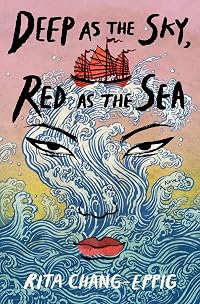
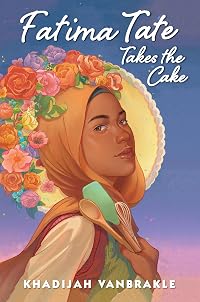
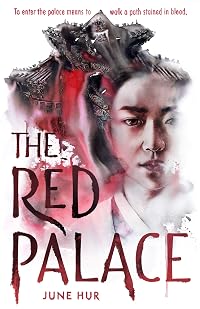

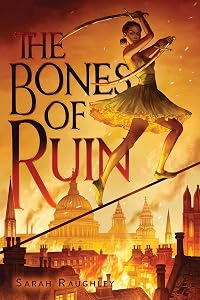

Member Recommendations
Member Reviews
This book is the best I've read this year for sure. It is a story about real-life happenings and based on actual historical figures. It is set in 17 century Japan, and is told in the first-person by Yasuke, the first foreign-born Samurai and the only Samurai who was of African descent. Yasuke, who we first come to know as Isaac, was taken from his home village by slave traders at the age of thirteen. Even at that age he was very big for his age. His village was sacked and burned and only those few that the traders knew would fetch a good prize at auction were saved. As the story progresses with Yasuke's life in Japan, we learn of his early days in bondage where he was tortured, beaten and starved, and forced to fight in Portuguese show more mercenary wars. He was sold again to Jesuits and became the bodyguard of a priest whose mission was to bring Catholicism to Japan. Yasuke learns a lot from this Jesuit priest. He can speak many languages, and learns his numbers and letters (albeit in Latin). But when, for reasons of his own, his priest decides to give Yasuke to the warlord Oda Nobunaga for the promise of a church to be built in Kyoto. Yasuke strikes up a close friendship with Nobunaga, and is granted his freedom and the post of Samurai in Nobunaga's unified Japan. There Yasuke learns the meaning of loyalty and friendship and vows to serve his lord until the end. "Who does not know the order that our flesh should serve to repay kindness, and life should serve for bonds and moral obligations?"--from The Noh play Tomoe. Yasuke fights almost to the death to preserve the memory and legacy of his Lord, and he does this because of the lessons that he has learned in his court and the friendship that they had. "Until the lion has its own storyteller, the hunter will have the better story"--African proverb. This book is told from the viewpoint of the "lion", and Yasuke, through Craig Shreve, is his storyteller. This book enthralled me from beginning to end, and Craig Shreve's writing is absolutely exquisite. Because the story is told in the first-person, it made the tale more realistic and it actually felt like I was there. Many lessons can be learned from Yasuke's journey. Highly recommend. show less
This novel is set in the late sixteenth century in Japan and is the fictionalized story of the first foreign-born Samurai, a black man from Africa.
The plot follows the story of a young boy, eventually given the name of Yasuke, who is kidnapped by the Portuguese from an unspecified African tribe. He is taken to India where he is trained to be a slave-soldier but then later finds himself amongst the Jesuits where he comes to the attention of Alessandro Valignano who educates him. Eventually he becomes the bodyguard for Valignano, the highest-ranking Jesuit in Asia, until he gifts him to Oda Nobunaga, a Japanese feudal warlord, in exchange for permission to erect a church. Nobunaga comes to trust and respect Yasuke and eventually he gives show more him the title of samurai.
The novel is narrated in first-person by Yasuke, though he tells his story in a non-linear fashion. The story alternates between his experiences in Japan and flashbacks to his childhood in Africa, his time enslaved and forced to fight in India, and his years spent in Europe with the Jesuits.
This is not my usual genre so it’s probably not a book I would have chosen to read were it not the 2024 SD&G Reads choice. It is a male-dominated book with few women. Yasuke thinks often of his mother but she features only in the flashbacks. Tomiko, one of Nobunaga’s servants, appears a few times but she is certainly not a central character and seems to have been added as a token female. I would have liked to learn more about Nobunaga’s home life. A quick Wikipedia search reveals that he had a wife, numerous concubines, and several children.
I understand that the author’s purpose was to tell Yasuke’s story, but I felt I got little sense of his daily life outside of training and fighting. I also get the impression that the author didn’t want to deviate from or take too many liberties with the limited historical information available about the protagonist. There is a non-fiction book about Yasuke which the author mentions in his bibliography. Why write fiction if not to imagine and dramatize that which is missing in biographical information? I guess I was looking for a richer, more in-depth imagining of Yasuke’s life.
It’s my failing, but I have to admit having difficulty with the Japanese names like Toyotomi, Tokugawa, and Takeda as well as Akechi and Azuchi. There are overly long passages describing the hierarchy of Japanese nobles, political rivalries and machinations, and military strategy; these bored me and some of them proved to be unnecessary to an understanding of events.
The book is very much an exploration of enslavement. At the age of twelve, Yasuke loses his identity, family, and freedom. He has no free agency; decisions are made for him by others. His value is only in his service: “It was the lesson I had learned many times over . . . That no matter how many years I had served . . . no matter how faithfully and how well, and regardless of the good treatment and fine clothes and training and occasional freedoms, in the end I was still a thing to be traded. I was still property.”
Yasuke learns to survive. He learns that “Adapting to new circumstances meant releasing any attachments to the old” and “Making myself valuable was one element of my survival. The other was learning everything I could of my new environment.” He proves to be intelligent and diligent, always observant and alert to dangers. Given what he endures, it is impossible not to find him a sympathetic character. It is heartwarming to see him finally be given freedom and the home he has long sought, though he questions the price he has paid: “was it worth it? Taken from my village, forced into war, . . . were the horrors suffered along the way justified by the honor waiting at the end? I could not bring myself to say yes. Too many had died, some at my own hand. . . . All justified by my own survival. . . The price was too high. But the price had already been paid, regardless.”
There are a couple of passages that I really liked. One is Yasuke’s reflection that humans are the same regardless of where they live: “So many reminders of home, in this place so far away from what should have been my home. The traditions of painted faces and carved masks, and song and dance. The beliefs that we can be guided by the spirits of our ancestors. Even the legends, of holy mountains and gods that fought over the land. All these things made me wonder if maybe men everywhere were the same.”
I also liked Tomiko’s rebuttal to Yasuke’s comment that he finds Japanese culture strange: “’No . . . you are just seeing it with strange eyes.’” He reflects “I suddenly understood how the foreign slavers and priests could look at my people as savages, not understanding our ways, evaluating our customs and practices against their standards, their experience.”
What the book also emphasized for me is the evils brought by Christianization. Yasuke mentions to Nobunaga that “’Many of [the Jesuits] are harmless priests and true believers. But some of them are far from that. Some are soldiers, criminals, killers, who were offered a choice between execution and salvation. There are dangerous men amongst them.’” Valignano chastises a priest for not baptizing Yasuke, stating, “’Why do we send our missionaries out to the farthest reaches of the world if we don’t believe the people we find there to be God’s children?’” However, he has little respect for the culture and beliefs of others and will do whatever he thinks is necessary to build his churches. He treats Yasuke like property in the belief that “’How can something that is necessary be evil?’”
This is an interesting novel about a largely unknown historical figure, though I would have preferred a more detailed depiction of all aspects of a samurai’s life. Readers should be forewarned that there is a lot of graphic violence: men are brutally tortured and killed and several commit seppuku, ritual suicide.
Note: Please check out my reader's blog (https://schatjesshelves.blogspot.com/) or substack (https://substack.com/@doreenyakabuski) for over 1,100 reviews. show less
The plot follows the story of a young boy, eventually given the name of Yasuke, who is kidnapped by the Portuguese from an unspecified African tribe. He is taken to India where he is trained to be a slave-soldier but then later finds himself amongst the Jesuits where he comes to the attention of Alessandro Valignano who educates him. Eventually he becomes the bodyguard for Valignano, the highest-ranking Jesuit in Asia, until he gifts him to Oda Nobunaga, a Japanese feudal warlord, in exchange for permission to erect a church. Nobunaga comes to trust and respect Yasuke and eventually he gives show more him the title of samurai.
The novel is narrated in first-person by Yasuke, though he tells his story in a non-linear fashion. The story alternates between his experiences in Japan and flashbacks to his childhood in Africa, his time enslaved and forced to fight in India, and his years spent in Europe with the Jesuits.
This is not my usual genre so it’s probably not a book I would have chosen to read were it not the 2024 SD&G Reads choice. It is a male-dominated book with few women. Yasuke thinks often of his mother but she features only in the flashbacks. Tomiko, one of Nobunaga’s servants, appears a few times but she is certainly not a central character and seems to have been added as a token female. I would have liked to learn more about Nobunaga’s home life. A quick Wikipedia search reveals that he had a wife, numerous concubines, and several children.
I understand that the author’s purpose was to tell Yasuke’s story, but I felt I got little sense of his daily life outside of training and fighting. I also get the impression that the author didn’t want to deviate from or take too many liberties with the limited historical information available about the protagonist. There is a non-fiction book about Yasuke which the author mentions in his bibliography. Why write fiction if not to imagine and dramatize that which is missing in biographical information? I guess I was looking for a richer, more in-depth imagining of Yasuke’s life.
It’s my failing, but I have to admit having difficulty with the Japanese names like Toyotomi, Tokugawa, and Takeda as well as Akechi and Azuchi. There are overly long passages describing the hierarchy of Japanese nobles, political rivalries and machinations, and military strategy; these bored me and some of them proved to be unnecessary to an understanding of events.
The book is very much an exploration of enslavement. At the age of twelve, Yasuke loses his identity, family, and freedom. He has no free agency; decisions are made for him by others. His value is only in his service: “It was the lesson I had learned many times over . . . That no matter how many years I had served . . . no matter how faithfully and how well, and regardless of the good treatment and fine clothes and training and occasional freedoms, in the end I was still a thing to be traded. I was still property.”
Yasuke learns to survive. He learns that “Adapting to new circumstances meant releasing any attachments to the old” and “Making myself valuable was one element of my survival. The other was learning everything I could of my new environment.” He proves to be intelligent and diligent, always observant and alert to dangers. Given what he endures, it is impossible not to find him a sympathetic character. It is heartwarming to see him finally be given freedom and the home he has long sought, though he questions the price he has paid: “was it worth it? Taken from my village, forced into war, . . . were the horrors suffered along the way justified by the honor waiting at the end? I could not bring myself to say yes. Too many had died, some at my own hand. . . . All justified by my own survival. . . The price was too high. But the price had already been paid, regardless.”
There are a couple of passages that I really liked. One is Yasuke’s reflection that humans are the same regardless of where they live: “So many reminders of home, in this place so far away from what should have been my home. The traditions of painted faces and carved masks, and song and dance. The beliefs that we can be guided by the spirits of our ancestors. Even the legends, of holy mountains and gods that fought over the land. All these things made me wonder if maybe men everywhere were the same.”
I also liked Tomiko’s rebuttal to Yasuke’s comment that he finds Japanese culture strange: “’No . . . you are just seeing it with strange eyes.’” He reflects “I suddenly understood how the foreign slavers and priests could look at my people as savages, not understanding our ways, evaluating our customs and practices against their standards, their experience.”
What the book also emphasized for me is the evils brought by Christianization. Yasuke mentions to Nobunaga that “’Many of [the Jesuits] are harmless priests and true believers. But some of them are far from that. Some are soldiers, criminals, killers, who were offered a choice between execution and salvation. There are dangerous men amongst them.’” Valignano chastises a priest for not baptizing Yasuke, stating, “’Why do we send our missionaries out to the farthest reaches of the world if we don’t believe the people we find there to be God’s children?’” However, he has little respect for the culture and beliefs of others and will do whatever he thinks is necessary to build his churches. He treats Yasuke like property in the belief that “’How can something that is necessary be evil?’”
This is an interesting novel about a largely unknown historical figure, though I would have preferred a more detailed depiction of all aspects of a samurai’s life. Readers should be forewarned that there is a lot of graphic violence: men are brutally tortured and killed and several commit seppuku, ritual suicide.
Note: Please check out my reader's blog (https://schatjesshelves.blogspot.com/) or substack (https://substack.com/@doreenyakabuski) for over 1,100 reviews. show less
Disclaimer: I was given a free copy of this book by the publisher in return for an honest review.
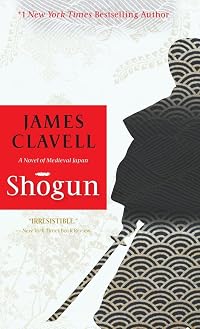
The history is fascinating, the themes interesting, and some of the dialogue is very good, but there's a lack of immediacy to things; despite all the action, there's precious little intrigue. Our protagonist has lived a life in which he has been kidnapped, sold and given away, but still feels like he's observing a lot of that fascinating history for much of the book's length. I'd love a revisionist James Clavell, but sadly I'm not sure this is it.
The history is fascinating, the themes interesting, and some of the dialogue is very good, but there's a lack of immediacy to things; despite all the action, there's precious little intrigue. Our protagonist has lived a life in which he has been kidnapped, sold and given away, but still feels like he's observing a lot of that fascinating history for much of the book's length. I'd love a revisionist James Clavell, but sadly I'm not sure this is it.
Not completely unreadable but difficult to follow with flat characters and no real sense of place. I'm wishing I'd read the nonfiction book instead.
Situado no final do século XVI entre África, Índia, Portugal e Japão, O Samurai Africano é um poderoso romance histórico baseado na história verídica de Yasuke, o primeiro samurai não nascido no Japão e o único de ascendência africana. Em 1579, uma nau portuguesa chega ao porto de Kuchinotsu, no Japão, carregada de mercadorias e armas europeias. A bordo segue Alessandro Valignano, um padre italiano e missionário jesuíta cuja autoridade na Ásia central e oriental é superada apenas pela do papa. Viaja com um guarda-costas, um homem da África Oriental grande e imponente. Raptado da sua aldeia em criança, vendido como escravo a mercenários portugueses e forçado a lutar em guerras na Índia, o jovem, mas experiente show more soldado, é assombrado pelas memórias do seu passado e pela sua condição de escravo. De Kuchinotsu, o padre Valignano lidera uma expedição que avança em direção à cidade capital de Quioto. Um motim coloca o seu guarda-costas à frente do mais poderoso senhor da guerra do país, Oda Nobunaga, nesse momento a preparar uma campanha para completar a unificação de um país dilacerado por mais de cem anos de guerra civil. Em troca de permissão para construir uma igreja, Valignano «oferece» o seu guarda-costas a Nobunaga. Após jurar lealdade ao senhor da guerra japonês, estes dois homens de mundos muito díspares desenvolvem uma confiança e respeito mútuos. O jovem soldado recebe o título de samurai, nunca concedido a um estrangeiro; também lhe é dado um novo nome: Yasuke. Uma história magnífica e comovente acerca de uma figura histórica perdida, durante o auge do Império Português no Oriente, O Samurai Africano é uma narrativa fascinante sobre as tensões entre o Oriente e o Ocidente e a formação do Japão moderno, de onde surge o mais improvável dos heróis. show less
Jun 7, 2024Portuguese (Portugal)
Ratings
Members
- Recently Added By
Lists

Books Read in 2023
5,547 works; 145 members

Llibres que he llegit el 2025
81 works; 2 members
Author Information

2 Works 84 Members
Common Knowledge
- Canonical title
- The African Samurai
- People/Characters
- Yasuke
Classifications
Statistics
- Members
- 71
- Popularity
- 441,926
- Reviews
- 5
- Rating
- (3.64)
- Languages
- 5 — Catalan, English, German, Portuguese, Spanish
- Media
- Paper, Audiobook, Ebook
- ISBNs
- 10
- ASINs
- 2