The Girl Who Spun Gold
by Virginia Hamilton
On This Page
Description
In this African American retelling of "Rumpelstiltskin," Lit'mahn spins thread into gold cloth for the king's new bride.Tags
Recommendations


Member Reviews
When Big King comes riding by one day, Quashiba's mother tells a little fib - that her daughter can spin golden thread - in answer to his queries, and the beautiful young girl soon finds herself Queen! But when Big King demands that she make good on her mother's claim, one year into their marriage, Quashiba must accept the help of that malicious little magic-maker, Lit'mahn, who wants to shrink her down to his size, and force her to live in his shade. Can she guess his name in time, and free herself from her obligation to him...?
Fairy-tale lovers will immediately recognize this wonderful story, a West Indies variant of the tale-type often known as Rumpelstiltskin. It's natural (and enjoyable) to compare and contrast folkloric variants, show more and I was particularly struck, during the course of my reading, by the fact that The Girl Who Spun Gold highlights the injustice of the king's demands, in a way that the German variant does not. I also found myself wondering, in light of the fact that it is Quashiba herself that Lit'mahn wants, rather than any unborn child (as in other variants), whether the terrible trauma of slavery had a role in shaping the story. Could the knowledge that, for many generations, one's children could be taken away, have made that aspect of the tale too painful to include? Or was this variant always different, in this regard? The folklorist in me can't help but wonder...
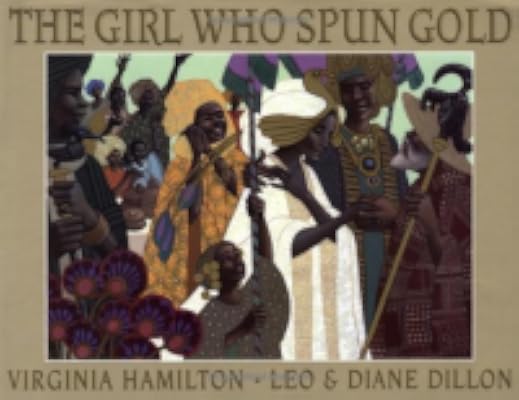
With an engaging story, and breathtakingly beautiful artwork - gorgeous gold-toned illustrations perfectly capture both the beauty of Quashiba and the gruesome creepiness of Lit'mahn - this is a picture-book I would recommend to all fairy and folktale lovers, as well as fans of Leo and Diane Dillon's artwork! show less
Fairy-tale lovers will immediately recognize this wonderful story, a West Indies variant of the tale-type often known as Rumpelstiltskin. It's natural (and enjoyable) to compare and contrast folkloric variants, show more and I was particularly struck, during the course of my reading, by the fact that The Girl Who Spun Gold highlights the injustice of the king's demands, in a way that the German variant does not. I also found myself wondering, in light of the fact that it is Quashiba herself that Lit'mahn wants, rather than any unborn child (as in other variants), whether the terrible trauma of slavery had a role in shaping the story. Could the knowledge that, for many generations, one's children could be taken away, have made that aspect of the tale too painful to include? Or was this variant always different, in this regard? The folklorist in me can't help but wonder...
With an engaging story, and breathtakingly beautiful artwork - gorgeous gold-toned illustrations perfectly capture both the beauty of Quashiba and the gruesome creepiness of Lit'mahn - this is a picture-book I would recommend to all fairy and folktale lovers, as well as fans of Leo and Diane Dillon's artwork! show less
Anyone who has heard or read Rupelstiltskin tales will be familiar with the mischievous figure to whom Quashiba makes a bargain, in this case named Lit'mahn. In this he described as dancing with flecks of gold, glinting in the shade of trees, connecting him to to glittering promises of spun gold. After her mother says she can spin thread to gold and weave fields of cloth the King Marries Quashiba, all the white she remains painfully aware that she cannot spin golden thread and make fields of cloth.
When Lit'Mahn does appear to her they strike a bargain that she will either guess his name with three tries in three nights, or he will make her tiny and carry her off to live in his shade. The plot continues as expected, the mysterious show more little man spins and works while the Queen falls fast asleep, worrying that she will have to spend eternity tiny and in Lit'Mahn's shade.
Ultimately, it was her husband that stumbled upon Lit'Mahn while out hunting and brought his amusing song back for his wife. Using his dinner retelling of the little man with whom she is already familiar, Quashiba is able to name Lit'Mahn. While she remains Queen and her husband rejoices at the rooms full of gold, she is unable to overlook the work he required of her.
In an amusing development the King and Queen live "fairly happily ever after." The Queen, being rightly displeased that her King has padlocked her in rooms and required her to spin golden thread and cloth, does not speak to the king for three long years and three long long fields of him asking for her forgiveness.
This story has it all! The story comes from West Indian tradition and contains some dialect. Some of the phrasing or sounds would be unfamiliar to western readers, but the bones of the fairy tale would remain familiar. A simple peasant whose mother changes her fate, gorgeous and detailed illustrations contributing to the telling. The gold theme follows in the illustrations with gold leaf borders and incredible motifs displayed in the textiles and vegetation around the figures. I very much enjoyed the read! show less
When Lit'Mahn does appear to her they strike a bargain that she will either guess his name with three tries in three nights, or he will make her tiny and carry her off to live in his shade. The plot continues as expected, the mysterious show more little man spins and works while the Queen falls fast asleep, worrying that she will have to spend eternity tiny and in Lit'Mahn's shade.
Ultimately, it was her husband that stumbled upon Lit'Mahn while out hunting and brought his amusing song back for his wife. Using his dinner retelling of the little man with whom she is already familiar, Quashiba is able to name Lit'Mahn. While she remains Queen and her husband rejoices at the rooms full of gold, she is unable to overlook the work he required of her.
In an amusing development the King and Queen live "fairly happily ever after." The Queen, being rightly displeased that her King has padlocked her in rooms and required her to spin golden thread and cloth, does not speak to the king for three long years and three long long fields of him asking for her forgiveness.
This story has it all! The story comes from West Indian tradition and contains some dialect. Some of the phrasing or sounds would be unfamiliar to western readers, but the bones of the fairy tale would remain familiar. A simple peasant whose mother changes her fate, gorgeous and detailed illustrations contributing to the telling. The gold theme follows in the illustrations with gold leaf borders and incredible motifs displayed in the textiles and vegetation around the figures. I very much enjoyed the read! show less
I love the artist who did these illustrations so much. She's done illustrations for various authors, and regardless of the story I am reading, her illustrations bring life to these stories. This story is no different. Mind you, it's not just the illustrations but the story itself that's very enjoyable - in this case, a retelling of the Rumpelstiltskin tale. A-
The Girl Who Spun Gold is a West Indian spin on the classic German tale of Rumplestiltskin. A young woman is married to the king under his false understanding that she can spin thread in to gold. At first, Quashiba is able to enjoy the luxuries of royalty. Soon, however, her husband locks her in a room overnight and expects her to fill the room with gold thread by morning. In her desperate hour, the clever, mystical Lit’mahn comes to her rescue. His conditions, however, could be the cause of her ruin. Folktales transcend time and place the reader in another culture. This folktale in particular brings out the cross-cultural issue of women being mistreated, sold in to marriage, or otherwise stripped of their power.
In this West Indian tale Big King takes the lovely Quashiba as his wife after her mother tells a little white lie, that Quashiba has the ability to spin gold. After a year of marital bliss Big King locks his bride in a room demanding that she spin gold in order to win her freedom. Luckily help arrives in the form of a little demon named Lit'mahn Bittyun. Of course there's a catch - if Quashiba cannot guess his name in three days he will shrink her down to his size and spirit her away to live in his shade. This story is a variation on the Rumplestiltskin theme. The illustrations are also very beautiful and colourful with gold edging and accents on each page.
"The Girl who Spun Gold" is a fantasy folk tale that has been passed down from generation to generation. There were a few overlying themes within this picture book that are great to show children in third and fourth grade. One theme of respect or lack there of is throughout the whole book because Big King married Quashiba just because she would spin him gold thread. Once he married her the audience learns that Big King has no respect for her and after a year and a day of marriage locks her in a room and threatens that if she doesn't fill the room with gold thread that she'd be doing it forever. That's no way to treat any person and we learn in the end that Queen Quashiba didn't like the way she was treated either because she didn't talk show more to Big King for three years. Another underlying theme is that trying to trick or con people won't get you anywhere. When the shade man, Lit'ham goes to help Queen Quashiba, he doesn't do it genuinely, but rather does it to try and trap her in his shadow if she can't guess his name correctly. In the end she correctly guesses his name and he then basically explodes. This book sneakily showed how tricking people isn't the best idea because in the end the trickster is the one who will get into some big trouble. Respect and treatment of others are huge when around children so this book is another example to show them. The book has what appears to be an all African American family with a strong and confident young woman in Queen Quashiba. Due to this little girls can find themselves in this book and are able to see a strong character that they can also be. show less
I think this is a great book to use in the class room for a couple reasons. The first reason is because this is a great example of multicultural lit. Anyone who is familiar with Rumpelstiltskin will immediately notice this is the same story but, with a west Indian twist on it. I think when a child reads a story they already know but, through another culture’s perspective it is really beneficial to the child because they can look at the similarities and differences between the two cultures. The book also used some dialect of the culture which may be difficult for kids but, I think it is good because they child is introduced to a different dialect for example “Don't cha know!""; ""For true!". The other reason why I love this book is show more because I love the illustrations! I may be a little bias because I do favor Leo and Dine Dillon but, it is well deserved. They are just really good at capturing the essence of folktale. The pages are full of gold and the pictures are gorgeous and very engaging. The pictures are detailed from the beautiful colors of the traditional garments to capturing how ugly Lit'mahn truly is. show less
Members
- Recently Added By
Lists

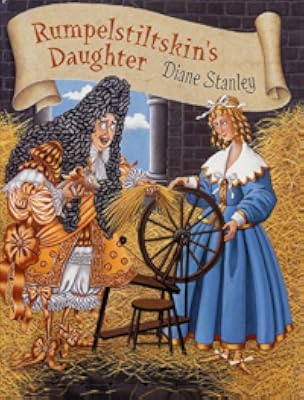
Rumpelstiltskin Retellings
43 works; 7 members
Author Information

49+ Works 16,346 Members
All Editions
Awards and Honors
Common Knowledge
- First words
- There be this tale told about a tiny fellow who could hide in a foot of shade amid old trees.
Classifications
Statistics
- Members
- 374
- Popularity
- 84,462
- Reviews
- 28
- Rating
- (4.09)
- Languages
- English
- Media
- Paper
- ISBNs
- 2
- UPCs
- 1
- ASINs
- 2